Check out all this great shit.......
Thanks for tuning in.
It's a fucking brilliant album.
January 8, 2023
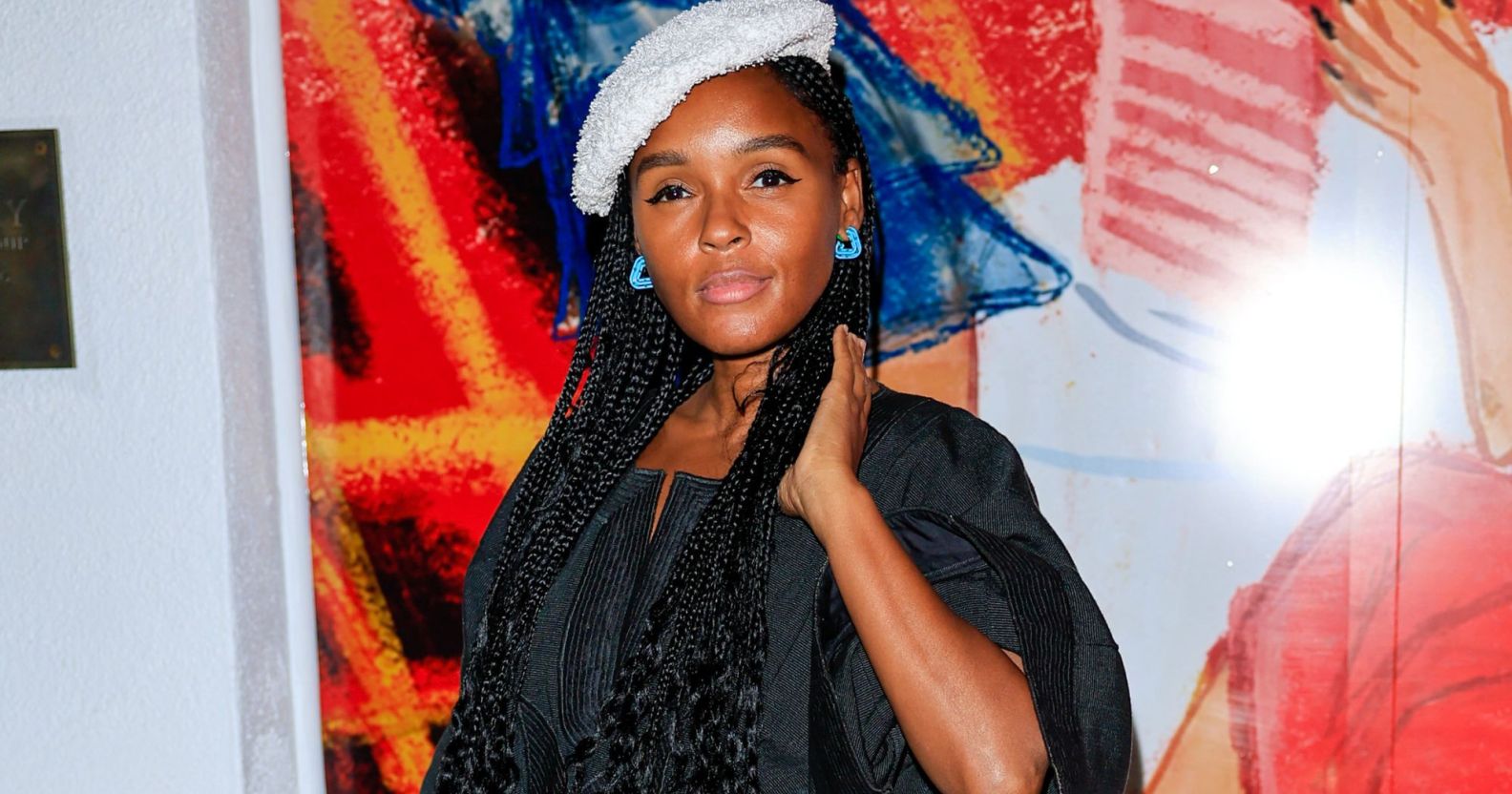
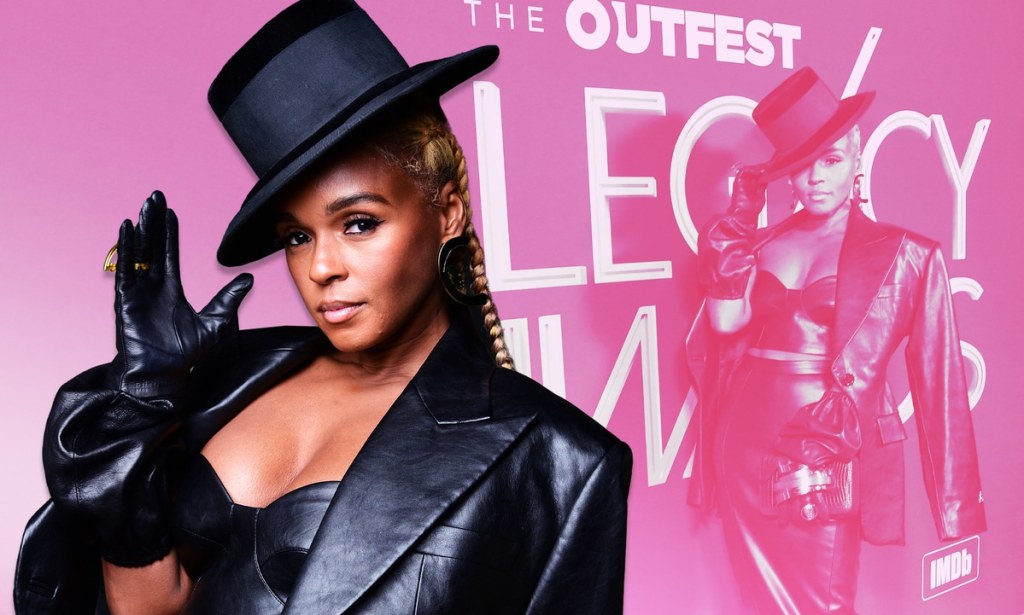
One evening in December, Janelle Monáe materialized at the Grand Salon of the Baccarat Hotel, in midtown, looking like a creature from another dimension. Enveloped in a faux-coyote-fur armchair, she wore a houndstooth top hat over her dyed-blond hair, a tweed black-and-white skirt with a matching tie, and platform saddle shoes—Catholic schoolgirl meets “A Clockwork Orange.” The outfit, she told me in a soft, Kansas-accented voice, was by Thom Browne, one of her favorite designers, and it captured both “the structure of a uniform” and the “whimsy of who I am.”
So who is Janelle Monáe? Since she emerged
on the music scene, she’s been less a pop star than a world-builder, refracting
herself through sci-fi and Afrofuturist imagery. Her first EP, “Metropolis: The
Chase Suite,” from 2007, drew on Fritz Lang’s German Expressionist classic and
cast Monáe as her android alter ego, Cindi Mayweather. With her tuxedos and
protruding pompadours, she was a glam retro-futurist androgyne, and her three
studio albums—“The ArchAndroid” (2010), “The Electric Lady” (2013), and “Dirty
Computer” (2018)—leaned into her funk-robot persona. “I’m a cyber-girl without
a face, a heart, or a mind,” she sang on one track. Monáe used Mayweather and
other spinoff characters as metaphors for her sense of otherness, as a queer
Black woman from Kansas City, Kansas. (In 2018, she came out as pansexual, and
last April revealed herself to be nonbinary; she uses she/her or they/them
pronouns but says that her preferred pronoun is “freeassmuthafucka.”) Monaé’s
forty-eight-minute visual album—or
“emotion picture”—for “Dirty Computer” featured her as Jane 57821, a Sapphic
android in a “Blade Runner”-esque dystopia, and in 2022 she expanded the “Dirty
Computer” universe into a sci-fi story collection, “The Memory Librarian.”
At the same time, Monáe has embarked on a
surprisingly earthbound acting career. In 2016, she played approachable human
women (with no discernable circuitry) in “Moonlight” and “Hidden Figures.” This
wasn’t Lady Gaga or Beyoncé tweaking their pop-diva persona for film (or
showily deglamorizing themselves); Monáe was a real-deal actor, comfortable and
charismatic without bells or whistles. Since then, she’s acted in the films “Harriet” and
“Antebellum” and on the TV series “Homecoming.” Her most acclaimed role,
however, is her latest, in Rian Johnson’s
whodunnit “Glass Onion: A Knives Out
Mystery.” Since the film began making the festival rounds, last
fall, critics have raved over Monáe’s performance—though they were vague about
why, because you can’t say much without revealing major spoilers. Now that the
film is out on Netflix, Monáe agreed to talk specifics. Be warned: what follows
is spoiler-heavy, and if you haven’t watched the movie you’re advised to do so
first. (To bypass the spoiler zone, skip down to the next mention of “Moonlight.”)
Our conversation—which ended with its own surprise twist—has been edited and
condensed.
I know you
think a lot about the future, so let’s imagine a time a month from now when
everyone has seen “Glass Onion” on Netflix and knows what happens in it.
Yeah, spoiler alerts!
Essentially,
you’re playing two people: Andi, the icy, powerful tech entrepreneur, and her
sister Helen, a Southern gal who isn’t quite as put together as we’re led to
believe Andi is. Tell me what it was like to delineate between those two
characters.
When I read the script, I didn’t expect
the twist, and I got really excited about the opportunity of playing those
different energies. So, this is a spoiler alert. If you’re reading this right
now, just stop if you don’t want this to be ruined!
This is your
last warning, people of the future.
People of the future, do not read anymore!
Spoiler alert! Spoiler alert! I played Helen, I played Andi, and I played Helen
pretending to be Andi. And then I played Helen being Andi and the audience not knowing
that there was any difference—so essentially four characters, or four different
energies. And I knew that it was going to be the greatest challenge in my film
career thus far. You don’t want people to be able to see anything that is
similar between the characters. You want to believe that this is not Janelle
Monáe playing different characters: this is a human, a being all their own. So
I started with that energy work. Once I put on my clothes and I got in the body
and I understood the spirit and I understood what each of them wanted, that’s
when the real fun started to happen.
Andi’s a very
powerful, contained person. Were you basing that on anyone? Were there
influences that helped you create the two personae?
Andi is an amalgamation. She’s a Black
woman. She’s a tech entrepreneur. She’s the minority in the majority, always
having to kind of fight for her voice in those rooms. She’s always around these
tech bros, these billionaire folks that people think are geniuses. And, in
fact, some of them don’t have original ideas. So I looked at entertainment,
tech, business—all the most successful women who have had stories of having to
stand up for their ideas. Andi is someone who has had to assimilate. She’s had
to learn to play the game. With Helen and Andi being sisters and coming from
the South, one of them has an accent, and one of them dropped their accent,
right? Helen has an accent. Andi has that business voice. She’s also a
fashionista. She looks the part. She looks strong. She looks brilliant. That
gets her the access she needs in those rooms. I mean, her name was Cassandra
Brand, and they call her Andi. She’s had to drop everything she knew in order
to become the person she wanted to be.
Helen stayed authentic to where they were
from, from the South. She’s not assimilating or trying to be around wealthy
billionaires and become powerful. She loves being a teacher. She enjoys the
simpler things in life. She also loved her sister, and, as much confidence as
her sister had, she just doesn’t believe that she had the confidence to live
that sort of life style—and she also didn’t want to. I think that they
represent the spectrum of that power dynamic, of the wealthy to the more
everyday, working-class woman who still has to go up against the machine.
Did that
duality resonate with you, as someone who came out of Kansas City, Kansas, and
created an alternate universe for yourself as a pop star? A lot of this sounds
very Janelle Monáe.
It does in a sense, right? My parents were
working class. I was a maid. I also worked at the Boys & Girls Club, so I
taught kids fresh out of high school to earn money to go to school in New York
City. I’ve seen both ends of it: living paycheck to paycheck and now having
more access to do the things that I want to do. Obviously, there are levels to
being in the music industry, to being in the movie industry. I’m still growing.
I’m not a veteran. But as I’m continuing to climb I try to stay grounded and
remember where I’ve come from—and also talk to the people in the room who are
taking care of us, from the janitors to the teachers to folks like my
grandmother and my mom and my dad, who put on uniforms every day.
While we’re in
the spoiler zone, you have this amazing scene at the end, where you just start
smashing glass objects, and it looks incredibly fun and cathartic. Was it as
freeing as it seems, or was it more staged and deliberate?
Both. It had to feel free, but it was
choreography. We only had two to three opportunities to break the sugar glass—a
type of movie glass that, like, if you sneeze on it, it could break. You had to
be very gentle. My inspirations in that scene were Bugs Bunny and Joker. Being
in a pandemic, too, maybe some frustrations that I’ve had with the world came
out as well.
Your acting
career over the past couple of years hasn’t been what you’d expect. You came
out of the gate with “Moonlight” and “Hidden Figures,” playing down-to-earth,
real women, after having established this very glamorous android persona. Were
you craving playing a normal person?
I was just blown away by the script for
“Moonlight.” I will say, I wanted to do a sci-fi movie. That was my dream if I
got into film—I wanted my first role to be futuristic and sci-fi. But I’m so
happy that it was “Moonlight,” because that movie still touches people’s hearts
to the core. People tell me all the time how much my character, Teresa, means
to them, and that it showed them how to be an ally to the L.G.B.T.Q.I.A.-plus
community. With “Hidden Figures,” this was honoring the three Black women who
helped get our astronauts into space. That was an untold story that was
important to me. One of my goals was to show that Black women are not
monolithic. We can be in space and we can be in the ghettos and still make an
impact in both.
It’s certainly
different than, say, David Bowie playing
the man who fell to Earth.
One of my favorite films!
But that movie
played on the alien-ness that he created through his alter egos. People always
say that you created your own Ziggy Stardust, so it’s been interesting to watch
your TV and movie career not be that at all.
One of my dreams is to write, direct, star
in, and create the soundtrack to a big sci-fi thing. But what I loved about
filming “Glass Onion” is how Rian Johnson shot this film. I love noir. I love
Hitchcock. I love spookiness and mystery. Even in my work, there’s mystery to
Cindi Mayweather. People are still, like, “Is Janelle an android? Is she human?
Does she have a clone?” I can’t tell anybody if that’s true or not. But this
role is one of the first times where that mystery from my world seeps over into
a film, because Andi is so enigmatic, and there are so many layers to peel
back.
Very
onion-like.
Yes! A lot of people don’t know this, but
I absolutely despise onions. I despise! I despise! One time I went over to my
cousin’s house and bit into what I thought was a shaved apple, and it was a raw
onion. I could not get that taste out of my mouth for days. I literally went
into the bathroom and put soap in my mouth. It was such a traumatic food
experience that I was, like, “Mom, if you cook spaghetti, please make me a side
that doesn’t have onions.”
What kind of
food did you grow up with in Kansas City?
Barbecue—ribs, brisket. My grandmother was
a cook at the county jail for twenty-five years. I remember her cooking us
chicken and dumplings and cornbread. My grandmother was so strong that she
could pull out a cast-iron skillet from the oven with her bare hands. She
didn’t use an oven mitt. Maybe she had built up so many calluses on her hand
that it didn’t bother her, because she also was a sharecropper in Aberdeen,
Mississippi. So I grew up with all the soul food that they learned how to cook.
You’ve said
that you were obsessed as a child with photosynthesis. Why?
I read a book about photosynthesis. It was
one of the “Goosebumps” books. I was in elementary school, and it just sparked
my imagination. I remember coming up with a story about a plant talking to
aliens who kidnap everyone in my neighborhood. And then they left me behind,
which was rude. Yeah, when I heard that plants talk to each other, I couldn’t
believe it. And then, when I listened to Stevie Wonder’s “Journey Through the
Secret Life of Plants,” all of it was a world untapped.
What was your
relationship with Kansas City and the Baptist Church? Did you feel out of
place?
The Baptist Church taught me how to sing.
It taught me how to find the Holy Spirit within me. And it would give me my
first goosebumps, from hearing somebody sing in church. I was, like, That’s how
I want to make people feel when I perform. There were some teachings that, as I
started to get older, I questioned, obviously. The Bible is full of stories and
storytelling. There are some beautiful things about growing up in the Baptist
Church, and there are some things that you have to unlearn.
What were the
earliest works of art that fired your imagination and made you feel there was
some wild, fantastical world out there?
Because I was from Kansas, “The Wizard of
Oz” and Judy Garland. The dreaminess of her eyes and her voice, everything
about her. And her journey with the Tin Man, the Lion, and the Scarecrow was
representative of some of the people I would go on to meet to help me along
with my journey. I didn’t realize it when it was happening, but a lot of my
life mirrored that. It made me also want to explore—like, Wow, I could have
this zany life outside Kansas? What would that look like for me?
There’s also a
reason that it’s a queer touchstone. It shows you that there’s some other world
out there that’s colorful and a little bit spicy and dangerous, but appealing.
I love danger!
You mentioned
working as a maid earlier. When was that?
To pay to go to college, I worked as a
maid in Kansas. It was called the Maids. Some of the women were recovering
addicts or were coming from being in prison. I was the only one with a license,
so I would drive us around to these middle-class or upper-class homes, and we
would clean. And they absolutely would make me sing, so it felt like a musical,
in a sense.
Did you have
other survival jobs when you were starting out?
Blockbuster. Boys & Girls Club. I did
taxes for my cousin. He actually fired me for being late, which was
devastating. But it pushed me to get in the studio and focus on songwriting and
what I have to say as an independent artist.
You came to New
York to go to a conservatory, right? What was the plan?
It was to leave Kansas City and go to New
York and study musical theatre. I studied acting, jazz, tap, ballet, music
theory, sight singing. I learned so much from that school that I still use. I
couldn’t afford to live in any of the apartments that they offered to the
students, because we didn’t have a campus.
Where is this?
Seventy-second and Broadway, the American
Musical and Dramatic Academy. So I lived with my cousin’s best friend. We slept
in the same bed. She worked at nights, so I had the bed to myself, and when I
had to go to school during the day she would come home and have the bed to
herself. I commuted from 140th and Amsterdam every single day. But it taught me
how to survive, how to hustle. It let me know, also, that I wanted to tell
stories and do music and acting on my own terms, because, as I started to dig
more into what it meant to do musicals on Broadway, there were not a lot of roles
that I saw for myself—it was all typecasting. So I didn’t finish
[conservatory]. I moved to Atlanta, and it was the best decision that I ever
made.
At a certain
point, you were playing acoustic guitar for college kids in Atlanta, right?
Yes, I went from New York to the library
steps, playing original songs that were near and dear to my heart. I was, like,
If I’m going to do this, I need to know if people like my music or not. That’s
when I started to reinvent Janelle Monáe.
I imagine that
when you were playing on the library steps you weren’t in a tuxedo with a pompadour. What was
your look then?
My hair was out in an Afro, because I cut
it off in high school and let it grow back in its natural state. I was wearing
dark lipstick at the time. I was into jean skirts. I was just so, like, earthy.
And still had my country Kansas accent. I think I still had a dreaminess about
me, though.
So how did you
get into the sleek black-and-white look?
It was my uniform. Honestly, I could not
afford to have a different stage outfit every single performance, so I would go
to the thrift store and buy these three-dollar high-waist pants. I would find a
tailor to tailor them to my body. I would go to a Gap or a Banana Republic and
get a white button-down shirt. I used to have this girl make custom
black-and-white ties for me. I would go to the uniform store and buy saddle
shoes, and I would go to an athletic store and buy baseball socks. I would do
my own hair. My hair was inspired by Lucille Ball—not a lot of people know
that. I did a shoot one day in Atlanta, and they were, like, “We’re inspired by
movie characters, so do a hair style that pays homage to Lucille Ball.” That’s
how I developed what I like to call the Monáe, my own hair style. Once I
started wearing it a lot as a uniform, I realized that, like my parents, I’m
going to work, and I wanted to pay homage to working-class folks. It also was a
protection for me. It made me feel strong. It was like armor. But now I
understand who I am. I don’t have to be as protected.
What were the
sci-fi influences that you drew on back then? Obviously Fritz Lang’s
“Metropolis” was a big one. When did you see it for the first time?
Right when I was writing my first EP,
“Metropolis: Suite I (The Chase).” I saw so many parallels to my life, to the
haves and the have-nots in Kansas. When I had left school, I was, like, Ooh,
I’m excited about creating this android persona. Which was also a sense of
protection, because I was still coming into who I was and what I wanted to say,
until I really got comfortable with my own stories and talking about my own
past. Cindi was a good protection for me.
She’s also a
metaphor. You’ve said that androids represent “untouchables” and “anyone who
went against the status quo.” Obviously, she was a version of you.
It was a hybrid. Cyndi represented being
the “other,” and how Black folks, queer folks are othered. It was making that
political statement. Also, the writer in me loved being able to create this
character. I grew up writing short stories and being a part of the Young
Playwrights’ Roundtable in Kansas City, where local actors would perform our
work if it was good enough. So world-building was always at the forefront of my
mind.
You put out a
book in April, “The Memory Librarian,” which is more world-building from that
android universe, and you write about the New Dawn, a kind of dystopian
concept. How would you explain what the New Dawn is?
“The Memory Librarian” is inspired by my
album “Dirty Computer,” and “Dirty Computer” centered around Jane 57821 and
this group of folks whose memories and identities have been erased, because
they refused to assimilate, and they refused to erase their own uniqueness and
their own queerness and their own Blackness. And the New Dawn is the enemy: it
is a regime that seeks to conquer and divide, and to erase folks’ memories and
reprogram them to assimilate and to be controlled. So what if there was a
memory librarian who had a whole Dewey decimal system of people’s past
identities? What happens when the memory librarian wants to fall in love, and
she knows everybody’s pasts? A lot of these stories were centered on thought
experiments, and I collaborated with five different writers.
What was that
collaboration like? How do you write a story with different co-authors?
It was like an album compilation: when I’m
working on an album, I bring in the drummer that I love, or the guitar player
that I love, and it’s a real collaboration. I wanted that to happen in the
literary world.
Were there
literary influences that you particularly loved?
I mean, the king herself, Octavia Butler. “Wild Seed” left a big
impression on me, and “Parable of the Sower,”
and so much of her work. Her and Sun Ra, and even Isaac Asimov and Philip K.
Dick.
I did sense a
little “Do Androids Dream of Electric
Sheep?”—the bureaucracy of android dystopia. I wrote down a line
from the introduction to your book: “Even before the Dawn, we lived in a nation
that asked us to forget in order to find wholeness, but memory of who we’ve
been—of who we’ve been punished for being—was always the only map into tomorrow.”
I’d love to hear more about that concept.
If you don’t understand your past, how can
you shape your future? Think about what’s going on in the school systems and
folks like DeSantis, these
Republicans who are trying to stop schools from talking about trans folks and
slavery. These people exist, and it happened in our past. To strip that away
from L.G.B.T.Q.I.A.-plus communities in schools is just evil, honestly. It’s
evil to erase somebody’s identity, and we have to do everything we can in the
literary world, in music and film, through voting, to protect our human rights.
You’ve identified
as pansexual and more recently as nonbinary, but you have an interesting take
on coming out, called “coming in.” Can you explain what that means?
You’re bringing people into who you are.
You’re allowing them a unique opportunity to further understand how you see
yourself. For me, it was not this big declarative statement. It was just, “This
is who I am.” I don’t think anybody should feel obligated to talk about their
sexuality. For me, after having the necessary conversations with my loved ones,
and also feeling comfortable enough to let it seep into my writing and my art,
I knew that it was time.
The idea of
coming in reminded me of “The Rocky Horror Picture Show,”
when the normie couple, Janet and Brad, wander into this house, this queer
world where up is down, masculine and feminine are all smashed up—and they’re the outsiders. That’s a “coming in”
idea, that queer aesthetics can be its own center, instead of asking
marginalized people to define themselves in relationship to whatever straight
culture is.
Exactly. I could not agree more.
It also makes
me think about Afrofuturism, which creates a world that is not governed by
white aesthetics. If you think about a concept like Wakanda, from “Black
Panther,” that’s another coming in—it’s existing and thriving on its own.
It’s not a response to whiteness. Being
queer is not a response to heteronormative behaviors. Like, we exist. I can’t
wait to get to a point where people can feel comfortable and just live, and not
feel like they have to look over their shoulders and wonder if they’re going to
lose a job or if their safety is going to be compromised.
Now that you’ve
been more public about gender and sexuality, do you need the android metaphor
less in your work, or do you think you’re going to keep going back to it?
I’ve evolved a lot, even within the
android persona, once I realized that I didn’t subscribe anymore to certain
systems and I live outside the binary. I’ve always done that through my music.
I’ve always explored genres. I’m allowing myself to surprise myself and going
outside the need to protect through persona. Who knows where it’ll go from
here?
You’ve talked
about how you’ve embraced your feminine and your masculine. I’m curious what
masculinity means to you. It’s a fraught concept nowadays.
Some folks can call energy masculine and
feminine, but I like to deal with it in terms of hardness versus softness. I
strive to be more like water than a hard rock. There are times that call for
you to be like a rock, but for the most part I won’t allow the world to define
my energy or make me hard. I want to stay soft. In the past, I didn’t always
believe in that, because it kind of played into what folks thought at the time,
before I realized I was nonbinary. You get people saying, “You’re supposed to
act like this” or “Women wear this”—these gender norms that were pushed on me.
I just had to get free from all of it. I’m not a stickler. If people say
“woman,” it doesn’t bother me. As long as I understand your intention, I give
grace in those areas. But I think it’s good to continue to have the
conversation around gender norms and pronouns. As we evolve as humanity, there
are going to be so many things that we discover about ourselves, and I’m never
so arrogant to believe that I have all the answers.
Years before
“Dirty Computer,” in a Pitchfork profile from
2013, you were talking about going to therapy and said, “It was like I had a
computer virus in my brain and it needed to be fixed.” How did the “dirty
computer” image come to you?
“Dirty Computer” came to me in a dream. I
had a dream that I was abducted. I was at a movie theatre, and one of the
ushers was trying to tell me to follow her, because they were snatching people.
And I didn’t listen. Right before I sat down to watch the film, I was taken,
and my whole identity was erased. I woke up a new person. I got up from that
nightmare and I got my phone and I clicked on my voice memos, trying to
remember every detail from that nightmare.
Why do you
think it was a movie theatre?
I don’t know. Maybe it’ll reveal itself to
me later. I mean, maybe we’re in a simulation. Maybe I was going to be watching
what was going to happen in the future. Who knows?
How long ago
was this?
Before I was filming “Hidden Figures.”
That’s how I knew we needed to put out “Dirty Computer,” because I was playing
a human computer in “Hidden Figures.”
Oh, right,
because the character is a mathematician.
Yeah, and their titles at nasa were “human computers.” I was, like,
This is too weird! I’m working on an album called ‘Dirty Computer,’ and I’m a
human computer in a film! All of the synergy kind of freaked me out, but it let
me know I was on the right course.
What is your
relationship with technology in your daily life?
There’s an interview with
David Bowie, and he’s talking about the Internet and how it’s going to blow our
minds. It’s a balancing act for me. I have somebody run my social media, in
order for me to stay creative and present. I consider myself to be a
“presenturist.” That is a word that I made up: instead of a futurist, I’m a presenturist. If I’m thinking about the future, I’m
having anxiety. If I’m thinking about the past, I could be depressed. But when
I’m present I’m happy, and I want to savor that. With technology, sometimes
it’s full of trolls, full of bots, and it has the ability to do great things, like
connect communities. You just have to know when it is having a negative impact
on your life and your mental health. Technology, as we know, is not linear;
it’s exponential. You have technology right now writing songs, writing full books!
How do you feel
about that?
I’ve already made my peace with it. I’ve
already tried to tell folks about androids. This has been my lifework, as a
futurist turned presenturist. I’m fine with androids. They’re fine with me. We
respect each other.
Speaking of
Bowie, he’s one of those names that always comes up around you. Did you
interact with him?
I think our spirits knew each other. I
know he knew of me, because I did a cover of his song “Heroes” for a commercial, and he
had to approve it. His wife, Iman, mentioned that he knew about me and he loved
me. So I will hold that dear. That’s enough. We don’t need to meet physically,
but I feel like our spirits did—especially after I saw “Moonage Daydream,”
the latest documentary. Did you watch that?
I sure did.
That film—that trippy, intergalactic piece
on him—confirmed some things about myself.
Really? What?
When you watch that film, you get a sense
that this is a person who, at the height of Ziggy Stardust, was, like, “Fuck
that. I’m going to have to reinvent myself, because I don’t want to rest on my
laurels.” I’m like that, too. I’m not interested in re-creating the past. I’m
all about what’s next. And hearing him say it was incredible. And there’s a
quote that I live by, and I keep it in my Notes.
Please, let me
know what it is!
[She brings up the Notes app on her phone.] I have a
Note, “Things to Always Remember.” Bowie says, “I think it’s terribly dangerous
for an artist to fulfill other people’s expectations. . . . If
you feel safe in the area that you’re working in, you’re not working in the
right area. Always go a little further into the water than you feel you’re
capable of being in. Go a little bit out of your depth, and when you don’t feel
that your feet are quite touching the bottom, you’re just about in the right
place to do something exciting.” I just love that. When I heard that quote from
him, it gave me more affirmation to keep swimming. Go out in the deep end a
little more.
I want to know
more things on your “Things to Always Remember” list.
What else can I share? [She reads.] “I will protect Little Janelle. I am not
above making a mistake. I am not above misspeaking. I will not give up on
myself today. I will not give up on myself tomorrow. I will not give up on
myself in the future. I will not give up on Little Janelle.” Let me see. “Don’t
go on social media during ovulation.”
That’s
practical advice. What does “Little Janelle” mean?
We all have our inner child. You take your
inner child with you everywhere you go, whether a new relationship, a new
chapter in your life. I had to go back to my childhood a lot to get through
some trauma of abandonment and rejection. When you’re younger, you can’t show
up for yourself in the way that you can now, because you didn’t have the tools.
Have you gone through your own inner-child work? Look at me, I’m putting you in
the hot seat!
I like to stay
in touch with Little Michael, I guess.
It’s when you let yourself be vulnerable
and free. Little Janelle didn’t know everything about the world, about danger.
Little Janelle was just being sweet, even if folks were being bullies. Coloring
outside the lines, not judging yourself, just being uninhibited—that level of
softness and adventure and risk-taking. Looking back, I wish that I could have
had the tools back then to deal with certain situations. And now I have the
tools to let Little Janelle roam free.
Your father was
in and out of jail—is that what you mean by abandonment?
Yeah, sure. Thank God, my dad is
completely sober now. He’s written a book. He’s on a new journey in life. But,
as a kid, obviously, when that inconsistency was there, you start to think, Was
it something wrong with me? What did I do? All of that seeps into you. But I’m
so happy I’ve gotten past that. I’m at a stage where I’m celebrating life.
[At this point, a woman who’d been sitting at the table
next to us with her laptop interrupted. She said that she had overheard what
Monáe said about her inner child and it gave her peace. The woman was from
Cleveland and was staying at the hotel to decompress: her uncle had just died,
having spent sixty-one days in the I.C.U. after a hip surgery gone wrong. The
woman had been his caretaker, and she was exhausted. “Thank you for sharing
that with me, and I’m so sorry,” Monáe told her, effortlessly repositioning
herself as a kind of celebrity healer. “I’m trying not to cry,” the woman said.
“You absolutely should cry,” Monáe told her. “It’s time to release. You are
safe.” Weeping, the woman said that she carries guilt from the feeling that she
had failed to keep her uncle alive; all she could do at the end was hold his
hand. “That’s all you needed to do,” Monáe reassured her. She urged the woman
to forgive herself, saying, “God bless you. You’re gonna be good.” Laughing
through tears, the woman said, “I don’t know if I believe in God anymore. God
and I are on bad terms.” To which Monáe said, “The god in you. That’s what I’m
talking about.” Recovering herself, the woman eyed Monáe’s outfit and said,
“Those are hot shoes.” It was time for Monáe to go. On her way out, she blew
the woman a kiss, and was gone.] ♦

+++++++++++++++++++++++++++++++++++++++++++++++++++++++++++++++++++++++
+++++++++++++++++++++++++++++++++++++++++++++++++++++++++++++++++++++++
+++++++++++++++++++++++++++++++++++++++++++++++++++++++++++++++++++++++
- Bloggery committed by chris tower - 2306.22 - 10:10
- Days ago = 2911 days ago
- New note - On 1807.06, I ceased daily transmission of my Hey Mom feature after three years of daily conversations. I plan to continue Hey Mom posts at least twice per week but will continue to post the days since ("Days Ago") count on my blog each day. The blog entry numbering in the title has changed to reflect total Sense of Doubt posts since I began the blog on 0705.04, which include Hey Mom posts, Daily Bowie posts, and Sense of Doubt posts. Hey Mom posts will still be numbered sequentially. New Hey Mom posts will use the same format as all the other Hey Mom posts; all other posts will feature this format seen here.