Hey, Mom! The Explanation.

Here's the permanent dedicated link to my first Hey, Mom! post and the explanation of the feature it contains.

Also,

Showing posts with label Jung. Show all posts

Thursday, September 10, 2026

A Sense of Doubt blog post #4224 - Letter to Dad #52 - Each Client a new Therapy


A Sense of Doubt blog post #4224 - Letter to Dad #52 - Each Client a new Therapy


Hi Big Guy, Letter 52 means 52 weeks.

This first as here's the first Letter to Dad:

Thursday, September 11, 2025

So I have been working at my clinical setting, which means I am also studying therapeutic technique and research.

In The Gift of Therapy (ch.10 pgs 33-26), author Irvin Yalom cites Carl Jung (p.34) who in regards to the uniqueness of each patient (or client), each with their own inner world and language, that a therapist is really required to create a new therapy for each patient.

This belief of Jung's tracks with my own thinking.

As I am being pushed to choose a theoretical approach, I hesitate to commit because different approaches are going to work best for different patients. Similarly, I balked at the idea of giving homework because some clients will love and embrace homework, some will like the idea but not find the time, and still others may resent being given homework.

Mainly, I am working from a place of CBT and DBT with a mindfulness emphasis mixed with motivational interviewing. Some clients may need other approaches all or in part, such existential or gestalt. In my current work, I am validating a lot and may pull in key concepts from Rogerian person-centered therapy.

If the client has significant trauma, depending on what the trauma is, trauma-informed approaches may work best.

There's no one size fits all.

Patients experience many common issues that an approach like DBT can help and improve, such as setting boundaries, interpersonal effectiveness, and the standards carried over from CBT like coping with negative thoughts and core beliefs.

I am having fun learning and thinking about how to best help people by considering what they need.

In other news, the floor project is nearly done, and I will show you the pictures next week.

Miss you, Dad.
Love you,
christopher


+++++++++++++++++++++++++++++++++++++++++++++++++++++++++++++++++++++++
+++++++++++++++++++++++++++++++++++++++++++++++++++++++++++++++++++++++
+++++++++++++++++++++++++++++++++++++++++++++++++++++++++++++++++++++++

- Bloggery committed by chris tower - 2609.10 - 10:10

- Days ago: MOM = 4088 days ago & DAD = 742 days ago

- New note - On 1807.06, I ceased daily transmission of my Hey Mom feature after three years of daily conversations. I post Hey Mom blog entries on special occasions. I post the days since ("Days Ago") count on my blog each day, and now I have a second count for Days since my Dad died on August 28, 2024. I am now in the same time zone as Google! So, when I post at 10:10 a.m. PDT to coincide with the time of Mom's death, I am now actually posting late, so it's really 1:10 p.m. EDT. But I will continue to use the time stamp of 10:10 a.m. to remember the time of her death and sometimes 13:40 EDT for the time of Dad's death. The blog entry numbering in the title has changed to reflect total Sense of Doubt posts since I began the blog on 0705.04, which include Hey Mom posts, Daily Bowie posts, and Sense of Doubt posts. Hey Mom posts will still be numbered sequentially. New Hey Mom posts will use the same format as all the other Hey Mom posts; all other posts will feature this format seen here.

Tuesday, September 1, 2026

A Sense of Doubt blog post #4215 - GRATITUDE - SoD Reprint from 2024


A Sense of Doubt blog post #4215 - GRATITUDE - SoD Reprint from 2024

Many people might think I overdo with commemorating my parents and their lives and that  I am wallowing in grief and over-focused on their deaths.

I would push back against this accusation. I have this blog for me more than for readers. Taking a week after the two year mark of my Dad's death feels right. I like looking at the old photos, the previous blog entries that I reprint.

And if I am "wallowing" in anything, it's gratitude. I have a great life. I am very thankful for my life and all the people who are and have been a part of it. My parents, surely, were a very important part of my life and in making it what it is.

I am celebrating my life, their lives, and in so doing I gain much needed perspective.

As I have written before, one does not "get over" grief. Instead one finds a way to absorb it into one's life, a way to live with it. I remind myself of that creed every day.

Thanks for tuning in.

Link to the original post I am reprinting below:

Wednesday, September 11, 2024


 A Sense of Doubt blog post #3494 - TWO WEEKS LATER - Reprint of Hey Mom #217 and T-shirt #157 and #78 - GRATITUDE

It is not lost on me that though I originally had this post scheduled for yesterday, 9/10, posting it today on the 23rd anniversary of the terrorist attacks on the WTC, Pentagon, etc.

I was not ready to write this post, and so I delayed. 

I recently took a "character strengths" test, and GRATITUDE was my highest ranked character strength out of 24 such aspects of my personality.

I told the Big Guy, my Dad, about how grateful I am for everything in my life, most of which is due to him and my Mom.

I had thought of listing all those things for which I am grateful here, but maybe that's private.

Maybe all I need to write is how grateful I am. How deep my gratitude fills me.

I have regrets of things I have not done, opportunities I wish I had taken advantage of, but I am also pleased with my life, and I owe so much of that to my Dad. I told him so in his last hours.

We all should take the time to be mindful of gratitude and all things for which we are grateful each and every day.

I do.

This is blog is just one way that I show that gratitude.

I am still processing that two weeks ago I was holding Dad's hand and watching his breathing slow.

14 days. That's more sevens and fours (Mom died 7/4 and 7*4 is 28). And half of 28, the day Dad died.

14 days.

Seems longer.

Seems shorter.

But 62 years and 8 months. I am grateful for all of that time. So grateful.

BTW, I love the picture above that I believe my sister took as she is not in it. I am guessing it's late 1970s when I was in high school. I don't think it was from the early 1980s when I was in college. In one of the other photos, Lori looks young, maybe 8-9ish. Even 10. Could be 1980. I have all of Dad's little black books, so I could research it and maybe figure it out. But not today.

Thanks for tuning in.


“Personality is a seed that can only develop by slow stages through our life. There is no personality without definiteness, wholeness, and ripeness…. The achievement of personality means nothing less than the optimum development of the whole individual human being. It is impossible to foresee the endless variety of conditions that have to be fulfilled.… Personality is the supreme realization of the innate idiosyncrasy of a living being. It is an act of high courage flung in the face of life.”

Collected Works Vol 17, para 288 and 289


COUNTDOWN!!!


The link to the original post that I am reprinting below:


Friday, February 18, 2022


Easter 1966

A Sense of Doubt blog post #2558 - REPRINT WEEK 08 - re: HEY MOM #217 - Gratitude

It's been a while since I featured a picture of myself and Mom up top, so there you go. Easter 1966. I am four years old. We're in Midland, living next to my grand parents and about to move to Traverse City. And my mother is still channeling Jackie Kennedy.

Hi there.

How are you?

Are you doing all right?

Please take care of yourself, okay?

Reprint week continues with a reminder about gratitude, which is one of my highest values.

I would not be whom I am and where I am if not for other people who love and support me.

My amazing wife alone deserves a great deal of this praise even though she does not like me to even mention her on my blog. But when I mention her in this context, it's more about me than it is about her. It's about how great she is at supporting ME.

So that.

This post originally appeared here:

Tuesday, February 9, 2016


But just for some extra value, here's where I originally wrote about gratitude:


Sunday, August 25, 2013

T-shirt #157: Gull Lake

And an excerpt:

LAST WORD ON THE GRATITUDE THING: I got the idea for the gratitude prayer (meditation, list, incantation, catalogue, rumination, reflection, or whatever you want to call it) from a movie called The Secret. I am not quite promoting the movie as a "true" exposure of an actual science. In fact, many of the stories in the film are a bit fatuous. However, I like watching it. I showed it to a class (my second viewing) about a month ago, and the idea of the daily gratitude thing struck me. In the movie, one of the interviewees (I forget which one and it's not important) explained how he had a rock in his pocket. At night, he would set it on his dresser with the other contents of his pockets. The next morning, he would retrieve it and remember to list the things for which he was grateful as a daily routine, like a prayer. He had a visitor from South Africa and told the man about his rock and gratitude practice. The man called it a "gratitude rock." After returning to South Africa, he wrote his American friend and asked for some gratitude rocks to be sent to him because one of his children was very sick, and he did not have the money to seek medical care for the child. The interviewee balked at sending "gratitude rocks" because, after all, "they are just rocks," he said. But he found three nice rocks and sent them to his South African friend. Months later, the South African wrote back. The rocks worked! His son was healed and recovered. They paid for his medical treatment by selling a hundred gratitude rocks. People believed in the power of the gratitude rocks.

I found this story inspirational. I do not use a rock, but every day, I make my gratitude list. I send energy into the universe. I focus on the positive and try to limit or dismiss the negative.

I think it's working.


LOW POWER MODE: I sometimes put the blog in what I call LOW POWER MODE. If you see this note, the blog is operating like a sleeping computer, maintaining static memory, but making no new computations. If I am in low power mode, it's because I do not have time to do much that's inventive, original, or even substantive on the blog. This means I am posting straight shares, limited content posts, reprints, often something qualifying for the THAT ONE THING category and other easy to make posts to keep me daily. That's the deal. Thanks for reading.


Easter 1966
Hey, Mom! Talking to My Mother #217 - Gratitude

Hi Mom, Here's some content from my T-shirts blog. I am still trying to catch up since I have fallen behind on my daily regimen.

I am very grateful for you, Mom, and for our family (see next two photos).

I think about our times together very often, Mom. These memories fill me with warmth and love and an ache that is never going to subside.

At least, I know that I told you how grateful I am for you. I know that I did not leave anything unsaid or finish our time together on hurtful or hateful words.

I am grateful to have lived with you for so long, to be able to be raised by you, and then in turn, to be able to help take care of you. I am grateful that you saw me get married and got to know my wife and kids and pets (Vespers and Satchel).

I am grateful for all you have given me because it's so much and I find new layers of it all the time.


FROM T-SHIRT #78

So, I am very grateful for Suzanne Vega and all that she has given me in my life, all that I have shared with her through music, what seems like deeply personal music, without knowing her at all, though feeling like I do know her, know her music.

So, each morning, I run the list of things for which I am grateful. I am not always listing musical artists, like Suzanne Vega, because I focus mostly on my family and community. Though from time to time, musical artists will drift into my consciousness, and I will thank the universe for them, infuse the positive energy of my love into the fabric of the cosmos, because, after all, we are all connected.

LAST WORD ON THE GRATITUDE THING: I got the idea for the gratitude prayer (meditation, list, incantation, catalogue, rumination, reflection, or whatever you want to call it) from a movie called The Secret. I am not quite promoting the movie as a "true" exposure of an actual science. In fact, many of the stories in the film are a bit fatuous. However, I like watching it. I showed it to a class (my second viewing) about a month ago, and the idea of the daily gratitude thing struck me. In the movie, one of the interviewees (I forget which one and it's not important) explained how he had a rock in his pocket. At night, he would set it on his dresser with the other contents of his pockets. The next morning, he would retrieve it and remember to list the things for which he was grateful as a daily routine, like a prayer. He had a visitor from South Africa and told the man about his rock and gratitude practice. The man called it a "gratitude rock." After returning to South Africa, he wrote his American friend and asked for some gratitude rocks to be sent to him because one of his children was very sick, and he did not have the money to seek medical care for the child. The interviewee balked at sending "gratitude rocks" because, after all, "they are just rocks," he said. But he found three nice rocks and sent them to his South African friend. Months later, the South African wrote back. The rocks worked! His son was healed and recovered. They paid for his medical treatment by selling a hundred gratitude rocks. People believed in the power of the gratitude rocks.

I found this story inspirational. I do not use a rock, but every day, I make my gratitude list. I send energy into the universe. I focus on the positive and try to limit or dismiss the negative.

I think it's working.

+++++++++++++++++++++++++++++++++++++++++++++++++++++++++++++++++++++++
+++++++++++++++++++++++++++++++++++++++++++++++++++++++++++++++++++++++
+++++++++++++++++++++++++++++++++++++++++++++++++++++++++++++++++++++++
Thank you, Mom.
Reflect and connect.
Have someone give you a kiss, and tell you that I love you.
Talk to you tomorrow, Mom.
+++++++++++++++++++++++++++++++++++++++++++++++++++++++++++++++++++++++
+++++++++++++++++++++++++++++++++++++++++++++++++++++++++++++++++++++++
+++++++++++++++++++++++++++++++++++++++++++++++++++++++++++++++++++++++
- Days ago = 219 days ago
- Bloggery committed by chris tower - 1602.09 - 10:10

+++++++++++++++++++++++++++++++++++++++++++++++++++++++++++++++++++++++
+++++++++++++++++++++++++++++++++++++++++++++++++++++++++++++++++++++++
+++++++++++++++++++++++++++++++++++++++++++++++++++++++++++++++++++++++
- Bloggery committed by chris tower - 2202.18 - 10:10
- Days ago = 2422 days ago

+++++++++++++++++++++++++++++++++++++++++++++++++++++++++++++++++++++++
+++++++++++++++++++++++++++++++++++++++++++++++++++++++++++++++++++++++
+++++++++++++++++++++++++++++++++++++++++++++++++++++++++++++++++++++++
- Bloggery committed by chris tower - 2409.11 - 13:40 (1:40 p.m.)
ANOTHER post at 1:40 p.m. in honor of the time of Dad's death.
- Days ago: MOM = 3458 days ago & DAD = 014 days ago
- New note - On 1807.06, I ceased daily transmission of my Hey Mom feature after three years of daily conversations. I plan to continue Hey Mom posts at least twice per week but will continue to post the days since ("Days Ago") count on my blog each day. The blog entry numbering in the title has changed to reflect total Sense of Doubt posts since I began the blog on 0705.04, which include Hey Mom posts, Daily Bowie posts, and Sense of Doubt posts. Hey Mom posts will still be numbered sequentially. New Hey Mom posts will use the same format as all the other Hey Mom posts; all other posts will feature this format seen here.

+++++++++++++++++++++++++++++++++++++++++++++++++++++++++++++++++++++++
+++++++++++++++++++++++++++++++++++++++++++++++++++++++++++++++++++++++
+++++++++++++++++++++++++++++++++++++++++++++++++++++++++++++++++++++++

- Bloggery committed by chris tower - 2609.01 - 13:40

posted at 1:40 p.m. in honor of the time of Dad's death.

- Days ago: MOM = 4079 days ago & DAD = 733 days ago

- New note - On 1807.06, I ceased daily transmission of my Hey Mom feature after three years of daily conversations. I post Hey Mom blog entries on special occasions. I post the days since ("Days Ago") count on my blog each day, and now I have a second count for Days since my Dad died on August 28, 2024. I am now in the same time zone as Google! So, when I post at 10:10 a.m. PDT to coincide with the time of Mom's death, I am now actually posting late, so it's really 1:10 p.m. EDT. But I will continue to use the time stamp of 10:10 a.m. to remember the time of her death and sometimes 13:40 EDT for the time of Dad's death. The blog entry numbering in the title has changed to reflect total Sense of Doubt posts since I began the blog on 0705.04, which include Hey Mom posts, Daily Bowie posts, and Sense of Doubt posts. Hey Mom posts will still be numbered sequentially. New Hey Mom posts will use the same format as all the other Hey Mom posts; all other posts will feature this format seen here.

Thursday, June 5, 2025

A Sense of Doubt blog post #3761 - Therapy Question: Are People Powerless to Change?


A Sense of Doubt blog post #3761 - Therapy Question: Are People Powerless to Change?

I may have mentioned that I am back in graduate school for a third Master's degree, this time in Clinical Mental Health Counseling.

I write things all the time for school, and I have posted a couple here on the blog, though many have not been posted.

Here's one:

Saturday, August 3, 2024

And I guess that's the only one so far. I thought I had posted some of my writings on theory.

Oh, well, I did post about my grade point (4.0) and my experience at the Dharma Rain Zen Buddhism Center, too. 

But not others. Perhaps I will share more. I like a lot of my essays on theory.

So, this quarter, in week one of the class on human development or Life Span, we were asked to respond as to whether or not we felt people were powerless to change.

It's a strange question because it is commonly believed that people enter into a therapeutic relationship seeking change.

Perhaps those who do not seek out therapy are powerless to change, though a better conceptualization should be that they are unwilling to change.

Others face great difficulties in changing aspects of their life, aspects of themselves. Trauma roots deep within the psyche and makes change difficult. In some cases, people are unaware of the full extent of their trauma. I should have written in my post about EMDR, especially as I know someone well who does EMDR with clients in mental health service.

There's a lot of repression out there that can be uprooted to heal people and help them change and move forward.

Also, an unwillingness to change may result from denial that a change is needed. I am told often about my deeply embedded white male privilege, and I listen and try to improve whereas others deny that such a thing even exists let alone resulting in toxic masculinity or patriarchy.

We all love to rationalize. As was stated in one of the best movies ever made, The Big Chill: 

"Rationalizations are more important than sex."

At which point, someone balked and the retort was:

"Have you ever tried to go a week with a rationalization?"

It's very true.

And people use rationalizations to deny that change is needed or to believe that they have changed sufficiently.

We love to trick ourselves.

Kicking a drug or alcohol habit is very difficult.

Healing from the trauma of abuse is also extremely painful and a very long process for some people who have suffered greatly. In some cases, unearthing repressed memories so the person even knows what trauma they are holding is just the first step.

I didn't write about most of those things.

I kept it general, and I wrote about Jung, one of my favorite topics.

My short essay is below.

Thanks for tuning in.


I have used this image above so many times that I created a category for it just so I could find it and use it again.

I did not take this picture (at least I don't think I did), but I might have.

I believe it is a picture from the UK somewhere, but it's hard to verify that with what we see in the photo. I do not know what those Q signs are, and although the parking payment kiosk looks like those out here, I am pretty sure this is a picture from the UK. I can't really zoom into the picture, and my quick Internet search did turn up this image.

I did an image search (uploading the image), and though I could not find this picture, all the results were from the UK and most from locations in Scotland; however, my image file does not date from the last time I was in Scotland, so I am pretty sure I didn't take it.

All of that analysis is more for me than for you, but I hope you found it interesting if you read it.


Week One Discussion MAIN POST
COUN-6215-18 - Lifespan

I lived a lot of my life not being a friend of change. I moved out west in 2017; I didn’t want to. I had lived in Michigan my entire life, and I had built strong communities and great comfort in my home town of Kalamazoo. I had spent years avoiding or even actively resisting change in many aspects of my life. We moved our west in 2017. At first, I was deeply depressed and besieged by home-sickness; however, within a little over a year, I fell in love with my new home and decided it was one of the best decisions I ever made. We now live in a little town called Kalama, Washington, which seems fated to be given it’s similarity in name to my long-time home of Kalamazoo.

I am a lifelong Jungian, ever since my first-year college religion courses introduced me to the writing of Carl Jung. Though Freud is a good starting point for understanding the development of personality across the life span, one flaw of the first chapter of the Broderick & Blewitt (2025) text is the omission of Jung’s ideas on the development of the personality that are a bridge of more deeply developed ideas between Freudian ideology and comprehensive work of Erickson and Piaget (pp. 7-11). Other than leaving out Jung, I like our textbook very much.

People are innately oriented to change whether they feel empowered to change or not. Conscious effort to make changes that benefit a person have more dramatic results. Therapists can aid the change clients desire with proper application of theoretical frameworks, treatments, and keeping abreast of scholarly and non-scholarly writings in psychology and counseling. Some changes like developing greater empathy, allowing more laughter and smiles, and integrating unconscious contents into consciousness can be encouraged with clients in alignment with the client’s personal goals.

Are People Powerless to Change?

Throughout their lives, people can always change if they are willing to change and are willing to examine the aspects of themselves preventing them from changing or interfering with their ability to even identify that a change may be needed. The use of the word “powerless” in this assignment prompt seems strange to ask of counselors-in-training. Are we not to believe that people are never “powerless” in regards to their lives? If so, what would be the point of therapy? And so, yes, change is always possible, though it may be difficult to achieve, and people may often resist what changes would most benefit them, much like my own experience of moving west. Left to my own devices, I would still be living in Michigan and continue to rationalize that where one lives is less important than what one is doing with one’s time. Though I still believe that rationalization ion some ways, moving has transformed my life in many positive respects, proving the validity of making changes to improve one’s life.

A central axiom for therapy may be “growth mindset” in regards to the development of the individual. Carl Jung referred to the developmental concept of the personality as the process of individuation and claims that effective psychotherapy is always directed toward growth. There can be no growth without change. Jung argued that unconscious or repressed aspects of the personality need to be made conscious and integrated into the unified whole of the personality (Hall & Nordby, 1973, pp. 81-85). Jung believed that a person is naturally directed toward wholeness and balance, as such all of his structures of the personality are yin-yang type dualities with which balance can be achieved by making unconscious contents conscious. Possibly the most important of these is the ego-shadow dualism. Jung posited that a shadow (the unconscious side) that remains repressed weakens the ego and leads a person to “collapse into helplessness” (Hall & Nordby, 1973, pp. 51), very much the idea of “powerlessness” named in the assignment prompt. However, integration of the shadow into consciousness leads to vitality, creativity, and vigor. Similarly, if introverts integrate their unconscious extravert side, they grow and make progress in the lifelong process of individuation. However, people can only employ growth mindset in regards to their unconscious if they believe it exists and if they accept the need to evolve in this way. Without the commitment to change, there can be no growth.

Though early childhood was integral to Freud’s theories of personality and Erickson equalized development through the life span, Jung believed that middle age was the “second half of life” and a stage most marked by the desire for self-examination and in-depth psychoanalysis (Haley et al., 2022, pp. 75). However, Jung’s view of growth differed from those of other psychological theorists. Jung ascribed to the etymological meaning of “education” as something that draws out, molds, or brings up something inside of a person, not as a process of people as empty containers being filled with knowledge. He believed that the structures of personality exist in wholeness from the start and are in a nascent state throughout life, waiting to emerge. The middle years were the time Jung individuated the most, especially after the “dark night of the soul” he experienced serving in combat in World War One, and thus identified it as the most latent time in a person’s life for change. Jung’s beliefs about individuation, especially during middle age, align with what Broderick and Blewit (2025) describe as incremental models for development as change does not usually happen all at once but in steady ways or in key stages (pp. 11-12). Integrating Jung into my practice along with many other people’s ideas fits Broderick and Blewit’s (2025) definition of “reflective practice,” a creative and person-focused hypothesis method (p.3), one which can be argued has its origins in Jungian Analytical Psychology.

Influence on Future Work as a Counselor

Change cannot be forced. People cannot change until they are ready. I talk with my own therapist about this issue a great deal because I am curious about clients who never change and just return to therapy again and again with no progress, no growth. How do we help them? For instance, I might think a client is in an abusive relationship, and if it were my relationship, I would end it. However, it will not be my job to convince the client to end a relationship unless they say that they want to end it (or there’s some great harm at work mandating a different approach). Granted, the abused often make excuses to stay with an abuser. But it’s not my place to convince but rather to listen, to reflect, to validate as needed, and to support with unconditional positive regard. Or what if someone lacks spiritual expression in their lives, which has been shown to have significant influence on mental health? Or what if someone always dwells on the negative and never sees the positive, also a mindset that has detrimental effects? These questions provide good starting points for a therapist to uncover ways to help clients to grow and change if they are open to such changes.

My future work as counselor will be strongly influenced by current research in the field. As someone who believes as strongly in the nature side of the nature-nurture debate and agrees with Broderick and Blewit’s (2025) reminder of the “complex interdependence” (p. 20) of these two forces. Something that demonstrates this interdependence can be seen in Davila-Ross & Dezecache’s (2021) study of the phylogenetic continuity of laughter and smiles in hominids that evolved in frequent social interactions among humans. They argued that laughter and smiles “promote social cohesion and the development of cognitive and socio-emotional skills” and are expressions of “positive affect deeply grounded in human biology” (pp. 1-2). The authors concluded the evolutionary foundation of such expressions in the ancestral species dating as far back as 10-16 million years. Collecting data via brain scans, the authors confirmed the beneficial effects of such joyful outbursts and how they strengthen social relationships (p.5). However, too often stress and anxiety interfere with the ability of humans to enjoy their lives and these moments of mirthful happiness. Jung would approve of the hard-wired nature of this human trait as strong evidence on the nature side of the nature-nurture debate. Laughter swaps the anxiety-produced cortisol flooding humans with dopamine, oxytocin, and endorphins, which have many positive effects from enhanced learning to empathy (NLI Staff, 2020). As Jung suggested that people work in therapy to bring out what is already within, the nascent propensity for joy through laughter and smiling is an easy change to encourage in clients without trying to leverage a more dramatic change that might not be a therapist’s place to promote.

Like joyful laughter, empathy plays a critical role in human development and can be stunted in adolescence by use of tobacco. Goering et al. (2025) investigated substance use’s effects on empathy and epigenetic aging and the GrimAge clock finding that lower (or no) tobacco use was associated with better health outcomes, higher empathy, and slower epigenetic aging, promoting health and longevity across the life span (p. 723). Though Goering et al. (2025) grounded their conclusions in data-collection and analysis, others such as Petersen (2024) warned those in the fields of psychology from errant assumptions “of continuity in behavior form, function, and/or mechanism” that lead to faulty inferences about behavior and development (p. 1992). Petersen (2024) argued that paying attention to continuity and discontinuity across the life span will lead to more accurate identification of personality constructs and their causes (p. 2004). All these articles and others I am always seeking will serve to help me best focus my efforts in helping clients to help themselves.

Circling back to the initial prompt for this assignment, when I have heard people admit to being “powerless” to change, it sounds like a cop out. I have a friend who has been in and out of therapy their entire life, hospitalized for a nervous breakdown, and their reason for stopping therapy was “this is as good as it gets.” My reaction to that statement mirrors my reaction to people when they say “it is what it is,” a phrase I dislike very much. Sure, some things are unchangeable, and they are what they are, like the earth orbiting the sun... no wait, that could change. Humans needing oxygen? We could probably change that one. I am sure there’s something. But when it comes to human, anyone can change. The ultimate end of this analysis is that as therapists our goal will be to empower clients not reinforce their surrender to not growing, not evolving. I hope to empower myself in all the ways described in this post to encourage clients to have a growth mindset.

Thanks for reading.
~ peace, chris tower, your friend in learning!
“Always look on the bright side” - from THE LIFE OF BRIAN

"Please don't tear this world asunder
Please take back this fear we're under
I demand a better future" ~ David Bowie

References


Broderick, P. C., & Blewitt, P. (2025). The life span: Human development for helping professionals (6th ed.). Pearson Education.

Davila-Ross, M., & Dezecache, G. (2021). The complexity and phylogenetic continuity of laughter and smiles in hominids. Frontiers in Psychology, 12. https://doi.org/10.3389/fpsyg.2021.648497.

Goering, M., Moore, A., Barker-Kamps, M., Patki, A., Tiwari, H. K., & Mrug, S. (2025). Adolescent empathy and epigenetic aging in adulthood: Substance use as a mediator. Developmental Psychology, 61(4), 714–725. https://doi.org/10.1037/dev0001893.

Haley, M., Riley, P. G., & Greenan, G. (2022). Jungian Analytical Theory. In D. Capuzzi & M. D. Stauffer (Eds.), Counseling and psychotherapy: Theories and interventions (7th ed., pp. 165-192). American Counseling Association.

Hall, C. & Nordby, V. (1973). A Primer of Jungian Psychology. Meridian. New York, New York. 

NLI Staff. (2020, September 17). “The Neuroscience of Laughter, and How to Inspire More of It at Work.” Neuroleadership Institute. https://neuroleadership.com/your-brain-at-work/neuroscience-laughter-at-work/

Petersen, I. T. (2024). Reexamining developmental continuity and discontinuity in the 21st century: Better aligning behaviors, functions, and mechanisms. Developmental Psychology, 60(11), 1992–2007. https://doi.org/10.1037/dev0001657.


+++++++++++++++++++++++++++++++++++++++++++++++++++++++++++++++++++++++
+++++++++++++++++++++++++++++++++++++++++++++++++++++++++++++++++++++++
+++++++++++++++++++++++++++++++++++++++++++++++++++++++++++++++++++++++

- Bloggery committed by chris tower - 2506.05 - 10:10

- Days ago: MOM = 3626 days ago & DAD = 280 days ago

- New note - On 1807.06, I ceased daily transmission of my Hey Mom feature after three years of daily conversations. I post Hey Mom blog entries on special occasions. I post the days since ("Days Ago") count on my blog each day, and now I have a second count for Days since my Dad died on August 28, 2024. I am now in the same time zone as Google! So, when I post at 10:10 a.m. PDT to coincide with the time of Mom's death, I am now actually posting late, so it's really 1:10 p.m. EDT. But I will continue to use the time stamp of 10:10 a.m. to remember the time of her death and sometimes 13:40 EDT for the time of Dad's death. The blog entry numbering in the title has changed to reflect total Sense of Doubt posts since I began the blog on 0705.04, which include Hey Mom posts, Daily Bowie posts, and Sense of Doubt posts. Hey Mom posts will still be numbered sequentially. New Hey Mom posts will use the same format as all the other Hey Mom posts; all other posts will feature this format seen here.

Tuesday, April 8, 2025

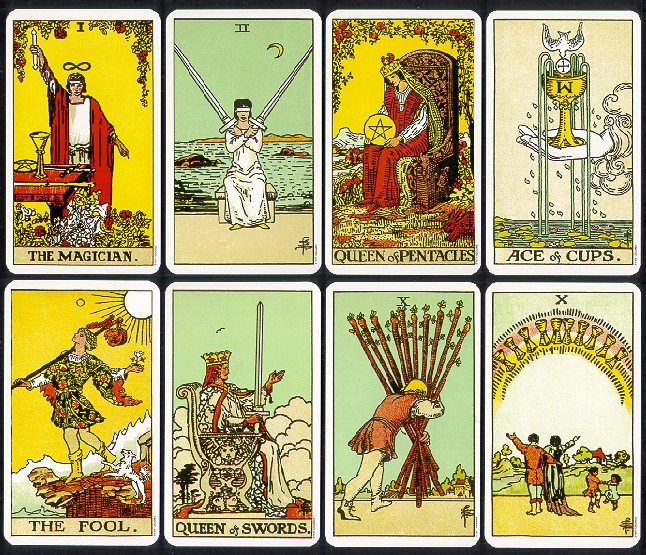
A Sense of Doubt blog post #3703 - Carl Jung and the Power of Tarot!


A Sense of Doubt blog post #3703 - Carl Jung and the Power of Tarot!

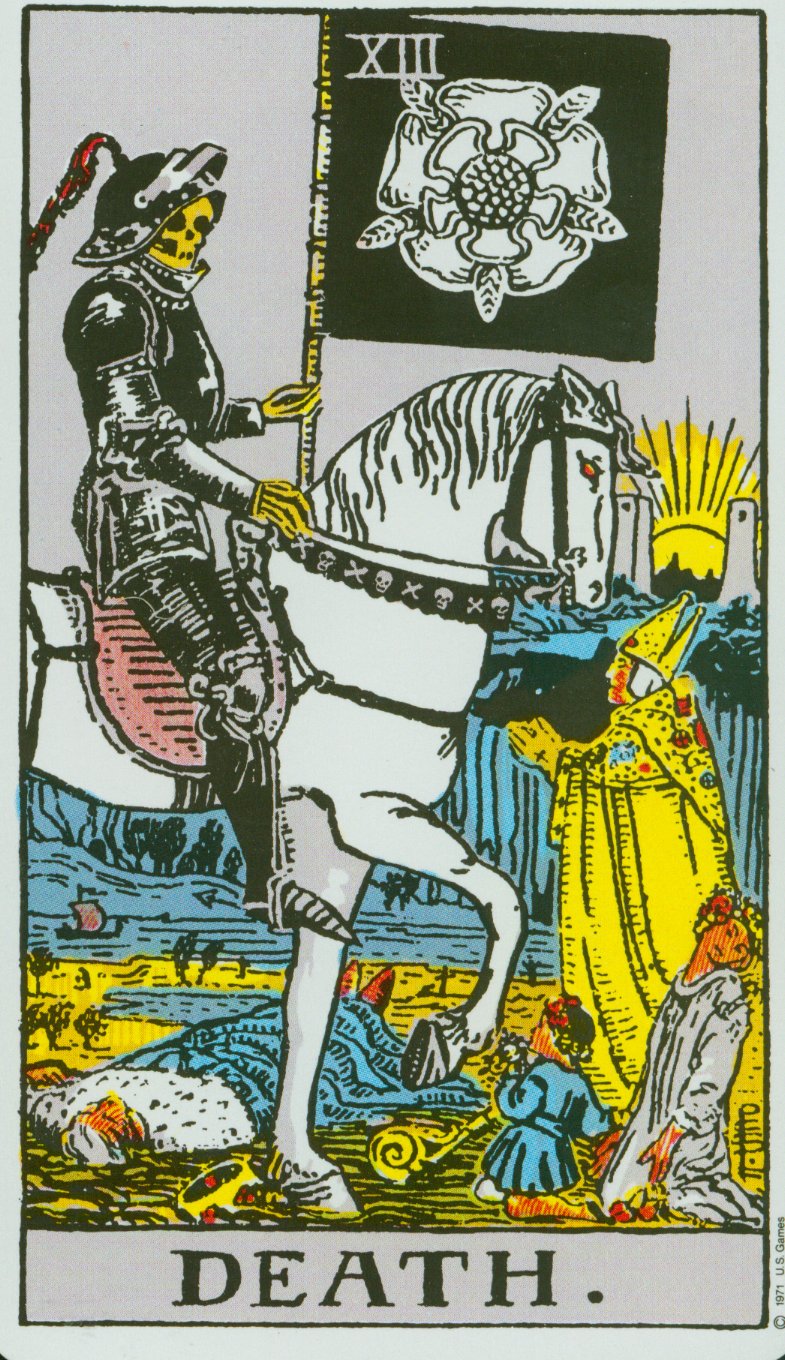
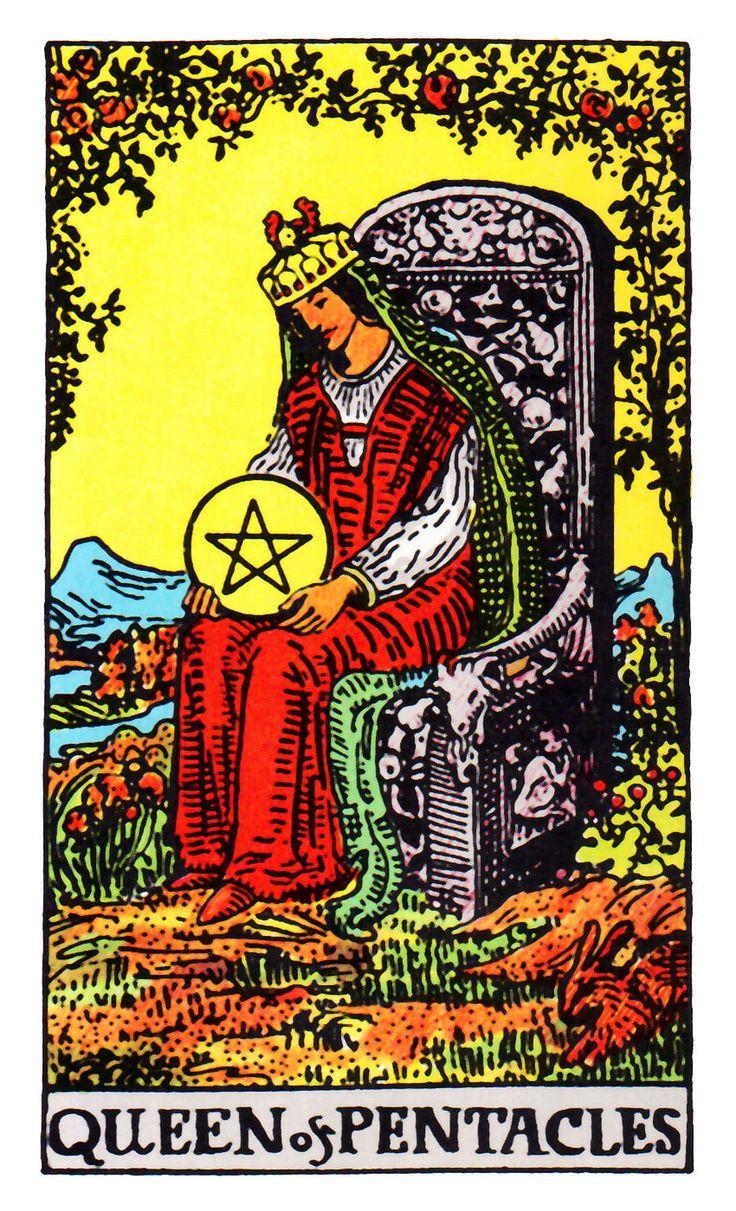
I was reminded this morning that my last name is also the name of a Tarot card..

Thus it seemed a good time to share this article.

I have so many saved articles to share that I could share one every day for the rest of the year and not empty the file containing all the links.

Lots of grad school work this week, so somewhat low power mode, though not officially.

Thanks for tuning in.


https://www.openculture.com/2023/10/carl-jung-on-the-power-of-tarot-cards.html

Carl Jung on the Power of Tarot Cards: They Provide Doorways to the Unconscious & Perhaps a Way to Predict the Future


It is generally accepted that the standard deck of playing cards we use for everything from three-card monte to high-stakes Vegas poker evolved from the Tarot. “Like our modern cards,” writes Sallie Nichols, “the Tarot deck has four suits with ten ‘pip’ or numbered cards in each…. In the Tarot deck, each suit has four ‘court’ cards: King, Queen, Jack, and Knight.” The latter figure has “mysteriously disappeared from today’s playing cards,” though examples of Knight playing cards exist in the fossil record. The modern Jack is a survival of the Page cards in the Tarot. (See examples of Tarot court cards here from the 1910 Rider-Waite deck.) The similarities between the two types of decks are significant, yet no one but adepts seems to consider using their Gin Rummy cards to tell the future.

The eminent psychiatrist Carl Jung, however, might have done so.

As Mary K. Greer explains, in a 1933 lecture Jung went on at length about his views on the Tarot, noting the late Medieval cards are “really the origin of our pack of cards, in which the red and the black symbolize the opposites, and the division of the four—clubs, spades, diamonds, and hearts—also belongs to the individual symbolism.

They are psychological images, symbols with which one plays, as the unconscious seems to play with its contents.” The cards, said Jung, “combine in certain ways, and the different combinations correspond to the playful development of mankind.” This, too, is how Tarot works—with the added dimension of “symbols, or pictures of symbolical situations.” The images—the hanged man, the tower, the sun—“are sort of archetypal ideas, of a differentiated nature.”


Thus far, Jung hasn’t said anything many orthodox Jungian psychologists would find disagreeable, but he goes even further and claims that, indeed, “we can predict the future, when we know how the present moment evolved from the past.” He called for “an intuitive method that has the purpose of understanding the flow of life, possibly even predicting future events, at all events lending itself to the reading of the conditions of the present moment.” He compared this process to the Chinese I Ching, and other such practices. As analyst Marie-Louise von Franz recounts in her book Psyche and Matter:

Jung suggested… having people engage in a divinatory procedure: throwing the I Ching, laying the Tarot cards, consulting the Mexican divination calendar, having a transit horoscope or a geometric reading done.

Content seemed to matter much less than form. Invoking the Swedenborgian doctrine of correspondences, Jung notes in his lecture, “man always felt the need of finding an access through the unconscious to the meaning of an actual condition, because there is a sort of correspondence or a likeness between the prevailing condition and the condition of the collective unconscious.”


What he aimed at through the use of divination was to accelerate the process of “individuation,” the move toward wholeness and integrity, by means of playful combinations of archetypes. As another mystical psychologist, Alejandro Jodorowsky, puts it, “the Tarot will teach you how to create a soul.” Jung perceived the Tarot, notes the blog Faena Aleph, “as an alchemical game,” which in his words, attempts “the union of opposites.” Like the I Ching, it “presents a rhythm of negative and positive, loss and gain, dark and light.”


Much later in 1960, a year before his death, Jung seemed less sanguine about Tarot and the occult, or at least downplayed their mystical, divinatory power for language more suited to the laboratory, right down to the usual complaints about staffing and funding. As he wrote in a letter about his attempts to use these methods:

Under certain conditions it is possible to experiment with archetypes, as my ‘astrological experiment’ has shown. As a matter of fact we had begun such experiments at the C. G. Jung Institute in Zurich, using the historically known intuitive, i.e., synchronistic methods (astrology, geomancy, Tarot cards, and the I Ching). But we had too few co-workers and too little means, so we could not go on and had to stop.

Later interpreters of Jung doubted that his experiments with divination as an analytical technique would pass peer review. “To do more than ‘preach to the converted,’” wrote the authors of a 1998 article published in the Journal of Parapsychology, “this experiment or any other must be done with sufficient rigor that the larger scientific community would be satisfied with all aspects of the data taking, analysis of the data, and so forth.” Or, one could simply use Jungian methods to read the Tarot, the scientific community be damned.

As in Jung’s many other creative reappropriations of mythical, alchemical, and religious symbolism, his interpretation of the Tarot inspired those with mystical leanings to undertake their own Jungian investigations into parapsychology and the occult. Inspired by Jung’s verbal descriptions of the Tarot’s major arcana, artist and mystic Robert Wang has created a Jungian Tarot deck, and an accompanying trilogy of books, The Jungian Tarot and its Archetypal Imagery, Tarot Psychology, and Perfect Tarot Divination.

You can see images of each of Wang’s cards here. His books purport to be exhaustive studies of Jung’s Tarot theory and practice, written in consultation with Jung scholars in New York and Zurich. Sallie Nichols’ Jung and Tarot: An Archetypal Journey is less voluminous and innovative—using the traditional, Pamela Coleman-Smith-illustrated, Rider-Waite deck rather than an updated original version. But for those willing to grant a relationship between systems of symbols and a collective unconscious, her book may provide some penetrating insights, if not a recipe for predicting the future.

Note: An earlier version of this post appeared on our site in 2017.

If you would like to sign up for Open Culture’s free email newsletter, please find it here. It’s a great way to see our new posts, all bundled in one email, each day.

If you would like to support the mission of Open Culture, consider making a donation to our site. It’s hard to rely 100% on ads, and your contributions will help us continue providing the best free cultural and educational materials to learners everywhere. You can contribute through PayPal, Patreon, and Venmo (@openculture). Thanks!

Related Content 

The Artistic & Mystical World of Tarot: See Decks by Salvador Dalí, Aleister Crowley, H.R. Giger & More

Carl Jung Offers an Introduction to His Psychological Thought in a 3‑Hour Interview (1957)

The Visionary Mystical Art of Carl Jung: See Illustrated Pages from The Red Book

How Carl Jung Inspired the Creation of Alcoholics Anonymous

Josh Jones is a writer and musician based in Durham, NC. Follow him at @jdmagness


+++++++++++++++++++++++++++++++++++++++++++++++++++++++++++++++++++++++
+++++++++++++++++++++++++++++++++++++++++++++++++++++++++++++++++++++++
+++++++++++++++++++++++++++++++++++++++++++++++++++++++++++++++++++++++

- Bloggery committed by chris tower - 2504.08 - 10:10

- Days ago: MOM = 3568 days ago & DAD = 223 days ago

- New note - On 1807.06, I ceased daily transmission of my Hey Mom feature after three years of daily conversations. I post Hey Mom blog entries on special occasions. I post the days since ("Days Ago") count on my blog each day, and now I have a second count for Days since my Dad died on August 28, 2024. I am now in the same time zone as Google! So, when I post at 10:10 a.m. PDT to coincide with the time of Mom's death, I am now actually posting late, so it's really 1:10 p.m. EDT. But I will continue to use the time stamp of 10:10 a.m. to remember the time of her death and sometimes 13:40 EDT for the time of Dad's death. The blog entry numbering in the title has changed to reflect total Sense of Doubt posts since I began the blog on 0705.04, which include Hey Mom posts, Daily Bowie posts, and Sense of Doubt posts. Hey Mom posts will still be numbered sequentially. New Hey Mom posts will use the same format as all the other Hey Mom posts; all other posts will feature this format seen here.