
A Sense of Doubt blog post #3765 - "A Dime in this Juke Box Fury" - "Runaround" - Rickie Lee Jones - Music Monday 2506.09
 I adore Rickie Lee Jones.
In that review, I wrote about my experience of first listening to her 1984 album The Magazine.


Love that line and how she sings it. The way she breaks up the line. She punctuates the words, hard.
"So punch it in (punch it in)
OTHER RICKIE LEE JONES POSTS

 |
| Rickie Lee Jones on SNL April 1979 |
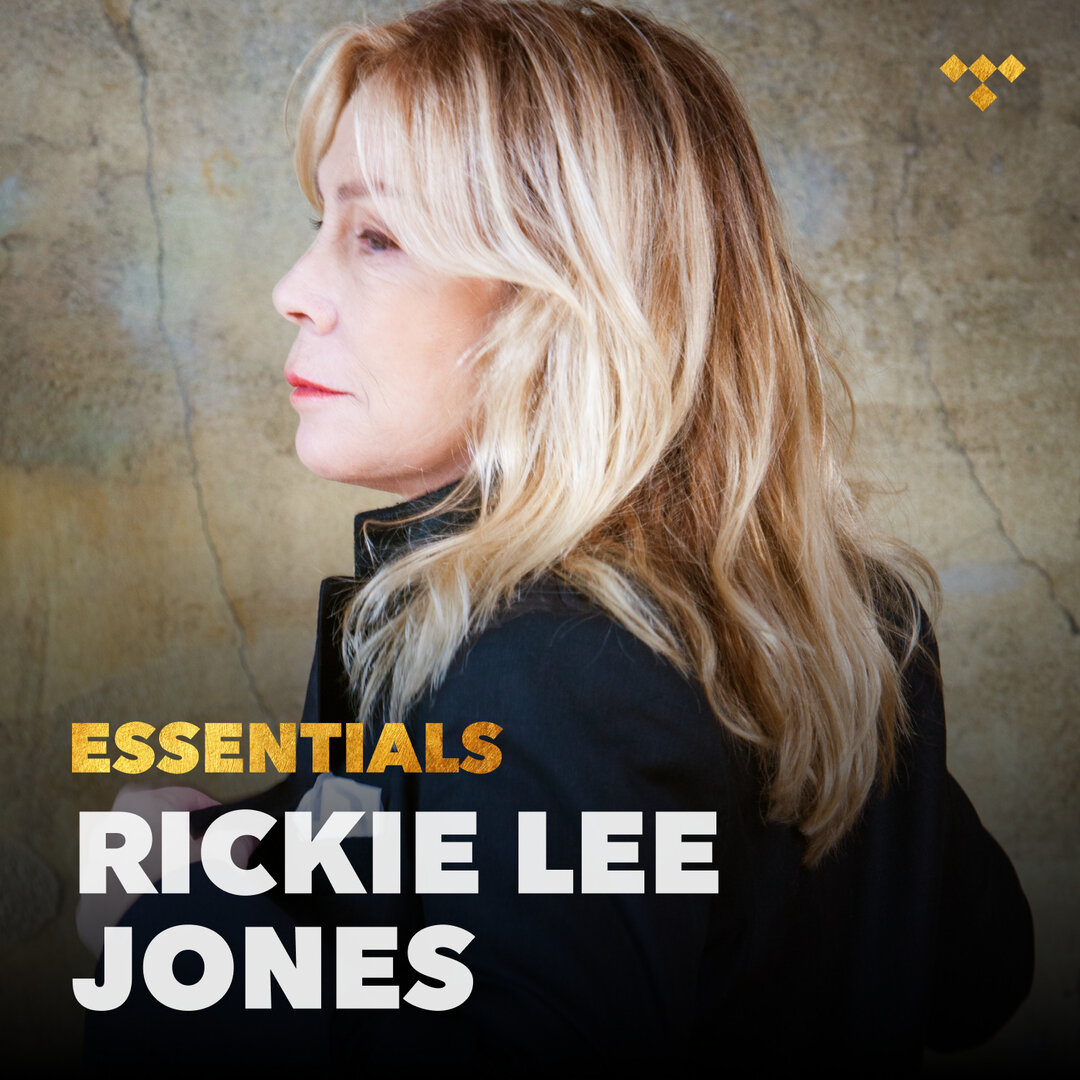
Rickie Lee Jones Interview: ‘It’s my art you like or don’t like, not me’
Mining old songs she learned as a child, the beloved singer and musician finds a new attitude on Pieces of Treasure.
by Larry BlumenfeldOver Zoom, Rickie Lee Jones explains that her daughter came up with that name, as she lets the dog into the yard so we can talk about her album Pieces of Treasure, out April 28. On the new release, Jones, now 68, sings standards from the Great American Songbook — familiar songs we’ve come to call “jazzy” but that, when Jones learned them from her dad, “were just pop songs.”
Beginning with the success of her 1979 self-titled debut, which spawned her biggest hit, “Chuck E.’s in Love,” Jones crafted her own classic songbook that formed something like a soundtrack for our lives and times. Her 2021 memoir, Last Chance Texaco: Chronicles of an American Troubadour, borrowed the title of another highlight from her debut, and revisited her life in prose as colorful as her celebrated lyrics.
Yet singing classic songs — among others, George and Ira Gershwin’s “They Can’t Take That Away From Me” and Harold Arlen and Johnny Mercer’s “One for My Baby” — offered a different sort of reflection. The experience was, she wrote in a liner note, “like meeting myself again after all these years.”
Her new release also represents a reunion with Russ Titelman, who produced her debut album and her 1981 gem Pirates. In his liner note to the new release, Titelman explained that when he first heard Jones, in 1978, he knew she was a brilliantly original singer and songwriter but also that he sensed “a real bebopper, a jazz singer.” He’d chased her for decades to make a jazz record. In late 2019, she finally relented — though she still doesn’t think of this as “jazz.” Titelman assembled an all-star cast of players. He threw in a surprise or two, like oud player Ara Dinkjian on “Nature Boy.” Jones reveled in the freeing environment. “I had only one job,” she said. “I came to sing.”
As always, she formed a deep rapport with her musicians — relaxing into the groove with vibraphonist Mike Mainieri on “Just in Time,” finding easy interplay with guitarist Russell Malone on “There Will Never Be Another You.”
We talked about where she sits now, and how she fits within the legacies of these songs.

You’ve been in New Orleans for a decade now. What holds you there?
You know, that’s a good question. I’m going to start by what doesn’t hold me, which is a lot of holes in the streets, and crime, and too many murders. Those are real problems, frustrating problems. But what I love about this place is that it has, like nowhere else, a friendliness and kindness in every person from here. Locals smile at you and everybody you pass by looks at you and says hello. Like it’s the most natural thing in the world. But in the rest of the places I’ve been, people look the other way and don’t acknowledge the person right in front of them.
Has your experience in New Orleans changed the way you consider the kind of songs you sing on this new album?
It has changed pretty much everything, so yes. And maybe it’s made me more open to certain things, like Russ’ invitation. The decision to do a record like this was his. He really wanted me to do it. My agreement, my yes, was in order to honor a friendship, and to trust somebody else’s view of what I could do musically. And to take the chair of singer instead of, you know, doing everything. Russ calls this a jazz album. Well, my relationship with jazz goes way back past the beginning of my career. I’m always sad that people are so genrefied that they feel you have to only do one genre or you’re not authentic, or you’re unwelcome.
And yet this album is about something other than that genre, jazz.
Well, my grandfather was a vaudevillian, right? So these songs that we call “jazz” were just songs. They were just pop songs. They got passed to my dad, and he taught them to me before I was 10. That’s just the music I learned around the house. Pop songs were pop songs. Andy Williams sang them, or Harry Belafonte or Sarah Vaughan. Somewhere along the way, when people got so angry about the Beatles, they went, “There’s a division between us and them, and we are no longer in pop music. We’re jazz and they’re rock and roll, and never can the two meet.”
Now, my writing is not my singing. What I’m able to write, what I’m drawn to write, is a kind of rhythm and blues. Not rhythm and blues in the New Orleans sense, but in the Motown sense. I’m comfortable expanding from that framework. But as a singer, these songs are home for me. I have strong opinions about them and I know how to sing them. I’m unaffected, straight from the heart. And I still have enough ability, even at my age, to make them swing, which someday will become hard for me. But my teachers were the greatest teachers. And that’s Ella and Sarah and Nina. Not to say that it’s just women — far from it — but those were the women that I learned from. And in my opinion, they’re still the best.
Is Billie Holiday one of those women?
Yes! Yes!
I’ve always heard more Billie Holiday in what you do than in the many singers who imitate her.
I don’t know how that happens. Really, you only have to hear a person once to take in everything about them. I agree. I think one thing about us that we do is that we’re unaffected. I don’t know. Maybe it’s an attitude, maybe it’s a point of view.
Your father, who died in 1985, seems to be a presence throughout this album. What was his relationship to your music?
That’s who I learned to sing from.
Was he a good singer?
Yes. I have some recordings. I love his singing more than some others do. My phrasing of coming in behind the beat, the conversational thing, that comes totally from my dad. He loved Frank Sinatra, but he sounded like the Mills Brothers. He could have been the fifth Mills Brother.
When you recorded these songs, was he present in some way?
I’m not sure I would say he was standing before me. But the invisible world is full of my relatives listening carefully to what I’m doing. And then I tell them, “So there it is. There’s my best.”

I was struck by the notes you wrote about these songs. You talked about Nat King Cole’s rendition of “There Will Never Be Another You” as definitive to the point of “rendering the song inert.” And that Frank Sinatra’s version of “One for My Baby” was “in the doorway, barring your entry.” It’s a challenge to confront songs we all know from famous renditions. If you had made this record 30 years ago, would you have been able to find your own way in?
I was a really different singer then, a much more dramatic singer. So the renditions I would have done would have only been looking at my own reflection. At 68 years of age, I actually am interested in other people. Now, I’m confident about what it is I do. First of all, this is a lower voice I have now. It’s a more conversational voice. I think when I was a kid, everything was about feeling. And I don’t mean to make fun of me at all. That’s just who I was.
I’m also really straight to the point now. I say and sing exactly what I think. If I die in a month, and I try to mask who I truly am so that someone will like me, then I’ve never told you the truth. So I like telling the truth now. And I’m not afraid if people like me or don’t like me. This is my art, you know? It’s my art you like or don’t like, not me. That’s how I could find my way into each song.
In considering those famous recordings and our associations with them, you made reference to “masculine posturing” and “misogynistic bullshit.” Are you locating or reclaiming a female history or voice in these songs?
Well, I think women have been guests for decades in most of American music, and especially in jazz. So it would be hard to reclaim something that I think we never really owned. I think men have a tendency to assign a crown to one female, and all others are guests. Walter Becker thought Sarah Vaughan was the only jazz singer, and placed her above all things. What I’m doing is just finding a way into a song to make it beautiful for you when you hear it, so you’ll hear something new or feel some new feelings about it. And yes, that has something to do with being a woman and recognizing the female characters in these songs and the perspectives that are sometimes absent from the way they are remembered and performed.
That seems especially true of your version of “One for My Baby.” What inspired that?
I went searching. Not only is Sinatra’s version definitive, but it’s extraordinarily beautiful. And then I stumbled onto Ida Lupino singing the song in a movie [1948’s Road House]. I saw that and went, “There’s the way in.” That’s the girl attitude. She’s a little saucy. She’s not crying in her whiskey. She’s upright. And Ida’s so funny. Even if she has a broken heart, she’s self-possessed. She shows how she feels, at least in that character in the movie. And in the scene, there’s a young waitress who says, “She’s the best person who can’t sing I ever heard,” or something like that. It spoke to another girl. And that’s what I dug. So that’s where I started.
How did it feel to rekindle your working relationship with Russ Titelman?
I guess we had unfinished business. More to do. For me to make the decision to call him and work with him again took a long time, because I didn’t want to fall into the trap of making anything sentimental. I want to go forward, always doing something new and different. Can I do that with somebody from the past? When we met again and began working, I went, “Oh my God, I feel like I’m home. I feel so good in his presence. That can’t be bad.”
And from the moment we started, the musicians were there with me every step of the way. My heart broke. I told myself, “Finally, here you are, right where you belong. All is well, and you don’t have to prove anything to anybody. And now you can just sing the very best you can sing.” It took my whole lifetime to get in a room of men who said, “We respect you and we’re happy to be playing with you.”
In your memoir, you wrote about music as a hand upon your shoulder when times were unbearable. Is your music an offering along those lines now, in these times that some people may find unbearable?
Of course it is. What we’re talking from and to are each other’s hearts and souls, whenever you hear music that moves you. You are relieved of pain for a little while. So that job never ends. That thing never goes away. You can use music as a political thing, as a manifesto, and that’s fine. I love Bob Dylan’s work, and I love that he did that. But that’s not my work. My work, as I understand it, is that I touch people’s hearts in inexplicable ways. I can sing about an ugly man or I can sing about a beautiful bird. The thing that’s really going on is what’s in our souls. That’s why I’m singing.
+++++++++++++++++++++++++++++++++++++++++++++++++++++++++++++++++++++++
+++++++++++++++++++++++++++++++++++++++++++++++++++++++++++++++++++++++
- New note - On 1807.06, I ceased daily transmission of my Hey Mom feature after three years of daily conversations. I post Hey Mom blog entries on special occasions. I post the days since ("Days Ago") count on my blog each day, and now I have a second count for Days since my Dad died on August 28, 2024. I am now in the same time zone as Google! So, when I post at 10:10 a.m. PDT to coincide with the time of Mom's death, I am now actually posting late, so it's really 1:10 p.m. EDT. But I will continue to use the time stamp of 10:10 a.m. to remember the time of her death and sometimes 13:40 EDT for the time of Dad's death. The blog entry numbering in the title has changed to reflect total Sense of Doubt posts since I began the blog on 0705.04, which include Hey Mom posts, Daily Bowie posts, and Sense of Doubt posts. Hey Mom posts will still be numbered sequentially. New Hey Mom posts will use the same format as all the other Hey Mom posts; all other posts will feature this format seen here.


No comments:
Post a Comment