 |
| Kenickie |
I have been sitting on this post for YEARS.
I assembled some content here in a tribute to '90s britpop, and I made a mix.
https://en.wikipedia.org/wiki/Britpop
https://en.wikipedia.org/wiki/List_of_Britpop_musicians
Way back in the 1900s, if we had never heard of an opening band we had virtually no way of checking them out before the show. You either got there late to miss them or watched them blindly. Either way it was a roll of the dice since you could miss out on a life changing opening (Mogwai opening for Pavement comes to mind) or sit through the worst thirty to sixty minutes of your life. When I saw that dog. at The Middle East in Cambridge back in 1997 (I think?), I got there early enough to see Kenickie. It wasn't life changing, but I came back with a band I played constantly on my college radio show for the rest of the year.
Kenickie (obviously named after the character from Grease) lasted a mere four years and put out two albums. Hailing from Sunderland, they got pumped into the Britpop genre, which is pretty fair but they also combined pop punk and power pop into their sound. Their 1997 debut album At The Club is a combination of hyper Britpop singles mixed with some more lowkey power pop/alt-rock album tracks. There's a lot of electronic experimentation going on here, which makes sense in the post-Trainspotting scene.
Listening to At The Club in 2021, it's surprising how well it holds up. The big singles, "In Your Car" and "Punka," seem a bit more dated than the rest, but that's only because all Britpop does in retrospect. The rest of the album definitely sounds like the mid-late 90's, which is when it was made, after all. It's shocking how many sounds this album encompasses. It bounces wildly between indie rock, Britpop, power pop, post-grunge, etc. from one song to another. While I consider that a huge plus, I wonder if the genre hopping turned off some listeners at the time. The crowd at The Middle East was an ultra-hipster one that didn't seem amused at a band that existed for pure fun. It's rare that I would have been the least jaded in a crowd, but I'm glad I came out of that night with a love of Kenickie.
Tuesday, 30 April 2019
Kenickie: Because Rizzo Didn't Have The Right Ring To It!
 |
The ladies of Kenickie: Emmy-Kate, Lauren, and Marie Johnny X apparently skipped this photo session |
Fuelled by several hit singles, including the maddeningly catchy "In Your Car" and "Punka," At The Club landed in the Top 10 on the UK charts. On the eve of the album's US release, Kenickie came over to play a few gigs in New York, Boston, Los Angeles, and San Francisco.
 |
| Kenickie demonstrate proper public transport etiquette (publicity photo) |
Meanwhile, bassist Emmy-Kate Montrose and drummer Johnny X grounded the performance with a steady beat.
Hanging out poolside at the Phoenix Hotel before the show, Lauren and Marie (who've known each other since they were four, seem closer than sisters, and frequently finish each other's sentences) filled us in on the Kenickie story — so far.
 |
| At The Club (EMIdisc - 1997) |
Marie: Yes. It's a city on the Northeast coast of England, near Scotland. But we've just moved to a house in Camden. We love our little house.
Teenage Kicks: From what I understand, you formed the band while you were still in school because you always wanted to be friends and didn't want to separate when you got out of school.
Marie: Well, it's true. We had left school, but we'd only just left by about a week. We all went to college to do "A" levels, but during the summer holidays, Emma was going to go to a different college than us. So, we just decided to be a band, because it's a laugh and it would mean we'd get to hang about together quite a lot.
Teenage Kicks: You went to Catholic school. What was that like? They couldn't have encouraged you artistically.
 |
| Marie & Emmy show off their home in this magazine feature |
Marie: It was hell on earth! But it's over now, so we prefer not to think about it. Don't go there.
 |
"In Your Car" picture sleeve 45 (EMIdisc - 1996) |
Marie: No, but we learned.
Teenage Kicks: How long ago was that?
Marie: Two- and a-bit years.
Teenage Kicks: It sounds like you've been playing a lot longer than that! It doesn't sound like you were groping in the dark, trying to figure out what you were doing. At The Club is a fully realized record.
Marie: Thank you. Well, we always wanted to learn, and we didn't want it to sound amateurish and stupid.
Teenage Kicks: How did you decide which instruments you wanted to play?
 |
| Kenickie illustrated as Josie and the Pussycats |
Teenage Kicks: What kind of bands did you listen to growing up?
Marie: Roxy Music, David Bowie...
Lauren: Sparks, Kylie Minogue...
Marie: Kylie Minogue — very important. Betty Boo. Did you have Betty Boo? You have to pursue Boomania, the first Betty Boo album!
Lauren: Suede, Manics...
Marie: Manics, you know, are our favorite band. They're lovely, the Manics.
 |
| Lauren Laverne & Emmy-Kate Montrose |
Lauren: We were going to do a gig with them but...
Marie: We did a TV program with them instead. They were big enough to schedule it so they could do the gig after the show. But we had to cancel the gig.
Teenage Kicks: What TV show was it?
Lauren: Jools Holland. It was a New Year's Eve spectacular, so it had a big celebrity audience. Some of our idols, like Noddy Holder, were there. Charlie Watts, Paul Weller...
 |
| Kenickie - publicity photo |
Teenage Kicks: Did you meet Noddy Holder?
 |
Kenickie on the cover of Melody Maker |
Lauren: Lauren Holder... That has a nice ring to it!
Teenage Kicks: Imagine going through his closet!
Lauren: Oh, God! Apparently, the hat was very heavy.
Marie: He used to reflect the stage lights off it, onto girls he fancied. So he could see them better!
Teenage Kicks: Is there anyone you'd really like to play with?
Marie: I'd like to have the Rolling Stones support us.
Lauren: The Rolling who? Oh, I don't like them — they eat babies!
Teenage Kicks: You put out a couple of independent singles before signing to EMI. Did you get a lot of flak for going from an indie to a major label?
 |
| Kenickie - publicity photo |
Marie: And burn 99!
Lauren: I will not sell my music!
Marie: The indie music people are all over the charts anyway. Nobody's bothered. There's a very fine line between indie and mainstream.
Teenage Kicks: How long did it take to record the album?
Lauren: Four weeks.
Marie: We took one week to do "Punka" and the B-sides because we needed a single out fast, and we didn't have anything recorded.
Lauren: We sort of record very quickly and write very quickly, as well.
 |
| "Catsuit City" EP (Slampt - 1995) |
Teenage Kicks: Is it mostly the two of you that write the songs?
Marie: Mostly. Everybody puts in a bit, though.
Teenage Kicks: You used different producers on the album. Why was that?
Lauren: We did the rocky stuff with John Cornfield, who did the first Supergrass album. But for the rest, the more personal stuff, the sad songs like "Robot Song," we got Andy [Carpenter] who's our friend. We just wanted our friend.
Teenage Kicks: How much control do you have?

Lauren: All. Complete. Total.
Marie: Everything that's on the album is on there because we want it to be.
Lauren: That was our main contractual stipulation — total artistic control.
 |
Kenickie grace the cover of the '97 Festival Guide |
Lauren: "In Your Car" sounds cheerful, but that doesn't mean the lyrics are all cheerful. It's about starting out on this very hectic "pop star lifestyle." The good times feel completely like Yeah! Yeah! Yeah! But the bad times… You feel very, very old. Like you're living out some 35-year-old's life, living on your own and worrying about money.
Teenage Kicks: The album covers a whole gamut of emotions. Some songs are happy — about clothes or going out and having fun. While other songs are sad and introspective. Which are your favorites?
Lauren: It's like children. You can't choose.
Marie: I can. I choose the brightest child who brings in the most money for Mom.
Lauren: Then I choose the crippled child, 'cause I can send him out begging!
Teenage Kicks: It seems that in England, the bands are younger...
 |
| "Punka" picture sleeve 45 (EMIdisc - 1996) |
Teenage Kicks: And you're all lumped in together and compared to each other.
Lauren: Ash basically sound like Thin Lizzy with Stevie Wonder singing. I couldn't even say what Bis sound like. But we were all teenagers when we started out, so it's an easy comparison. But George Harrison was 15 when he joined the Beatles. Pop is a teenage medium. So, I say, why shouldn't teenagers play it? ✨
Promo video for "In Your Car"

Nothing more enraging than a badly rewrit history.
Actually before we even get to that - there IS something more enraging and that’s because it’s more enraging than any other sound on earth. It’s the sound of Jo Whiley’s voice. Every time I hear it I can picture her insufferably smug expression, I can picture her grinning and nodding in agreement with another legendary bit of Noel Gallagher bants, I can her utterly revolting dismissal of Lily Allen as just a daft girl who doesn't deserve an opinion on music, I can picture her struggling with Mark E.Smith's refusal to join her in speaking the corpse-breathed corporate-spiel she thinks passes for communication - I can hear ultimately the sound of someone who perhaps kindalikes music, but who blatantly loves money and business and marketing more, someone whose indiscriminate endless sycophancy around musicians (and consequent snotty snobbery around anything that wouldn’t coincide with her grisly ‘real music played by real people’ conservatism) percolates into everything she does, everything she plays, everything she’s ever said and done in nearly three decades of co-opting the independent and ‘alternative’ into the corporate deathspiral of her soul. Who knows what Whiley thinks or feels about music? Who can recall a single thing she’s ever said about music? For Whiley, if you’re an indie band/bloke, and you’re signed/successful/willing to join her live from Maida Vale that’s all that matters, and it deserves cheerleading and applauding for the sheer effort and success in and of itself and nothing else. Her voice is the living embodiment of the word ‘iconic’, the word ‘legendary’, and the words ‘coming up, Snow Patrol live from the Livelounge’ and I will die happy knowing I will never ever have to endure hearing it emit a single simpering syllable again.
Tbh I feel nearly as enraged when I hear Lamacq’s whiney drawl n’all (. . yes yes I know Lamacq is by official consent a ‘nice bloke’ and a ‘music fan’ and so immune to critique. We’ve got enough fucking ‘nice blokes’ running the show if you ask me . . .) The vague line in that Guardian piece is that Whiley was some kind of honourable descendent of Annie Nightingale, and Lamacq/Whiley’s Evening Sessions were like a Janice Long for the 90s, a more-easily-digestible preliminary to the Peel show that followed them every night. This is patently, for listeners who weren’t middle-class & spoonfed-lazy, a nonsense. Many of us STOPPED listening to the evening show PRECISELY when Lamacq/Whiley took over because where with Janice (and on a Sunday night, with Annie) we felt we were in the company of someone properly funny, properly loveable, and properly a pop fan, friends and compadres in our lonely rooms , with Lamacq & Whiley we felt we were being condescended to less like a family or a community and firmly like a demarcated demographic who shared the hosts’ snotty indie-superiority about pop, happy to surrender the notional idea of an independent musical culture to big business, laddishness, commercial consensus, to firmly buy into Morrissey-esque ideas of blackpop’s artifice and whiterock’s realness. Whiley & Lamacq, contrary to Peel’s genuine openness and range, presented a horribly withered be-denimmed endless 90s version of Disco Demolition Night; appalled by what was actually thrillingly going on in music in the 90s they presented a deoderised three hours of jingly jangly Kings Reach Tower-sanctioned dullness as if it was a head-wrecking face-fucking sonic revolution and set in stone the decades of empty blustery hype around suffocating mediocrity that has long-since passed for music ‘coverage’. I think we can hold them both accountable for the career of Zane Lowe and if for nothing else, they should be shackled in the Tower for that alone.


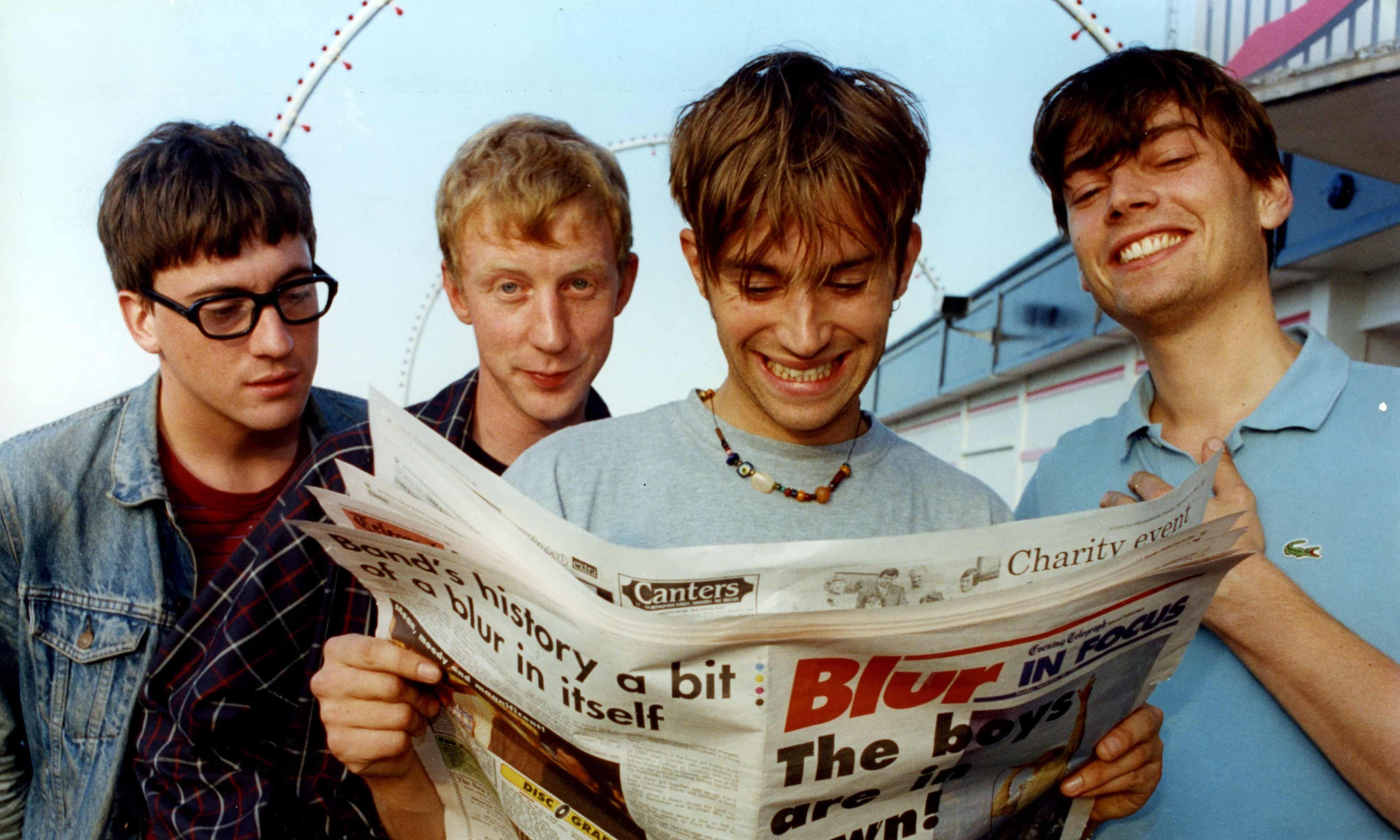
Episode 1 - Cliche/Lie #1 - We needed Britpop as a necessary corrective to the music scene in 1992/1993, as a rebuttal of Grunge, and as a celebratory counteractive to the 92 election result.
Did we fuck. That utter bullshit line that in some way we needed some return of British ‘wit’ and ‘camp’ as a rejoinder to Grunge’s overwhelming gruffness and authenticity is an absolute crock - Grunge was at its best, an absolutely inauthentic yet thrilling confection of 70s excess, 80s post-hardcore and pop nous. It weren’t all fucking Pearl Jam, and if you couldn’t enjoy Alice In Chains/ Tad/ Soundgarden/ Mudhoney as pop, I’d suggest you weren’t really listening and that’s even IF you’re dimwitted enough to buy that reductive headline-lazy bullshit about Grunge being the only US rock we were immersed in. It’s still NEVER been satisfactorily explained to me why every NME vision of ‘Britpop’ (ugh, that name, coined one suspects by the same kind of people who’d proudly call themselves a ‘Brit’) seemed to only include white blokes in guitar bands and not ALL the british pop music being made, from ALL sides of the racial/class tracks, that was utterly thrilling in 93. If I wanted to hear something resistant to the UK regime at the time I had deepest darkest techno and jungle and Asian rap music and Riot Grrrl and a whole lot of music whose answer to the horrific present was to confront and call it out, rather than click its heels together and pasquinade itself back to some mythical 60s idyll when all was well and 'guitar music’ was king. If I was listening to Origin Unknown, Insides, Orbital, Hyper On Experience, Rufige Kru, Stereolab, Pulp, Pram, DJ Crystl in 93 was I not listening to British pop? And if I listened to Flaming Lips, Grant Lee Buffalo, Liz Phair, Madder Rose, Monster Magnet, Labradford, Tool, Girls Against Boys, Mazzy Star, Afghan Whigs in 93 was I listening to ‘grunge’? Reductive histories can always answer back - well we’re just covering THIS scene, we’re just talking about THESE bands who happen to be the most ‘popular’. But why is always the same scenes, and always the same people who get to decide what was ‘happening’? Why aren’t those other stories being told? I say if a cultural history has to be so reductive to even be coherent, has to deliberately obscure and eliminate so much just to tell its narrative, that’s a cultural history not worth telling, and perhaps a cultural history only useful to those DJs, writers and self-appointed cultural curators who were too lazy and narrow minded to really apprehend what was going on. Fuck Britpop (and by extension fuck the idea of ‘grunge’) as some kind of musical Brexit/MAGA from 93’s more diverse realities on BOTH sides of the pond. They are myths and stories told by the reactionary, for the reactionary.
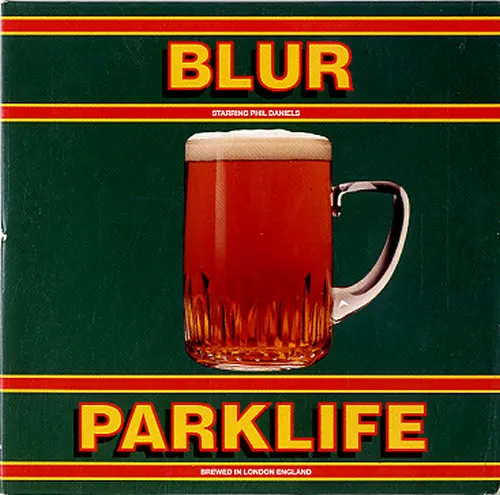
Episode 2 - Cliche/Lie #2 The success of Parklife meant some kind of massive change in pop music.
Did it fuck. The single that no-less an authority than cultural vandal Mark Sutherland called ‘the barmiest pop single ever’ peaked at number 10 in the UK charts. A record approximately two billion times better - Baby D’s ‘Let Me Be Your Fantasy’ got to number one for two weeks and deserves roughly two billion times the column inches that ‘Parklife’ got and gets. Difference being, the people who write about pop were being jazz-hands-cunts at indie bops to Parklife in 94 and were doubtless hugely snotty about the likes of Baby D and Whigfield as ‘not proper music’, smarmily superior to fans of those songs as being townies & chavs. The charts were dominated that year, like they were through all the years supposedly ‘claimed’ by Britpop’s anschluss by the usual mix of boy-bands, dance tracks, reggae and hip hop and unshiftable commercial juggernauts by Celine Dion & Wet Wet Wet. What did ‘Parklife’ actually change? It merely proved that novelty records will always sell. All it’s ever been. Don’t be fooled - it was a novelty minor-hit in a lineage that includes the far superior ‘A Little Bit Of Toast’ and ‘What Are We Going To Get for Er Indoors’. As with the similarly execrable ‘Boys & Girls’ and ‘Country House’, Blur are at their absolute worst when sneering.
"Who wants to be an Indie Noise-Freak, alienating everybody?" - Damon Albarn

Episode 3 - Cliche/Lie#3 - How the ‘youthquake’ of Britpop infected the entirety of UK culture.
Get to fuck. Britpop’s tiresome yet undeniable ‘prominence’ in the cultural landscape was always massively out of proportion with its actual popularity among the populace. Music mags need chippiness and gobbiness and all those old fashioned things that bands can provide, and pop television had long been so terrified of dance-culture’s oddity and deliberate anonymity it was happy (check the appalling Ric Blaxill era of TOTP) to find these entirely traditional, conventional and conservative reiterations of previous pop highpoints amenable to shows like The Word and TFIFridays (although weren’t Huggy Bear and Royal Trux and Throwing Muses all sooooo much better at latenight PopTV than the dreary drongs of Britpop?) Scuffed up simulacras of ‘attitude’ are always gonna play well among the middle class ex-punk writers and producers who generated 90s broadcast media cuntent because it meant NOT having to deal with the genuinely innovative new shapes pop was creating at the time, shapes thrown by those determinedly excluded by the media’s usual class/race/gender/Londoncentric barriers. The fact that Britpop is a culture that could benefit and be fronted by a jumped-up Butlins-redcoat giggling misogynist cunt like Chris Evans should be a stain of SHAME upon it, not a badge of pride. No Britpop TV appearance was as thrilling as Altern-8 on TOTP. And every Britpop appearance on TV was uncannily similar to THIS (you know what this is before you even click on it).

Episode 4 - Cliche/Lie#4 How the ‘women of Britpop’ fought lad culture.
Oh come the fuck on. I’ll never forget ALL THOSE front covers for Bikini Kill and Le Tigre and Missy Elliot in the Britpop era of the music press? Who can forget how jungle and drum and bass - a scene that gave women far more space and safety than any guitar-rock scene - were played so heavily on the Evening Session and featured so heavily in the NME? Throughout this series, Lamacq & Whiley continually wanna have it both ways - they’re telling us they were there, they were part of things, they were riding this crest, this return of a nebulous Britishness to pop culture but they somehow manage to sidestep how it’s precisely the conventional and mainstream nature of that culture that OF COURSE lets good old sexism and good old racism run rampant in terms of the expectations and place of marginalised people within that culture. Somehow - in eight laborious episodes - they manage to step away from the scene of THEIR crimes. Whiley can recant all she likes, she and Lamacq tacitly approved of lad culture and that video of her patronising Lily Allen (see above) is hugely revealing I think of her attitude towards types of ‘women in music’. This episode is pure deception. The outright blatant sexism of so much Britpop and laddishness is barely attacked. It’s glossed over.
Episode 5 - Cliche/Lie#5 How Pulp became the definitive Britpop band
FUCK RIGHT OFF. Pulp were not Britpop, never were (and nor were Super Furries or Supergrass) and it was precisely their neat - and dignified - sidestep of the Britpop era’s flag-shagging cretinism that made them so compelling. In an era draped in the flag, at a time where independence was being turned into a orthodoxy, Pulp were too good not to occasionally take over the mainstream they provided such withering counterpoint to. In an age when the dumb and clever-clever were being propounded as our only alternatives, Pulp were about real street-level intelligence and guile and survival and they gave us songs that spoke like we did about the messes we got ourselves in without any jazz-hands smarm or monkey-walk lairyness. They delineated our first loves, our lingering decay, our furies and our freakouts and our dance-steps, the cuts of our jib and our clothes, helped us to know we weren't alone standing off to one side, scowling on the stairs, waiting moodily for their songs at the edge of Britpop's dancefloor, conquering it every time 'Lipgloss' hit. Their songs were so much better than anything else, so naturally, effortlessly, breathtakingly superior in sound and word and stance. Going to see Pulp was a political act, an act of bravery and courage in a sea of rock & roll gestures and retrograde rearranging. Absolutey FUCK ALL to do wtih Britpop. I stand Pulp records next to Baby D, not Blur.
Episode 6 - Cliche/Lie#6 How We all cared about the ‘battle of Britpop’ Oh Yes We Did
Oh no we fucking didn’t. We really really fucking didn’t. Christ can you imagine feeling involved in that storm in a shitcup even one tiny iota? Fuck me the HOLLOWNESS inside, I genuinely cannot imagine. Don’t forget that Damien fucking Hirst video. Yeah ‘irony’ i guess. ‘Dolly birds’. Fucking hell.

Episode 7 - Cliche/Lie#7How Britpop Became Corrupted by Big Business,
It always was purely business ya pricks. John Harris hates my writing so I should probably hate his but I can’t deny his statement about what made those early Suede singles - which I love btw - the first Britpop singles is pretty much definitive. ‘Audacious, successful and very very British’. Note the Britishness that is acceptable to Harris - very very white, arch, camp, easy for pop hacks to write about and link to a lineage of previous highs. Note also how ‘audacious’ really isn’t the word, it would have been remarkable if Suede hadn’t have hit big. But crucially note that word ‘successful’. Britpop was always defined by its success, until it gained success it couldn’t be counted as Britpop. Pulp according to this formulation could only be blessed with the soubriquet of Britpop once they’d ‘made it’. Britpop was the first movement in independent music entirely dependent/defined by sales figures and visibility, the first indie movement guided and galvanised and blessed only by its amenability to commerce. Its commercial triumphalism was a deliberate rejection of 80s miserablism and underground obscurity. It claimed for itself the twin triumphs of commercial success AND the snotty sense of superiority to other music that gained commercial success. Harris’ definition is a really telling and revealing one I think because, beyond the commerce, beyond the marketing, what exactly was there to ‘Britpop’? Fuck all, despite its delusional myths since about Cool Britainnia, about ‘Wonderwall’ fucking winning the 97 election or something, about a ‘power’ it apparently had which utterly vanishes if you look for a single second anywhere beyond the piecharts and ABCs and Rajars and chart-returns of pure commerce. And yet here’s Whiley & Lamacq talking about Parlophone and Creation and those labels getting ‘corrupted’ by commercialism? Fucking hell. Britpop always depended on business to hold itself together because if success is removed from the Britpop equation what you’re left with is merely a deliberately myopic and retrograde exclusion of vast swathes of British existence, a Morriseyesque Farage-esque repulsion to non-white British identity. That success variable obscured and continues to obscure the more problematic aspects of Harris’ definition. Britpop was always strictly business. If it wasn’t it would’ve gone the same way as the Scene That Celebrates Itself and the New Wave Of New Wave and the Camden Lurch.
Episode 8 - Cliche/Lie #8 - Britpop’s Legacy
Nigh on non-existent and where it does maintain an influence, hugely damaging. From Britpop onwards the only game in mainstream UK indie music has been revivalism. An endlessly dwindling revivalism. Britpop set up that holding pattern, that final fatal severing of white guitar music from the future. Let’s pretend, lets allow rock to become all muscle memory and technique, lets make music that makes the likes of Lamacq & Whiley feel comfortable. And you can fucking bet that over these eight episodes of monstrous hagiography they sound SUPREMELY comfortable.
Far be it from me to fuck with someone’s fictions, we all have our own that get us through. But the fiction of Britpop perpetuated by Lamacq & Whiley, the idea that somehow it was something we were all signed up to to, that somehow seeing the fucking Bluetones on TOTP felt like a fucking ‘victory’ - those kinds of fiction sell the 90, one of the most exciting times for music ever, incredibly short, sells many bands roped into Britpop’s fiction extremely short as well, and crucially it stems from the kind of reductive underestimation of audiences then and audiences now that can only wither and cripple any sense of real cultural insight. It encourages a deadening, deadened idea that culture can only pivot around its most commercial moments, and that those marginalised and excluded from those cultural stories DESERVE to be marginalised because hey they’re losers who couldn’t write ‘Don’t Look Back In Anger’. Britpop is a hateful myth, celebratory of all that’s actually worst about British pop, and it should be destroyed, torn down, every chance we get. Take your fucking butchers apron away from pop. There was SO MUCH MORE than this. Britpop, like Lamacq & Whiley who boosted it, were the worst of their time. Never forget it.

Mad fer it! The young musicians flying the flag for Britpop
or some, Britpop was a high point for British guitar music: that time when Blur, Pulp, Suede and Oasis thrilled the world with wit and brio. Others argue it has aged worse than Loaded magazine: blokey, beery, conservative and still clogging up the charts. Indeed, there’s perhaps something a bit dismal about the fact that James and Shed Seven have both had No 1 albums in 2024.
Nevertheless, a crop of young artists are turning to the energy and iconography of mid-90s Britain for inspiration. The jungle artist Nia Archives, 24, wears a dazzling union jack on her teeth for the cover of her debut album, Silence Is Loud. “No one’s really making Britpop at the moment,” she told the Face in February, “but I have a feeling 2024 is gonna be the year.” Dua Lipa has said she was “looking through the music history of psychedelia, trip-hop and Britpop” while making her new album, Radical Optimism, adding that Britpop “has always felt so confidently optimistic to me, and that honesty and attitude is a feeling I took into my recording sessions” – although you’d be pushed to notice the influence on the new singles she has released so far.
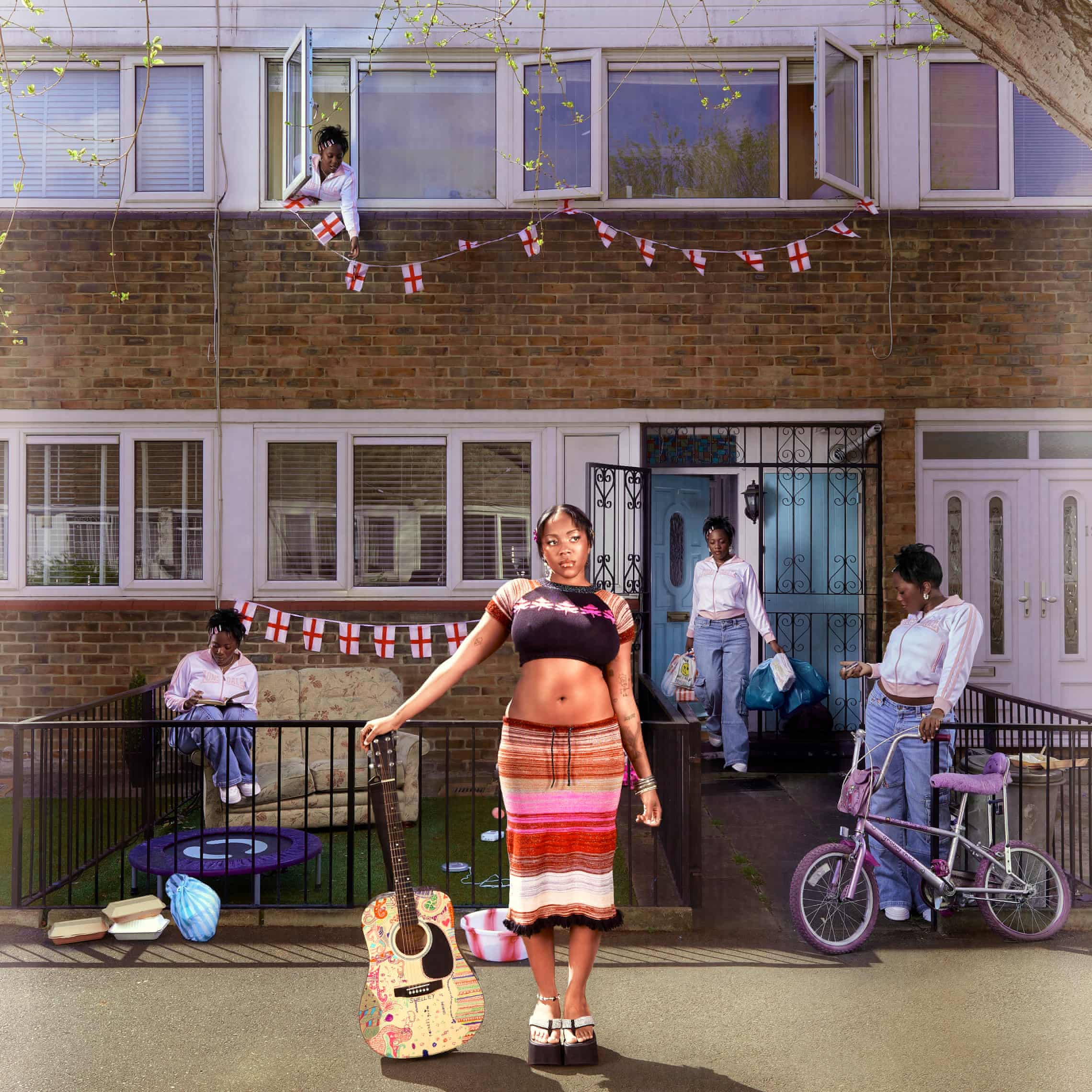
AG Cook, once head of the avant-pop collective PC Music, turns “Britpop” into a hooky slogan on his triple album of the same name – Charli XCX hypnotically chants it on the title track, while the cover is a warped pink and green remix of the union jack. Then there’s the songwriter Rachel Chinouriri, 25, whose cover for the album What a Devastating Turn of Events is very Britpop, with its picture of a council estate festooned with St George’s Cross bunting. Is this just another rotation of the nostalgia cycle, or can these artists help recontextualise what Britpop was – and is?
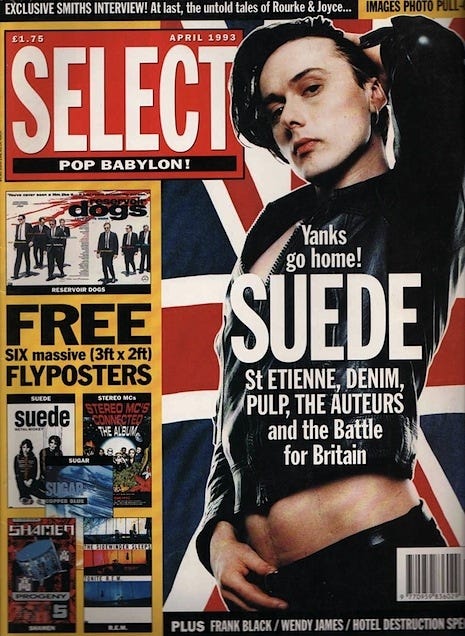
The BBC 6 Music presenter Stuart Maconie is credited with coining the term in a 1993 feature for Select magazine’s Yanks Go Home! edition. It described a hyperspecific period when a wave of bands arrived with a similar eccentric British sensibility, seeming like an antidote to US grunge.
“I would always distinguish Britpop from what we call Cool Britannia,” he says. “The burgeoning economic climate, Tony Blair – that becomes bullish and slightly swaggery. Then you get the Spice Girls, you get Oasis, you get all the frankly horrible stuff associated with Britpop – the laddishness, the replica football shirts. One is outsider, it’s underground, it’s witty, it’s enigmatic, it’s poetic, it’s sexy in a very un-thrusting way. The latter is football, beer, Three Lions.”
But over time, the distinction between Britpop and Cool Britannia has become lost. “What we think of as Britpop wasn’t what it was like,” says Kieron Gillen, co-creator of the Britpop-influenced comic book series Phonogram. “It was much wider. Especially early on, it was more female, queer, late-1970s. Later, it was more male, straight, 1960s and leaden.” Gillen based Phonogram on “the frustration of ‘I was fucking there!’” – a time when most people’s tastes were much broader than lads with guitars. “I was obsessed with everything that happened in music. Everyone went down to the Good Mixer” – the Britpop scene pub in Camden. “Everyone liked jungle records.”
Though jungle was also an upsurge of new British music, which happened at pretty much the same time as the explosion of guitar bands, it wasn’t part of the Britpop conversation. Nia Archives connects the dots on her debut record, which pairs jungle with songwriting inspired by the Beatles, Blur and Oasis. “Jungle was the punk of dance music – it’s rebellious. It’s also Black British music,” she says. “I liked the loose link from jungle to Britpop. In the 90s, you’d have the Gallagher brothers hanging out with Goldie and Björk.” Noel Gallagher and Goldie also collaborated on a record, Temper Temper, though it isn’t exactly a highlight of either’s catalogue. “That mismatch of people, like David Bowie going to the Blue Note on a Sunday night in Hoxton” – for the influential jungle club night Metalheadz – “I love that culture.” So what does Britpop mean to her? Like Lipa, she says “it’s a feeling of optimism. When listening to Britpop, there’s a feeling of togetherness.”
While displaying the union jack and England flags caused unease among some music fans in the mid-90s (Noel Gallagher brandished the former on his guitar), today the flags are perhaps even more heavily politicised thanks to Brexit and the rise of popular nationalism. “I have a different connection with the union jack as opposed to the St George’s Cross,” Nia Archives says. Growing up in Bradford in the early 2000s she saw it co-opted by the far-right English Defence League. “That to me is where I associate that flag.”
Chinouriri, however, decided to use the St George’s Cross as an act of reclamation. “For Black people and POC, that flag’s not something people are proud of,” she says, adding that some people around her discouraged her from using it on her album cover. But on her single The Hills, Chinouriri sings about rediscovering her British identity after feeling lonely during a period spent in Los Angeles. “No matter the trauma I’ve had from being raised in the UK, being Black British and being the only Black person in my neighbourhood, it’s made me the person who I am,” she says. “There is a culture within being Black British that is distinct and strong, and harbours creativity.” Using the flag is “a celebration – taking back this thing and saying: you can’t get rid of me”.
AG Cook also drew on Britpop during a period of isolation. He spent lockdown in rural Montana with his girlfriend, where he was the only British person in town. Britpop became a way of discussing his personal and national identity. “What justified using ‘Britpop’ on my record is the word being so loaded,” he says. “That’s a lot of fuel to mess with. Pop is already something that people can’t agree on. It reminds me of the confusion of: what is Britain? What is a Brit? The British Isles, United Kingdom, England – people arguing about boundaries and about genre.”
Cook recast the union jack in pink and green to give it “an alternative universe quality”, but he isn’t worried about backlash. “My audience is different to the audience watching the back of the England shirt,” he jokes about the recent controversy around Nike’s revamp of the St George’s Cross on the new England football kit.
Still, he sees value in artists claiming the flag for themselves. “Now we have this spectre of populist nationalist thinking, interesting musicians are using it in another way; maybe it declaws it from just being one interpretation.”
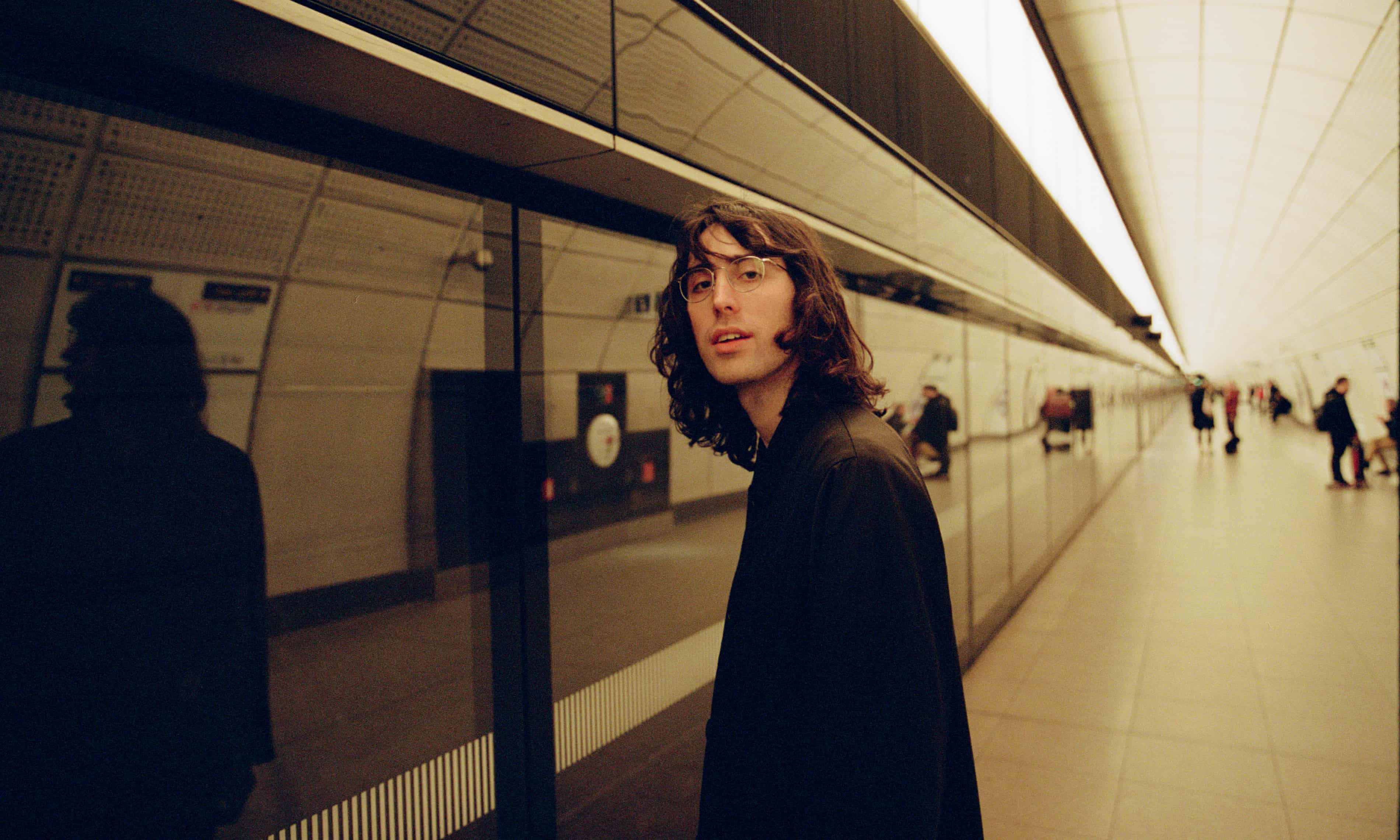
Cook also points to the fracturing of pop culture since the advent of the internet as another reason that Britpop is a reference. “We live in a completely different media to the one 90s Britpop was responding to,” he says. “Even if a lot of those bands weren’t on the same page, they would be on the same front pages. Once you’ve got this broken up mainstream and everyone’s existing in these subcultures, anything you can do to latch on to something more universal” – such as Britpop – “is very useful. It creates an interesting dialogue between artists.”
It’s clear that bands who once defined the monocultural mainstream sit differently in today’s broader culture – just look at the nonplussed reaction of gen Z to Blur’s 2024 Coachella set – and the very notion of Britpop is becoming broader again, too. With their diverse perspectives and hopeful songwriting, this new wave of artists is moving Britpop away from its association with laddism and jingoism, and closer to the original anything-goes feeling.
“History is a long game – you can absolutely redefine an alternative history of Britpop,” says Gillen. “If it’s popular enough, history changes. That’s the magic of pop music.”


No comments:
Post a Comment