
A Sense of Doubt blog post #4063 - Letter to Dad #29 - BE LIKE WATER
Hi Big Guy (Dad),
I am feeling almost 100% today though still a little affected.
Yesterday, I quoted "be like water" for an assignment in school, and so I looked up all the times I wrote about that on this blog (four times), and I decided to share these posts with you, Big Guy.
Write at you next week.
THE FOUR ORIGINAL BLOG POSTS REPRINTED BELOW:

 |
| 1973? 1974? Appropriate for today's subject - us all aswim in water |
Hi Mom,
BE LIKE WATER - FLOW.
Liesel posted a link from this Facebook page devoted to C.G. Jung while at the same time I was working on adding to this re-post of content from my T-shirt blog about Jung. I am preparing to talk to my students about Jung today, and so I pulled out this post as a way to refresh my memory, reacquaint myself with Jungian ideas and how I like to relate Jung to the stories of Winnie the Pooh as a way to clarify archetypes for others.
But when I saw Liesel's post and discovered that someone had a Carl Jung page on Facebook, I followed through the links to find the site linked below, THE CENTRE FOR APPLIED JUNG STUDIES in Johannesburg, South Africa, and then, also, a guide to archetypes and basics of Jungian thought that one can apply to receive as a PDF. It's a great document. A very well done primer of Jungian ideology.
APPLIED JUNG
GET THE APPLIED GUIDE
Since I posted this entry (update 1604.06), I found the C.G. Jung Institute of CHICAGO, which is a lot closer for me than South Africa (though it would be cool to go to South Africa for Jung work). So I just wanted to add this note here if only for my personal use, later, Mom.
And then this post... it was one of the most recent posts, and it resonated with me because of you, Mom. My conscious psyche is wrestling with this concept, but according to Jung, my unconscious psyche simply believes.

I am gearing for some more Jung reading.
This makes me think of my Jungian mentors (Mark Thompson and Stephanie Gauper) both of whom are my Facebook friends. I owe both a debt of gratitude for putting me on the path as a lifelong Jungian. Also, I owe Elaine Klein for our many conversations about Jung during our years at K-College. But most of all, big THANKS to my wife Liesel who shares my interest in Jung and is keen to explore more as we both move along through the Process of Individuation.
I am struck by the coincidence -- IE. Synchronicity -- of my thoughts turning to Jung at the same time that her (Liesel's) thoughts turned to Jung. We did not discuss it at all.
This is SYNCHRONICITY because we're strongly connected, she and I.
AS can be heard in the following VIDEO: "It may prove to be that psyche and matter are the same phenomenon. One observed from within and one from without... Jung put forward a new term, Synchronicity, a meaningful coincidence of outer and inner events that are not themselves casually connected. The emphasis relies on the word 'meaningful.'"

One of the better links from the APPLIED JUNG site.
A critical analysis of Jung’s contribution to depth psychology of the Collective Unconscious and its value for psychotherapy.
- This is a copy of public lecture delivered to Psyche at the University of Pretoria 9 September 2015.

Just one more video...
Here's my original T-shirt link with the content to follow. There's pictures of me teaching Jung at the University of Phoenix.
T-SHIRT #250 - WINNIE THE POOH, TEACHING, AND JUNGIAN THOUGHT
+++++++++++++++++++++++++++++++++++++++++++++++++++++++++++++++++++++++
+++++++++++++++++++++++++++++++++++++++++++++++++++++++++++++++++++++++
+++++++++++++++++++++++++++++++++++++++++++++++++++++++++++++++++++++++
.jpg) - On Jungian Thought, Poohism, and Teaching
- On Jungian Thought, Poohism, and TeachingI started this entry back in July, and it's been sitting on my computer ever since. This is why I am in shorts in the pictures.
I love Winnie the Pooh. Disney Pooh. Milne Pooh. Doesn't matter.
I love POOH.
I did discuss this affection some in T-shirt #166.
I feel that Today is somewhat of a milestone as the number 250 has some significance.
 So, today, I wish to share a few thoughts on intersections between Jungian thought, Tao te Ching, and Winnie the Pooh.
Somewhat coincidentally but also by design (teleology?), I am teaching the power point in my mythology class tonight that I am shown teaching in these photos.
If you have not read The Tao of Pooh by Benjamin Hoff, and you have any interest in either Tao te Ching, Winnie the Pooh, or both, then I recommend you read it immediately.
A free PDF version is available FROM THIS LINK.
Today, I wish to share thoughts punctuated by a series of photographs that comprise some of my favorite ideas in the whole world.
The best reaction to all situations is LOVE. But it is so hard to function this way.
It is so much easier to judge and to be angry, frustrated, annoyed, to give into one's stress.
But I keep trying.
If this statement about love as the right reaction to the universe makes you think of "Love is the Answer," then check the video I posted in T-shirt #166.

.jpg) When I started this entry back in July, this woing toToday,he start text: Apparently, some of my students check this blog to see what I am doing. I really am working when I say I am working. Honest. For the last two days, I have worked on the blog throughout the day because I need to get to work and keep making progress with the work or I will not meet the deadline. The blog can be like a black hole. If I start working on it with the intention to finish it, I can easily get sucked into another universe, and once I emerge, I have not completed nearly enough work.
When I started this entry back in July, this woing toToday,he start text: Apparently, some of my students check this blog to see what I am doing. I really am working when I say I am working. Honest. For the last two days, I have worked on the blog throughout the day because I need to get to work and keep making progress with the work or I will not meet the deadline. The blog can be like a black hole. If I start working on it with the intention to finish it, I can easily get sucked into another universe, and once I emerge, I have not completed nearly enough work.Things have not changed much since July. I work many hours. I work on the blog off and on throughout the day in an attempt to multi-task, though by nature I am not a multi-tasker.
The blog CAN be like a black hole.
I continue to experiment with how to better manage my time.


Jung came up with the idea of the Collective Unconscious to explain his idea of archetypes. He had no other explanation for the recurring predisposition toward images and image patterns by people with no communication with one another, with cultures that did not have interaction with one another.
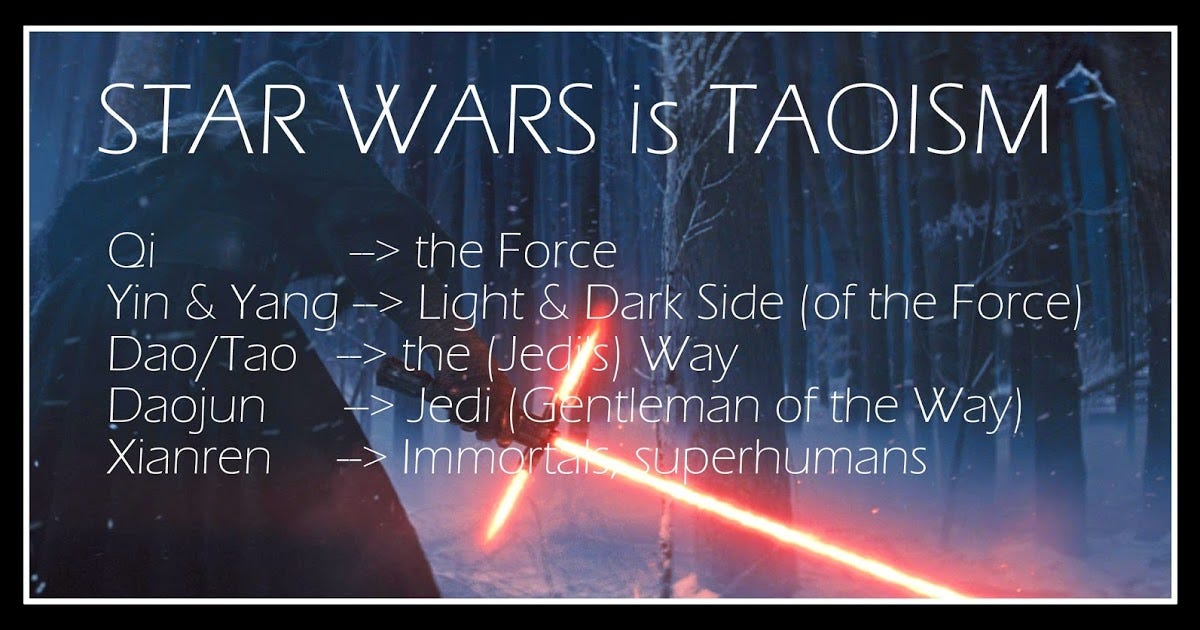
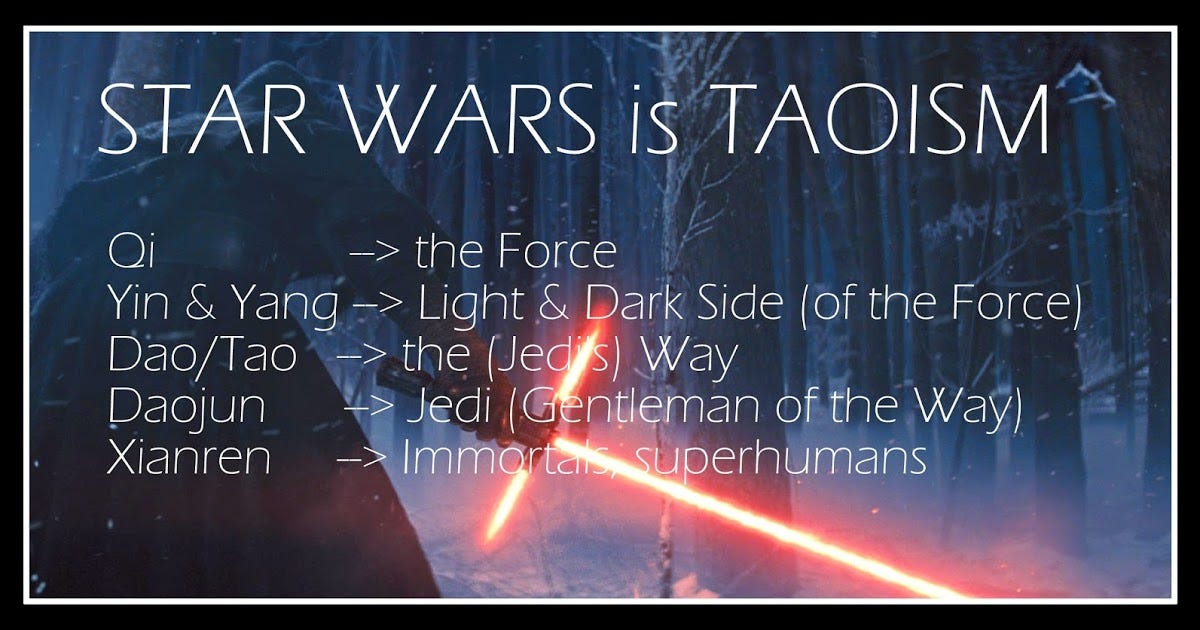
George Lucas adapted Jung's Collective Unconscious as the Force in the Star Wars movies.
I like both versions of these ideas.
I believe firmly in the interconnectedness of people and things, of the universe.
WE ARE ALL CONNECTED.
.jpg)
MAGIC SOUND FABRIC - WE ARE ALL CONNECTED
Can we tap into another realm of consciousness with the Collective Unconscious? Through the interconnected fabric of consciousness, can we see the thoughts of others? Can we experience prophecies of the future? Or are the prophecies an overlap? The echoes of other consciousnesses?
.jpg)
ARCHETYPE: an archetype is not an image. It's a pre-disposition to an image. It's a projection of content into an imagined form. It's filled by our consciousness.
.jpg)
Archetypes are "universal, archaic patterns and images that derive from the collective unconscious and are the psychic counterpart of instinct. They are autonomous and hidden forms which are transformed once they enter consciousness and are given particular expression by individuals and their cultures. Being unconscious, the existence of archetypes can only be deduced indirectly by examining behavior, images, art, myths, religions, or dreams. They are inherited potentials which are actualized when they enter consciousness as images or manifest in behavior on interaction with the outside world.

"Strictly speaking, Jungian archetypes refer to nuclear underlying forms or the archetypes-as-such from which emerge images and motifs such as the mother, the child, the trickster and the flood amongst others. It is history, culture and personal context that shape these manifest representations giving them their specific content. These images and motifs are more precisely called archetypal images. However it is common for the term archetype to be used interchangeably to refer to both archetypes-as-such and archetypal images" (Jungian Archetypes, Wikipedia, 2013).
.jpg)
The image of Horus is purposeful in the power point as is my inclusion of the Eye of Horus here on the blog.
The Collective Unconscious and its archetypes must be taken on faith. There is no proving their existence through epistemology.
But we can see it working. We can set forth its workings, set forth the evidence and prove its existence like we would prove anything in a court of law. We can observe it to work and presume how it works and why it woeks, much like we feel we understand the migration of birds. Instinct drives us. Instinct drives birds. Instinct and the Collective Unconscious are one.
.jpg)
Study of Jung branches off from the standard story-type archetypes, such as child hero, wise old man, or trickster, and informs the archetypes of a man's feminine side (Anima), a woman's masculine side (Animus), and the dark side in us all (the Shadow).
.jpg)
But these "archetypes" do not exist independently of us. We fill them with content from consciousness. We project them onto actual people or actual images in the actual world. The archetype is the pattern, the similarity between different people's dark sides, different child heroes in different stories. But they are all different because we are all different, because different stories are different.
We must remember this.
We must make our own myths.
Everyone has the same questions. What is the meaning of life? What is after death? And everyone must find his or her own answers or live with the uncertainty. But people do not like uncertainty. People like certainty. People do not like long quests. People like short trips and then packing away what is over and done with. But the world, the process of individuation to become a self, is not a short trip.
It's a long trip.
What a long and strange trip it has been and will be.
But we must all make our own journey and find our own answers in what Jung called THE PROCESS OF INDIVIDUATION.
Individuation[edit]
.jpg)
Jungian school [edit]
I have been compelled, in my investigations into the structure of the unconscious, to make a conceptual distinction between soul and psyche. By psyche, I understand the totality of all psychic processes, conscious as well as unconscious. By soul, on the other hand, I understand a clearly demarcated functional complex that can best be described as a "personality". (Jung, 1971: Def. 48 par. 797)
[The translation of the German word Seele presents almost insuperable difficulties on account of the lack of a single English equivalent and because it combines the two words "psyche" and "soul" in a way not altogether familiar to the English reader. For this reason some comment by the Editors will not be out of place.]
[In previous translations, and in this one as well, psyche– for which Jung in the German original uses either Psyche or Seele– has been used with reference to the totality of all psychic processes (cf. Jung, Psychological Types, Def. 48); i.e., it is a comprehensive term. Soul, on the other hand, as used in the technical terminology of analytical psychology, is more restricted in meaning and refers to a "function complex" or partial personality and never to the whole psyche. It is often applied specifically to "anima" and "animus"; e.g., in this connection it is used in the composite word "soul-image" (Seelenbild). This conception of the soul is more primitive than the Christian one with which the reader is likely to be more familiar. In its Christian context it refers to "the transcendental energy in man" and "the spiritual part of man considered in its moral aspect or in relation to God." . . . –Editors.] (Jung, 1968: note 2 par. 9)
PSYCHE WIKIPEDIA 2013
.jpg)
So the goal of Psyche, the word Jung used for "all the psychic processes," in other words, the person, the personality, the self under development, is to find wholeness, balance, to realize the self, the center wholeness in us all.
The self is the end product, the balanced, whole, transformed, transcendent being.
The Buddha.
The gestalt of ultimate apotheosis.
All spirit. One with God.
All of which brings my content sharing to the subject of Winnie the Pooh.
.jpg)
The Winnie the Pooh stories are consciousness at work, the Process of Individuation at work.
The One Hundred Acre woods is the unconscious. Christopher Robin is the psyche under development to become a self. All the characters and elements of his unconscious are the parts of his psyche that must be brought into balance to emerge as a whole and unified self.
.jpg)
Perhaps Pooh is the end result.
Pooh just is.
Pooh is totally a right-brained being.
We are all much too left brained in our society with its rules and prisons.
We all should be more like Pooh.
.jpg)
Pooh is the UNCARVED BLOCK.
The Taoist idea of the Uncarved Block is called P'u. Much like "Pooh."
Coincidence or proof of the Collective Unconscious?
"Things in their original simplicity contain their own natural power, power that is easily spoiled and lost when simplicity is changed" (Hoff, pg. 10).
The secret of the Uncarved Block? LIFE IS FUN.
Pooh proves that the Pooh Way is the true way when lost in the woods with Rabbit. Rabbit is very left brained. Pooh is not. Pooh finds home when he stops looking for it. It's this counter-intuitive thinking that is endemic of the Uncarved Block.
Just be.
Let the natural forces of the universe guide you.
Be like water.
FLOW.
.jpg)
The Greatest Good is like water... Lao Tzu, Tao Te Ching

from wikipedia;
Lao Tzu, aka Laozi and many others, was a philosopher of ancient China and is a central figure in Taoism or Daoism. Lao Tzu literally means "Old Master." He is revered simply as a wise man in philosophical forms of Taoism, but revered as a god in religious forms, much like The Buddha is regarded differently by the religious and philosophical schools of Buddhism. According to Chinese tradition, Lao Tzu lived in the 6th century BC and is traditionally regarded as the author of the Daodejing (Tao Te Ching), though its authorship has been debated throughout history.
The above is my own translation of his teaching on water being the greatest good. No, I don't speak any form of Chinese, but from going over many other different interpretations, I believe this is what Lao Tzu was saying;
that we all should strive to be ourselves, without ego getting in the way, to mix among all walks of life both rich and poor, both good and bad (whatever that means) and in between. And that by truly being ourselves, we'll actually be helping everyone around us without even trying (sort of like Forrest Gump.) Perhaps by losing the ego and letting go, we'll allow Spirit to work through us, thus being like the Tao or The Way.
I also believe if you read between the lines in the teachings of Jesus Christ, you'll find a lot of similar themes. Some scholars argue that Jesus appears to have studied Buddhism during his "missing years" between the ages of 20 and 30. Wouldn't surprise me one bit.
.jpg)
I am of the Pooh way.
The way is of Pooh.
.jpg)
That's a wrap.
Thank you for checking out my blog today. I am here every day, at least for another 115 days.
COUNTDOWN TO THE END OF THE BLOG YEAR - 115 shirts remaining
- chris tower - 1311.26 - 13:52
+++++++++++++++++++++++++++++++++++++++++++++++++++++++++++++++++++++++
+++++++++++++++++++++++++++++++++++++++++++++++++++++++++++++++++++++++
+++++++++++++++++++++++++++++++++++++++++++++++++++++++++++++++++++++++
Talk to you tomorrow, Mom.
- Days ago = 273 days ago
- Bloggery committed by chris tower - 1604.03 - 10:10
+++++++++++++++++++++++++++++++++++++++++++++++++++++++++++++++++++++++
+++++++++++++++++++++++++++++++++++++++++++++++++++++++++++++++++++++++

Hey, Mom! Talking to My Mother #940 - Erykah Badu - Empathy
Hi Mom,
As you know, I am a huge fan of Erykah Badu.
So when I spotted this interview via EW that was published on VULTURE, I knew I was going to re-publish it to my blog.
Badu is stirring up some controversy with her empathy, claiming that she can see good in everyone, even Adolf Hitler.
I find this a great point to make to challenge people's strong feelings that lead them to be very closed off. Hitler is an extreme example. Though he might not have been the worst of the Nazi regime, he was the leader and one could argue that many of the atrocities committed by the Nazis may not have occurred without Hitler.
And yet, was he 100% consummate evil with no goodness or redeeming qualities?
This argument is not meant to exonerate or forgive Hitler for what he did. He is one of the greatest villains in all of history. For the Holocaust alone, he deserves no forgiveness and no compassion.
And yet, if one is going to make the argument that there's goodness in everyone, that statement would include Hitler.
And that statement is going to upset a lot of people. And it should.
Yet, I do not want to be so closed off to possibility that I cannot see the argument Badu is making.
So, here's a quote from the following:
"I’m an observer who can see good things and bad things. If you say something good about someone, people think it means that you’ve chosen a side. But I don’t choose sides. I see all sides simultaneously."
People are afraid that acknowledging anything good about someone who committed such great evils condones those evils.
I hate absolutes. So I can acknowledge the good things about someone like Hitler as an intellectual exercise (he was a brilliant orator and he achieved a regime that was and still is unmatched) without losing my abhorrence for the atrocities he committed.
Other situations get stickier.
Badu mentions Bill Cosby, who is someone so many of us admired, and now is forever tarnished because of the horrible sexual assaults he committed. But do those crimes negate my enjoyment of his comedy albums, Fat Albert, and/or the Cosby Show? They affect my enjoyment. I will never look at them the same way, but those were good things. Cosby is a great comedian and performer and had a huge impact on our culture.
Likewise, when I learned that Orson Scott Card opposed gay marriage because of his religion, others chose to boycott, to stop reading, to boycott the Ender's Game film. But I have invested many years in reading his work, and I have enjoyed the Ender series and all its off shoots immensely. Do I need to give that up because I just found out that I strongly disagree with his religious convictions? After all, the convictions existed before I found out about them, and surely, I like the art of other people whose opinions I would not share. Given that Card has committed no crimes, and actually tries to not be hateful or vicious in how he professes his views on the subject, continuing to support his work is easier and more benign than the seeing the good in Cosby or Hitler.
But all these examples bring up the issue of whether art can be separated from artist.
I believe it can.
And once again, Erykah Badu is leading the way for me down a dark path carrying a bright and shining lantern of light.
This is a great interview.
Thanks, Erykah. You inspire me.
ORIGINAL LINK: http://www.vulture.com/2018/01/erykah-badu-in-conversation.html

If it’s anything, it’s that I understand where young people are coming from. I don’t try and fight it. What’s interesting to me about music and the younger generation is that what we hear on the radio is more about frequency and sound than words. People talk about “mumble rapA style from the warrens of SoundCloud featuring young rappers with somewhat unintelligible verses, hooks repeated into infinity, blown-out beats, and a willingness to try anything — stylistically and pharmaceutically. Influenced by trap and emo, well-known practitioners include Lil Yachty, Lil Pump, and the late Lil Peep.,” but that’s because they don’t understand that the important thing is the vibration, not the words. The kids need vibrations, because their attention span is about three seconds.
I think so.
You named a hip-hop artist and hip-hop is the people. Hip-hop is not separate from the people. It goes to where the people go, and part of what moves people is vibration. People pray for that kind of movement, they pray for a Kendrick. Kendrick getting his thoughts out plays a big role in other people’s thoughts. That thinking becomes a collective thing, something that comes out of a need, and that exchange is a vibration, too.
As much as the people have changed. We’re in such a different place. My son, SevenThe son of Badu and André 3000, Seven Sirius Benjamin is a college student and producer, who has a credit on “What’s Yo Phone Number / Telephone (Ghost of Screw Mix)” from Badu’s last mixtape, 2015’s But You Caint Use My Phone. Seven showed his mom how to use Apple’s GarageBand software., is 19. I’m seeing him evolve into this creature that I never thought I could create. Without even trying, he’s an improvement on his father’s design. His thinking. His logic. His compassion. It’s an evolutionary cycle. People acted out in new ways when rock and roll first came out, and the blues, and bebop. Here’s how I think of it: My favorite cartoon is The Flintstones. It’s the funniest thing to me. But when my children are sitting with me trying to watch it, the whole frequency is too slow for them. Everything has sped up and recalibrated; the children are vibrating faster. They’re way ahead of us. That’s how hip-hop has changed.
You can’t roll a joint on the cover of a digital download.
I’m listening to new things I’ve recorded — seeing if they might lead to bigger ideas. I’m also listening to D.R.A.M. and Lil Uzi Vert. All new stuff because of Seven. XXXTentacionJahseh Onfroy, the 20-year-old mumble rapper behind hits “Jocelyn Flores” and “Look at Me!,” is currently under house arrest, facing up to 30 years in prison for charges including aggravated battery of a pregnant woman, domestic battery by strangulation, false imprisonment, and witness-tampering. is another one.
I would never suggest that I have the popular opinion on this. Because I don’t.
It takes me back to a story my grandmother told me about Jesus and Barabbas. Jesus is standing on one side, Barabbas is standing on the other side, and the people have to choose which one of them could go free. Some people started yelling, “Barabbas! Barabbas! Barabbas!” Then so many people were doing that that the others found safety in numbers, and they also started yelling, “Barabbas! Barabbas! Barabbas!” People walked up who didn’t even know what was going on and they also started yelling for Barabbas to go free. I always think about that. It’s so important to me.
That I don’t want to get scared into not thinking for myself. I weigh everything. Even what you just asked me, I would have to really think about it and know the facts in each of those situations before I made a judgment. Because I love Bill Cosby, and I love what he’s done for the world. But if he’s sick, why would I be angry with him? The people who got hurt, I feel so bad for them. I want them to feel better, too. But sick people do evil things; hurt people hurt people. I know I could be crucified for saying that, because I’m supposed to be on the purple team or the green team. I’m not trying to rebel against what everybody’s saying, but maybe I want to measure it. Somebody will call me and ask me to come to a march because such and such got shot. In that situation I want to know what really happened. I’m not going to jump up and go march just because I’m green and the person who got shot is green. The rush to get mad doesn’t make sense to me.
People can be bad for certain things. They could be bad around children. They could be bad with power. Are those people all “bad”? Could be. Maybe they need to get kicked off the planet. I don’t know. Each thing is individual. There aren’t rules for how we can or should think about something. We don’t have to believe everything we’re hearing. At least I don’t think we do. I’m glad I don’t watch this stuff.
Everything. I read the description of an empath and I think I fit the description pretty well. It’s about absorbing people’s feelings.
You can ask me anything.
Absolutely. But I never made a statement about Louis Farrakhan — ever. What you’re talking about happened in Palestine. At the time, the working title of my album was Saviours’ Day — which is a holiday for the Nation of Islam but also my birthday. So I’d gone to PalestineIn a press conference prior to a 2008 show in Tel Aviv, Badu expressed solidarity with Palestinian rappers who use hip-hop as a “form of liberation,” and defended Louis Farrakhan, the Nation of Islam leader, Million Man March leader, and alleged anti-Semite.
He is “not an anti-Semite,” said Badu. “He loves all people.”and journalists asked me, “Do you believe in Louis Farrakhan? Do you follow him?” Sure I do. I’ll follow anyone who has positive aspects. He single-handedly changed half of the Nation of Islam to clean eating, clean living, caring for their families. He has flaws — like any man — but I’m not responsible for that. I said I’ve appreciated what he’s done for a lot of black Americans. I mean, I’m not Muslim, I’m not Christian, I’m not anything; I’m an observer who can see good things and bad things. If you say something good about someone, people think it means that you’ve chosen a side. But I don’t choose sides. I see all sides simultaneously.
We’re not, and I’m okay with that. I’m also okay with anything I had to say about Louis Farrakhan. But I’m not an anti-Semitic person. I don’t even know what anti-Semitic was before I was called it. I’m a humanist. I see good in everybody. I saw something good in Hitler.
Yeah, I did. Hitler was a wonderful painter.
Okay, he was a terrible painter. Poor thing. He had a terrible childhood. That means that when I’m looking at my daughter, MarsBadu’s daughter with enigmatic rapper Jay Electronica. She also has another daughter, Puma, with the West Coast rapper the D.O.C., I could imagine her being in someone else’s home and being treated so poorly, and what that could spawn. I see things like that. I guess it’s just the Pisces in me.
Maybe so. It doesn’t test my limits — I can see this clearly. I don’t care if the whole group says something, I’m going to be honest. I know I don’t have the most popular opinion sometimes.
Why can’t I say what I’m saying? Because he did such terrible things?
You asked me a question. I could’ve chosen not to answer. I don’t walk around thinking about Hitler or Louis Farrakhan. But I understand what you’re saying: “Why would you want to risk fueling hateful thinking?” I have a platform, and I would never want to hurt people. I would never do that. I would never even imagine doing that. I would never even want a group of white men who believe that the Confederate flag is worth saving to feel bad. That’s not how I operate.
You got that Pisces in you, that two-fish.
I thought so. So am I. One fish is swimming upstream, one’s swimming downstream. We are all living in a cognitive-dissonance reality. We want to live a certain way or do a certain thing, and we don’t because we are emotionally attached to how the group thinks. The hive mentality takes over. But you know what’s right in your mind and your heart, and if you’re strong enough to detach from the hive then sometimes, just sometimes, you may be able to do the right thing.
Back in Catholic school in DallasBadu’s family goes back five generations in Dallas, and she still lives there, near White Rock Lake in northeast Dallas.. I was raised Baptist, but I went to Catholic school because it was better than the public school where I grew up. When I was there I thought it was odd that we didn’t question what we were doing. What is this “blood of the lamb”? What does this mean? And whenever I would ask questions, I would either get manufactured answers or get in trouble for asking questions. I just thought I was not fit for society.
I guess at the time I discovered psychology in high school. I came across a sociologist named Irving JanisBorn in 1918, Yale psychologist Irving Janis is known for his theory of groupthink, a social psychological occurence where the decision-making process of groups degrades due to a desire to reach harmony. From a 1971 article in Psychology Today: “The advantages of having decisions made by groups are often lost because of powerful psychological pressures that arise when the members work closely together, share the same set of values and, above all, face a crisis situation that puts everyone under intense stress.”.
Yeah. Coming across his work, I realized what was happening to the other people and wasn’t necessarily happening to me. That’s when I said, “Okay, I am a part of this, but a different part.”
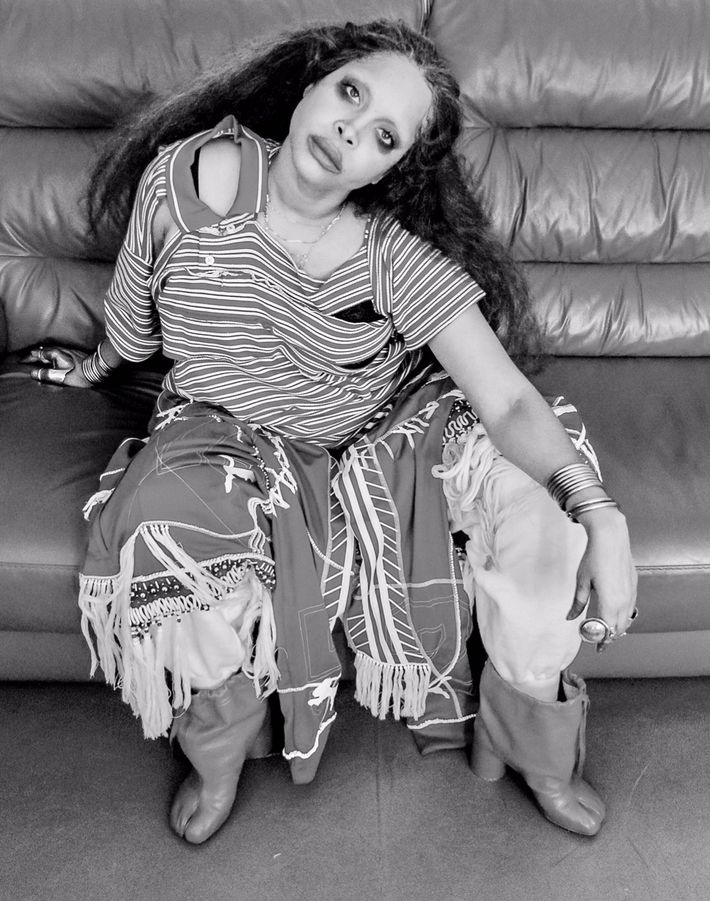
The Erykah Badu legendThough she’s typically fairly private about her personal life, Badu has had high-profile relationships with André Benjamin, Jay Electronica, Common, and the D.O.C. There’s a theory floating around that a Badu fling will alter a rapper’s style during their time together, making them a bit more mystic in their outlook, more outlandish in their clothing choices. “The Badu box is real,” said Common, in 2014. Badu has said that, “I learned just as much from them as they learned from me.”.
I take advantage of it. It’s a good thing if people think I’m supposed to be some mystical creature that controls people’s minds.
I keep the prestige going. I keep up the idea that I’m mystical. The thing about this legend is, I get blamed if rappers do good or do bad — people think these rappers get all confused by my presence.
That I take rappers to the sunken placeOn the off-chance you aren’t aware, this is a Get Out reference. The Sunken Place is the purgatory that black people are doomed to when the villainous white family in Get Out steals their bodies.. I don’t think that’s what I do. I hope it’s not.
It’s all part of the same thing. In both ways — whether it comes from men or women — some people talk about me like I’m a sex goddess, a magical creature, a unicorn. Those things are part of how people perceive me. I never think of it as derogatory. Even when there is an element of sexism to it I find it all hilarious. It means you’re powerful — in a loving way.
You know what’s funny? I’m thinking about music, but it’s all about tuning forks, singing bowls, bells, drums. I went to South Africa and recorded drums from Soweto, from Johannesburg, just gathering sounds. That’s what I’m interested in right now — sound vibration. If I put out another project, it’ll be like that. Maybe I’m humming or primal wailing or tribal moaning. You know, I haven’t written anything in five yearsThough she did release a mixtape in 2015, But You Caint Use My Phone. Influenced by Drake and the Weeknd, Badu’s self-described “Trap & B” mix was a hit with critics and a popular audience, reaching No. 14 on the Billboard 200..
That’s right. If I’m not inspired to write, I don’t. Whether it’s me as a singer or a dancer or a writer or a painter or a filmmaker or on Instagram or a mixtape, everything I do is coming out of a real need. I think Joni Mitchell is the one who said that singing, laughing, and crying come up out of the same need: to get stuff out. I just haven’t had anything to say. I can’t really force it. If I did, what I’d be saying wouldn’t be coming from an honest place. Or maybe I’ve said all the things I feel like saying.
They haven’t. I feel the most like me when I perform. That’s why I do it so much — never had a vacation. No matter what’s going on in my life or the world, performing feels new every time, and I can get to where I need to be to have a good show every single night.
It’s about becoming a living, breathing organism with the people. And it always happens. I never have a bad show.
I don’t want to speak for those people. I know all of them, and there are individual circumstances for why each of them were quiet in different moments.
When you say unfulfilled potential, wouldn’t that have to be determined by the person? Whose fulfillment are we talking about?
D’Angelo did what he came to do. He never had to make another record. Lauryn continues to make music. I don’t think she’s putting it out, but she’s always recording. I think we have something in common, us neo-soulThe term, coined by the manager of D’Angelo and Erykah Badu, refers to a strain of music that arose in the ‘90s and which fused soul and hip-hop. The essential texts include, among others, Baduizm, D’Angelo’s Brown Sugar and Voodoo, Maxwell’s Urban Hang Suite, and The Miseducation of Lauryn Hill. musicians, and that’s honesty. Making music hurts, or it feels good, and we do it when we have to. And sometimes we don’t.
Life happens. Shit happens. Family members die. Your relationship gets fucked up. Your record label does some shit. Lauryn has five children. There are so many different circumstances why someone might not make music. It is selfish of you to want more from those people, and that’s fine. Everybody has their own shit.
I don’t have no shit right now, and I’m so fucking happy about it. I don’t have a lot of needs, so maybe that’s why I don’t have any shit.
That conflict makes sense, because change is hard. The culture is changing and people are resisting that. The world is sick of the old shit. The people are sick of being angry. They’re sick of hate. They’re sick of color. They’re sick of race. They’re sick of age. But you’re always going to have people who are resistant to progress. People have such a hard time being uncomfy for a minute.
They talk with me about it. They say the typical little girl things like “Trump’s a mean man and he wants to send my friends back to Mexico.” We don’t elaborate any more than that, because that’s all that they need to be preoccupied with right now. But I’m not a political chick at all. I’m macrocosmic in lieu of microcosmic. I see a whole big picture. I see freedom for the slaves and the slave masters. For everybody. We’re just emerging into a new state of being altogether, and the anger now is about people scared of that change. What I’m talking about is BaduizmBadu coined the term for her debut album, the 1997 triple-platinum, Grammy-winner that made her a leading voice in neo-soul., and I see Trump as part of the resistance to that.
The way I see things.
I’ve learned so many things since then. I’ve changed in a way that involves elimination for the sake of evolution. There’s less emphasis on trying to figure things out. It’s about letting things be. I’m focusing on listening to the silence underneath everything. That’s what I try to connect with. I can listen to the silence right here, right now while we’re talking, and it feels so good. I’m in love with the silence.
The thing about Trump is that he’s a bad guy to the point where it looks manufactured. Are we playing games here? He can’t really be that bad. I’m not a conspiracy theorist at all — I don’t give a shit about that stuff — but it looks like Trump’s just trying to spark division. It looks like a game. Why are we being toyed with?
We can’t help but to engage. There’s no way I can live without engaging and doing service for others. I’m a doula. I’m a health practitioner and a Reiki master. These things come easy to me.
Yeah.
Serendipity. It’s always easy to find someone pregnant that needs me. It just happens, you know? I met one lady I worked with at a restaurant. I’ve assisted births at home, at birthing centers, at a hospital, in the woods. It all depends on the person and their story. Like Bruce Lee says, you have to be like water, and fit in any container. I also sit at the bedside of people who are dying. So I do the opposite of birth work — it’s beings coming in and beings going out.
Depends on the person. Some want to listen to Richard Pryor. Some want to listen to gospel. Some want to talk. Some want to cry. Some haven’t seen their children in a long time; I’ll go find those children and let them know what’s going on. Whatever service is needed, that’s what I’ll do. I just want people to be at peace.
I lead with my emotions, my feelings, and my thoughts — I like to describe that as spirit. When I’m meeting people, it’s about the spirit first. I think in the Hindu religion it’s called Namaste: the divine in me recognizes the divine in you. No matter what our background was or what we were programmed to think or what our egos want us to believe about each other, there’s something about looking in someone’s eyes and connecting with them, their struggle, their whole shit — that’s what I want to do. That’s spiritual to me.
I’ve never had a manager, and it’s so I could be as lazy as I want and procrastinate whenever I want. I also want to be able to live outside of the music business. If I want to take off a year and raise my child, or pace myself in some other way, I can do it without having to explain it to anyone. And I’ve been blessed with organizational skills. I’m always late, though.
[Laughs] I know. I’m sorry. When it comes to my business, though, I’m very organized. I just want to be able to do things without guilt. I used to operate out of guilt.
When I first got a record deal, I felt guilty that I was able to do certain things that the people I grew up with were not able to do. It was no fun going back home to Dallas and driving a new car. It was always a heavy, nervous feeling all over my body when I’d come home, feeling like I’d be judged by the people in town if I was seen as flaunting my success. Or people would expect you to do something for them, or think you weren’t doing enough. Oh, you know what? I spun out of that when I went to Cuba, illegally, in 2000.
That trip was the trip where I left behind the big headwrap I used to wear. I got a story about that. Want to hear it?
I was dating Common. After André [Benjamin] and I split, Common and I fused into a couple in some kind of way. And he took me to Cuba. He said he wanted me to get a Santería reading there.
[Laughs] That line works! I was into Candomblé back then too. And La Regla de IfáSantería, or La Regla de Ifá, is a religious bricolage of Yoruba, Christian, and indigenous American beliefs; it is practiced throughout the African diaspora in the Caribbean, though the United States has around 20,000 practitioners. Candomblé is an Afro-Brazilian religion merging Catholicism, West African religious tradition, and indigenous American beliefs, with about 2 million followers in the Americas.Badu coined the term for her debut album, the 1997 triple-platinum, Grammy-winner that made her a leading voice in neo-soul.. That kind of thing was so exciting to me. And at that time, I was wearing all white, with a towering white headwrap — I thought that if people saw white, it would attract great energy. So Common took me to Cuba, and we went to meet an interpreter named Pablo who led us to where the Santería reading was. And we got there and were waiting in line on the curb with everyone else who was there for a reading. On my right was this man smoking a cigar, and he had on the dirtiest Pumas I had ever seen in my life. On my left was a man who had on the tightest white shorts — you could see his nuts. I was okay with that. I wasn’t okay with those two passing a cigarette back and forth over the white shit I was wearing. But we were in Cuba, and it was their home, so I went with it. Finally, this short little lady in a long yellow dress came out and said it was my turn.
So she brought me into a little room in a house with no ceiling. I was kneeling on the floor and she was washing my headwrap; it was a ritual, to soften my spirit. Pablo was explaining everything to me. Then a girl came in, without knocking, and reached over me to grab something off a clothesline. And I’m thinking, This reading is a dream for me, and people are just coming in like that? So we kept going, and then the man with the Pumas came in and was just standing there with a beer. And I’m like, Wait a minute, this is not what I had in mind. And Pablo turns to me and says, “He’s the priest.” Then I changed. I didn’t need the headwrap anymore.
In that moment, I realized that you don’t have to meet anyone else’s expectations. You don’t have to conform to anything other than who you are. The guy in the Pumas came from a long line of healers, and he didn’t have to look like one to be one.
I don’t. Maybe it was something like “Don’t get with Common.”
One of my children was asking me, “Mom, when we die, do we come back?” And I said, “I don’t know. But that sounds good.” “Do we choose the people we want to be with when we come back?” I said, “I don’t know. But maybe we do.” She said, “Well, when I die, I’m going to choose to be with you again.” It was easy tears. It made me think that all that matters is how she sees me. But, I’m sorry, did I offend you in any way earlier when you thought I was defending anti-Semitism?
“Is she about to get in here and Black Power me to death?”
Okay, I could tell.
Just, you got a whole Jewish thing.
It is. A sexy JewishWriter’s note: Badu is a very generous soul. thing.
Oh good. That makes me happy.
And I wasn’t trying to put you in one. I was so surprised when I read that people thought I’d said something anti-Semitic. I went to Palestine because I cared about the Palestinian children, and I was there doing work for them. Then someone twisted what I’d said around and made me into a villain or something.
I’m over being scared. When I feel the heart rate going or the palms getting sweaty, I start looking for the silence. And when I’m calmed down, I realize I’ve been thinking about the past or the future, which is not even here. I just come back to the moment. I remember watching Star Wars —
One of the ones from the ’90s. This relates to what we’re talking about. I saw this one scene in Star Wars — the guy was fighting the Sith Lord with the red and black face.
Yeah, you know what I’m talking about. There was one scene where they were fighting, and they got to these doors that would close and then open up 30 seconds later. So at one point, the guy — who am I talking about?
Yeah, and he turned and flipped and he and Darth Maul were on opposite sides of a door. So you have Darth Maul standing there, ready for that door to open, and Qui-Gon Jinn does this [Badu briefly kneels on the ground with her eyes closed] just for a few seconds, then he gets up. He took a deep breath and then started back fighting. That must’ve been the scariest moment of that man’s life and this motherfucker just got down on one knee and took a breath? That’s some Jedi shit! I fell in love with that. Whenever I’m afraid, I do that: Take a minute and breathe. No matter how scary something is, doing that helps it go away. So it’s not that I don’t have fear, but I manage fear pretty fucking well.
You can build a whole fucking world on the shit I don’t know. I used to want to appear like I knew everything, and now my favorite answer to give is “I don’t know.” I just love to say, “I don’t know.” It makes life a whole lot easier.
+++++++++++++++++++++++++++++++++++++++++++++++++++++++++++++++++++++++
+++++++++++++++++++++++++++++++++++++++++++++++++++++++++++++++++++++++
+++++++++++++++++++++++++++++++++++++++++++++++++++++++++++++++++++++++
Reflect and connect.
Have someone give you a kiss, and tell you that I love you, Mom.
I miss you so very much, Mom.
Talk to you tomorrow, Mom.
- Days ago = 942 days ago
- Bloggery committed by chris tower - 1801.31 - 10:10
+++++++++++++++++++++++++++++++++++++++++++++++++++++++++++++++++++++++
+++++++++++++++++++++++++++++++++++++++++++++++++++++++++++++++++++++++
+++++++++++++++++++++++++++++++++++++++++++++++++++++++++++++++++++++++

A Sense of Doubt blog post #2122 - Be Like Water - Taoism the philosophy of flow


“In the West,” the I Ching, or the Book of Changes, “is mainly known as a divination manual,” writes philosopher and novelist Will Buckingham, “part of the wild carnival of spurious notions that is New Age spirituality.” But just as one can use the Tarot as a means of reading the present, rather than predicting future events, so too can the I Ching serve to remind us, again and again, of a principle we are too apt to forget: the critical importance of non-action, or what is called wu wei in Chinese philosophy.
Non-action is not passivity, though it has been mischaracterized as such by cultures that overvalue aggression and self-assertion. It is a way of exercising power by attuning to the rhythms of its mysterious source. In the religious and philosophical tradition that became known as Taoism, non-action achieves its most canonical expression in the Tao Te Ching, the classic text attributed to sixth century B.C.E. thinker Laozi, who may or may not have been a real historical figure.
The Tao Te Ching describes non-action as a paradox in which dualistic tensions like passivity and aggression resolve.
That which offers no resistance,
Overcomes the hardest substances.
That which offers no resistance
Can enter where there is no space.
Few in the world can comprehend
The teaching without words, or
Understand the value of non-action.
Wu wei is sometimes translated as “effortless action” or the “action of non-action,” phrases that highlight its dynamic quality. Arthur Waley used the phrase “actionless activity” in his English version of the Tao Te Ching. In the short video introduction above, “philosophical entertainer” Einzelgänger explains “the practical sense” of wu wei in terms of that which athletes call “the zone,” a state of “action without striving” in which bodies “move through space effortlessly.” But non-action is also an inner quality, characterized by its depth and stillness as much as its strength.
Among the many symbols of wu wei is the action of water against stone—a graceful organic movement that “overcomes the hardest substances” and “can enter where there is no space.” The image illustrates what Einzelgänger explains in contemporary terms as a “philosophy of flow.” We cannot grasp the Tao—the hidden creative energy that animates the universe—with discursive formulas and definitions. But we can meet it through “stillness of mind, curbing the senses, being humble, and the cessation of striving, in order to open ourselves up to the workings of the universe.”
The state of “flow,” or total absorption in the present, has been popularized by psychologists in recent years, who describe it as the secret to achieving creative fulfillment. Non-action has its analogues in Stoicism’s amor fati, Zen’s “backward step,” and Henri Bergson’s élan vital. In the Tao te Ching, the Way appears as both a metaphysical, if enigmatic, philosophy and a practical approach to life that transcends our individual goals. It is an improvisatory practice which, like rivers carving out their beds, requires time and persistence to master.
In a story told by Taoist philosopher Zhuangzi, a renowned butcher is asked to explain his seemingly effortless skill at carving up an ox. He replies it is the product of years of training, during which he renounced the struggle to achieve, and came to rely on intuition rather than perception or brute force. Embracing non-action reveals to us the paths down which our talents naturally take us when we stop fighting with life. And it can show us how to handle what seem like insoluble problems by moving through, over, and around them rather than crashing into them head on.

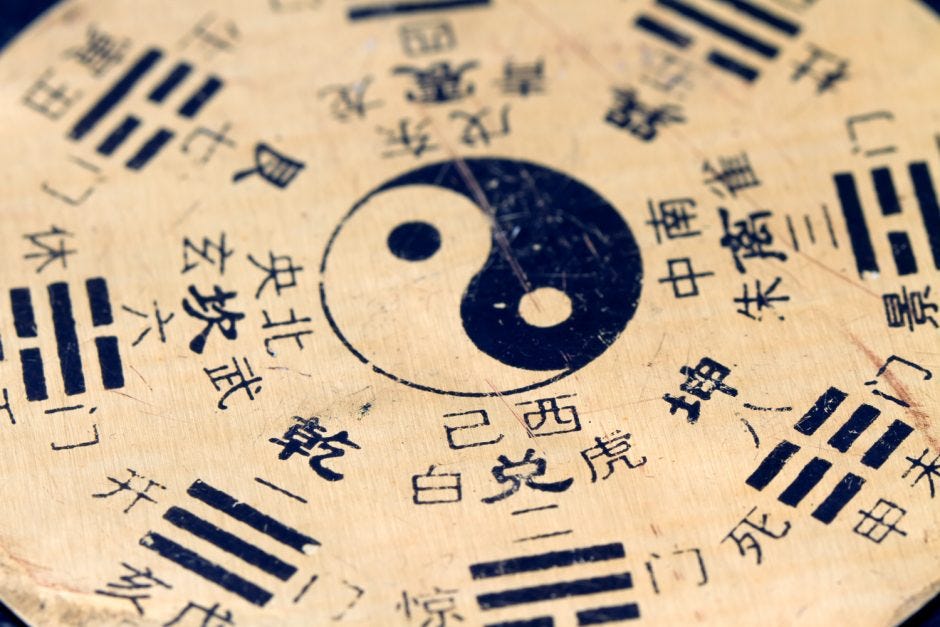 |
| The yin, the dark swirl, is associated with shadows, femininity, and the trough of a wave; the yang, the light swirl, represents brightness, passion and growth. |
https://medium.com/novasemita/the-philosophy-of-flow-taoism-f176f1de2999
The Philosophy Of Flow — Taoism

We’re sure you’ve heard about Taoism before, but what is it all about?
“That which offers no resistance, overcomes the hardest substances. That which offers no resistance can enter where there is no space.
Few in the world can comprehend the teachings without words, or understand the value of non-action”
Lao Tzu, Tao Te Ching, Chapter 43.
There’s no proof that he truly ever lived. But if he did, it should have been somewhere around the 5th and 6th century B.C which makes him a contemporary of Confucius. Lao Tzu wrote a masterpiece called Tao Te Ching, which is the main work of Taoism.
A well-known concept that has emerged from Taoist philosophy is Wu Wei, that can be translated as “non-action” , “effortless action” or the paradoxical “Action of non-action”. In a practical sense, we can describe Wu Wei as the state of flow, often referred to as the “the zone” by athletes. When athletes are in zone, they engage in action without striving, and move through time and space effortlessly. There are no extremes, no worries, no ruminations, everything seems to flow in a natural course.
“Knowing others is Intelligence, Knowing Yourself is true wisdom,
Mastering others is Strength, Mastering Yourself is true Power”
- Lao Tzu
Taoism is a philosophy of flow. Taoist philosophy emphasis on living with the Tao, also called Way.
So what is the Tao?
That is a question we can’t really answer, and it’s futile to try. Our understanding of the Tao only goes as far as limitation of our perception. What the Tao really is remains a mystery.
“The Tao” is indefinable. Each person can discover the Tao on their terms. A teaching like this can be very hard to grasp when most people desire very concrete definitions in their own life.
The famous opening of the Tao Te Ching goes like this:
“The Tao that can be described is not the eternal Tao. The name that can be spoken is not the eternal Name”.
Taoist philosophers emphasize over and over again that true Tao is an all-encompassing force that is beyond our comprehension and cannot be perceived by the senses. Even though we can never grasp the true Tao, the goal is live in agreement with it, which is strikingly similar to the stoic approach to nature.
So how does one live in harmony with the way?
Taoist literature doesn’t really give one practical method to achieve this. However, we can find many clues that point to achieving stillness of mind, curbing the senses, being humble, and the cessation of striving, in order to open ourselves up to the working of universe. We need to spend time cultivating our Yin which is our inner experience. This stillness of mind doesn’t necessarily mean that we sit down somewhere with our eyes closed. Stillness of mind can be combined with action, and if we are completely in the present moment, our actions will go effortlessly, without friction and accompanied by a razor sharp focus.

Another essential teaching of Taoism is power of gentleness. By forcing and striving, we might get the job done, but at the same time we spend much more energy than necessary and possibly suffer from collateral damage. On the other hand, someone in a state of flow approaches a task intelligently, knowing when to act, and finds a balance between action and non-action. It’s a golden path between anxiety and boredom. The idea behind non-action goes against the Western ideal of forcing and working harder to get results. We are encouraged to be ambitious, to take control and to strive. Meanwhile many people suffer from depression, anxiety disorders and sleep disorders. Are we burning ourselves out? We look down on passivity, and often mistake it for laziness. When we look at nature, ‘doing nothing’ makes way more sense than we tend to think. Results do not equal the amount of energy we spend. Results are the consequences of a series of actions. Many of this action come naturally and a task doesn’t need more human intervention than necessary to steer it into the right direction. Isn’t it so many problems solve themselves?
Taoism compares life with a river. The river already has a course or several courses, and once we find ourselves in that river, we can swim against the current, we can hold on to a branch or we can let go and go along with stream. Most of our lives we swim against the current and we don’t even realize it. Our mind believes that it can and should control the environment, in order to survive, which is kind of egocentric because the vast majority of processes within as well as outside ourselves are not in our control. Taoist way is rather navigating through the river instead of trying to control it. Another aspect of the river that characterizes Taoism is the water itself. The characterization of water are softness and humility that basically symbolize Taoist virtue.
The supreme good is like water, which benefits all of creation without trying to compete with it.
It gathers in unpopular places.
Thus, it is like Tao.
Lao Tzu, Tao Te Ching, Chapter 8
Water may be soft, but it overcomes hardness which can see in the erosion of rock. And water not only seeks the lower places, it has no purpose, no goal, no specific desire. Yet it nourishes everything thing possible.
Water is the softest and most yielding substance. Yet nothing is better than water, for overcoming the hard and rigid, because nothing can compete with it.
Lao Tzu, Tao Te Ching, Chapter 78
If you ever experienced a state of flow, there’s one thing that disappears and only comes back when thinking mind takes back control. This is the focus on results, rather than task in hand. When you are in state of flow, you forget results, the pressure, the anxieties about the future, the failing of the past. It’s just you and the task in hand. You are completely in the present and only way to do this, is by letting go. Letting go means stops swimming against the current, stop holding on to some branches. It means letting go of the past, letting go of the future, focus on this moment entirely and just live it without hesitation.
.jpg)
+++++++++++++++++++++++++++++++++++++++++++++++++++++++++++++++++++++++
+++++++++++++++++++++++++++++++++++++++++++++++++++++++++++++++++++++++
+++++++++++++++++++++++++++++++++++++++++++++++++++++++++++++++++++++++
- Bloggery committed by chris tower - 2012.09 - 10:10
- Days ago = 1986 days ago
+++++++++++++++++++++++++++++++++++++++++++++++++++++++++++++++++++++++
+++++++++++++++++++++++++++++++++++++++++++++++++++++++++++++++++++++++
+++++++++++++++++++++++++++++++++++++++++++++++++++++++++++++++++++++++

A Sense of Doubt blog post #2280 - BE LIKE WATER - my favorite from Tao te Ching
Comic book Sunday will return next week on 2105.23.


SOME WIKI BASICS
The Tao Te Ching (/ˈdaʊ ˈdɛ ˈdʒɪŋ/ DOW DEH JING), also known by its pinyin romanization Dao De Jing, is a Chinese classic text traditionally credited to the 6th-century BC sage Laozi. The text's authorship, date of composition and date of compilation are debated.[1] The oldest excavated portion dates back to the late 4th century BC,[2] but modern scholarship dates other parts of the text as having been written—or at least compiled—later than the earliest portions of the Zhuangzi.[3]
The Tao Te Ching, along with the Zhuangzi, is a fundamental text for both philosophical and religious Taoism. It also strongly influenced other schools of Chinese philosophy and religion, including Legalism, Confucianism, and Buddhism, which was largely interpreted through the use of Taoist words and concepts when it was originally introduced to China. Many Chinese artists, including poets, painters, calligraphers, and gardeners, have used the Tao Te Ching as a source of inspiration. Its influence has spread widely outside East Asia and it is among the most translated works in world literature.[2]
Tao Te Ching is the Wade–Giles romanization of the same name as the pinyin Daodejing and should be pronounced in the same way.[a] That is, its ⟨t⟩s should be pronounced closer to English ⟨d⟩s. The Chinese characters in the title are:
Dào/tao literally means "way", or one of its synonyms, but was extended to mean "the Way". This term, which was variously used by other Chinese philosophers (including Confucius, Mencius, Mozi, and Hanfeizi), has special meaning within the context of Taoism, where it implies the essential, unnamable process of the universe.
Dé/te means "virtue", "personal character", "inner strength" (virtuosity), or "integrity". The semantics of this Chinese word resemble English virtue, which developed from the Italian virtù, an archaic sense of "inner potency" or "divine power" (as in "healing virtue of a drug") to the modern meaning of "moral excellence" or "goodness". Compare the compound word taote (Chinese: 道德; pinyin: Dàodé; literally: "ethics", "ethical principles", "morals" or "morality"). Jīng/ching as it is used here means "canon", "great book", or "classic".

The Tao Te Ching is ascribed to Lao Tzu, whose historical existence has been a matter of scholastic debate. His name, which means "Old Master", has only fueled controversy on this issue.[16]

The first reliable reference to Laozi is his "biography" in Shiji (63, tr. Chan 1963:35–37), by Chinese historian Sima Qian (c. 145–86 BC), which combines three stories. First, Lao Tzu was a contemporary of Confucius (551–479 BC). His surname was Li (李 "plum"), and his personal name was Er (耳 "ear") or Dan (聃 "long ear"). He was an official in the imperial archives, and wrote a book in two parts before departing to the West. Second, Laozi was Lao Laizi (老來子 "Old Come Master"), also a contemporary of Confucius, who wrote a book in 15 parts. Third, Laozi was the grand historian and astrologer Lao Dan (老聃 "Old Long-ears"), who lived during the reign (384–362 BC) of Duke Xian (獻公) of Qin).
Generations of scholars have debated the historicity of Laozi and the dating of the Tao Te Ching. Linguistic studies of the text's vocabulary and rhyme scheme point to a date of composition after the Shi Jing yet before the Zhuangzi. Legends claim variously that Laozi was "born old"; that he lived for 996 years, with twelve previous incarnations starting around the time of the Three Sovereigns before the thirteenth as Laozi. Some Western scholars have expressed doubts over Lao Tzu's historical existence, claiming that the Tao Te Ching is actually a collection of the work of various authors.
Many Taoists venerate Lao Tzu as Daotsu, the founder of the school of Dao, the Daode Tianjun in the Three Pure Ones, and one of the eight elders transformed from Taiji in the Chinese creation myth.
LOW POWER MODE: I sometimes put the blog in what I call LOW POWER MODE. If you see this note, the blog is operating like a sleeping computer, maintaining static memory, but making no new computations. If I am in low power mode, it's because I do not have time to do much that's inventive, original, or even substantive on the blog. This means I am posting straight shares, limited content posts, reprints, often something qualifying for the THAT ONE THING category and other easy to make posts to keep me daily. That's the deal. Thanks for reading.
+++++++++++++++++++++++++++++++++++++++++++++++++++++++++++++++++++++++
+++++++++++++++++++++++++++++++++++++++++++++++++++++++++++++++++++++++
+++++++++++++++++++++++++++++++++++++++++++++++++++++++++++++++++++++++
- Bloggery committed by chris tower - 2105.16 - 10:10
- Days ago = 2144 days ago
+++++++++++++++++++++++++++++++++++++++++++++++++++++++++++++++++++++++
+++++++++++++++++++++++++++++++++++++++++++++++++++++++++++++++++++++++
- Days ago: MOM = 3927 days ago & DAD = 581 days ago


No comments:
Post a Comment