Though the current project started as a series of posts charting my grief journey after the death of my mother, I am no longer actively grieving. Now, the blog charts a conversation in living, mainly whatever I want it to be. This is an activity that goes well with the theme of this blog (updated 2018). The Sense of Doubt blog is dedicated to my motto: EMBRACE UNCERTAINTY. I promote questioning everything because just when I think I know something is concrete, I find out that it’s not.
Hey, Mom! The Explanation.
Here's the permanent dedicated link to my first Hey, Mom! post and the explanation of the feature it contains.
A Sense of Doubt blog post #4202 - For Now, I am Just Writing FOR ME - Writing Wednesday for 2608.19
This time I am not searching for another article to echo what I intend to write. I am just going to share some of my recent thoughts.
When I was in graduate school, I felt that I received a transmission from the source or as I described it "from Pluto."
It was if a story was being transmitted into my head, and I had to stop what I was doing and channel it all out until I reached the conclusion of the transmission. It started when I was driving, so I did not stop driving. Also, I was sober. I was on Gull Road, near the Elias Brothers, and the story beam hit me and flooded my consciousness. Once I got home, and for the next two days, I wrote a sixty-some page story called "Sodium" about three junior high boys who steal sodium from the chemistry lab, take it with them in a row boat, and then drop it in a lake because sodium, pure sodium metal, can explode when it comes in contact with water. The story also depicts a great deal of their lives in junior high, such as the narrator who has a crush on a girl, whom he "saves" when she sucks a rat's tail through a straw in a bottle of milk: the rat had died and was bottled but couldn't be seen through the milk. Yes, they used to sell milk to school kids in small glass bottles, maybe a pint, with foil caps that could be penetrated to insert a straw.
As I transcribed the story -- the writing felt like transcribing a transmission -- I was not writing for publication; I was just writing the story that had possessed me, a story I had to write, a voice inside me that would not be still (Thank you, Sylvia Plath).
Most writers have similar or the exact same experiences though all writers describe the muse, the inspiration, the flow differently. But a frequent through line is this idea of receiving a transmission, being possessed, hearing voices, receiving a boon from the muse, and so on.
And yet, some thoughts of reality can interfere with that muse.
For years, I have spent a lot of time thinking about the market for fiction -- especially fantasy and science fiction -- and eventual publication of the thing I am working on. These thoughts lead to a lot of second guessing as I will read something that upends my own thinking and makes me doubt that my own fiction is unique or original enough to find a home as a published novel.
Last year, I returned to somewhat steady work on my long-time novel project, what I describe as a cyberpunk/Sword & Sorcery epic fantasy with the overarching title of CYBERPSELL. I still don't know what the first book is called, unless it shares the series title. Kind of like how most people refer to Martin's series as GAME OF THRONES and not a SONG OF FIRE AND ICE.
As I explored the market, reading Locus, reading novels and short stories, I started to have those familiar doubts and bouts of second guessing.
Meanwhile, I am re-educating myself to change careers. Writing and being an English teacher always went hand in hand, and, of course, I had fantasies for how publishing a novel (or novels) might affect my teaching position and career. And then because of this career shift, I had a revelation. Stop worrying about publication, the voice said. Just write the book. Write it for me. I am still thinking about a reader as I write but that reader is myself. Later, in revisions, I can think more about readers in general and about publication. For now, I need to stay true to what I want the characters to be, what I want the story to be, the world to be, and just FINISH THE DAMN BOOK.
I have been working on this novel project off and on since 1995. There have been periods when no writing took place because I was putting all my efforts into teaching. There were other periods in which I was working on other, also still unfinished, projects. Through all those years, this novel was the favored project, though one project that consumed me for several years was really a prequel to this novel and so in a sense still part of the CYBERSPELL project.
The first chapter of CYBERSPELL has seen over thirteen drafts. And since returning to work on this novel in earnest, it has undergone significant changes from previous versions and conceptualizations, changes that serve the best interests of the story, the characters, and the world in which they live.
And this realization that I could just write for me has freed my mind from traps of writing for publication, writing to attract readers. The focus on writing for myself satisfies readership in a sense. I am a reader. I am the first reader, and I need to be happy as a reader with what I am doing.
Also, giving up on the goal of publishing removes a lot of pressure to fit the story into a box of what the market is looking for. That lifting of pressure emboldens me to keep writing the story I want to read and not worry so much about other people's stories or expectations for stories.
I may never publish this book, but I am determined to finish it. Maybe I will self-publish it as self-publication is not only more possible these days but has higher regard than ever before.
But for now, the goal is simply to finish it. It's the story I have to write. It may not be a transmission from Pluto, but it has been on my mind, part of my life, for over thirty years. I need to write it; I need to finish it.
And I am making progress toward that goal.
I just needed to write down these thoughts. If you read them, thank you. Thanks for tuning in.
- Bloggery committed by chris tower - 2608.19 - 10:10
- Days ago: MOM = 4066 days ago & DAD = 720 days ago
- New note - On 1807.06, I ceased daily transmission of my Hey Mom feature after three years of daily conversations. I post Hey Mom blog entries on special occasions. I post the days since ("Days Ago") count on my blog each day, and now I have a second count for Days since my Dad died on August 28, 2024. I am now in the same time zone as Google! So, when I post at 10:10 a.m. PDT to coincide with the time of Mom's death, I am now actually posting late, so it's really 1:10 p.m. EDT. But I will continue to use the time stamp of 10:10 a.m. to remember the time of her death and sometimes 13:40 EDT for the time of Dad's death. The blog entry numbering in the title has changed to reflect total Sense of Doubt posts since I began the blog on 0705.04, which include Hey Mom posts, Daily Bowie posts, and Sense of Doubt posts. Hey Mom posts will still be numbered sequentially. New Hey Mom posts will use the same format as all the other Hey Mom posts; all other posts will feature this format seen here.
I include an article from that blog below and some extra links as well.
And it's a current project, not a defunct blog that exists on the Internet but has had no new posts in many years. (I have two of those, also, though, so can't be too harsh).
I was drawn to Brianna's video and then the mythcreants article because my current cyberpunk-sword-and-sorcery project uses multiple point of views.
Of course, like many, I was inspired by the scope and complexity of Game of Thrones and the multiple ongoing story lines. I spent time studying this model. Which ones engaged me the most? (Tyrion and Arya). Which ones engaged me the least? (Bran and Sansa).
But the link below argues that Game of Thrones might have been better without so many POVs. And maybe ALL THE POVs has something to do with why it has been FIFTEEN YEARS since Dance With Dragons came out.
One strong element of Game of Thrones is that at the start of the first book, nearly all the most significant POV characters are together; all the Starks and Lannisters are at Winterfell. Only Daenerys Targaryen is not present along with some minor POV characters like the Onion Knight (Davos Seaworth), Samwell Tarley, and others. But only Daenerys appears in that first book. All the others are POV characters in later books.
In any case, when I returned to my book which at the moment is called Cyberspell but that is likely the name of the series if I am allowed to have a series, if I even ever publish this book, I just focused on the primary main character: Thomar. I was considering dumping the planned POVs or severely limiting them.
As I wrote, I saw the ways that different story elements could and should fit together. This resulted in the first added POV character not being one in my original plan -- Thomar's sister Ayla -- but she is a key character and one I had originally as a POV character. And then I flipped it, creating a new character to see and encounter Ayla, which at the moment is a one-off, but I am not sure if it will stay that way.
That led to something I had resisted in writing going back to my first unpublished book -- a one off. Having a character that is only a POV character one time seemed cheap to me. However, V.E. Schwab used this technique well in her DARKER SHADE OF MAGIC series. And since I look to make things fit, the one-off I added that allows the reader to see someone observe Thomar early in the book will now not be a one-off. Though I may not return to him as a POV character, he is not off the map. And the character who sees Ayla, the other one-off, may become a POV, but she's (Salu) not off the map either.
Once I started adding POV, I returned somewhat to my original plan for other characters, though so far I have only written one of those with plans for a second and the others on hold.
In my original draft of the book (unfinished), I had planned NINE POV characters but I had not written them all yet. I felt justified in this number as the first three books of the Songs of Fire And Ice varied from eight to ten POV characters, not counting one-offs.
FOR SURE, nine is too many. Right now, I have just three with possible two more additions.
However, some of the CRITICISMS of multiple POV are not things I am doing, such as having multiple stories in one book for little reason.
My plan all along is that the POV characters and their stories, though separate at first, come together. They are all part of the same story. The POV divisions are necessary, especially when they are apart, though the question is whether or not they will be when the characters are together.
But obviously, I have a lot more to think about.
When it comes to Brianna's video, as always, her videos are validating as I am not doing the things she identifies as "mistakes."
Here's her list:
Mistake #1 - Head-hopping within scenes
Mistake #2 - Too Many POV characters
Mistake #3 - Undeveloped POV characters
Mistake #4 - Weak POV transitions
Mistake #5 - Head-Hopping Within Scenes - examples
Mistake #6 - Adding POV Characters for convenience
Here's her solutions:
I feel like my original plans were too many POV characters, so I am limiting that number.
I have strategic plans. Characters have distinct voices and their own arcs. I have very clear transitions between the characters (each in their own chapter), which maintains switch rules.
But the last, which is POV for convenience, is an issue only if I do not make good use of the two one-offs I have created, and I think I am already making good use of those.
One thing in the mythcreant article that's not in Brianna's list is considering villain POVs, which mythcreants claim rarely work. I had considered a villain POV for my book, but I had not started down that path yet for all the reasons listed in that article, which is linked from the mythcreant text below.
I like that my choices get validated.
Going through all this advice is part of "questioning habits" that I wrote about in this blog post, yesterday:
Level up your third-person multiple book and stop making these common mistakes that confuse readers and weaken your story. I’ll break down the 6 most common errors new writers make when juggling multiple perspectives, including head-hopping, adding unnecessary POV characters, weak transitions, and creating indistinguishable character voices.
I'll show you how to create distinct character voices, plan your POV characters strategically, and transition smoothly between perspectives. Whether you're writing fantasy, romance, sci-fi, thriller, or any genre with multiple main characters, these techniques will help you write stories that keep readers hooked from start to finish.
👉 Write your best novel yet with my cheap, digital & printer-friendly writing workbooks: https://plannerpaletteco.etsy.com
📲 FOLLOW MY SOCIALS:
TikTok: www.tiktok.com/@authorbrisarovski
Threads: www.threads.net/@authorbrisarovski
Instagram: www.instagram.com/authorbrisarovski
Chapters:
0:00 Intro
What is Third-Person Multiple POV?
Mistake #1 - Head-hopping within scenes
Mistake #2 - Too Many POV characters
Mistake #3 - Undeveloped POV characters
Mistake #4 - Weak POV transitions
Mistake #5 - Head-Hopping Within Scenes - examples
Mistake #6 - Adding POV Characters for convenience
Great Book Examples
Tips for Success
Music track: 2 am by Lofiru
Thank you for watching! Don't forget to like and subscribe 💕
When I started Mythcreants, I had an axe to grind: for years the epic fantasy stories I loved had forced me to wade through belabored chapters that bored me to tears. I just wanted to see my precious farmboy be crowned king – why did I first have to hear about how some random elf plays elf chess?
I expressed my beef with multiple viewpoints in an article shortly after the site launched in 2013. But this criticism made me an outlier on the site and elsewhere; I even debated Oren about it on an early podcast episode. Then over the next five years, something strange happened. Oren decided I was right: multiple points of view are the bane of novels everywhere. After that, it became the official Mythcreants position.
While my original article (PDF) held up surprisingly well for newbie axe-grinding, our readers deserve an updated explanation for why we’re so cranky about a writing practice that’s considered normal. So, let’s go over the problems that multiple viewpoints cause and when they actually work.
How Multiple POVs Work in Theory
I’ve never insisted that multiple viewpoints have no use. Like other choices about narrative style and perspective, they are a valuable tool in the right situation.
In theory, using multiple viewpoints allows writers to benefit from the immersion of close limited narration without giving up the opportunity to narrate the thoughts of side characters. By including a character’s viewpoint, writers can help their audience get to know that character more intimately and understand where they’re coming from.
A great example of this in practice is Steven King’s The Shining. In it, a family of three – Wendy, Jack, and Danny – are isolated for the winter in a haunted hotel. Jack has a history of heavy drinking and violence, which almost caused Wendy to leave him previously. As the hotel works its evil magic, Jack’s troubling behaviors reemerge.
King could easily have told this story with one viewpoint. However, he clearly wanted his audience to root not only for Wendy and Danny’s survival, but for the whole family to stay intact. By switching between the viewpoints of all three central characters, King develops each person in detail, builds sympathy for the antagonistic Jack, and explains why Wendy doesn’t leave with Danny at the first sign of trouble. If King had used omniscient POV to do this, he would have sacrificed far too much tension for a horror story.
Many other novels feature a few central characters that deal with the story’s problems together, romances in particular. Using the viewpoints of both people in a relationship arc can allow readers to discover the full complexity of each character’s perspective. With a better understanding of the obstacles they face, relationship conflicts can become deeper and more interesting.
How Multiple POVs Work in Practice
Instead of being a technical tool for developing characters, multiple viewpoints have become synonymous with something else: multiple stories thrown into the same book for very little reason.
As long as a writer sticks to one viewpoint, the main character has to be included in every scene.* While writers chafe at this restriction, it’s really good for them. In a world where most writers don’t know what a throughline is and are always stuffing too many ideas into one book, a single viewpoint forces them to streamline and focus on what matters. It doesn’t guarantee a tightly plotted story, but it definitely helps.
When writers add a new viewpoint, they often do it for the explicit purpose of inserting content with little or no relevance to what they’ve already written. They might even jump to an entirely different continent to follow characters that have no practical means of interacting with the main character anytime soon, such as the Daenerys viewpoint in Game of Thrones.
Writers believe that if they bring these disparate arcs together at the end, this practice is fine. But that’s not true. As long as the novel is stretched between independent stories running in parallel, engagement will suffer. A great end doesn’t justify a terrible beginning and middle.
How This Makes Novels Boring
When people read for pleasure, they generally pick up a book and read it through. They don’t read a chapter of one book, put it down, read a chapter of another book, and then switch back to the first book again. The reason for this is pretty obvious. A story has specific mechanisms for hooking readers. When a reader is hooked on Lord of the Rings, they want to read more Lord of the Rings, not more Interview With the Vampire or more Dune.
The two primary mechanisms for hooking readers are:
Emotional attachment to the main character
Tension created by the problems the main character faces
New viewpoints often feature a different character facing different problems. That means even if the previous viewpoint had a great hook, the new viewpoint isn’t benefiting from it. For readers, it really is like starting another book.
Then, many writers make this problem worse. It’s incredibly common to only bother with a good hook for the first viewpoint of the story, which features either the main character or a throwaway character during a prologue. Once this is done, writers assume they can throw in another story without taking the same time and care to hook readers. After all, the writer can make readers wade through this second story by holding the first one hostage. They might even end the first viewpoint on a cliffhanger before jumping to the second.
Considering all of this, it’s no surprise that so many secondary viewpoints are not only boring but actively resented. They’re getting in the way of the content readers are interested in.
This doesn’t mean that every reader will get bored during extra viewpoints. Some readers may become really interested in the world. Others may decide they like the secondary viewpoint character as much as, or more than, the main character. But even in a best-case scenario, readers will be more interested in some viewpoints than others. If they love a secondary viewpoint character, they could start resenting the main character for taking up time.
This is why even when you put effort into making each viewpoint riveting, it still doesn’t justify stuffing multiple stories into one book. If those secondary viewpoints had their own books, the writer would pay more attention to making them engaging, and readers would have more control over what they read. No one would be forced to put down Lord of the Rings until they read an obligatory chapter of Dune.
Since many novel writers emulate filmed stories these days, it’s also worth explaining why our favorite TV shows get away with covering so many protagonists with their own arcs.* It comes down to two factors:
Narrated works require their audience to focus on the narration in hopes that it will pay off in the form of an engaging story. Visual works grab the audience’s attention immediately and then just have to keep it. The engagement bar is simply higher for narrated works because they require more effort to consume.
Hollywood writers collaborate, and when their bosses tell them to make edits, they have to do it. If the ratings go down, the show gets cancelled. Because of all this, visual stories are better plotted than the average novel, so they handle multiple protagonists with more skill.
Even so, the occasional TV show does get itself into trouble for doing what novelists using multiple viewpoints do. The second season of Stranger Things sent Eleven off on her own. Carnival Row had a cast of characters that barely interacted with one another. This lowered engagement just like it would in a novel.
When Multiple POVs Work
A novel should be one consolidated story, not multiple stories that beg for reader patience as they inch closer together. As long as you keep to one story, it can be told with multiple viewpoints. This doesn’t mean you should give all your minor characters a viewpoint. Using additional viewpoints still takes readers further from a beloved main character, so they need to offer a benefit to make up for that. However, as long as you’re telling one story, the tension of the primary viewpoint should be in effect. In other words, the hook you put in earlier will be doing its magic.
So how do you know the difference between one story and many? To start, if you don’t actually need multiple viewpoints to cover all of the events of your plot, that’s a good sign you’re telling one story, not several. A more accurate but technical explanation is that multiple viewpoints should keep the throughline moving. Let’s dig into what that means.
Your throughline is the basic arc that holds your entire novel together. It opens with a big problem that your main character must resolve at the climax. For instance, they might need to find a loved one who’s been missing or stop the library from being destroyed. Then, movement is the sense that the story is heading toward that climax. It could mean the main character is making progress on finding their loved one or that they are approaching an inevitable confrontation with the villain who wants to destroy the library. When a story has good movement, every event is essential. If you take one event out, later events don’t unfold the same way. They’re all linked together in a single chain of causality.
This shouldn’t change when you add more viewpoints. If you can remove a scene from one viewpoint without impacting the next few scenes in another viewpoint, you probably have multiple stories on your hands. On the other hand, if scenes in one viewpoint have important implications for scenes in the other viewpoint, that suggests they are one story.
Let’s go back to my example of a main character who has to find a lost loved one. You give that loved one a viewpoint, revealing that they’re being held prisoner by the villain. Then they develop a relationship with another captive. Since that relationship has no impact on the main character’s search, you have two stories on your hands. However, maybe the villain lets slip to the kidnapped character that someone is searching for them. Then, the kidnapped character finds a way to send out clues. The main character receives those clues and gets closer to finding the kidnapped character. Now you have one story.
Viewpoint characters can also act against each other. One viewpoint character might plant bombs beneath the library, and then the next viewpoint character could defuse the bombs. Generally, this would be a gray morality story where the protagonists are at odds but none of them are strictly villains, because villain viewpoints rarely work. On top of that, these types of political intrigue stories need to be tightly paced, with lots of interplay between viewpoint characters to stay entertaining. Most writers would struggle to keep this up.
If you’re on the fence about using multiple viewpoints in your story, you should stick to one. It’s essential to keep your story simple where you can, so when you inevitably want to add more characters, places, or magical curses, you’ll have a chance of fitting them in.
Did you know? Our patrons get weekly bonus content, access to our Discord server, fun merch, and more. Join our Patreon community today.
- Bloggery committed by chris tower - 2603.04 - 10:10
- Days ago: MOM = 3898 days ago & DAD = 552 days ago
- New note - On 1807.06, I ceased daily transmission of my Hey Mom feature after three years of daily conversations. I post Hey Mom blog entries on special occasions. I post the days since ("Days Ago") count on my blog each day, and now I have a second count for Days since my Dad died on August 28, 2024. I am now in the same time zone as Google! So, when I post at 10:10 a.m. PDT to coincide with the time of Mom's death, I am now actually posting late, so it's really 1:10 p.m. EDT. But I will continue to use the time stamp of 10:10 a.m. to remember the time of her death and sometimes 13:40 EDT for the time of Dad's death. The blog entry numbering in the title has changed to reflect total Sense of Doubt posts since I began the blog on 0705.04, which include Hey Mom posts, Daily Bowie posts, and Sense of Doubt posts. Hey Mom posts will still be numbered sequentially. New Hey Mom posts will use the same format as all the other Hey Mom posts; all other posts will feature this format seen here.
A Sense of Doubt blog post #3942 - Micro-Bursts - Writing Wednesday for 2512.03
Since I started adhering to nearly weekly WRITING WEDNESDAY posts, I have been touting the idea that progress is progress no matter what, how, or when.
I have written on this before. If all you have is fifteen minutes, then write for fifteen minutes. All progress is good progress or if not "good" progress, it's some kind of progress or at least exercising the writing muscle.
I did not write at all last week because of Thanksgiving and family visiting.
So my goal was to get back to writing this week. And I didn't the first two days of the week, so I was resolved to start today.
I had a new idea for a short story the other day.
One thing I have been wanting to do is rewrite very old stories by little known writers, like one of my favorites: Edmund Cooper.
And by rewrite, I mean completely reimagine though possibly using the same structure and some of the other aspects of the story.
And so, I started the story, which borrows some aspects from an Edmund Cooper story called "Tomorrow's Gift" but is in no way a rewrite or a reimagining of that story. Or if we're calling it a reimagining, it's a RADICAL reimagining.
I love discussing process. I recently had a process discussion with someone. One common practice, and I would love to find someone who DOES NOT work this way, is writing in one's head. Thinking time, imagining, brainstorming, and actually just writing in one's head until such a time that the text can be written out seems so fundamental to what writers do that I can't imagine that there's someone who DOES NOT do that.
Not to say that everything to be written is dreamed in the head ahead of time. That's not only impractical but loses that sense of discovery and serendipity. And yet, some things are surely dreamed up and then written down. In part, this is how I will end up working out of order. I have various ideas for different parts of a story, a chapter, a book, and so I want to first unload what's in my head because it will only stay there for so long. I have lost really good ideas because I didn't get them written down. I feel that sense of loss. Some might say that if the idea is REALLY good that I will have it again but that's not necessarily true with all ideas.
So, success today. Started the story. A micro-burst, 15-20 minutes of writing. I can check off the to do list that I achieved writing today.
Now, to do it again tomorrow.
Next week, I have scheduled to write about the ideas on the "back burner." We'll see if I actually get that written.
- Bloggery committed by chris tower - 2512.03 - 10:10
- Days ago: MOM = 3806 days ago & DAD = 461 days ago
- New note - On 1807.06, I ceased daily transmission of my Hey Mom feature after three years of daily conversations. I post Hey Mom blog entries on special occasions. I post the days since ("Days Ago") count on my blog each day, and now I have a second count for Days since my Dad died on August 28, 2024. I am now in the same time zone as Google! So, when I post at 10:10 a.m. PDT to coincide with the time of Mom's death, I am now actually posting late, so it's really 1:10 p.m. EDT. But I will continue to use the time stamp of 10:10 a.m. to remember the time of her death and sometimes 13:40 EDT for the time of Dad's death. The blog entry numbering in the title has changed to reflect total Sense of Doubt posts since I began the blog on 0705.04, which include Hey Mom posts, Daily Bowie posts, and Sense of Doubt posts. Hey Mom posts will still be numbered sequentially. New Hey Mom posts will use the same format as all the other Hey Mom posts; all other posts will feature this format seen here.
I love typing random concepts into Google and seeing what images come up that I can use for a post.
This image came from someone's fiction at the link above.
Today I wanted to write a little about my working on CYBERSPELL, my cyberpunk sword and sorcery epic that I started literally thirty years ago this year after reading SNOW CRASH.
Not that I have worked on it non-stop or substantially since 1995.
In my return to working on it earlier this year, after a long hiatus with focus on other projects, I focused in on what I consider to be the main character, a warrior by the name of Thomar, taken from a D&D character created by a friend of mine.
As I started to work again, I considered JUST focusing on Thomar but eventually my original plan for multiple POV characters resurfaced. As I worked, variations to the original plan and the set of POV characters also changed.
And that's what I mean by the topic at hand: Adding things and making Things fit.
The first thing I added was a chapter double-zero (00 being a thing in D&D with dice) and an action-rich scene that I had already written about as something that happened, and I decided it was something I needed to show. This addition allowed me to pull a character I had created and make them a POV character, if only for that chapter, maybe not in frequent rotation.
Similarly, with another character that will venture off on her own in the dangerous wilderness, I wanted her to make a friend, which got me thinking of another POV character. However, I dislike creating POV characters just for a a plot point reason, and so I put thought into how this character would fit into the overall story unfolding in the world.
This is a line of thinking that generates more story ideas and more POV characters as I have other ideas burbling away on the stove.
The lesson here is not being too fixated on my thinking that I do not consider changing things up for what works best for the story. And if I add things, then they have to fit into the overall scheme, possibly in multiple ways.
Expressed another way: Use what you have.
At this point, I have ceased to care if this book is marketable or even original enough to attract attention in the market place.
- Bloggery committed by chris tower - 2511.19 - 10:10
- Days ago: MOM = 3793 days ago & DAD = 447 days ago
- New note - On 1807.06, I ceased daily transmission of my Hey Mom feature after three years of daily conversations. I post Hey Mom blog entries on special occasions. I post the days since ("Days Ago") count on my blog each day, and now I have a second count for Days since my Dad died on August 28, 2024. I am now in the same time zone as Google! So, when I post at 10:10 a.m. PDT to coincide with the time of Mom's death, I am now actually posting late, so it's really 1:10 p.m. EDT. But I will continue to use the time stamp of 10:10 a.m. to remember the time of her death and sometimes 13:40 EDT for the time of Dad's death. The blog entry numbering in the title has changed to reflect total Sense of Doubt posts since I began the blog on 0705.04, which include Hey Mom posts, Daily Bowie posts, and Sense of Doubt posts. Hey Mom posts will still be numbered sequentially. New Hey Mom posts will use the same format as all the other Hey Mom posts; all other posts will feature this format seen here.
Time to just plunge ahead, full steam to the engines, WARP POWER.
What's the harm?
I am not on a deadline. I have no agent. I am not planning to share the writing with anyone an time soon. And after all, writing is rewriting, but I cannot rewrite if I do not first WRITE things.
A couple of years ago I went on a writer's retreat, and I came away with some lessons for myself that I recapped here:
Being fearless is an extension of NUMBER ONE - Stop second guessing.
Too much worry about the market place, what other writers are doing, second guessing my choices and not listening to my instincts is all a pathway to IMPOSTER SYNDROME and paralysis.
I do not believe in Writer's Block. But I do believe in paralysis born from Imposter Syndrome, too much second guessing, too much fear.
I also believe in loss of momentum.
Writing is an exercise. It's a discipline. Like exercise, if you do it on a regular basis, you develop the habit, you build momentum, and you really want to get back on the horse if you get thrown off.
Loss of momentum is what kills the forward progress of writing.
Second guessing, fear, anxiety disorder, feeling like an imposter all lead to losing that momentum, falling off the horse, and becoming afraid to get back on.
It's not being blocked. Writers can always write. It's not an immovable block of stone.
But writers can choose not to write, try to re-do things that may not need re-doing, pause before acting with fear and second guesses.
Recently, in watching the documentary 20,000 Days on Earth about Nick Cave, he said that there's too little time on this earth to be idle. He said that we must act, even on the bad ideas, because an idea is neither good nor bad until you act on it. That's when you find out if it's a good or bad idea. But doing nothing is always pointless. There's nothing to be gained in the pursuit of art by doing nothing. In other areas of life, doing nothing has value. Not in making art.
And so, I am resolved to plunge ahead without fear or at least trying to control and dismiss my fears as much as possible.
I just need to write.
After all, really, writing is rewriting. The initial drafting is not supposed to be perfect or even good. It's just content, clay, waiting to be shaped. The shaping is the real work. But if you don't get your hands dirty in the clay, you will have nothing to shape.
- Bloggery committed by chris tower - 2505.14 - 10:10
- Days ago: MOM = 3604 days ago & DAD = 259 days ago
- New note - On 1807.06, I ceased daily transmission of my Hey Mom feature after three years of daily conversations. I post Hey Mom blog entries on special occasions. I post the days since ("Days Ago") count on my blog each day, and now I have a second count for Days since my Dad died on August 28, 2024. I am now in the same time zone as Google! So, when I post at 10:10 a.m. PDT to coincide with the time of Mom's death, I am now actually posting late, so it's really 1:10 p.m. EDT. But I will continue to use the time stamp of 10:10 a.m. to remember the time of her death and sometimes 13:40 EDT for the time of Dad's death. The blog entry numbering in the title has changed to reflect total Sense of Doubt posts since I began the blog on 0705.04, which include Hey Mom posts, Daily Bowie posts, and Sense of Doubt posts. Hey Mom posts will still be numbered sequentially. New Hey Mom posts will use the same format as all the other Hey Mom posts; all other posts will feature this format seen here.
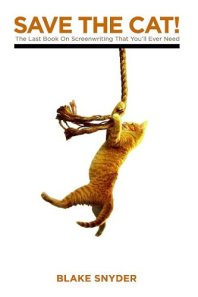
The Blake Snyder Beat Sheet is the best plot structure template I’ve come across.
It breaks down the three-act structure into bite-size, manageable sections, each with a specific goal for your overall story.
See my review of the Save the Cat books by Blake Snyder (where the Blake Snyder Beat Sheet originated), and buy the book. It’s a great resource!
Below is an explanation of each beat. Please see how it works with graphic novels by visiting Graphic Novel Story Structure. Thanks!
THE BLAKE SNYDER BEAT SHEET (aka BS2)
Opening Image – A visual that represents the struggle & tone of the story. A snapshot of the main character’s problem, before the adventure begins.
Set-up – Expand on the “before” snapshot. Present the main character’s world as it is, and what is missing in their life.
Theme Stated (happens during the Set-up) – What your story is about; the message, the truth. Usually, it is spoken to the main character or in their presence, but they don’t understand the truth…not until they have some personal experience and context to support it.
Catalyst – The moment where life as it is changes. It is the telegram, the act of catching your loved-one cheating, allowing a monster onboard the ship, meeting the true love of your life, etc. The “before” world is no more, change is underway.
Debate – But change is scary and for a moment, or a brief number of moments, the main character doubts the journey they must take. Can I face this challenge? Do I have what it takes? Should I go at all? It is the last chance for the hero to chicken out.
Break Into Two (Choosing Act Two) – The main character makes a choice and the journey begins. We leave the “Thesis” world and enter the upside-down, opposite world of Act Two.
B Story – This is when there’s a discussion about the Theme – the nugget of truth. Usually, this discussion is between the main character and the love interest. So, the B Story is usually called the “love story”.
The Promise of the Premise – This is when Craig Thompson’s relationship with Raina blooms, when Indiana Jones tries to beat the Nazis to the Lost Ark, when the detective finds the most clues and dodges the most bullets. This is when the main character explores the new world and the audience is entertained by the premise they have been promised.
Midpoint – Dependent upon the story, this moment is when everything is “great” or everything is “awful”. The main character either gets everything they think they want (“great”) or doesn’t get what they think they want at all (“awful”). But not everything we think we want is what we actually need in the end.
Bad Guys Close In – Doubt, jealousy, fear, foes both physical and emotional regroup to defeat the main character’s goal, and the main character’s “great”/“awful” situation disintegrates.
All is Lost – The opposite moment from the Midpoint: “awful”/“great”. The moment that the main character realizes they’ve lost everything they gained, or everything they now have has no meaning. The initial goal now looks even more impossible than before. And here, something or someone dies. It can be physical or emotional, but the death of something old makes way for something new to be born.
Dark Night of the Soul – The main character hits bottom, and wallows in hopelessness. The Why hast thou forsaken me, Lord? moment. Mourning the loss of what has “died” – the dream, the goal, the mentor character, the love of your life, etc. But, you must fall completely before you can pick yourself back up and try again.
Break Into Three (Choosing Act Three) – Thanks to a fresh idea, new inspiration, or last-minute Thematic advice from the B Story (usually the love interest), the main character chooses to try again.
Finale – This time around, the main character incorporates the Theme – the nugget of truth that now makes sense to them – into their fight for the goal because they have experience from the A Story and context from the B Story. Act Three is about Synthesis!
Final Image – opposite of Opening Image, proving, visually, that a change has occurred within the character.
Now that we’ve spent weeks looking at most of the key scenes you need in your novel and that will form the foundation for your entire story, we’re ready to look at the “10” in my 10-20-30 Scene Builder concept. These are the first ten scenes you will do well to lock in first.
Of course, if you haven’t taken the time to develop a strong concept with a kicker, the protagonist and his goal, the conflict with high stakes, and the themes with heart, you should hold off until you do so.
You can take my online video course to understand fully what those four essential corner pillars of novel structure are. Just enroll at cslakin.teachable.com and then click on the free course. I want you to nail this! Also think about studying my 12 Key Pillars of Novel Construction and use the workbook to flesh this all out. Then you’ll be ready to dive into laying out all these scenes.
Last week I gave the example of filling a jar with rocks. These first ten scenes are your rocks. You put them in first, then you add the pebbles (the next twenty scenes) to fill in the spaces. From there you’ll move into sand, then water—all those other scenes that will round out your story within the strong framework you’ve fashioned.
So, here are the ten scenes you’ll want to get working on:
#1 – Setup. Introduce protagonist in her world. Establish her core need. Set the stage, begin building the world, bring key characters on stage.
#2 – Turning Point #1 (10%): inciting incident.
#3 – Pinch Point #1 (33% roughly): Give a glimpse of the opposition’s power, need, and goal as well as the stakes.
#4 – Twist #1: Something new happens: a new ally, a friend becomes a foe. New info reveals a serious complication to reaching the goal. Protagonist must adjust to change with this setback.
#5 – The midpoint (50%): No turning back. Important event that propels the story forward and solidifies the protagonist’s determination to reach her goal. “I’ll never go hungry again!”
#6 – Pinch Point #2 (62% roughly): The opposition comes full force. Time to buckle down and fight through it.
#7 – Twist 2: An unexpected surprise giving (false?) hope. The goal now looks within reach. A mentor gives encouragement, a secret weapon, an important clue.
#8 – Turning Point #4 (75%): Major setback. All is lost and hopeless. Time for final push.
#9 – Turning Point #5 (76-99%): The climax in which the goal is either reached or not; the two MDQs are answered. (Be sure to read my posts on MDQs if you haven’t nailed that concept).
#10 – The aftermath (90-99%): The wrap-up at the end. Denoument, resolution, tie it all in a pretty knot.
Twists and Turns
I haven’t gone into twists yet, and we’ll talk about them further. Twists make good stories terrific. They are surprises, reversals. Just when you think . . . then the unexpected comes out of nowhere (or maybe it’s expected, but here it comes anyway).
You can have lots of variations on your twists. The movie Outbreak comes to my mind with twist #2. Dustin Hoffman’s character finally finds the monkey carrying the disease. He flies to the family’s home and the monkey is caught. They now have great hope to get a cure made before everyone in the quarantined town (and possibly the world) dies.
BUT he learns upon returning that the president has authorized full cleansing, and the bomb is en route to annihilate the town. Hope is raised but then so are the stakes, and that barrels the story toward turning point #4—that major setback.
There’s nothing more fun than raising someone’s hopes to the heights, then dashing them. No, I’m not mental. This is good storytelling! Raise your character’s hopes at a moment when he really needs hope. Then smash it into pieces and send him reeling. That’s the build to the climax.
Yay! More Charts!
And since I love creating charts and handouts, as you’ve probably noticed, I’ve put these first ten scenes in a list in two formats for you: An Excel chart (which will come in handy when you go on to paste your scene summaries into the final thirty-scene chart) and a PDF, for those of you who can’t access Excel (or don’t want to use it).
Print out your chart (maybe multiple copies so you can play with ideas) and get working on your ten scenes.
I’ll talk more next week about these twists. And then we’ll move on to the next twenty scenes: the pebbles that go into the spaces in the jar between your ten rocks! There are countless ways to approach the next ten scenes, and over the next weeks we’ll play with some ideas.
Share some thoughts in the comments. Do you have all these ten scenes figured out? What are some great twists you can think of from a movie or book?
- Bloggery committed by chris tower - 2108.18 - 10:10
- Days ago = 2238 days ago
- New note - On 1807.06, I ceased daily transmission of my Hey Mom feature after three years of daily conversations. I plan to continue Hey Mom posts at least twice per week but will continue to post the days since ("Days Ago") count on my blog each day. The blog entry numbering in the title has changed to reflect total Sense of Doubt posts since I began the blog on 0705.04, which include Hey Mom posts, Daily Bowie posts, and Sense of Doubt posts. Hey Mom posts will still be numbered sequentially. New Hey Mom posts will use the same format as all the other Hey Mom posts; all other posts will feature this format seen here.