Though the current project started as a series of posts charting my grief journey after the death of my mother, I am no longer actively grieving. Now, the blog charts a conversation in living, mainly whatever I want it to be. This is an activity that goes well with the theme of this blog (updated 2018). The Sense of Doubt blog is dedicated to my motto: EMBRACE UNCERTAINTY. I promote questioning everything because just when I think I know something is concrete, I find out that it’s not.
Hey, Mom! The Explanation.
Here's the permanent dedicated link to my first Hey, Mom! post and the explanation of the feature it contains.
Clarke’s three laws, written by the British science fiction writer and futurist Arthur C. Clarke, are his observations on the nature of technology and discovery.
Clarke was renowned for his scientific knowledge, literary skill and uncannily accurate technological predictions. Best known for co-writing the 1968 film 2001: A Space Odyssey, he popularised the concept of space travel and predicted the use of satellites for telecommunications.
Three observations of his have come to be known as Clarke’s three laws.
The first two appeared in the essay “Hazards of Prophecy: The Failure of Imagination”, first published in Clarke’s 1962 book, Profiles of the Future.
The first, which he expressly designated as “Clarke’s law” in the essay, states: “When a distinguished but elderly scientist states that something is possible, he is almost certainly right. When he states that something is impossible, he is very probably wrong.”
His definition of “elderly” was tongue-in-cheek: for those in physics, maths and astronautics, Clarke defined it as being over thirty. “As every researcher just out of college knows,” he wrote, “scientists over fifty are good for nothing but board meetings, and at all costs should be kept out of the laboratory!”
People later designated another observation Clarke made in the essay as his second law: “The only way of discovering the limits of the possible is to venture a little way past them into the impossible.”
He had written this in the context of a list of inventions and discoveries that he had classified as either expected (including automobiles, telephones, robots, “flying machines”) or unexpected (x-rays, nuclear energy, photography, quantum mechanics).
But perhaps the best known of Clarke’s three laws is the third, which has inspired multiple variations. It appeared in a footnote in his 1973 revision of Profiles of the Future: “Any sufficiently advanced technology is indistinguishable from magic.”
“As three laws were good enough for Newton, I have modestly decided to stop there,” Clarke concluded. ~ Donna Lu
I took a "Blog Vacation" in 2021 from August 31st to October 14th. I did not stop posting daily; I just put the blog in a low power rotation and mostly kept it off social media. Like that vacation, for this second blog vacation now in 2022, I am alternating between reprints, shares with little to no commentary, and THAT ONE THING, which is an image from the folder with a few thoughts scribbled along with it. I am alternating these three modes as long as the vacation lasts (not sure how long), pre-publishing the posts, and not always pushing them to social media.
- Bloggery committed by chris tower - 2204.02 - 10:10
- Days ago = 2465 days ago
- New note - On 1807.06, I ceased daily transmission of my Hey Mom feature after three years of daily conversations. I plan to continue Hey Mom posts at least twice per week but will continue to post the days since ("Days Ago") count on my blog each day. The blog entry numbering in the title has changed to reflect total Sense of Doubt posts since I began the blog on 0705.04, which include Hey Mom posts, Daily Bowie posts, and Sense of Doubt posts. Hey Mom posts will still be numbered sequentially. New Hey Mom posts will use the same format as all the other Hey Mom posts; all other posts will feature this format seen here.
Final grades were due Monday, but I am still catching up with life!
SENTIERS - No.108 — William Gibson keeps his scifi real ⊗ A persistence of magical thinking? ⊗ Mediating consent ⊗ The Internet can learn from the printing press
THIS WEEK → How William Gibson keeps his science fiction real ⊗ A persistence of magical thinking? ⊗ Mediating consent ⊗ What the Internet can learn from the printing press
Welcome back, I hope you had time for a break and spent some of it doing absolutely nothing.
It’s been a three week break and some of you have signed up during that time—perhaps through Letterlist, who had kind words recently—so if you aren’t sure why you’re getting this newsletter; I’m Patrick Tanguay and this is Sentiers, a weekly newsletter to feed your curiosity & make better sense of the world, you can click here to read up on me, these emails and the topics covered (there’s also a full archive). If it’s not to your liking, there’s an unsubscribe link at the bottom of this issue, no hard feelings.
—This is a free issue of the weekly Sentiers newsletter. To support its publication and receive a couple of extra dispatches a month, each focused on one topic: Become a member.
This interview with William Gibson has already been very widely circulated and is almost a month old but it was by far my favorite read over the holidays so it has to be in here. It’s a great piece to discover Gibson, or to learn more about his life and career, but I picked the quotes below with an eye to observing the world, forecasting, and some things to ponder around collage and curation.
Some speculative writers are architects: they build orderly worlds. But Gibson has a collagist’s mind. He has depicted himself as “burrowing from surface to previously unconnected surface.” His language connects contemporary jargon, with its tactical-technological inflections, to modern states of anxiety and desire. […]
Often, at the center of the story, there’s a Gibson-like figure—an orphaned collagist of actual or digital bits. […]
Checking his Vancouver bank balance from an A.T.M. in Los Angeles struck him suddenly as spooky. It didn’t matter where you were in the landscape; you were in the same place in the datascape. It was as though cyberspace were turning inside out, or “everting”—consuming the world that had once surrounded it. […]
A physical object was also a search term: an espresso wasn’t just an espresso; it was also Web pages about crema, fair trade, roasting techniques, varieties of beans. […]
For us, of course, things can change so abruptly, so violently, so profoundly, that futures like our grandparents’ have insufficient “now” to stand on. We have no futures because our present is too volatile. . . . We have only risk management. The spinning of the given moment’s scenarios. Pattern recognition.
Nicolas Nova shares some of the observations he’s been making around magical thinking and superstition in the use of technology. From the patron saint of transmissions, to ghosts of Dropbox, and automatic door myths. Then on to Jobs, Ive, Arthur C. Clarke, and a form of consumerist seduction.
These examples highlight the extent to which the behavior of technological objects is opaque and mysterious, requiring users to build their own assumptions about their mechanisms and operation. This explains why, for some people, the automatic door seems to “have a mind of its own,” or why someone might raise their hand hoping the gesture will strengthen their cell phone signal. […]
[T]he intentional use of the term “magic” by digital organizations is also an important phenomenon, reflecting how technological illiteracy is skilfully maintained, with advertisers and marketing professionals leveraging their systems’ opacity to seduce would-be users. […]
[“Any sufficiently advanced technology is indistinguishable from magic” was] Originally a statement about the extraordinary, mythical quality of many technological objects, particularly in fiction, its apparent ubiquity in talks and design publications raises the possibility of the claim having become an objective in itself.
Renee DiResta on our current state of un-shared reality, on the unprecedented tensions around building consensus and preserving harmony. How can we find ways to achieve consensus or how can we find ways to “preserve harmony within a pluralist dissensus?” The piece ends up being more of a recap of the evolution from old media to today’s faction-rich media landscape and tribal realities than an opening towards new ways of mediating consent, but it’s a useful look at the landscape and framing of the problems.
This portends a societal transformation: our information ecosystem no longer assists us in reaching consensus. In fact, it structurally discourages it, and instead facilitates a dissensus of bespoke pseudo-realities. […]
Today, there is no institution with the legitimacy capable of bridging these gaps and restoring our capacity for achieving consensus, and neither are there credible technological means with which to create and preserve harmony within a pluralist dissensus. […]
Anyone — not just the powerful media companies of old — can now create pseudo-events. Within some of the echo chambers of the internet this happens with such intensity and regularity that it creates what might best be termed a full-on pseudo-reality: an unending stream of fabrications, truthiness, and distraction, filtered to reinforce and strengthen the beliefs of the members. […]
Can we redesign or create an information ecosystem that engenders sufficient consensus for governance functions? If not, how do we transition to a non-toxic form of dissensus that can sustain governance at least as well as older processes of manufacturing consent, for all their faults, did? […]
The path forward requires systems to facilitate mediating, not manufacturing, consent. We need a hybrid form of consensus that is resistant to the institutional corruption of top-down control, and welcomes pluralism, but is also hardened against bottom-up gaming of social infrastructure by malign actors.
Cullen Murphy at The Atlantic looks back to Elizabeth Eisenstein’s (historian of the printed word) study of Gutenberg to make a parallel with the internet and tries to give us a better grasp of just “how unforeseeable (and never-ending) the ‘unforeseeable’ really is.”
Venice, with its dense cluster of print shops, played the role of Silicon Valley. The printing press would soon upend the social order in ways that no one had anticipated and that few today give much thought to. […]
Her larger point is that the world was never the same again. As she explained to me, we no longer register the impact of the printing press because we have no easy way to retrieve the ambient sensation of “before.” […]
The printing press transformed religion, science, politics; it put information, misinformation, and power in the hands of more people than ever before; it created a celebrity culture as poets and polemicists vied for fame; and it loosened the restraints of authority and hierarchy, setting groups against one another. This shattered the status quo in ways that proved liberating but also lethal: If the printing press deserves some of the credit for democracy and the Enlightenment, it also deserves some of the blame for chaos and slaughter. […]
Dewar made a crucial distinction: between technologies, such as knives and microwave ovens, whose intended consequences far outweigh the unintended ones, and technologies, such as cars and air-conditioning, whose unintended consequences dwarf the intended ones. The study’s main message was that the internet, which originated as a form of military communication, was technology of the second kind. Its consequences would be “dominated” by the unforeseeable and the uncontrollable.
Miscellany
It’s 2020 and you’re in the future. Some perspective on history, the present, what’s older, what’s closer, and some mind blowage at Wait But Why. “[R]emember when Jurassic Park, The Lion King, and Forrest Gump came out in theaters? Closer to the moon landing than today.”
HackCurio: Decoding the Cultures of Hacking. Biella Coleman is founder, editor, and curator so you know it’s going to be on point. “Hack_Curio is a video portal into hackerdom that helps explain why hacking is one of the most important phenomena of global culture and politics in the late 20th and early 21st century. Our site features short video clips that are accompanied by a brief explainer about the footage.”
Crows could be the smartest animal other than primates. “The specific kind of brain they have doesn’t really matter – corvids and primates share some of the same basic capabilities in terms of problem-solving and plasticity, or being able to adapt and change in the face of new information and experiences. This is an example of convergent evolution, where completely different evolutionary histories have led to the same feature or behaviour.”
The Rivian pickup’s real edge over Tesla’s Cybertruck isn’t its battery. “The company’s own vehicles, as well as Amazon’s and Ford’s, will all be built upon the company’s so-called “skateboard” chassis. It packages together the battery, suspension, braking system, and mechanical components all below the height of the wheels, lowering the vehicle’s center of gravity. That improves handling and increases storage space, the company says.”
🧠 Air filters create huge educational gains. “[M]ath scores went up by 0.20 standard deviations and English scores by 0.18 standard deviations, and the results hold up even when you control for “detailed student demographics, including residential ZIP Code fixed effects that help control for a student’s exposure to pollution at home.””
- Bloggery committed by chris tower - 2103.26 - 10:10
- Days ago = 2092 days ago
- New note - On 1807.06, I ceased daily transmission of my Hey Mom feature after three years of daily conversations. I plan to continue Hey Mom posts at least twice per week but will continue to post the days since ("Days Ago") count on my blog each day. The blog entry numbering in the title has changed to reflect total Sense of Doubt posts since I began the blog on 0705.04, which include Hey Mom posts, Daily Bowie posts, and Sense of Doubt posts. Hey Mom posts will still be numbered sequentially. New Hey Mom posts will use the same format as all the other Hey Mom posts; all other posts will feature this format seen here.
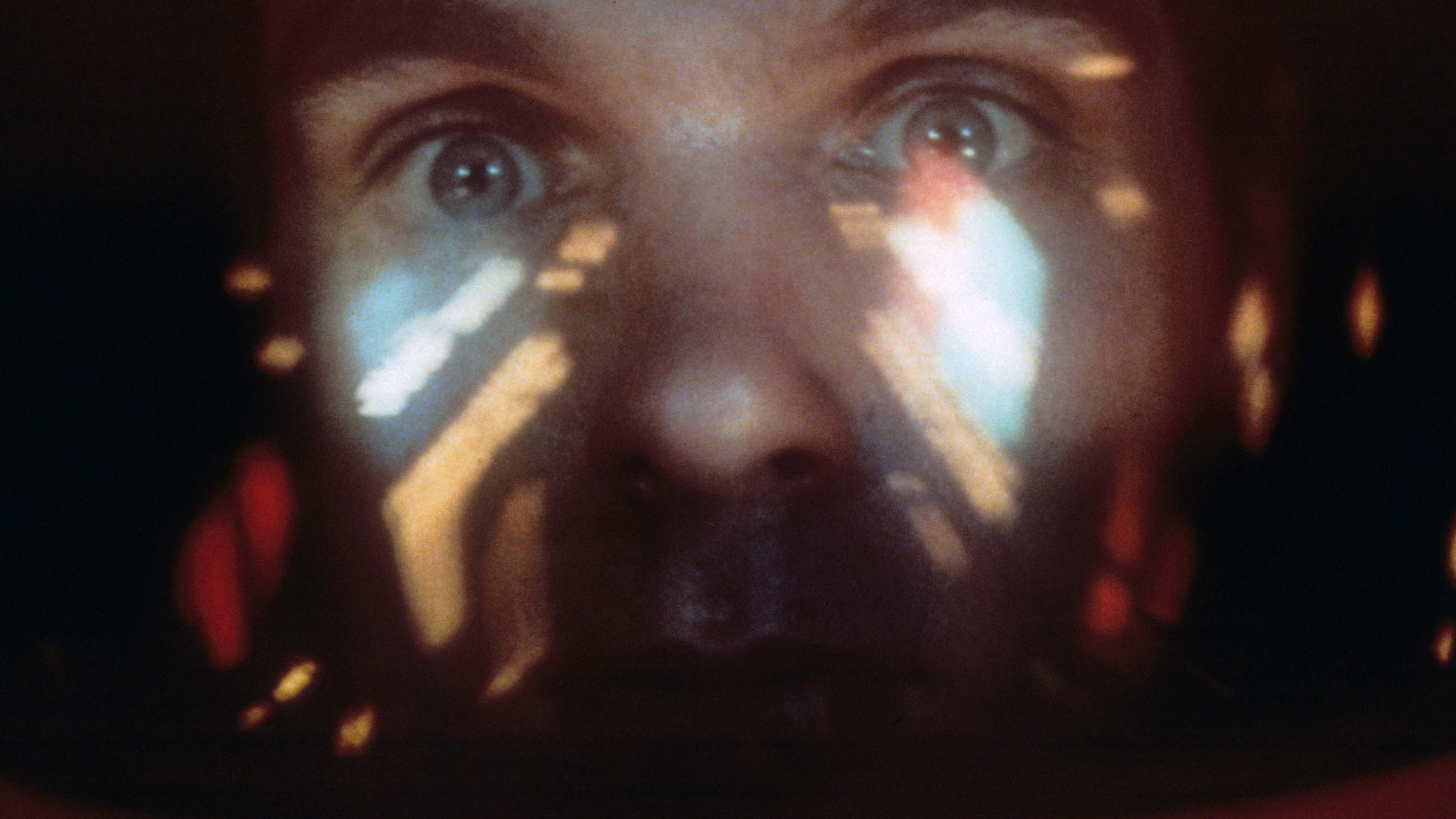
A Sense of Doubt blog post #1968 - "My God, It's Full of Stars!"
I was six years old in 1968.
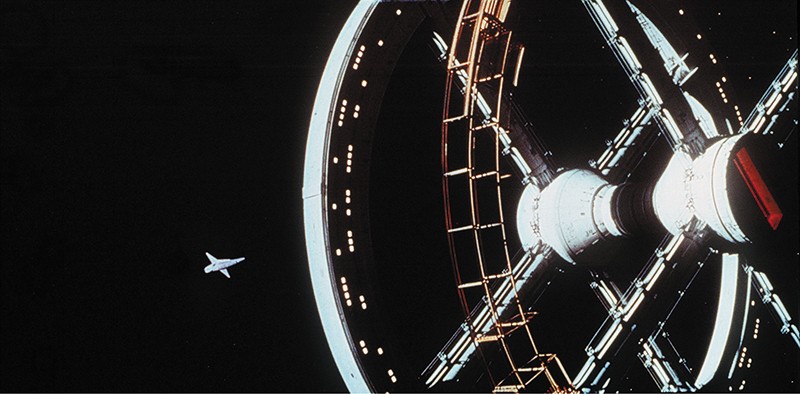
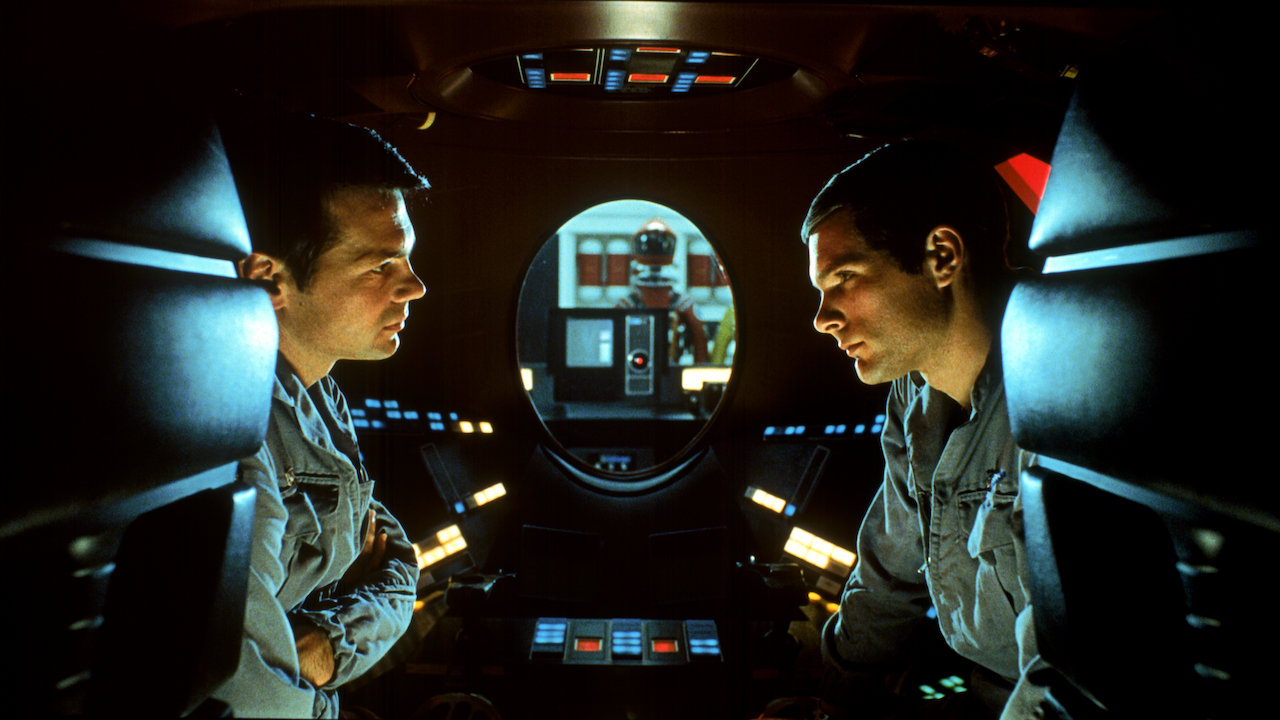
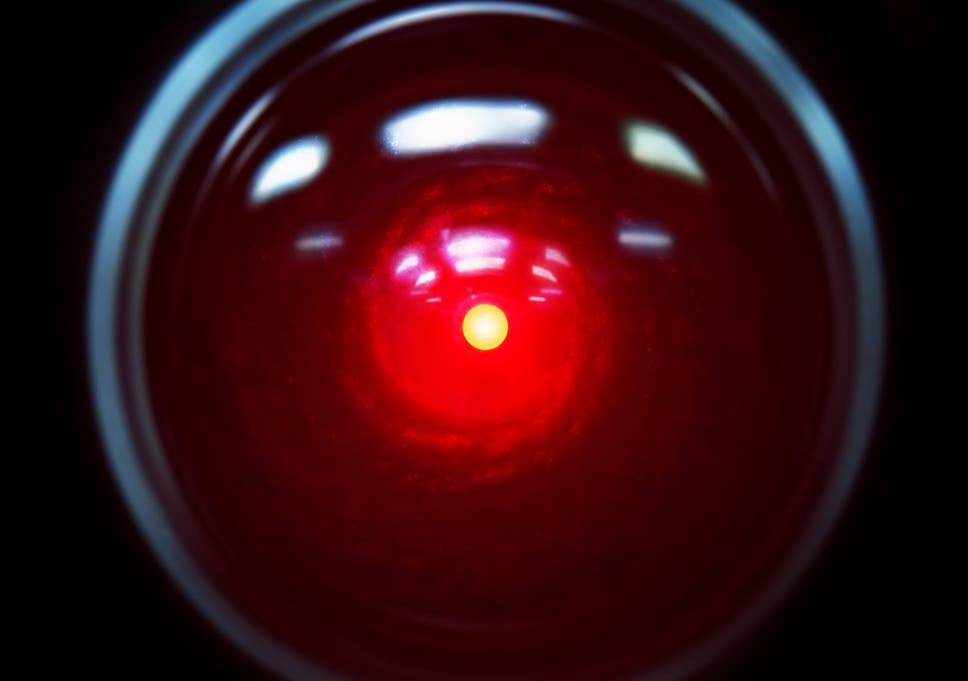
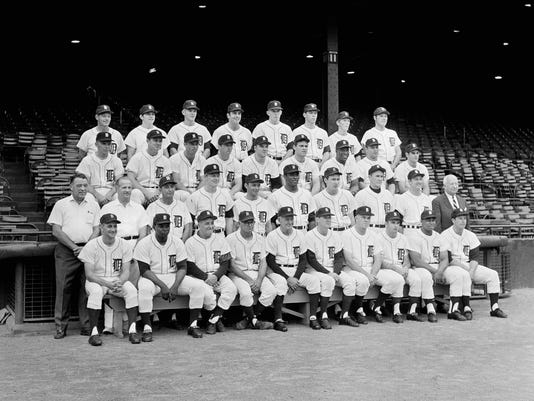
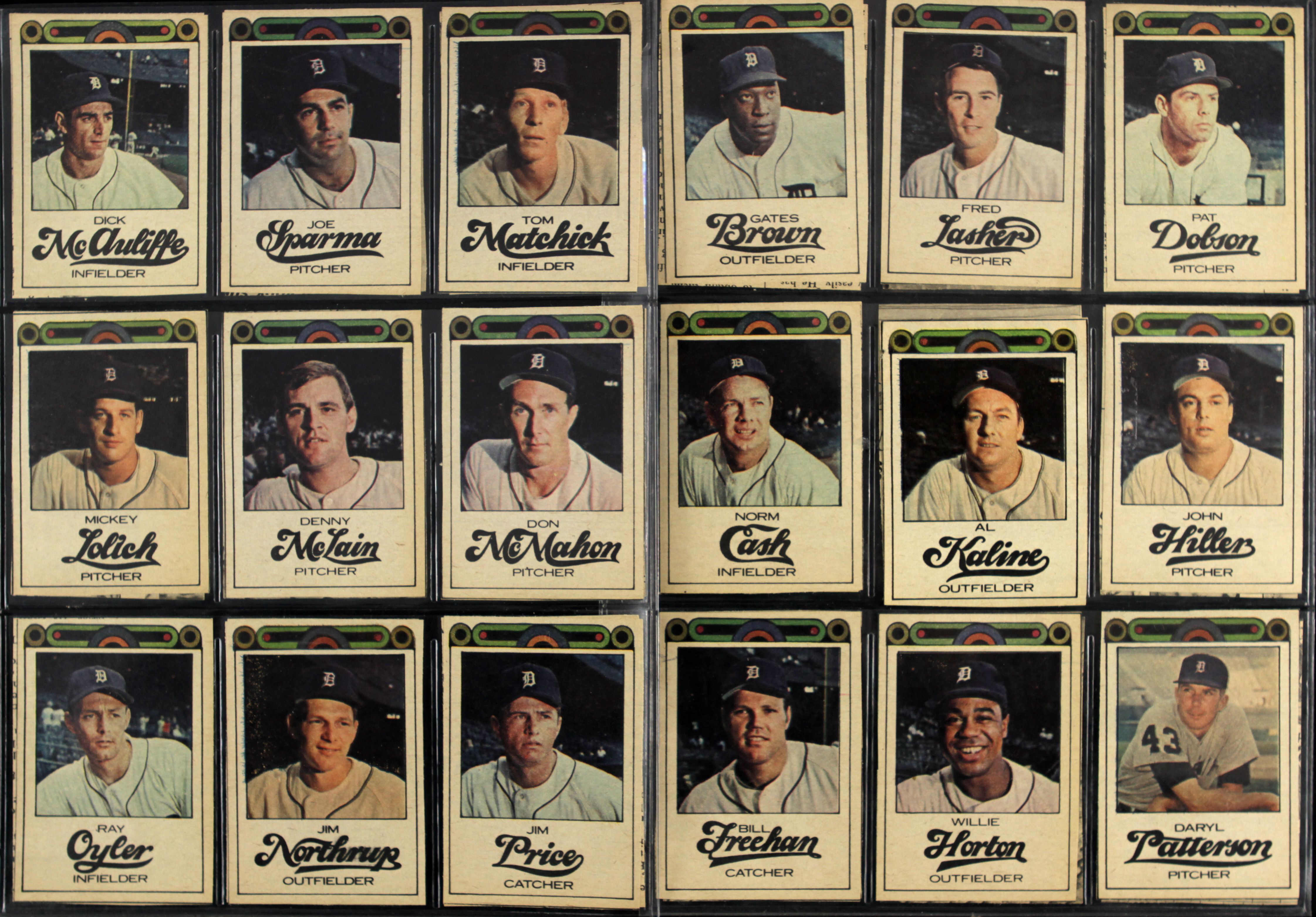
It's an interesting coincidence that I had been composing this post on Stanley Kubrick and Arthur C. Clarke's 2001, a Space Odyssey, which is film that came out in 1968, and another beloved event also occurred that year: the Detroit Tigers won the World Series.
And so, since I warned you readers that posts would begin to feature content related to the year of the post number, though not every day, that is what I am featuring today. Some 1968 content.
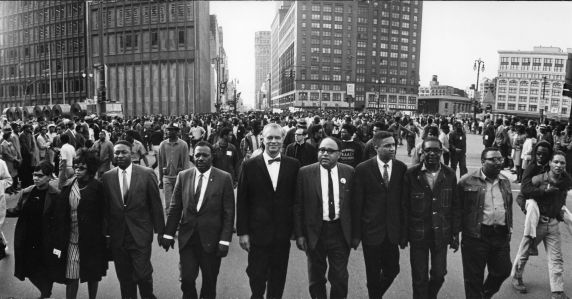
Comparing the Baseball photos and the city photos during more civil rights riots in Detroit in 1968, following the assassination of Martin Luther King, with the videos and images from 2001, a Space Odyssey shows incredible contrast. The vision of the future from the Kubrick film seems almost incapable of being made in the still predominantly black and white era of 1968 media.
So here's a tribute to the classic line "My God, It's Full of Stars" and the World Series win by the 1968 Detroit Tigers with some scenes from Detroit and the riots in particular mixed in.
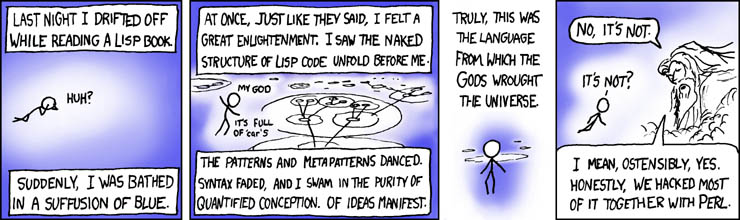
The famous line "My God, it's full of stars!" were Dave Bowman's final words as he entered the monolith in the book version of 2001: A SpaceOdyssey, in Chapter 39. That line did not occur in the original movie, although it was retrofitted to the various sequels, e.g., in the movie sequel 2010: The Year We Make Contact as being uttered by Dave Bowman as he entered the monolith.
note that the chat version, OMG it g0ts *s!!1!, was left on the editing room floor as "too improbable"...
ArthurCeeClarke wrote the book version as a protest against StanleyKubrick's obscurism and mysticism in the movie version; they had a major falling out over this. Clarke made sure the book was rushed into print in time for people to be able to read it before the movie came out. This is thus a slightly unusual situation; it's not just that the book and movie vary from each other somewhat randomly, or somewhat stupidly, as is the usual case, it's that the movie was based on Clarke's ideas, with additions by Kubrik, most of which Clarke went along with, but those that he did not agree with, are exactly where the book deviates from the movie. The two are otherwise a close match. In particular this complicated history means that it's not really possible to definitively call either the book or the movie version "the original".
Kubrik did not participate in later movies, which were based purely on Clarke's sequel books and production input.
I don't see "major falling out" over such majestic collaboration - both the book and movie are better than what either Kubrick or Clarke could have come up with alone. PairProgramming strikes again! -- PhlIp
I think it would be better to read the book first - the film is a bit hard to comprehend, but the book isn't. Both are brilliant.
KenMacLeod's ScienceFiction novel The Cassini Division (ISBN 0812568583) has the line 'My stars, it's full of gods!'. He put another Clarke in-joke in his later novel Engine City (ISBN: 076530502X).
And here I expected this to be a comment on typical CeeLanguage source.
Dave Bowman opens an editor window and sees twelve-level-deep pointer indirections everywhere... "My mind is going, Hal; I can feel it."
Is this a variation on IsaacAsimov's "The sky! It's full of... stars!" (from his short story "Nightfall")?
2001 makes MUCH more sense if you read the book, which I highly encourage.
Yeah, but I would add, See the movie first!. Maybe you can work the message from the movie alone (all the info is there, in form of music and great directing skills). The book is just a by-product of the movie.
+1. the book is for engineers with a special need to dissect god. the movie is simply what the participants would experience, from their murky & befuddled point of view...
Not true at all, the two were written concurrently, with discussion between Clarke and Kubrick. Some stuff was missed in the movie - for instance, the trip to Saturn was much better for the story line, but the effects guys weren't up to it - and it doesn't make as much sense. On the other hand, the movie takes a different angle. Isn't this discussed on SpaceOdyssey? Anyways, I read the book first and enjoyed the movie more than most people I know, but to each their own.
Part of the 2001 audio book available from audible contains an interview with Clarke where he talks about the film and the book. They wanted to base the movie on a novel, but the original ideas where a mix taken from several of Clarke's short stories. The novel was written so the movie could be built around a solid plot.
A sample of this quote is buried in the background of the music in the tune "amber" on Banco de Gaia's Last Train to Lhasa cd. Which is a very cool cd, btw.
When I saw the movie in the UnitedKingdom when it first came out (in Cinerama) those words were in it! Rumour has it that they were cut at the demand of the UnitedStates religious right, and since all critique seems to be from US sources that piece of history is unmade... It's not the only time Kubrick was the victim of the UK/US divide 'cos his version of ClockworkOrange is based on a US edition which lacked the final chapter - the ultimate horror of little Alex on the reproduction trail! But think about it. All those scenes of people (Dave B...) acting like automata in front of the beauty of space and in the face of threats to life, and then the humanizing revelation. It was a wonderful moment. Shame really. -- drnickjefferies@aol.com
I recall hearing that exact line in the movie when I saw it. I also remember the part in 2010 when he is listening to the words of Dave Bowman over and over saying "My God, it's full of stars." What is so funny is how when I rented the movie some 10 to 15 years later to watch it (synchronizing PinkFloyd's Echoes with the Jupiter And Beyond section of the movie), I was utterly confused when I did not hear those words in the movie. That would make sense though if the movie were to have been edited for religious reasons because I know that the first couple times I saw that movie, I remember that exact line from the movie. It really just jumps out at you and grabs you. Which is probably why the religious right would want to go so far as to edit one small phrase out of a movie. I'm glad to know that I am not the only one now who remembers that line being in the original movie. -- mbc@madbeatfactory.com
Rumor has it the East Indian version says, "My stars! It's full of gods!"
This quote can also be found at about 1:05 in the beginning of the track Be Serious by Etnica.
(Note: WardsWiki is not WikiPedia - we don't list every cultural reference for everything here on principle!!!)
"My God, its full of stars!" is used in Solarstone's "Rain stars eternal" track, which comes from their debut album with the same title.
Obviously they like using movie quotes: in their other famous classic track "Solarcoaster" they used words from "True Romance" movie with Tarantino's script:
 I look back and I'm amazed
 That my thoughts were so clear and true;
 That three words went through my mind endlessly,
 Repeating themselves like a broken record...
 You're so cool
 You're so cool
 You're So cool
GregEgan's short story "Singleton" mentions "an anthology of cheesy “alternate (sic) history” stories from the '90s, entitled My God, It's Full of Tsars!". Does that actually exist? From the description I wouldn't be surprised if he made it up, but then I originally thought he'd made up Repo Man, too.
Sample with the phrase ,"My God, it's full of stars", used on Billy Idol's Album, "Cyberpunk".
I just recently had the privilege to view an original road show 70mm print on July 11, 2010, it even had the "The Stylized Lion" MGM leo the lion logo. I don't remember hearing the line during that viewing. I could have just missed it, but I was pretty focused through the whole viewing... especially at the end, knowing what I was about to experience. Slitscan in 70mm :)
I recall that the phrase also crops up in The X Files (movie?) as a voice print password. I can't exactly place it though; anyone else?
Last edit June 19, 2011, See github about remodeling.
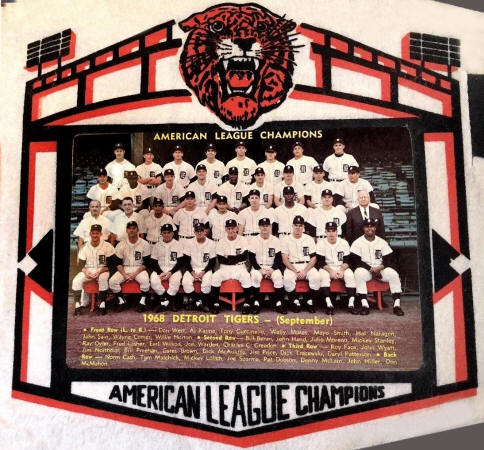
THE 1968 DETROIT TIGERS
The 1968 Detroit Tigers won the world series for just third time in franchise history (the others came in 1935 and 1945)
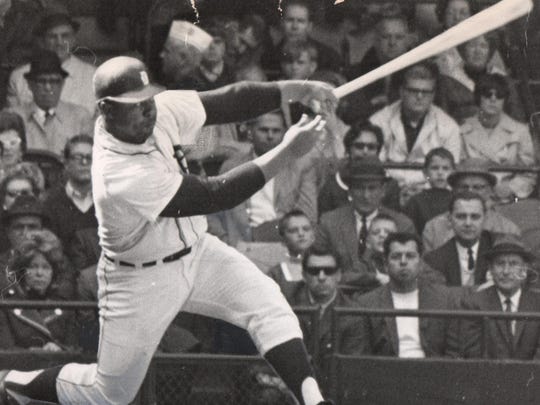
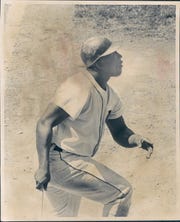
Willie Horton, shown during his Tigers career, hasn’t visited his old stomping grounds much: “I’d just rather stay away because I’ve got too many great memories.”(Photo: Detroit Free Press file photo)
The slugger: Willie Horton
MLB’s 1968 season has been called “The Year of The Pitcher.” An expanded strike zone and pitching mounds that were 15 inches high (as opposed to the 10 inches they had been previously) gave pitchers a huge advantage over hitters, and batting stats plummeted. Just one American League batter hit above .300 and just three AL hitters cleared 30 home runs.
Amid this offense-starved environment, Tigers left fielder Willie Horton thrived. His .285 batting average was fourth in the league, and his 36 homers were second behind only Frank Howard’s 44 for the Washington Senators.
The Detroit Northwestern alum finished fourth in AL MVP voting behind Boston’s Ken Harrelson (third) and Detroit teammates Denny McLain (first) and Bill Freehan (second), getting 36 percent of the vote.
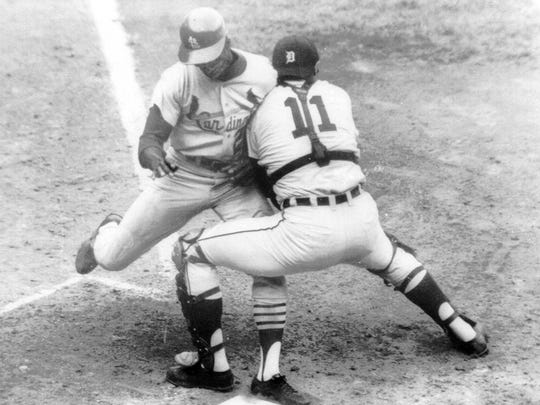
Horton’s most important contribution to the ’68 squad, however, came in the field, rather than at the plate. With the Tigers trailing 3-1 in the series and 3-2 in Game 5, Horton gunned down speedster Lou Brock at home plate to keep the Cards’ lead at one run.
"I knew from the scouting report that after the All-Star break Brock had a bad habit of trotting into home," Horton told the Free Press in 2011. "My job was to throw the ball right at (third baseman) Don Wert's head. Freehan knew the report and, when he saw Brock break his stride, he let the ball go through to him.”
Horton was dealt to the Rangers in 1977; he finished his Tigers career with 262 home runs and a .276 batting average over 15 seasons.
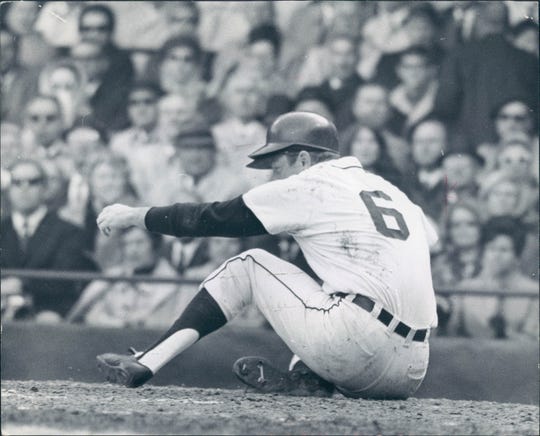
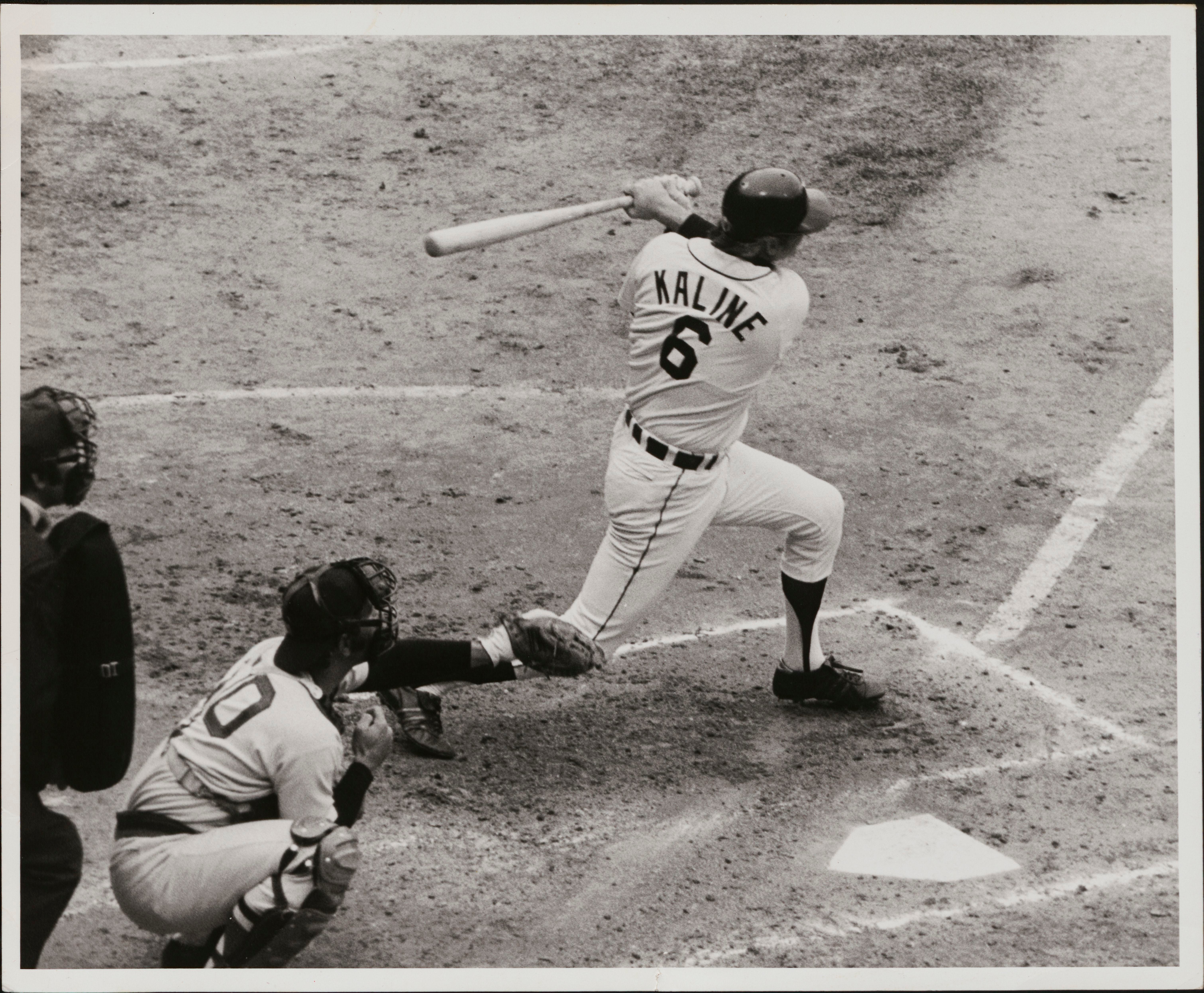
Al Kaline hit .287 in an injury-shortened 1968 season.(Photo: Detroit Free Press file photo)
The legend: Al Kaline
Kaline was already “Mr. Tiger” when the 1968 season began, with 13 consecutive AL All-Star appearances. His streak ended in 1968, however, when an errant pitch broke his arm in late May. Kaline missed just more than five weeks, finishing the year with a .287 batting average (which would have been fourth in the AL if Kaline would have had enough at-bats) and 10 home runs.
The 33-year-old also underwent a position change when he returned from the disabled list in late June, moving to first base for most of July to make way for Jim Northrup in right field. Kaline, who won 10 Gold Glove awards in the outfield, played 22 games at first base.
Despite playing in just 102 games, Kaline still drove in 52 runs and scored 49 with a .392 on-base percentage. (Boston’s Carl Yastrzemski led the AL with a .426 OBP; Baltimore’s Frank Robinson was second at .390.)
Still, by the time the World Series rolled around, Kaline was back in right, and his bat was back to normal. He hit .379 against the Cardinals, with two home runs, two doubles and eight RBIs in 29 at-bats. Kaline’s single in the seventh inning of Game 5 gave the Tigers the lead; the Tigers never trailed again in the Series.
In all, Kaline played 22 seasons with the Tigers, finishing with a .297 batting average and 399 homers. He was inducted into the Baseball Hall of Fame in 1980.
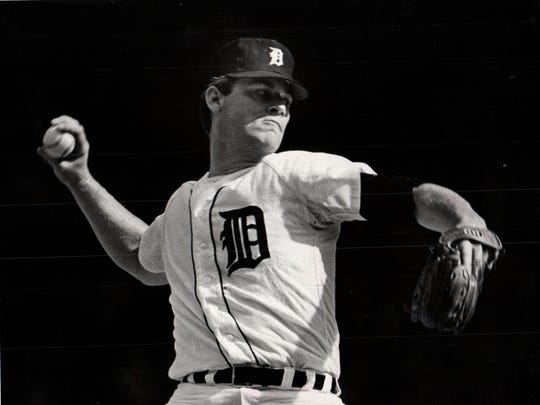
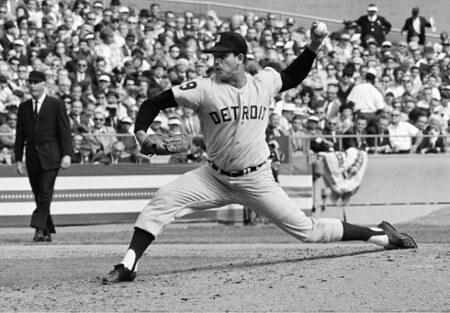
Detroit Tigers pitcher Denny McLain went 31-6 with a 1.96 ERA in 1968 to win the American League MVP and Cy Young Award.(Photo: Detroit Free Press)
The ace: Denny McLain
McLain was just 24 when he had his breakout season in “The Year of the Pitcher:” 31 wins, 28 complete games, a 1.96 ERA and just six losses. The Chicago native finished first in AL Cy Young and MVP voting that season, winning both unanimously.
Surprisingly, McLain didn’t pick up his first victory of the season until April 21, in his third start. He finished the first half of the season with a 16-2 record and a 2.09 ERA, then went 15-4 with a 1.81 ERA in the second half.
Just four pitchers in the past 100 seasons have won 30 games: Jim Bagby (31 in 1920), Lefty Grove (31 in 1931), Dizzy Dean (30 in 1934) and McLain.
As good as McLain’s 1968 was, Cleveland’s Luis Tiant (1.60), Cleveland’s Sam McDowell (1.81) and Baltimore’s Dave McNally (1.95) had better ERAs in the AL. (Bob Gibson led the NL in ERA at 1.12.) McLain’s 28 complete games did lead the league, though.
McLain also struggled for the Tigers in the World Series. He made three starts, going 1-2 with a 3.24 ERA. His lone win, though, did come in a must-win Game 6 for the Tigers.
McLain’s tenure in Detroit didn’t last long. He repeated as CY Young winner in 1969, was injured in 1970 and dealt to Washington before the 1971 season. He was out of baseball by 1973.
Tigers catcher Bill Freehan puts the tag on Cardinals speedster Lou Brock at home plate in the fifth inning of Game 5 of the World Series at Tiger Stadium, Oct. 7, 1968.(Photo: Associated Press)
The leader: Bill Freehan
Freehan entered the 1968 season as a four-time All-Star who had finished third in AL MVP voting in 1967. The Royal Oak native started the season red-hot, hitting .323 in 17 April games. Then, as the weather heated up, so did his power stroke; 23 of his 25 home runs came after May 1.
The catcher finished the year with 24 doubles, 85 RBIs and a .263 batting average. He also got plunked by pitchers 24 times, the first American Leaguer to be hit that many times since Kid Elberfeld was hit 25 times in 1911.
Freehan wasn’t a flashy player, but sportswriters took note of his performance that season. He finished second in MVP voting, behind McLain, with 58 percent of the vote. (Six different Tigers received MVP votes.)
St. Louis’ pitching gave him issues in the World Series; he went hitless in the first five games of the series and finished with an .083 batting average. Still, he was the player who recorded the final out of the Series, on a foul pop-up, followed by Mickey Lolich leaping into his arms to celebrate.
Freehan spent his entire career with the Tigers, hitting 200 homers with a .262 average over 15 seasons.
The bench: Gates Brown
Brown played in just 67 games for the Tigers in 1968, and just 16 of those were starts. Still, he played a big part in the team making the World Series.
Gates Brown hit .450 as a
pinch-hitter in 1968.
(Photo: Detroit Free Press)
The part-time left fielder made a name for himself as a pinch-hitting specialist. He hit .450 in 40 at-bats coming off the bench in 1968. (He hit .292 in his 16 starts.) No
Brown, nicknamed “The Gator,” came up in the clutch as well. He had six go-ahead hits in the eighth inning or later during the 1968 season, including walk-off game-winners in both ends of a doubleheader against the Red Sox on Aug. 11.
Jon Warden, a left-handed relief pitcher and teammate of Brown’s in 1968, told the Free Press in 2013: “He was by far the best pinch-hitter I have ever seen. He was a miracle worker, every time he came up to bat the game was on the line and he came through.”
Brown played in 1,051 games over 13 seasons with the Tigers, including 516 appearances as a pinch-hitter, and finished with a .244 batting average as a pinch-hitter.
- Bloggery committed by chris tower - 2007.08 - 10:10
- Days ago = 1832 days ago
- New note - On 1807.06, I ceased daily transmission of my Hey Mom feature after three years of daily conversations. I plan to continue Hey Mom posts at least twice per week but will continue to post the days since ("Days Ago") count on my blog each day. The blog entry numbering in the title has changed to reflect total Sense of Doubt posts since I began the blog on 0705.04, which include Hey Mom posts, Daily Bowie posts, and Sense of Doubt posts. Hey Mom posts will still be numbered sequentially. New Hey Mom posts will use the same format as all the other Hey Mom posts; all other posts will feature this format seen here.