Hey, Mom! The Explanation.

Here's the permanent dedicated link to my first Hey, Mom! post and the explanation of the feature it contains.

Also,

Showing posts with label fungus. Show all posts

Tuesday, July 7, 2026

A Sense of Doubt blog post #4159 - The Hidden Kingdom - Will Fungus Destroy Us?


Bracket Fungii


A Sense of Doubt blog post #4159 - The Hidden Kingdom - Will Fungus Destroy Us?

Some would say that when I share articles with little curation, I am in low power mode. But I am not categorizing this one that way as it's not a reprint.

I am technically still on blog vacation and in low power mode, but this one was scheduled and it was easy.

So, here it is.

I love fungus. But it's also scary.

Thanks for tuning in.


From 1440 Sunday Feb. 22, 2026


The Hidden Kingdom


Fungus 101

Fungi are nature’s decomposers, recycling ecosystem nutrients. Distinct from plants and animals, fungi are everywhere on Earth, including in water, soil, air, and our bodies. 


The fungal kingdom includes more than 1 million species, such as molds, mushrooms, and yeasts. But in this diverse group are also fungi that produce toxins in food and ones that trigger allergic reactions and asthma attacks. When certain fungal species become overgrown in or on humans, that can lead to disorders like yeast infections, ringworm, and athlete’s foot.


Fungal diseases are increasing worldwide due to factors including climate change and the increase in international travel and trade. They cost the US around $19B annually and cause around 130,000 hospitalizations each year. Although most fungal pathogens, when inhaled, are easily cleared from the human body in otherwise healthy people, people with compromised immune systems are at particular risk. In hospitals, fungal pathogens may persist on surfaces, equipment, and in the air without strict sanitation practices and then spread easily among vulnerable people.


... Read our full explainer on fungus here.


https://www.scientificamerican.com/article/a-poetic-mind-bending-tour-of-the-fungal-world/

June 24, 2020

A Poetic, Mind-Bending Tour of the Fungal World

Author Merlin Sheldrake shows how this neglected kingdom is essential for life on earth


In his book Entangled Life, scientist Merlin Sheldrake introduces us to vastly underappreciated players in the story of our planet. Fungal species count in the millions—the true number is unknown. And they serve as a platform for, and partner in, almost every aspect of life. No fungi, no us. Sheldrake’s book is a poetic letter to the associates we never knew we had. He recently answered questions about the nature of intelligence, psychedelic drugs, and creative home brews from Mind Matters editor Gareth Cook.

[An edited transcript of the interview follows.]


Why have you been drawn to study fungi?

I’ve always been fascinated by the way things transform. A solid log becomes soil, sugar becomes alcohol, a lump of dough rises into bread. But how? My questioning often led me back to fungi—metabolic wizards with a breathtaking capacity to arrange and rearrange the world. Fungi can digest many things, from wood to rock to kerosene. And without their powers of decomposition, our lives would be inconceivable. If nothing decomposed, the earth would pile up kilometers-deep with the bodies of animals and plants. I remember trying to wrap my head around this idea as a child and feeling dizzy: Our lives take place in the space that decomposition leaves behind. Composers make; decomposers unmake. And unless decomposers unmake, there isn’t anything that the composers can make with. It was a thought that changed the way I understood the world—and one that continues to fuel my curiosity about these organisms, which are responsible for so much yet live largely out of sight.


As my biological studies progressed, I became increasingly interested in symbiosis, the close relationships formed between unrelated organisms. Life is a story of intimate collaboration. And fungi are major players in some of the most blockbuster symbioses in the history of the planet. For example, plants only made it out of the water around 500 million years ago because of their relationships with fungi, which served as their root systems until plants’ ancestors were able to evolve their own. Today almost all plants depend on these fungi (known as mycorrhizal fungi, from the Greek for fungus, mykes, and root, rhiza), which form intricate networks that lace through the soil and scavenge for nutrients that they trade with their plant partners.

Learning about these relationships made the world look different. At high school, I had been taught to think of plants as autonomous individuals. But they turned out to be the product of a complex tangle of relationships: mycorrhizal fungi are a more ancient part of plant-hood than wood, leaves, flowers or even roots. What we call plants are really algae that have evolved to farm fungi and fungi that have evolved to farm algae. And their ancient relationship lies at the base of the food chains that sustain nearly all life on land. This was—and remains—a huge thought for me. I found myself full of questions and decided to study this world-making association and its subterranean networks of influence. I’m yet to emerge from this tangled enquiry and don’t imagine that I will any time soon. Fungi have received a tiny fraction of the attention given to animals or plants, and we’re only just beginning to understand this mind-bending kingdom of life. There are wide-open questions whichever way one looks.


You write about how fungi challenge the ways that we might think about intelligence. Can you explain this idea?

Classical scientific definitions of intelligence use humans as a yardstick by which all other species are measured. From this perspective, intelligence requires at least a brain and, more usually, a mind. Because fungi, like plants, don’t look or behave like us—or have brains—they have long fallen well short of these anthropocentric requirements. Thankfully, over the past few decades, the concept of intelligence has deepened and expanded. Brains didn’t evolve their tricks from scratch: many of their characteristics reflect more ancient processes that existed long before recognizable brains arose. Today many argue that it is less helpful to think about whether organisms are intelligent or not—and more productive to ask to what degree an organism (or, indeed, a computer) might display intelligent behaviors. There are a variety of definitions in circulation. Most refer to the ability of an organism to receive and process information from their environment, solve problems, adapt to new situations, and make choices between alternative courses of action.


Within this more inclusive picture, there are a number of ways that fungi press hard on questions of intelligence. Mushrooms are only the fruiting bodies of fungi: for the most part fungi live their lives as branching, fusing networks of tubular cells known as mycelium. These networks can sprawl over tens or even hundreds of meters and are subject to an unceasing flood of sensory information. And somehow, without a brain, fungi are able to integrate these many data streams, make decisions, and determine suitable courses of action. Fungi can find the shortest path between two points in a labyrinth (rather like slime molds, or Physarum, which have become poster organisms for brainless problem-solving). They can hijack insect bodies and control their behavior with an astonishing degree of precision. They can negotiate intricate trading relationships with plants. They maintain countless channels of communication with other organisms and with distant parts of themselves. The mycelium of some fungal species is electrically excitable and conducts spikes of electrical activity (analogous to the electrical impulses in animal nerve cells), and researchers are working on ways to use fungal networks as living circuit boards, or “biocomputers,” – that can solve routing problems or serve as environmental sensors.

Why do some fungi produce mind-altering drugs such as psilocybin?

The metabolic ingenuity of fungi impacts human lives in a number of ways: bread, alcohol, cheese, soy sauce, penicillin, anticancer drugs, immunosuppressant drugs that enable organ transplants—it’s a long list. But the ability of some fungi to make mind-altering chemicals, such as psilocybin, that slip into the workings of our brain is particularly intriguing and has long been a source of puzzlement and speculation. Both fungi and plants produce a wide range of substances that have a mind-altering effect on animals. Sometimes these compounds act as deterrents: nicotine, for example, is produced by some plants and paralyses insects, whereas caffeine suppresses their appetite. Mushrooms such as the death cap defend themselves with deadly poisons. Hallucinogens contained in other plants and fungi may serve to baffle herbivores and take their minds off their next meal. Ergot fungi, from which the psychedelic drug LSD was originally derived, induce a grisly portfolio of symptoms —from convulsions to a sensation of unbearable burning—which suggest that these chemicals may have evolved to discourage animal pests. (I should add that LSD itself shares none of these qualities.)


The case of psilocybin is less clear-cut. The current best estimate puts the origin of the first “magic” mushroom around 75 million years ago, among wood-rotting and dung-loving fungi—tens of millions of years before our genus Homo evolved. These habitats are also home to insects that eat or compete with fungi, leading some researchers suggest that psilocybin, with its potent neurological activity, may have evolved to defend mushrooms from hungry animals by causing confusion or suppressing their appetite. The problem is that if psilocybin has evolved to be a deterrent, it’s not very effective. There are species of gnat and fly that routinely make their homes within magic mushrooms. Snails and slugs devour them without apparent ill effect. And leaf-cutter ants have been observed actively to forage for a certain type of psilocybin mushroom and carry them back to their nest in one piece. These observations have led some to propose that psilocybin instead acts as a lure, somehow changing animal behavior in a way that benefits the fungus—although how, exactly, isn’t clear. The answer probably falls somewhere in between. Psilocybin mushrooms that are toxic to some animals could still make a good meal for those able to develop resistance. Some species of fly are resistant to the poisons produced by death cap mushrooms, for instance, and have near-exclusive access as a result.

Interestingly, today many psilocybin-producing fungi find themselves in a very different predicament. Whatever benefit psilocybin originally provided, its interaction with human minds has transformed the evolutionary fortunes of those fungi that can make it. Psilocybin certainly doesn’t act as a human repellent—to stand a chance of overdosing, a human would have to eat around 1,000 times more mushrooms than required for an average trip. Quite the opposite, in fact. Humans seek out psilocybin-producing fungi, transport them around the world and have worked hard to develop new methods to cultivate them. (Humans don’t seem to be the only creatures to take an interest: Michael Beug, one of the mycologists in charge of the poisoning reports filed by the North American Mycological Association, told me that there are a number of cases of dogs eating psychoactive mushrooms with effects that appear familiar to human observers. Only once has he dealt with reports of a cat that ate mushrooms repeatedly and seemed to become quite “bemushroomed.”) A new story of domestication is in full swing. In cupboards, bedrooms and warehouses, a handful of tropical fungal species are making new lives in otherwise inhospitable temperate climates. In colliding with a new type of animal, a chemical that might once have served to fuddle the wits of pests has been transformed into a glittering lure.


Speaking of domestication, I understand that you are fond of fermentation projects. What do you make at home? And if you were offering a taste of something to a guest, what would you choose?

Yes, I’m very fond of fermentation. Besides the fine flavors and health benefits, there’s the satisfying confusion of who —microbe or person—is domesticating who, a perspective shift that I find to be good medicine for my human-centeredness. My brother Cosmo and I have a fermentation shed where we make all sorts of things. Pickles, kimchis, and sauerkrauts are staples, as are fermented hot sauces—our chipotle hot sauce is a perennial favorite. There’s also a drink called beetroot kvass, which tastes deep and life-giving and quite unlike anything else: rich and earthy, with a twang. It’s wonderful drunk on its own but can also be mixed into any number of cocktails. If a guest showed up unannounced, I’d definitely reach for the kvass.

And then there are the alcoholic drinks, which range from dry meads to nettle beers. I made a cider with apples harvested from Isaac Newton’s apple tree—called Gravity. (Three of these trees grow in Cambridge, England—planted from cuttings taken from an old tree at Newton’s family home.) And there was a delicious cider that Cosmo and I made with apples collected from the orchard at Charles Darwin’s house, which we called Evolution. I particularly enjoy brewing from recipes documented in historical texts. Old brewing recipes are records of how yeasts have etched themselves into human lives and minds over the past few hundred years. Yeasts were only discovered to be microscopic organisms in the 19th century, which means that in many of these texts, yeasts are a silent companion—an invisible participant in human culture. Indeed, the transformational power of yeast has long been personified as a divine energy, spirit, or god. Ultimately, brewing recipes are stories that make sense of how substances decompose and are a good reminder that it matters what stories we tell. The story you hear about grain determines whether you end up with bread or beer. The story you hear about milk determines whether you end up with yogurt or cheese. The story you hear about apples determines whether you end up with sauce or cider.


Are you a scientist who specializes in neuroscience, cognitive science, or psychology? And have you read a recent peer-reviewed paper that you would like to write about? Please send suggestions to Mind Matters editor Gareth Cook. Gareth, a Pulitzer prize-winning journalist, is the series editor of Best American Infographics and can be reached at garethideas AT gmail.com or Twitter 

@garethideas.


+++++++++++++++++++++++++++++++++++++++++++++++++++++++++++++++++++++++
+++++++++++++++++++++++++++++++++++++++++++++++++++++++++++++++++++++++
+++++++++++++++++++++++++++++++++++++++++++++++++++++++++++++++++++++++

- Bloggery committed by chris tower - date - time

- Days ago: MOM = 4023 days ago & DAD = 677 days ago

- New note - On 1807.06, I ceased daily transmission of my Hey Mom feature after three years of daily conversations. I post Hey Mom blog entries on special occasions. I post the days since ("Days Ago") count on my blog each day, and now I have a second count for Days since my Dad died on August 28, 2024. I am now in the same time zone as Google! So, when I post at 10:10 a.m. PDT to coincide with the time of Mom's death, I am now actually posting late, so it's really 1:10 p.m. EDT. But I will continue to use the time stamp of 10:10 a.m. to remember the time of her death and sometimes 13:40 EDT for the time of Dad's death. The blog entry numbering in the title has changed to reflect total Sense of Doubt posts since I began the blog on 0705.04, which include Hey Mom posts, Daily Bowie posts, and Sense of Doubt posts. Hey Mom posts will still be numbered sequentially. New Hey Mom posts will use the same format as all the other Hey Mom posts; all other posts will feature this format seen here.

Thursday, October 12, 2023

A Sense of Doubt blog post #3159 - Fungus Fighting Climate Change


A Sense of Doubt blog post #3159 - Fungus Fighting Climate Change

I love fungus.

And so, I am very happy to read this news.

I hope their works continues successfully.

First, a summary from SLASHDOT followed by the article linked in the Slashdot summary.

Thanks for tuning in.


https://science.slashdot.org/story/23/10/09/0438252/can-these-fungus-studying-scientists-make-the-planet-more-resilient-to-climate-change


Can These Fungus-Studying Scientists Make the Planet More Resilient to Climate Change? (msn.com)


A team of scientists drove hundreds of miles through the steppes of Kazakhstan in search of what may be one of the largest and most diverse fungi ecosystems on Earth.

The Washington Post believes their efforts "could help make the planet more resilient to climate change."When these underground fungi come together, they form sophisticated systems known as "mycorrhizal networks...." Mycorrhizal fungi often form mutually beneficial relationships with plants. They trade essential nutrients such as phosphorus and nitrogen in exchange for carbon, and act as an extended root system, allowing plants to access water they can't reach. These networks may also prove to be invaluable for transporting carbon underground, a study published in June found. About 13 gigatons of carbon fixed by vegetation — equivalent to about one-third of all carbon dioxide emissions from fossil fuels in one year — flows through underground fungi, according to an analysis of nearly 200 data sets.

In the steppe, these plant-fungal benefits may be short-lived, however. While deserts are a natural part of Kazakhstan's ecosystem, more than half of the country's vegetation and drylands is at risk of becoming desert as well. The main drivers are large-scale intensive agriculture and increasingly warm and dry temperatures brought by climate change.... Knowing what species of fungi live here is key to understanding how to protect them, said Bethan Manley, project officer at the Society for the Protection of Underground Networks who was on the expedition. It will help determine "where we might be able to have the most effective measures of not poisoning them with fungicides or not having harmful farming practices," she said.


How a few bags of dirt could help make the planet more resilient to climate change

Story by Jonathan Moens •6d


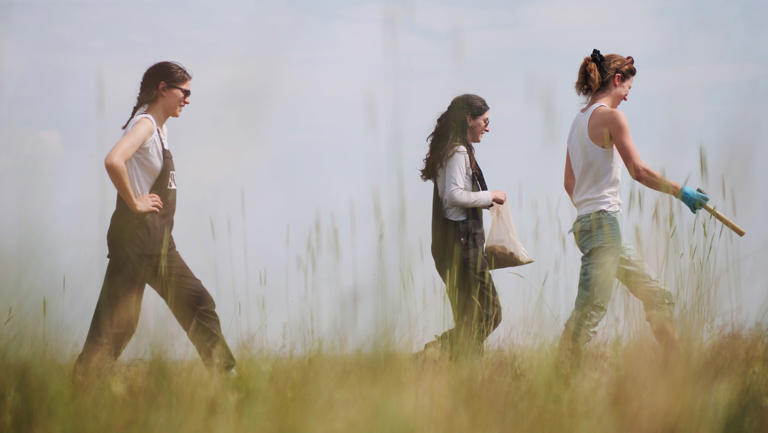
ASTANA, Kazakhstan — A team of scientists loaded into a gray minivan in this capital city earlier this year and drove for hundreds of miles west through the Kazakh steppe — a vast region marked by endless open plains of grass, abandoned farms and flower-filled meadows.

It’s a desolate, semiarid landscape, but just a few inches below the ground may lie one of the most diverse fungi ecosystems on Earth.

Across much of the planet, thin, wildly interconnected filamentous structures — known as “mycelium” — hold the earth together. When these underground fungi come together, they form sophisticated systems known as “mycorrhizal networks.” The Kazakh steppe, which stretches from the north of the Caspian Sea to the Altai Mountains, is one of the largest dry steppes in the world and is predicted to have a wild diversity of mycorrhizal fungi. But as the region becomes increasingly desert-like, many of these fungi may disappear.

“There’s a time limit, 100 percent,” said Justin Stewart, an evolutionary ecologist who led the mapping expedition. “If we collect a sample when it’s already a desert, then we’ve already lost all that diversity.”

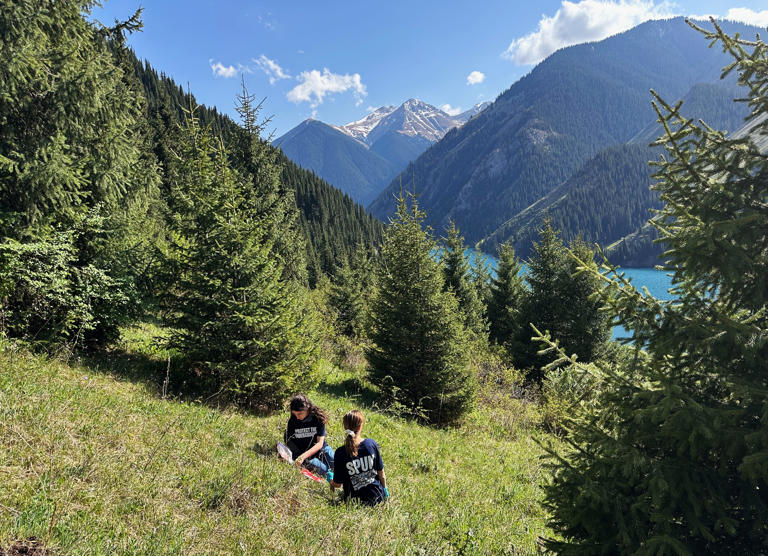
The Kazakhstan mission is part of a worldwide project led by the Society for the Protection of Underground Networks, or SPUN, a scientific research organization dedicated to mapping out underground fungi. The goal is to sample soil in 10,000 biodiversity hot spots across the world to create a global picture of what species of fungi exist and where.

How a few bags of dirt could help make the planet more resilient to climate change
How a few bags of dirt could help make the planet more resilient to climate change© Photo by Yevgeniy Lechsenko/Photo by Yevgeniy Lechsenko

The team identified these areas using a predictive map based on thousands of observations and environmental data. In it, the Kazakh steppe stood out because of its wide-ranging diversity of ecosystems. Understanding which mycorrhizal fungi survive in the harsh temperatures there may help scientists determine how these fungal communities might adapt to the climate crisis as droughts, fires and desertification become more prevalent.

The researchers chose three areas of the steppe, each with a different climate: They began in the southern deserts, then drove out west to an area dominated by vast grasslands, agricultural lands and meadows. They ended north, near the Russian border, where they entered a forest ecosystem.

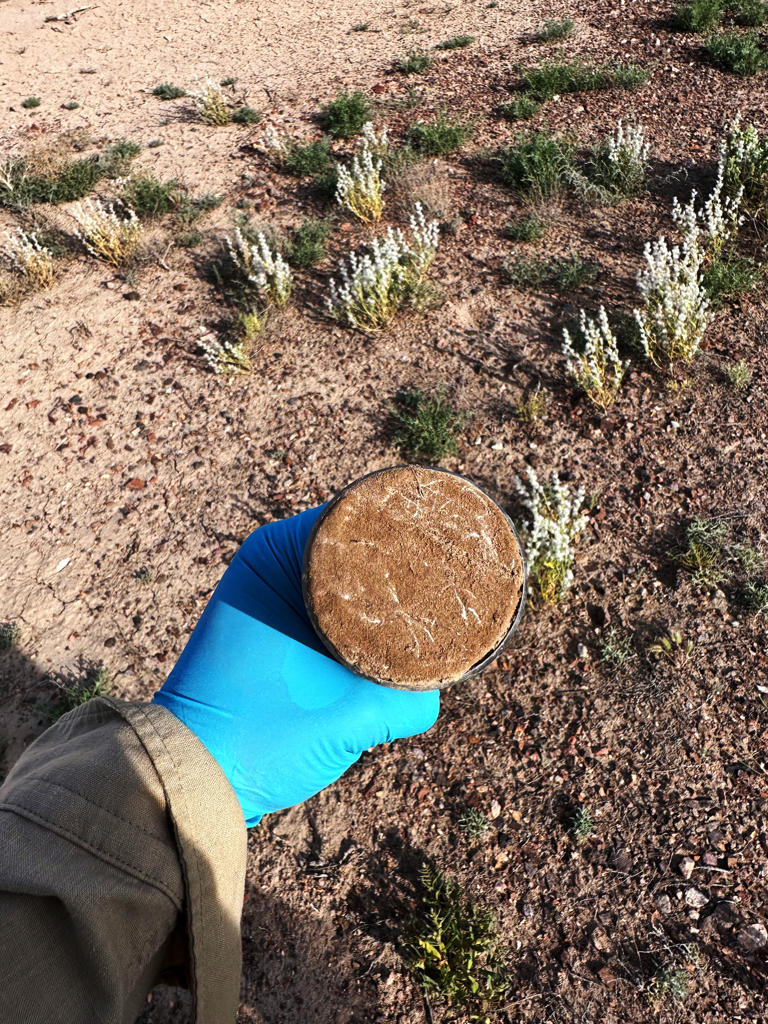
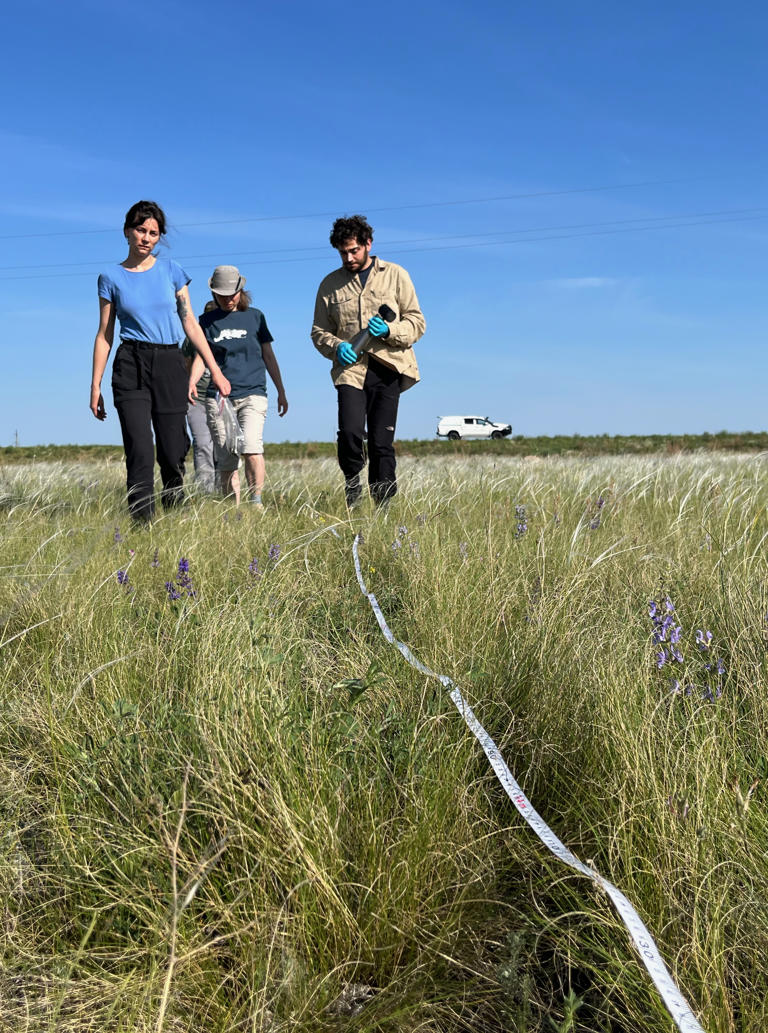
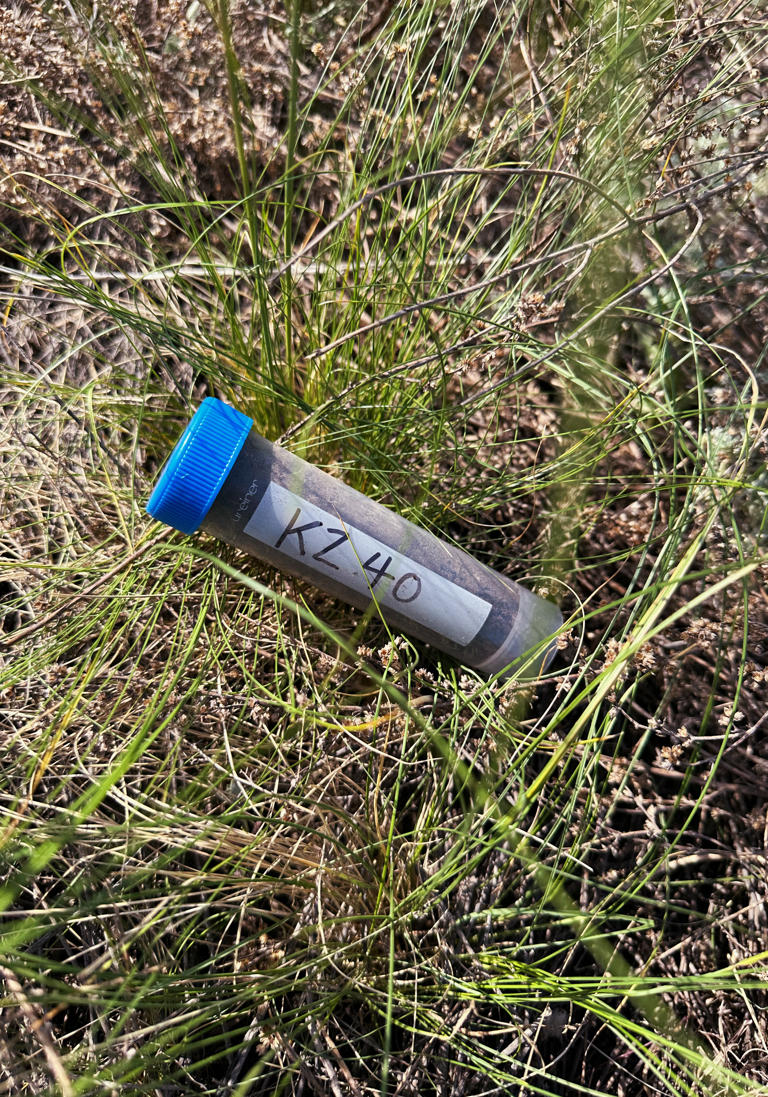
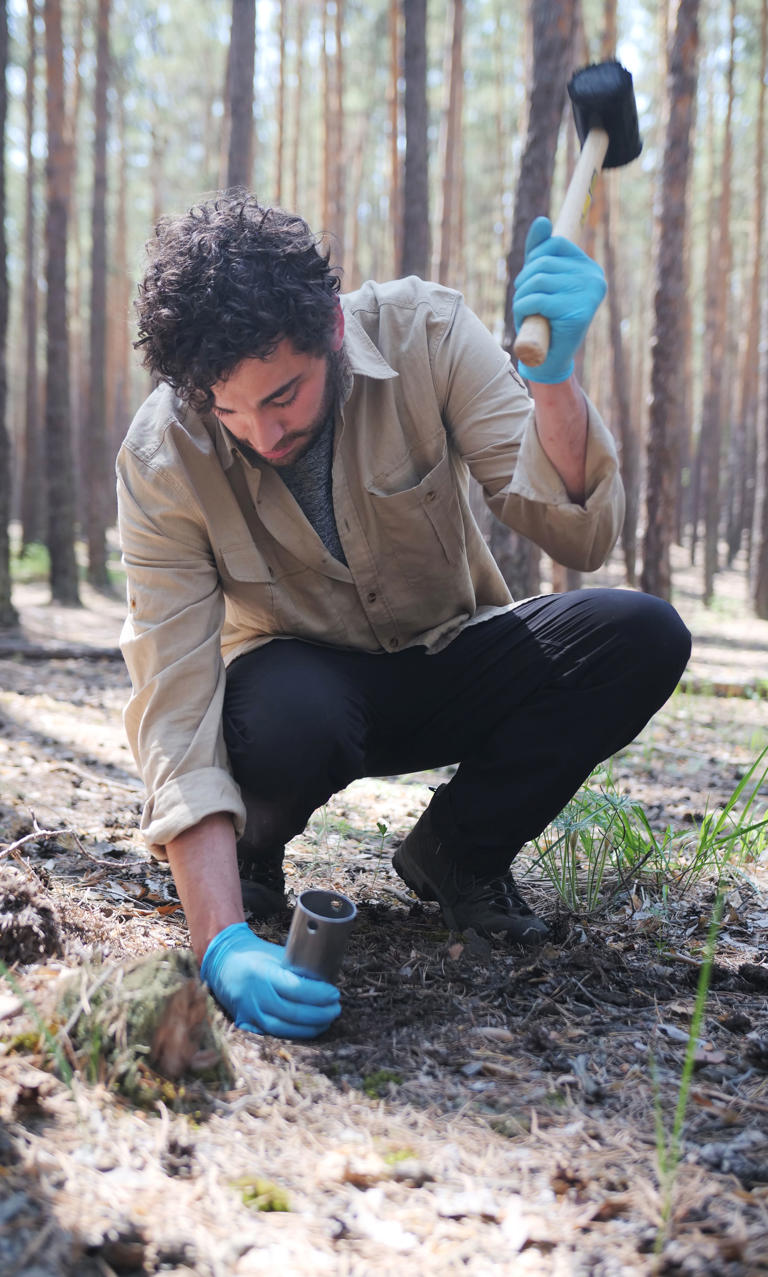
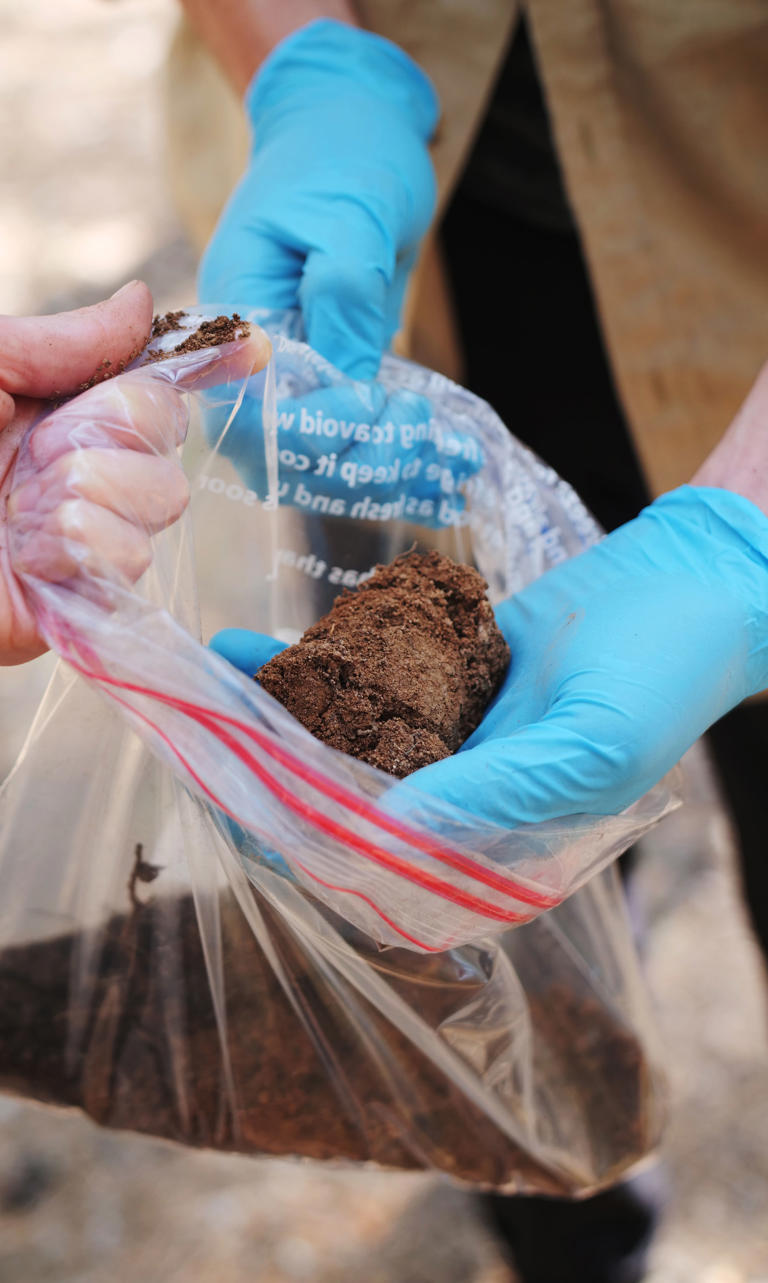
At each site they took tens of samples by mapping out a grid with measuring tape, pounding a tube into the ground to extract the soil and storing this soil in a plastic bag for mixing. These samples may help scientists unlock secrets that could one day help ecosystems capture more carbon dioxide and restore soil health — as well as the trees, plants and animal life that rely on it.

The drylands

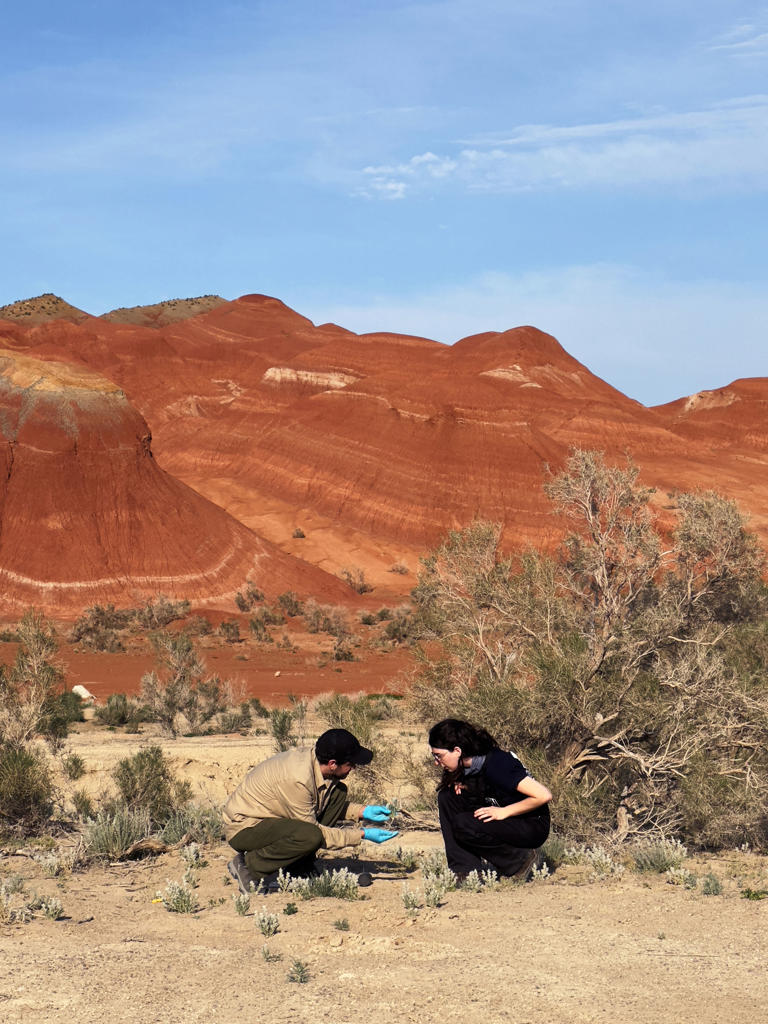
This stretch of the journey is an open area south of Astana. The soil is hard and dry, revealing deep cracks. Marmots dominate the lands, scuttling in and out of dens and grazing on the little tufts of remaining vegetation. A small lake lies in the middle of the field, but it has visibly receded under the scorching heat.

“This is super dry soil,” Stewart said. He hammers a metal tube into the ground to extract soil and pulls it out. He then uses the back of the hammer to try to release the earth into a plastic bag, unsuccessfully. “And because of that, it’s really hard to be able to get the soil out.”

Mycorrhizal fungi often form mutually beneficial relationships with plants. They trade essential nutrients such as phosphorus and nitrogen in exchange for carbon, and act as an extended root system, allowing plants to access water they can’t reach.

Bethan Manley and Stewart inspect the root system architecture of drought-adapted plants in the Aktau Mountains. The Chinese border is approximately 50 kilometers east, behind the mountains. (Photo by Genevieve Stephens/Justin Stewart)
A soil core shows roots collected at the foothills of the Aktau Mountains near the Ili river. (Photo by Justin Stewart)

These networks may also prove to be invaluable for transporting carbon underground, a study published in June found. About 13 gigatons of carbon fixed by vegetation — equivalent to about one-third of all carbon dioxide emissions from fossil fuels in one year — flows through underground fungi, according to an analysis of nearly 200 data sets.

In the steppe, these plant-fungal benefits may be short-lived, however. While deserts are a natural part of Kazakhstan’s ecosystem, more than half of the country’s vegetation and drylands is at risk of becoming desert as well. The main drivers are large-scale intensive agriculture and increasingly warm and dry temperatures brought by climate change.

The problem extends beyond Kazakhstan. Since the 1980s, deserts have moved northward by about 100 kilometers in Central Asia, including Uzbekistan, Kyrgyzstan and northwestern China. “Those areas would be experiencing more frequent drought and also hotter temperatures,” said Steve Hu, a professor of earth and atmospheric sciences at University of Nebraska at Lincoln who led the study.

It’s unclear what will happen to fungi in these increasingly harsh temperatures. Some may adapt, experts say, but many will almost certainly die.

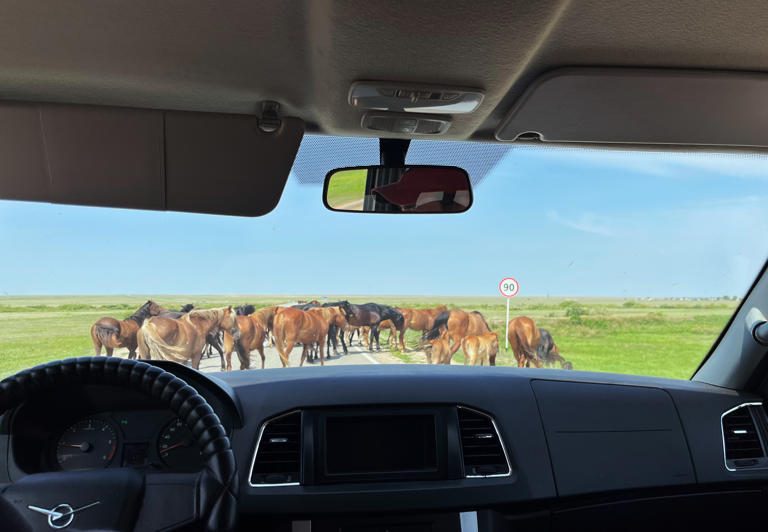
Livestock block the road on the way to Kostanay.
Livestock block the road on the way to Kostanay.© Photo by Justin Stewart/Photo by Justin Stewart

The grasslands

As the minivan moves northwest toward Kostanay, a city about 100 miles away from Russia’s southern border, the clay-red, barren landscapes give way to endless fields of grass. Herds of horses reared for meat consumption trot along the wide expanse while eagles circle the skies in search of prey.

For hundreds of years, the steppe was a region of nomadic herders. In the 1950s, under Soviet rule, the government mobilized thousands of young volunteers to produce as much grain as possible in order to alleviate food shortages, an initiative known as the virgin lands campaign.

The fields were extensively plowed, which degraded the soil, and were later abandoned because they were not productive. “It had an impact on vegetation, on steppe species — it’s now very fragmented in the northern part,” said Alyona Koshkina, a researcher at the Association for the Conservation of Biodiversity of Kazakhstan, a national conservation group.

The farming damaged the fungi networks, too, by ripping them out of the ground and stripping the soil of nutrients. The researchers hope the samples here give them more information on what kinds of fungi are able to survive in such unfavorable conditions, and compare it to other sites, such as forests and meadows.

Kelcie Walther, Stewart and Koshkina sample soil on the way to Petropavl, near the Russian border. The team sampled during a heat wave, when temperatures reached about 97 degrees Fahrenheit.
Kelcie Walther, Stewart and Koshkina sample soil on the way to Petropavl, near the Russian border. The team sampled during a heat wave, when temperatures reached about 97 degrees Fahrenheit.© Photo by Bethan Manley/Photo by Bethan Manley
A soil sample.
A soil sample.© Photo by Kelcie Walther/Photo by Kelcie Walther

Over the years, the fields have had time to slowly recover, but they face new threats. Since 2021, the Kazakh government has been working on a nine-year project to bolster the livestock sector in the steppe.

While grazing of the grasslands can help these ecosystems thrive, overgrazing may lead to further desertification, Koshkina said. To restore the steppe would mean winding back the clock to its pre-Soviet era, when the region was largely undisturbed or “pristine,” she said.

For some, that means bringing back predators that used to be in the region, including wolves and cheetahs that would hunt native saiga antelopes. But for others, such as Genevieve Stephens, project officer for the Royal Society for the Protection of Birds, restoration is less about replicating the past and more about ensuring specific ecological functions of the region are met, for instance by carefully introducing new wildlife, predators or grazers.

Either way, conservationists agree that the health of aboveground vegetation is inextricably linked to that of below-ground biodiversity. As such, mycorrhizal fungi may play an important role in shaping the steppe’s future.

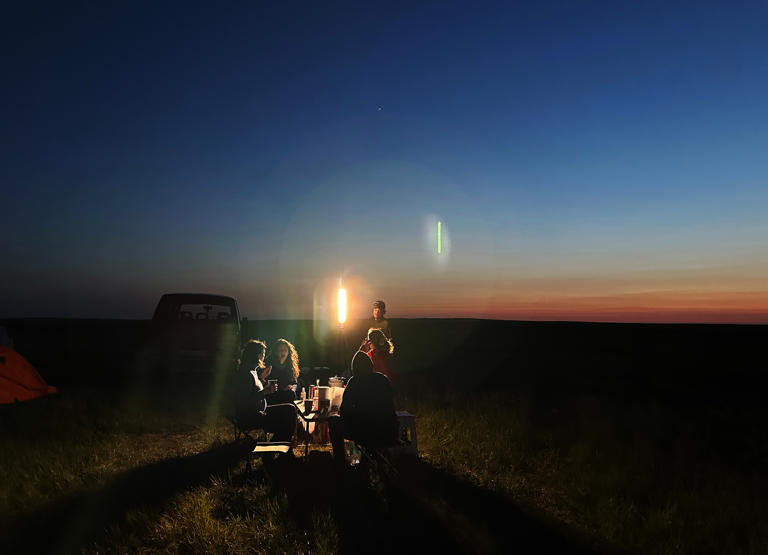
SPUN scientists and guides relax at camp near Turgay, close to the Ishim river, on an abandoned Soviet farm.
SPUN scientists and guides relax at camp near Turgay, close to the Ishim river, on an abandoned Soviet farm.© Photo by Justin Stewart/Photo by Justin Stewart

The forest

As the minivan trudges along to its final sampling spot for the day, it rocks and sways over mounds and meadows. The team is now around 1,200 miles north of the brittle landscapes it started on and has reached a much richer, more plentiful region of the steppe.

Here the ecosystem is marked by islands of trees among vast expanses of grasslands. The scientists suspect mycorrhizal fungi are faring much better in these conditions.

Knowing what species of fungi live here is key to understanding how to protect them, said Bethan Manley, project officer at SPUN who was on the expedition. It will help determine “where we might be able to have the most effective measures of not poisoning them with fungicides or not having harmful farming practices,” she said.

To date, only about 650 of the 2.2 million to 3.8 million species of fungi on Earth have been evaluated by the International Union for Conservation of Nature’s Red List of Threatened Species. Of these, about half are considered threatened.

Stewart takes a soil sample in a pine forest in the mountains near Burabay. This area acts as a negative control for the data set — it is not expected to desertify.
Stewart takes a soil sample in a pine forest in the mountains near Burabay. This area acts as a negative control for the data set — it is not expected to desertify.© Photo by Yevgeniy Lechsenko/Photo by Yevgeniy Lechsenko
An intact soil core is place in a bag with the other eight cores from a sampling site near Burabay.
An intact soil core is place in a bag with the other eight cores from a sampling site near Burabay.© Photo by Yevgeniy Lechsenko/Photo by Yevgeniy Lechsenko

Studying the steppe’s fungi could help scientists figure out whether they could thrive in other, similar climates. One way to test this would be via inoculation. If, for instance, SPUN’s work revealed that pristine steppes had higher mycorrhizal diversity compared with more degraded land, those same fungi could be transferred elsewhere to test whether they improve soil quality, said Mark Day, head of the Kazakh steppe conservation program at the RSPB, a U.K.-based conservation charity.

“It does beg the question: Could we use mycorrhizal inoculation of some kind to boost and quicken or strengthen the ecosystem restoration of previously degraded steppe grassland?” he said.

To date, only small, experimental studies of this kind have been conducted, and the results have been mixed, Stewart said. Whether such a method is transferrable and scalable to the Kazakh steppe — given its gargantuan size and ecological niche — is also unclear, but worthy of further study, he added.

What’s clear is that fungi play countless ecological roles underground — many of which help aboveground life to thrive.

At the final camping destination, the soil is still arid, but a thick carpet of feather grass reaches the researchers’ knees. The top of the grasses shimmer under the light as the sun begins to set. Pine trees tower around the team as swarms of feisty mosquitoes, flies and tiny grasshoppers notice their presence. This area of the steppe is neither desert nor pristine.

“This place is gorgeous. It’s absolutely beautiful,” Stewart said.

Stephens and Manley sample in one of the few regions in Kazakhstan with a high predicted diversity of ectomycorrhizal fungi.
Stephens and Manley sample in one of the few regions in Kazakhstan with a high predicted diversity of ectomycorrhizal fungi.© Photo by Justin Stewart/Photo by Justin Stewart

+++++++++++++++++++++++++++++++++++++++++++++++++++++++++++++++++++++++
+++++++++++++++++++++++++++++++++++++++++++++++++++++++++++++++++++++++
+++++++++++++++++++++++++++++++++++++++++++++++++++++++++++++++++++++++

- Bloggery committed by chris tower - 2310.12 - 10:10

- Days ago = 3023 days ago

- New note - On 1807.06, I ceased daily transmission of my Hey Mom feature after three years of daily conversations. I plan to continue Hey Mom posts at least twice per week but will continue to post the days since ("Days Ago") count on my blog each day. The blog entry numbering in the title has changed to reflect total Sense of Doubt posts since I began the blog on 0705.04, which include Hey Mom posts, Daily Bowie posts, and Sense of Doubt posts. Hey Mom posts will still be numbered sequentially. New Hey Mom posts will use the same format as all the other Hey Mom posts; all other posts will feature this format seen here.