A Sense of Doubt blog post #4045 - More DIE RPG and other Kieron Gillen stuff
I am still deep into my immersion in DIE, both the new LOADED series and my re-read of the original.
I had an infusion of some cash, and so I bought the DIE:RPG, and it arrived last night.
Many good ideas!
This post is full of old posts from Kieron Gillen's newsletter that I never posted and pulled from the archive.
In working on this post, I discovered that I somehow was unsubscribed to his newsletter LAST YEAR about now and somehow didn't notice until now.
So I will have another post soon that collects more DIE stuff direct from Kieron Gillen.
But here, just basically a share from those who are interested.
Thanks for tuning in.
Nick Cave’s Red Right Hand continues to be basically the closest I get to hearing a sermon. The latest is especially good, writing to a man conflicted between his family duties and his artist callings: “The creative urge is a gift not afforded to everyone, and those of us who possess it bear a responsibility to pursue that impulse wholeheartedly. However, there are other duties beyond those at the tip of your brush or nib of my pen – beautiful and sacrificial fidelities. You have committed to your wife and son to offer them more than just the crumbs of yourself, the dregs of what remains of you after a day with the devil in the shed.”
- I did a big interview about DIE over at CBR, which gives you a lot of context of what we’re doing, what our plans for the future are, and all of that. Go read.

More DIE. It’s strange as we head deeper in the final arc, and we just start putting cards on the table. Last issue was much more the thematic homage part of our focus issues – the one is where we play autobiographical games with the figure’s history, and also reveal a whole bunch of stuff. There’s one image here which has been in my head the beginning, so it’s great (i.e. horrific) to get out there. It’s also the issue which features a character created by the winner of our competition. That’s him on the cover. Hope nothing terrible happens to him. That would be awful.
Here’s the first page of the issue…

… and you can read the rest here.
You can get it from your retailer or digitally.

We’re releasing the above Thank Your Variant for Diamond UK retailers to ship with issue 16. It’s been a particularly hellish year for retailers here, and when Eric suggested doing this, it seemed like a good idea.
Press release here for details.
And lo! DIE: RPG v1.3 is available to download either from the site or itch.io.
Like the 1.2, this is additional to the core manual – it gives a bunch of whole new character sheets, replaces some sections and add some new rules. It’s main stuff is a complete rework of the Master (which can now be played by a character), an improved Godbinder, the ability to have antagonists be classes other than Masters and tweaks on everything that was in 1.2. You can read more in the post here, which mirrors the introduction to the document.
I think this is the last significant update I’ll do in the public Beta – in a real way, with the Master, it is feature complete for this part of the core game. The remaining development would be for a full campaign mode – I just finished the full DIE campaign a couple of weeks back, so “compile all that” is part of my general work in the next few weeks. It’s a lot of work, but it doesn’t seem impossible.
Honestly, if you want my actual self-inflicted goal for this, it’s “we have a complete enough manuscript that I feel no worry in kickstarting it shortly after we hit DIE 20.” I dunno if it’ll happen, but that’s where my head’s at.
I’ll likely write something about how my campaign ended next week – I was going to do this time, but it’s already an RPG heavy one, and I still remember the newsletter where I listed my fave RPGs of the year and thirty or forty of you unsubbed.
I have watched from 1-3 episodes of Come Dine With Me, every day since February. It’s been the systolic heartbeat of the day, a default choice to background noise during lunch breaks. A few months into it, I watched it, tilted my head, and realised I knew how to turn it into a role-playing game. After writing it up, playtesting, and tweaks, here it is, for free, for your amusement.
I describe it on its itch.io page like…
What will the flirty butcher who hates anything orange make of the salami-heavy starter served up by the Fitness-freak Architect? What mysterious object will the Theatrical Personal Trainer find hidden in the flat of the Pretentious Nanny? And, most importantly, will Jane be happy with her sad little life?
It’s for 3-5 players, takes 2-3 hours and doesn’t need a games master. I’ve tried to make it accessible for new folk in lots of ways (which is one reason why it’s longer than the one-page I was aiming for – I wanted to explain stuff) and in these times of isolation, a virtual dinner party competition is a fine way to spend an evening. It’s often very funny. Playtesters have regularly said their faces hurt afterwards from laughing, which is more than I could have hoped.
Here’s a video of a demonstration game with Al Ewing, C and Ella Watts to show how it works.

And here’s the link to download again.
****
****
A big interview about Eternals over at SyFy. Same warnings as last time – fairly major spoilers for issue 1 in here. If you’re sold and want to experience the work clean, bookmark it for afterwards. It’s got me doing my rambles about characters and throwing metaphors away, as if I was some kind of metaphoraphobe and I’d been covered with metaphors by some shit and I’m panicking and just have to get them away, and who actually would do that to someone with a phobia? What a shit. Let’s get them.
In other news, I’m no longer aloud to write metaphors.
Logan Dalton over at Graphic Policy starts a series of essays on the Singles Club. There’s days I still think Singles Club is the best thing we ever did. I still smile that this issue has more words on the cover than some comics have inside the comic. Also I’m reminded that one of the working titles was “CHRISTMAS SINGLES” but I went another way – the fact it is set a couple of days before Xmas and never mentioned seemed to be worth hiding, and the “Club” of it was key.
Mary Robinette Kowal doing a lecture on writing short stories as part of Brandon Sanderson’s fantasy/sci-fi writing lecture series. This is really strong, and got me thinking about how when we do writing for comics its rare we actually do it like this. As in, this is very much "how do you structure a short story, how long how it takes, how it works." The vast majority of comic writing advice is more akin "What is a sentence? How you can you make one?" There's obvious reasons for this. Part of it is writing for comics is learning to write a language. With prose you can talk prose style, but the basic concept of What Is A Sentence, What Is A Paragraph is prior knowledge. That's simply not true in comics, so we have to do that. And equally that a huge chunk of writing concepts and theory are transferable into comics ("the What to write" rather than "How to write advice") means that you don't need to. Comics is a bastard media, and we can lift stuff from everywhere. And do. But still. There's something that nags a little there, right? In comics, we spend so much time teaching people grammar and so little time teaching people how to write, just trusting the latter will sort itself out, and knowing you can't start on the latter without the former.
Which made it interesting the next thing I listened to was this, The Mask In The Mirror interviewing Alan Moore, at length about his Occultism – which is something which Alan sees interchangeably with art. If you’ve never actually listened to Alan talk about this, and you have the knee-jerk of “he talks to a sock!”, it’s worth your time. It’s also relevant to the above - I’ve heard him say it before, but that “Grimoire” means “Grammar” and “spell” is both for magic and writing is one of the things which is undeniable. As much as I beat myself up over the above (I like beating myself up. It’s my fave unhealthy productivity tool) that comics has some fundamentals which are expressed in its own language means that we have to not just touch them, but master them.
This was also great. Arkady Martine in conversation with Amal El-Mohtar. A delight.
(Yes, it appears I’ve been watching a lot of Youtube in the last week. I’ve been giving my podcasts a break while painting.)
****
I haven’t done a newsletter for a while so links have piled up. Here’s a download of stuff to think about and chew over and/or open up in a tab and forget about for months and years.
This was one of my tab-lurkers– this was in a tab for most of the year, and could have been longer. Jillian Weise on the Common Cyborg, writing about the concepts of cyborg, disability and a whole lot else. In the week Cyberpunk drops, I suspect something that’s worth reading and thinking about.
I was also interested in seeing Mike Pondsmith being profiled in the Atlantic – it’s prompted by the new game, but mainly about him, and his work. I’m aware the first Cyberpunk was likely the first indie-RPG I’d bought – its first edition’s rawness was miles away from everything else I was playing at the time.
A review of Ludocrat’s first trade over at AIPT, which is a lovely piece. I’ve said before, but I wish we lived in a place where there were more trade reviews rather than issue reviews. I know why – finances, readerships, a certain strand of anglophone comics being suspended between two formats and so on – but it’s a shame. A populist, well written site which just reviews trades for people who buy trades is something we haven’t had for a long time.
Chrissy and I spent a lovely lunchtime playing the first Mini Mystery. Puzzle stuff with a lovely online narrative wrapper. Tickles the escape-room urge, and very family friendly.
This is a new Eternals animated trailer from Marvel, which is excellent but includes a lot of material from the first issue. If you’re sold on it, I’d save it for afterwards.
I was interviewed in Three Crows magazine which is a really excellent, deep and heavyweight interview – I can’t think of the last time I went in so hard. Lots of fiction and other content in there too. Go nose.
On a similar note, Wyrd Science is a quarterly magazine of boardgames, rpgs, miniature games, etc and are doing a kickstarter. It’s already made its goal, but if you want a copy, go nose and support. They’ve done a big interview with me, and the photography is pretty astounding.
Olly MacNamee’s Once & Future’s annotations jump in on the third arc. Oh – and a preview for issue 14.
This is an excellent interview with Barry Gibb. I’ve been thinking of the BeeGees ever since reading Yeah Yeah Yeah earlier in the year, and this is more kindling for that particular fire.
I smiled at this list at the top 10 stories, and the bits of people getting miffed at things not included. Which is what lists are for, right? (There’s a Paul Morley line I often think of. To paraphrase: “a good list isn’t the end of an argument, but the start of one”. A list is meant to be a statement about how its compilers see the world, and you’re meant to think about how you see it differently.)
Meanwhile Back In Communist Russia were one of the bands I was obsessed with in the early 00s and have been thinking about recently. This is Indian Ink, probably their best album. The track to go to would be Morning After Pill, whose poetry-over-post-rock, all resplendent of fluids and regret is still a hell of a thing.
Spire is an excellent RPG of Dark Elves trying to rebel against High Elf persecution, and has some of my favourite worldbuilding in modern RPGs, and is presently in Bundle of Holding on sale. I suspect if you’re a fan of the similarly named but unconnect Spurrier/Stokley comic you’d love this.
The Writer Will Do Something by Tom Bissell and Matthew S Burns is an interactive fiction game about writing on a triple-A development, which is i) really well done ii) explains why I was never tempted to ever follow that route. Well worth a play through.
****

Ross Richie of Boom fame has started his youtube channel where he does ludicrously in depth dives into creators’ history. This is the first part of mine, which is an hour. If you click through there’s another two parts up, which are an hour each, which I think is the last one. This has a lot, for basically every stage of my life.
****
I finished off reading Emma Southon’s overview of murder in Ancient Rome, A Fatal Thing Happened On The Way To The Forum. I enjoyed it as much as I enjoyed her Agrippina, and it creates similar difficulties of how to talk about it. My immediate urge, especially in the earlier, relatively lighter chapters was to turn to words like “gossipy” or “catty” to describe its tone, except they’re words which drip misogyny and always imply a lack of seriousness. Conversely, something like “conversational” absolutely undersells its charm (and patronises). Equally, when she turns her eye to the darker areas, and she writes with anger and empathy, it’s easy to talk about its political astuteness and understanding of lives as lived between the lines in the sources, which also misrepresents the book. It is serious of intent and determinedly unsomber in approach.
What I’m reminded of is a moment when I was researching THREE. Talking to historians, I was struck time and time over how careful they are whenever I asked a question, or said something that reached a bit too far. The possibilities of where truth could lay was delineated carefully.
However, there was one night. I went to the yearly Classics association gathering. As well as revealing how much they were all fans of all the classics (7 Abba songs in a row) there was one moment. Two drinks in, a historian leans over to me and says “Now, let me tell you about bloody Cicero” and lets rip.
This book is a lot like that. It’s conversational, only in the way of a highly opinionated and highly educated friend, who’s taken you to one side and giving you it with both barrels, and not even pretending they’re not having fun doing so. It has strong opinions on what it describes, but Southon shows all her evidence as she unveils her take. She lampshades when it is her take, but without any “this is all just opinions” cowardice. She is scathingly funny, constantly. It marches into the arena, and asks you to come at it, bro. I enjoyed it enormously, and has had me reading random bits out to C all the time I was reading it.
I also suspect my use of the word “yonks” repeatedly in last week’s column was 100% its influence.
You can buy it here.
****
Chip’s latest newsletter says goodbye to Sex Criminals, and is very heartfelt and/or I’m just missing a particularly sneaky joke. It also has a McKelvie comic, which has some excellent dong. Well done, Chip and Matt. End of an era. A sexy era, which is one of the worst kind of era to end.
Gareth Hanrahan is an excellent RPG writer, who’s done all manner of things, not least a lot of work on the One Ring RPG. I have no idea what prompted him to start going through the History of Middle Earth books and doing threads about the tweaks in various drafts and so on – but whatever it is excites me – but I’m glad he did. The first thread is here and the second, picking up in Balin’s tomb, is here. From Aragorn-was-a-hard-man-Hobbit to evil Treebeard to the Ablative Hobbit strategy, there’s a lot to love – not just the reminder of exactly how chaotic the process of creation which led to the most famously ordered fantasy world was.
Brendan Caldwell writes about his time as a games journalist, and the internet dogpile after he asked a question to a developer and all associated horror. Brendan’s always been a funny and human writer, and there’s a whole lot in here. I often think of how I’d have handled it if I came in later. The answer, I suspect, is I wouldn’t.
The Coliseum Comics Forum interviewed me of many things, but mainly Marneus Calgar. Includes an inept fly by of the miniatures on my nearest shelf.
This has been sitting in my newsletter notes for months, so let’s put it here. The reason why I didn’t is that I wanted to go through in detail, and I haven’t had time. As time is clearly not coming, let’s get it out there. Here Emily Short writes about how to self train in Narrative Design. If you’re at all thinking about trying to write for games, I can’t think of anyone better than Emily ‘s advice to follow. She’s a titan and is less an article and more of a syllabus for self-improvement.
*****
|  | |
Andi Watson mailed me a new edition of his comics novella Dumped, which is a lovely hardback, and gave me a chance to read a story which since I read it in the early 00s had come to live as an example in my critical theory rather than a living story. Reapproaching it reminded me how unfair this is. If you’ve heard me mentioning it before, I use it as an example of how smart creators can write about comics culture without just making it literally about comics culture. Here is a love story between two people, both collectors, one of who literally collects rubbish. You can see why my read stuck with me – but it’s incomplete, but for Dumped’s small size, its aim is bigger. I had made the same error as those who read Seaguy as being about comics culture rather than all capitalism… and that’s still not enough. Dumped isn’t about how objects tie us down and separate us from people. It’s about people, and it elegantly eviscerates a budding relationship only to find a still living heart within. And, as always, Andi’s work is always just beautiful. You can buy it direct from Andi here.
I also finished the latest Penguin translation of The Romance of the Three Kingdoms. It isn’t about three kingdoms, getting it on. It’s the classic of the fall of the Han dynastyand the civil wars that fallow. It’s an abridgement of the whole story, with some sections included whole and others condensed (primarily battle scenes the translator thought too repetitive). Even so, it’s still over 600 dense pages, so I’ll happily take this journey through a classic I’ve never experienced before, and enjoyed its berserk energy and sheer scale. Early on, I suspected (and was right) that I shouldn’t stan Cao Cao as hard as I did in the opening, but it didn’t stop me. I also learned that Dynasty Wars’ army-punching heroes is more faithful to the text than you’d expect, especially the bit where the awesome dude uses two corpses as weapons to fight basically everyone. As a side note, discovering Creative Assembly released a Three Kingdoms Total War game last year was the closest I’ve come to being dragged back to playing a computer game in some time. I can “be” Cao Cao? I’m in, without actually being In. But I was close to In. Nice try, games.
****
Been a couple of weeks where things have been just clockwork. I started a script. By Friday, I’ve finished a script. I’m frustrated that I’m not doing enough outside that simple rhythm, but I also know that not enough is still not nothing. The tight synopsis of Eternals’ second arc is not a small thing, and basically means I can just write that. As I handed in Once & Future 21 last Friday, I don’t think I have a non-Eternals hard deadline for a new script at least a month, which means that I may just get my head down and write the whole thing.
Oh – the DIE Beta went into its campaign testing, with a closed audience. I decided it was probably time I compiled all the bits of the various PDF releases into a single volume, just for everyone’s ease of use.  Which is a lot, innit? There’s still more to write, but also stuff to cut. Maybe we don’t need all those narrative in RPG essays, right? Or maybe we do. You only get to write your fantasy heartbreaker once. I also, have a side project, have started writing – a little incursion (i.e. Scenario) inspired by the Old Forest section of Lords of the Ring for deconstructionist horror-fantasy game, Trophy. If that goes well, there’s a couple more I’m thinking of writing up too.

June Solicits are out!
Here’s DIE 18’s solicit, with Yoshi Yoshitani joining us for the alt cover.
I get the occasional mail from creator friends, asking me for advice on a topic. Last week, Alex Paknadel (he outed himself on twitter) asked me about writing team books, and I downloaded my brief thoughts to him. None of my thoughts are brief. Here’s an edited and slightly tidied version…
Right!
After I got the mail I wrote a list of five topics off the top of my head. I’m now going to go in and fill in some details beneath them. Fear the download.
1) Killing artists.
More than any other kind of book, the chance of breaking an artist on a team book is highest. You have a bunch of characters, which often do some stuff together. So you’re writing a 6 person team? That’s 6 people together. They’re in a fight? Maybe another 6 people against them.
So call your shots carefully when they’re together. Don’t call for shots of everyone in the same panel, unless you’re really giving it the space to land for the reader and you absolutely need it.
Worth noting sometimes you do: at least part of the team book is folks want to see a team doing the thing. That said, there’s exceptions to that…
2) Black Hole/Bad company . Probably Authority.
I usually say I learned to write team books by a teenage exposure to ABC WARRIORS: THE BLACK HOLE and BAD COMPANY VOL 2: THE BEWILDERNESS. This is classic 2000AD hypercompression - both explicit team books told in 5-6 page chunks. How did they do it?
ABC Warriors primarily does it by having a team member be the narrator in each episode, and then rotating the narrator between episodes. So you are both introduced to each character, and also (because the narrators are so different) introduced to the perspective of the character who is speaking., This also means this constant reintroduction isn’t in any way boring, because the characters are all so individually warped. You want to know what a sadistic fuck like Blackblood makes about everyone, right?
BAD COMPANY goes the other way, and has a strong single narrator in the form of Danny Franks, and uses them as the perspective we explore the rest of the cast. Some stuff is almost explicitly Franks interviewing team members.
Both speak to an underlying truth – a big chunk of team books are about moving the pieces around in new combinations, and seeing what they do.
I mention Authority, but the first run dose some key basic things of modern team story books – this almost procedural mode was especially popular in the 00s, and is something of a break of the Classic American Superteam approach. Speaking broadly, it does very cleanly some things superteams have always done - you can see where it moves from separating the group (so all team members gets a chance to do cool shit) and then bringing them together (so you get to do the big team book money shots).
But also note that when they’re together in a non-violent scene, someone - usually Jenny - takes lead, and almost everyone else shuts up. You may view this as the Authority becoming a solo book with a supporting cast rather than a true team book when the story demands - that speaks to it being a plot-first book. There’s not really much for the team to debate about - they all know what they’re going to do (kick people in the head, save the world).
TL;DR: Go breakdown some of your faves. How do their stories work?
3) Spotlight time.
That’s the main thing, and what all the above do, in various ways. If it’s a team book, characters need to be able to be on panel and do their thing. That it’s being sold as a team book implies that’s the promise to some degree. When planning an issue ensuring everyone gets to do their cool thing for a moment is not a bad perspective to take.
(This is pretty close to running an RPG group, btw. If someone’s not done something for a while, it’s probably time to give them a chance to do something.)
The alternative - especially in a one off - is to make the issue explicitly about an individual. Like the Black Hole, maybe this is just a single character in the team, and about how they work in the team. Of course, the effects do overlap - like in Bad Company, having the story be from an individual’s perspective you get to show how the other people are viewed by them, and so how cool their cool thing may be.
4) Team book vs ensemble cast.
That links to the above - like, what is the book, really?
There’s team books which aren’t really teams - they’re actually ensemble casts. WicDiv was one of them. DIE is much more of a team book - it’s a literal party (with Ash as the main narrator, ala BAD company). Watchmen has one scene when there’s a team, and they’re not called The Watchmen – it is absolutely an ensemble cast. Hickman’s X-men isn’t a team - it’s an ensemble cast (to the level where I think it’s more of a permanent event, or even a social novel). My Journey into Mystery is abstractly a solo book, but at times it became an ensemble book - and even a SERIES of team books, because Loki was always having to put teams together to do stuff. My Uncanny X-men run was primarily an Authority-mode procedural team book, with Cyclops taking the Jenny position and everyone having lots of focus time to do their cool thing (though see later on the exceptions).
The core difference between Ensemble books and Team books is that in a team book “I want to see the people together doing their thing” is part of the promise.
5) Split the Party.
You ever seen Dan Harmon write about Community? Clearly the story circle, but there’s also the sense that most episodes are about dividing the cast into smaller pairs and threes, and exploring that dynamic. This is in a lot of sitcoms, and an approach that 100% crosses over into team books.
5-9 people in a team normally means 7 of them standing around in a blob, with 1 person taking the leader role, and maybe one other takes the person to argue against the leader. Who is arguing likely varies, but it’s normally who feels most strongly about a situation. I suddenly find myself thinking like a team book is a zoom call, and most people are just standing and listening.
So you need to split that up.
Split up a 6 team into two groups of three, and you’ve got proper potential for actual drama. Each scene can be about those people, and by changing up the people you group together, you get to show different aspects of the characters. The Uncanny Run had a core team of nine, which is ludicrous… and when the book isn’t doing the widescreen mode, you’ll see I split the team into 3 groups of 3, and I get to play with all kinds of dynamics.
This is what team books do best, I think – in that you’ve got no single element which “needs” to be there (As in if opposed to you having a group cast around a a daredevil or a batman, readers are still broadly pissed off when you don’t see anything of the lead character). You get to see what emerges from all these different combinations, and then being able to bring them together to do the core TEAM beat when you need that.
Think about the subtext of “Avengers Assemble”. It implies that the Avengers were apart.
FROM
195: Apocalypse Romances
I’ve said for a while I was going to write about how the DIE campaign development is going, so follows a download about it. Skip down if RPGs aren’t your thing, hep cats.

“So… do you know what’s going to happen?” asks Katie.
I’ve just explained the rough shape of the present playtest we’re doing for the DIE campaign. I’ve ran a whole 35 session one before, which let it sprawl naturally. This is a much more constrained game. I’m going to wrap it all up in 10-12 sessions. As Katie has realised, there’s something implicit in that. This is a game with a core narrative and a whole bunch of mysteries. If I know when the end will be, do I know what it is?
It’s a good question, and my answer is “yes and no, mostly no”.
DIE’s campaign mode been in closed beta for a month or two now, and there’s really two parts to it. One is basically what you’d expect from most RPG campaigns – the purely mechanical stuff. There’s a convention that emerged in RPGs, which has crossed over into pop culture, that the longer you carry on playing a character, the more abilities they pick up. The Level Up. You get better, and in many traditional games, exponentially so. DIE doesn’t have the extreme scaling up of power, but you pick up significant toys. That’s all stuff we’re playtesting.
It’s also the easy part. It’s a lot of work and potentially endless, but it’s a task which any designer of games understands. What is a fun toy? What adds to the character? What detracts? What is a meaningful number of choices at any point? It’s easier because that it’s a convention that so many games have, so you have working models. You just work out what applies to your game and what doesn’t.
DIE fetishises a bunch of classical RPG stuff, and gives its own spin on them. As such, we have levels. You go up levels, normally for narrative reasons. As you do, you make choices. Each classes’ main choices are presented in a diagram which looks something like this…

That’s my playtesting google drawing mock up. There’s going to be graphic designers involved, and this is the Fool’s one as it is today, with Al’s present choices picked. You see, every time you level up, you get to pick an option to one you’ve already picked. So as you level up, you trace your way through your abilities, making your own route through the diagram. For example, both of these are characters of the same level, with valid choices…

At the moment, some of the options are more self explanatory than others. To pick Al’s sheet, “A Trip to Clown School” is a number of sub-abilities for Fools, and each time you get it, you get to pick another one. Last night Al picked Never Tell Me The Odds, which means you’ll never lose any game of chance, ever, which obviously has some fun implications for Fools. Hell, the opponent can’t even win by cheating if the Fool is willing to draw a bad luck symbol on their D6.
(Er… Fools vandalise their dice as part of their powers. That’s in the Open Beta rules if you want to know more, but it’s expanded a lot to a sort of currency in the present rules.)
Speaking broadly, in terms of raw power, you top out around level 12, and after that you’re increasing breadth of abilities or selecting things which precipitate world scale events – you’re the head of a Neo Guild, you’ve formed a splinter religion and so on. In some ways, this process has been one of just spreading out the material I had. In the first Betas, the paragons had far too many abilities, so spacing them out further in advancement has only helped the game. It’s a game with a lot of cognitive load on the GM and player, and giving one powerful tool and letting people play with it is better than giving them three which they barely touch.
Speaking broadly, the playtest has been great for this. I just understand my own system and what it does on a different level to when I pieced it together. There is less stuff mugging me because I’m am amateur now. There is still some stuff, but that’s okay. I am an amateur.
But, as I said, this isn’t the hard part, and isn’t what has been mainly on my mind.
What DIE Campaign isn’t is what you may expect from what amounts to a licensed rpg – a list of versions of the characters you see in DIE, some maps and similar. Stats for Ash. Stats for – say – Prussian Dragons, or Dire or the Master of 13 or similar. Whether DIE CORE or DIE CAMPAIGN that the world reflect the persona who visits it is key, and none of that helps. The things we spend time on are those things which are impactful to giving DIE its very specific vibe – the classes and the creatures which form a structure with those classes – as in, , the Fair and the Fallen. That said, we include enough tools so you can in a trivial way cook anyone you want yourselves easily, but the focus is elsewhere. Now, it’s possible (and if all goes well, likely) that we’ll do more down the road, but it’s not core to what we are about at its core. Any DIE campaign has to be your DIE campaign.
The problem is… what is a DIE campaign? And when I know that, how can I explain how to run one?
Speaking extremely broadly, campaign structure in classical RPGs is primarily been limited to the mechanical effects. As in, as your character gets powerful, it’s going to change how they interact with the world, which may speak to how the world views them. Trevor OrcSlayer is a very different person to Trevor DragonSlayer. You’ll get a few thoughts in the core game, but a GM is left on their own to make up a series of adventures. You’ll get separate campaigns sold, certainly, but that’s a different beast. By definition, an add on isn’t central.
The first Beta releases were designed to follow the rough narrative shape of the first arc of DIE. A group of people are dragged into a world by a hostile GM, they traverse the environment (encountering externalisations of their own internal conflicts) and then they reach the final encounter where they decide to go home or not. This was meant to ensure whatever the group ends up doing, you’ll get something which works as a story, and allows you to answer the questions the characters implicitly pose. A start and an end, and it will function as a story. Give the players sufficient input to the specifics of the start, and the freedom in between, and an ending responsive enough to player agency, and you’ll make something that is absolutely yours.
I’m presently calling this mode of play DIE CORE. It’s designed to be 2-4 sessions. As the name implies, I also consider it the core experience. The clue’s in the game. This is what most people’s first experience of the game. You play this. It’ll be a good time.
Then there’s everything else, which adds to it, expands it in all directions, and allows things to get more messy.
How does a more picaresque approach look like? To be dropped into a world, and left to explore there indefinitely… while also having the push towards something that feels dramatically meaningful. How to spend so much time in a fantasy world without the real world becoming less real – that’s an ongoing question, because the big irony that the random goblin you befriended in the first session is more real and emotionally powerful than your character’s parents in most RPGs, because you’ve been around them much longer. How can we have this as an emotionally meaningful thing while also working as a fantasy adventure – the conversation between the two being the heart of DIE?
Well, one answer is to just do DIE CORE and expand it ever outwards. That’s great. There’s a reason why most RPGs don’t include a beat by beat design of running a campaign. Rules for advancement is all they need, and if you feel you can keep the plates spinning indefinitely, you’re sorted. DIE CORE is the core, and the rest of the book essentially is various spices and unusual ingredients. You add the ones which suit your purposes.
But I also present something I call DIE CAMPAIGN, which is an expanded set of structural tools. It’s a hybrid of GM advice, GM worksheet and mechanics. While absolutely driven by the players’ choices, it presents a broad three part structure to guide the game, with each section slowly introducing the world and escalating…
The first third of the game is Exploration, where the group discover the main areas of the world they’re trapped in, and each scenario essentially acts as an introduction to each of the cast, and their obsessions. You explore a region (so getting to know the world) and because the realms is primarily echoing a character’s obsessions and flaws you get to know that one character better. In TV show language, it’s a character focus episode.
When we know all that, we pass over to Interaction – akin to THE GREAT GAME in the comic – where these individual regions start interacting with one another. What was static becomes fluid. The players start to piece together what’s going on. It’s possible that the party splits, and we have rules for that. By the end of Interaction stage, we reach Destruction – the players have discovered what they need to do to go home. Now, as the world burns, either from external apocalypse or the awful machinations of the realms, the players decide what they are going to do. And, inevitably, we end back up with the final decision of whether to stay or go.
It leads to a distinctly different experience to DIE CORE. The key thing I come back to is, while DIE CORE is a game where you are thinking about the specific awful needs that could make your players stay on a world and possibly betray their friends (“What do you want and what would you give up for it?”), DIE CAMPAIGN is a game where you’re looking for answers to questions about the people. That’s the game. Getting to know them, and the truth about them. Why did this person never finish their book? What awful compromise did this person make to get their big break? Why did this person decide to abandon all their youthful ambition? Why? Why? Why?
And are they ever going to do anything about it?
To get more specific, in DIE CAMPAIGN, when you finish your first adventure inside DIE, the GM presents a map to the players. It shows where they are, and shows three adjacent regions. This is the one for my present campaign…

Each of those regions is inspired by a detail of their backdrop which the GM (me in this case) expands to a high concept for a whole fantasy region. You ask the players which direction they’ll head in, and they choose. The exploration begins, of world and character both.
Worth noting, that at the point of showing the map, I’ve only got the vaguest of concept of what’s there. I get a chance to do my prep in the gap between each sessions. And, yes, DIE CAMPAIGN takes place on a world that’s a D20, just like the comic. But its regions aren’t the history of RPGs made flesh. They’re each of the persona’s obsessions and fears made flesh… and, when exploration phase is over, these parts of them go to war. It’s a metaphor, probably.
There’s a sense I’ve had that my game design is somehow an extension of my criticism (in the same way my comics writing has). The point of my games is to essentially render myself obsolete. It’s not enough to write a story. It’s to write a structure which allows you to make your own version of that story at home. I understand it enough to explain it well enough so you can can do it yourself, and then go on to do whatever you want. I’m trying to explain a magic spell and/or a demonic summoning ritual. You do this, and will create something. What, I can’t be sure, but it will be magical and yours.
So to return to Katie’s question, I know that by session 4 we’ll have finished the exploration stage and discovered the shape of the world and their characters. I know then the Regions will start to interact with one another, and tempt the party to split and follow their own needs for a while. I know that by session 10, one way or another, and the players will have explored the space, searching for meaning… and found it. And I know that in the final sessions, they’ll work out what they want to do about it, and what that means for them, and who lives, who dies, who goes home and who doesn’t.
In short: I know that there will be an Act 1, Act 2 and Act 3. I have absolutely no idea what any of that looks like.
I know exactly what happens. I have no idea what happens. That’s why we’re playing, and I can’t wait to find out what we discover.
And, when it’s done, that’s what I want to give to you.
Also, orcs.
from
199: No ethical creation under capitalism
It’s been a while since we’ve released something publicly, because we’ve been working away on the (much messier) closed Beta and trying to arrange the material into a coherent manual for the eventual kickstarter release. Plans are for November, circa the final DIE trade. If all goes well, they’ll be a reminder link you can sign up to in the backmatter of DIE 20.
I felt in the meantime it was worth releasing a take on the current character sheets for DIE CORE (i.e. the standard non-campaign DIE game). There’s a lot of minor rules tweaks, and a whole bunch of complete overhalls - the Master is most notable, but there’s significant changes in almost all the classes.
These sheets have also been designed for the CORE game - which, as standard, has no advancement. As such, some elements have been removed. If you want to play with the Beta’s simplified advancement, you can grab stuff from the earlier sheets. Also expect typos, as this is quick and dirty.
We also have tweaked to the new core mechanic, which you’ll find explained on the cheat sheet. To transfer any pre-existing material to the new core mechanic you reduce all difficulties by 1. So a character with Defence of 1 would now have a Defence of 0.
The new sheets and core mechanic can either be got from itch.io or the main DIE site.
from
200: the conjunction is complete
When doing the quick update for DIE beta, someone on the DIE Discord asked me an obvious question.
What do I need to read to actually play the DIE beta?
Good question. We’re in a place where we’re in a tangle of various editions, many of which including useful material, none of which is entirely sufficient.
Thankfully, it’s fairly simple.
Anything in the DIE 1.46 beta over-rules anything in the manual. You may find some useful guidance in the Rules section of the main manual, but the cheat sheet is good enough for you.
If you want to convert pre-1.46 statistics into the present-edition statistics, you just reduce all Difficulties and Defences by 1. (So Difficulty 1 is Difficulty 0). The only change that may trip you up when running the game as described in the first encounter, where you should instead run with as many lesser fallen as there are players.
All the other Beta contain useful material, but none of it is essential. The Arcana is likely most useful if you want to generate your own worlds, as it describes a bunch of other methods. If you want to try limited advancement, that’s described in the 1.3 arcana. That also includes a fairly solid one-off scenario (“Do You Remember The First Time We Killed A Kobold And Took Its Stuff”)which holds your hand through it a more than what’s described in the main manual.
Hopefully this clarifies things a little.
TL;DR: Download the Main Manual and the Current Sheets and you’ll be fine.
from - 201: I Am Terrible At This
Bar the keeping-things-ticking-over bits of work that are always on my desk, I decided to give all of last week over to just RPG stuff, allowing me to lob an update with some extra stuff over to the Beta Campaign Playtesters. It’s primarily neating up, and thickening up of options – every class needs even more of that, and tightening, but all the classes bar the Master are feeling more like a fully developed tech tree… and Master is one of the more robust classes anyway. The Dictator especially has a final missing piece added which makes them feel really Dictator-y.
Some of this is just born of where I am with the second campaign, where I actually have a Dictator player-character, so I’ve had a chance to look at the areas where they want to push. The missing piece is really to lean into what Ash does in the comic – as in, she plans. Sure, the Dictator’s powers are great (if terrifying) in the moment, but she shines when she’s had a chance to step back, see a problem and do her homework. It’s essentially a more limited version of the Flashback mechanic you’d see in something like Blades in the Dark, which only the Dictator gets to use.
The biggest conceptual addition to advancement is specific bonuses for each class when they hit a certain level. The game normally works by you working down a tree, with one pick for each level. These ones would only kick in, for each class, when you reach the level associated with your dice. So Dictator’s is Level 4, the Fool’s Level 6, the Emotion Knight at Level 8 and so on. They’re very much two-edged swords, with a strong addition to the narrative, and I’m hoping by spreading them along the advancement curve, they’ll provide some spices for people to add to their taste in a game. Each one can be the backbone of a full adventure, or a gracenote between them, or anything between.
And there’s still some me just thinking of a quirky thing and putting it in the advancement grid to see what it feels like. Here’s my first-draft of what I added to the Emotion Knight’s one, born of thinking they needed a characterful steed option…
I dunno if it’ll stick, but this is the sort of thing I do gravitate towards as an off-the-beaten-track-optional-advance. What other weirdos could there be which speaks to the core of the class? That’s one of the most interesting things about DIE RPG, as a release. In the comic, we’ve really had one strong example of each class. We’ve seen a few other Emotion Knights and Dictators, but not really anyone else, and certainly not in detail. Now, we’ll able to see what other Neos or Godbinders or whatever are like… and have Stephanie Hans draw them. That alone should be a lot of fun.
This all dovetails with my campaign reaching an end-of-season moment, where we’re to have a month break, before hopefully returning for the conclusion. I’m planning to use the month off to run a few two-shots of the game, to test the short-form with its new changes. Hopefully I’ll lob some of these online too. Also, a Beta campaign ran by someone other than me has just ended – the first to do so - which sounds like it went really well, and looking forward to hearing what feedback I get. I wonder if I should interview the GM about it for here? That sounds like it could be useful. What about it, Books?
from
We put this page in the back of the issue.

Which is an interesting looking link, right?
If you follow it, it leads you to here which is one of those customary “Click to be alerted when this kickstarter launches” pages.
DIE RPG is being published by Rook, Rowan & Decard, who announce details here We love Rook, Rowan & Decard. They’re an excellent British Indie RPG company who put out amazing work (their Heart just cleaned up at the ENnies, winning seven (count ‘em!) awards) and their values are deeply in line with our own. They’re providing an incredible perspective in making DIE as good as it can be, and are hugely experienced in doing this sort of thing.
Most importantly, their post also gives a time-frame for the campaign: November.
Cripes.
I’ll likely do an initial info sort of thing in the next newsletter for folks, so if anyone has anything they’d like to know especially, do ask. If you respond to the mail, it’ll get to me. I’m happy that we’ve got to this stage now, because the whole “All DIE RPG games are canon” aspect which ties into DIE’s ending. It all sort of lines up.
+++++++++++++++++++++++++++++++++++++++++++++++++++++++++++++++++++++++
+++++++++++++++++++++++++++++++++++++++++++++++++++++++++++++++++++++++
+++++++++++++++++++++++++++++++++++++++++++++++++++++++++++++++++++++++
- Bloggery committed by chris tower - 2603.15 - 10:10
- Days ago: MOM = 3909 days ago & DAD = 563 days ago
- New note - On 1807.06, I ceased daily transmission of my Hey Mom feature after three years of daily conversations. I post Hey Mom blog entries on special occasions. I post the days since ("Days Ago") count on my blog each day, and now I have a second count for Days since my Dad died on August 28, 2024. I am now in the same time zone as Google! So, when I post at 10:10 a.m. PDT to coincide with the time of Mom's death, I am now actually posting late, so it's really 1:10 p.m. EDT. But I will continue to use the time stamp of 10:10 a.m. to remember the time of her death and sometimes 13:40 EDT for the time of Dad's death. The blog entry numbering in the title has changed to reflect total Sense of Doubt posts since I began the blog on 0705.04, which include Hey Mom posts, Daily Bowie posts, and Sense of Doubt posts. Hey Mom posts will still be numbered sequentially. New Hey Mom posts will use the same format as all the other Hey Mom posts; all other posts will feature this format seen here.






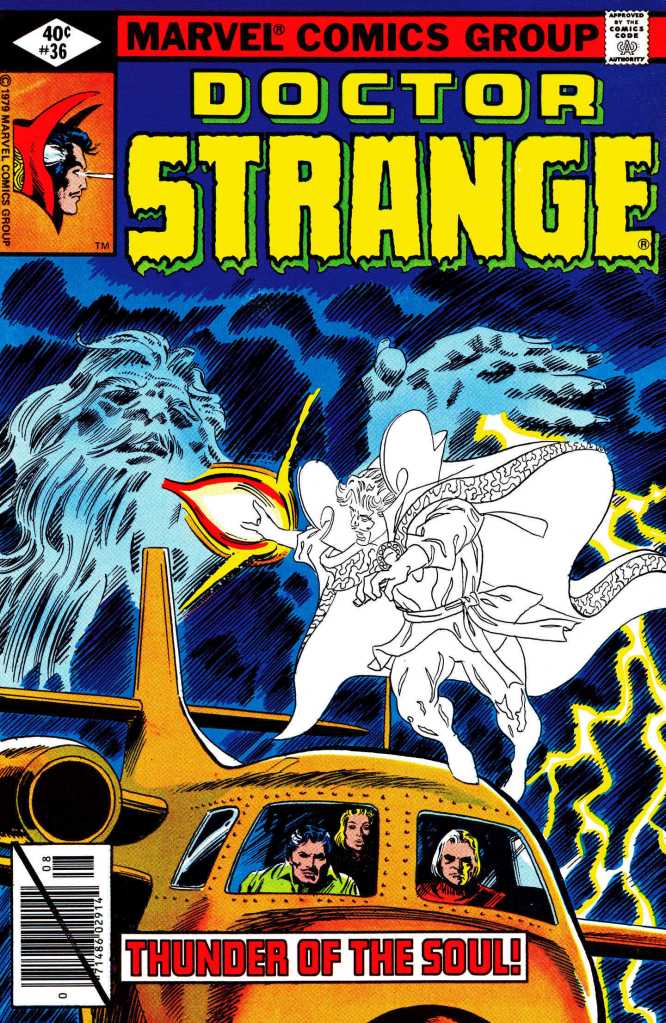
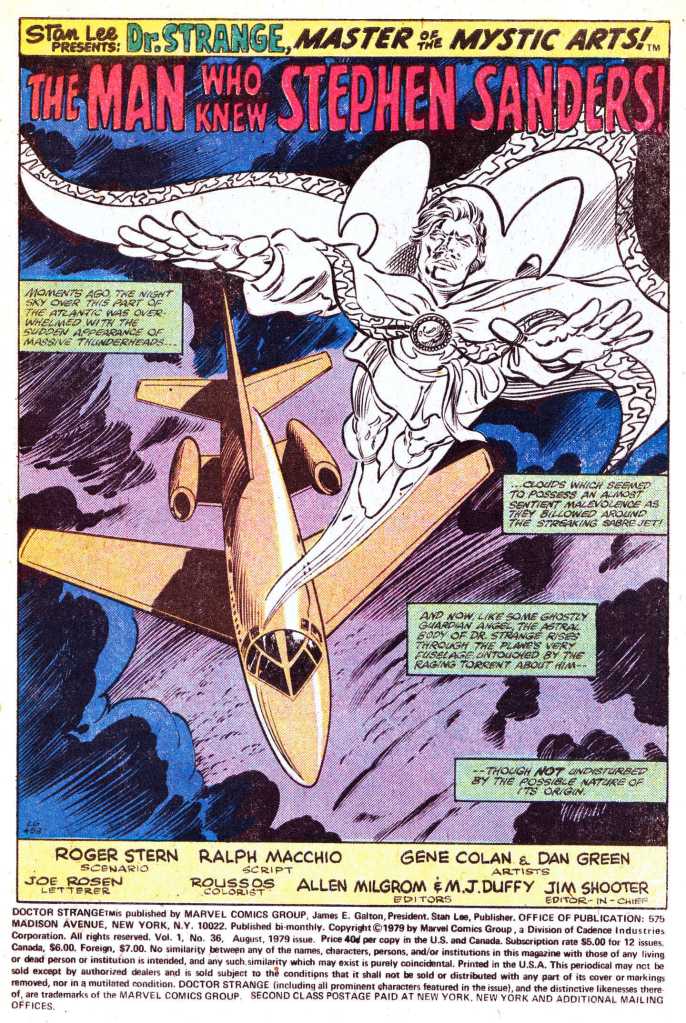




Trivia note: The costume Nighthawk was wearing in this era was designed by Len Wein.