Though the current project started as a series of posts charting my grief journey after the death of my mother, I am no longer actively grieving. Now, the blog charts a conversation in living, mainly whatever I want it to be. This is an activity that goes well with the theme of this blog (updated 2018). The Sense of Doubt blog is dedicated to my motto: EMBRACE UNCERTAINTY. I promote questioning everything because just when I think I know something is concrete, I find out that it’s not.
Hey, Mom! The Explanation.
Here's the permanent dedicated link to my first Hey, Mom! post and the explanation of the feature it contains.
Richard Jones is working on a talk for PyCon Australia and asked me about the history of the Zen of Python, Tim Peters' eternal words of wisdom, often quoted, on the essential truths of Python. At first, I couldn't find a reference to the first publication of this list, but then I did a better search of my archives and found that it was originally sent to the python-list mailing list on June 4, 1999, under the subject "The Python Way".
Interestingly enough, because I couldn't find that first reference immediately, I went back into my archives and researched the "this" module. Did you know that if you type the following at a modern Python interpreter, you get the Zen of Python?
% python3 -c "import this"
The Zen of Python, by Tim Peters

Beautiful is better than ugly.
Explicit is better than implicit.
Simple is better than complex.
Complex is better than complicated.
Flat is better than nested.
Sparse is better than dense.
Readability counts.
Special cases aren't special enough to break the rules.
Although practicality beats purity.
Errors should never pass silently.
Unless explicitly silenced.
In the face of ambiguity, refuse the temptation to guess.
There should be one-- and preferably only one --obvious way to do it.
Although that way may not be obvious at first unless you're Dutch.
Now is better than never.
Although never is often better than *right* now.
If the implementation is hard to explain, it's a bad idea.
If the implementation is easy to explain, it may be a good idea.
Namespaces are one honking great idea -- let's do more of those!
The story behind "import this" is kind of funny, and occurred totally behind the scenes, so I thought it might be interesting to relate how it happened. Maybe something to add to Guido's History of Python blog.
Anyway, back in fall 2001, Foretec was organizing the International Python Conference #10 (IPC 10, precursor to Pycon). Foretec was a conference organizing company owned by CNRI, which earlier had employed Guido, Fred, Jeremy and myself, and which by 2000 we had left to form Pythonlabs at various friendly (and occasionally disfunctional) corporate homes. By September 13, 2001 (yes, how weird!) we were working for our friends at Zope Corporation (perhaps not yet rebranded from Digitial Creations), but Foretec was still organizing the IPCs. They wanted to have a slogan for the conference, which could be printed on a t-shirt, and wanted to gather submissions from the Python community. Pythonlabs agreed to judge the entries and select a winner. However, I think Guido's wife was due any day and he didn't have much time or energy to go through the entries.
We got something like 500 entries, almost all of them terrible. Tim's exact words were "Jeez Louise, I can't look at these for more than 5 minutes w/o my brain turning to mush" and yet he still managed to do an initial cut down to something like 130 entries. While we had agreed to choose a winner, we procrastinated until the last minute and by then it was obvious that Tim and I were the only ones crazy enough to still care. Tim suggested that we trade the list back and forth between the two of us, each cutting the list in half until there was just one left. Tim is much better at math than me, and I had forgotten about Python's integer division so I was left to choose from between the last two entries: "Bite off all you like - Chewing is optional" (yes, I said most were terrible ;), and "import this". At the last minute, Tim resurrected a fun one that we had both noticed approvingly early on: "Let's we study about Python program".
While that last one had lots of appeal, I liked the irreverent, almost sneering tone of "import this". I saw the potential for a great, Michael Jackson-esque t-shirt.
As soon as we'd chosen "import this" I realized we just had to implement it. Python 2.2 was about to be released and I proposed that we turn off check-in notifications and sneak in a "this.py" module which when imported just printed the Zen of Python. Tim or Guido suggested further that we rot13 the contents of the module just for a little extra obfuscation, and we told no one outside our little group. According to my intergoogles spelunking, as soon as IPC 10 was concluded, we commemorated the event by committing this.py to what was to become Python 2.2.1, thus adding to the affront of new features in point releases. IIRC, it took a long time for someone to find our little easter egg.
That was all back in the day when the Python community had a sense of humor.
About
I'm Barry Warsaw, bass player, tai chi practitioner, and software geek. Make a little birdhouse in your soul.
+++++++++++++++++++++++++++++++++++++++++++++++++++++++++++++++++++++++ +++++++++++++++++++++++++++++++++++++++++++++++++++++++++++++++++++++++ +++++++++++++++++++++++++++++++++++++++++++++++++++++++++++++++++++++++ - Bloggery committed by chris tower - 1909.13 - 10:10 - Days ago = 1532 days ago +++++++++++++++++++++++++++++++++++++++++++++++++++++++++++++++++++++++ +++++++++++++++++++++++++++++++++++++++++++++++++++++++++++++++++++++++ +++++++++++++++++++++++++++++++++++++++++++++++++++++++++++++++++++++++
- Bloggery committed by chris tower - 2209.13 - 10:10
- Days ago = 2629 days ago
- New note - On 1807.06, I ceased daily transmission of my Hey Mom feature after three years of daily conversations. I plan to continue Hey Mom posts at least twice per week but will continue to post the days since ("Days Ago") count on my blog each day. The blog entry numbering in the title has changed to reflect total Sense of Doubt posts since I began the blog on 0705.04, which include Hey Mom posts, Daily Bowie posts, and Sense of Doubt posts. Hey Mom posts will still be numbered sequentially. New Hey Mom posts will use the same format as all the other Hey Mom posts; all other posts will feature this format seen here.
A Sense of Doubt blog post #2508 - SOLVING FIZZ BUZZ
Starting in 2011, I started studying computer science and coding. You may think this is an “out of left field” switch, but back in the late ‘70s in high school I was involved at the dawn of personal computer era with an Altair-8800. I didn’t keep on with the computer science studies in college. I was awarded a theatre scholarship, so I went with theatre and English. If I had to do it over, I might do Psychology and/or computer science.
Anyway, I was chugging along and about ready to apply for graduate school in computer science when we moved out here and my sweet deal for free tuition was lost.
However, I still thought that I might leave teaching, and so I was trying to get hired in tech. I attended a lot of conferences and meet ups. I pursued some studies on my own via the Internet. I did a Coursera series on Python.
And that’s when I heard about Fizz Buzz.
But then, as I returned to teaching and did less with tech, I completely forgot the name of the common job test for coders, and I couldn’t even remember enough details to Google it. Thankfully, just asking a couple of friends for the name of the common test in the hiring process nailed it: FIZZ BUZZ.
I knew I would remember it if I heard it.
So then, this post has been in the archive for quite a while.
So here’s my first tech post in quite some time with a good post on FIZZ BUZZ and a variety of resources.
I know. FizzBuzz has been done to death. But I want to use it as a familiar base upon which we can explore some of the common tradeoffs involved in writing and maintaining software. In this article, I'll show multiple implementations of FizzBuzz, all designed to achieve different goals, and discuss the implications of each.
What is FizzBuzz?
Hey guys, have you heard about this new FizzBuzz thing?
FizzBuzz is a very simple programming task, used in software developer job interviews, to determine whether the job candidate can actually write code. It was invented by Imran Ghory, and popularized by Jeff Atwood. Here is a description of the task:
Write a program that prints the numbers from 1 to 100. But for multiples of three print "Fizz" instead of the number and for the multiples of five print "Buzz". For numbers which are multiples of both three and five print "FizzBuzz".
Let's kick things off with a super simple, straight-forward implementation. I'll be using Ruby for this article, but the concepts apply to all languages.
This implementation gives the correct results, and there is nothing clever about it. Now let's start applying some common software development practices to it.
Don't Repeat Yourself (DRY)
I'm fairly certain that when Dijkstra descended from Mt Sinai, DRY was inscribed on one of his stone tablets. Also known as "Single Source of Truth", DRY is universally accepted as a pillar of good software design. It involves removing redundancy and duplication from our code.
Let's apply DRY to the naïve implementation above. The sources of duplication that immediately pop out to me are:
i % 3 == 0 and i % 5 == 0 both appear twice
puts appears four times
After removing those sources of duplication, our implementation looks like this:
This implementation has a few advantages. If we wanted to replace puts with something else, now we only have to change it in a single place instead of four. In the naïve example, if we were to add an additional case to the case statement, we might have forgotten to use puts, but that's not a problem here. Also, if the definition of when to Fizz or Buzz changes – for example, if it should Fizz on multiples of seven, instead of three – then we only need to change one value instead of two. In summary, DRY is reducing the likelihood of introducing bugs while updating the code.
But why stop there? I can still see duplication. The i % _ == 0 pattern appears twice, and the string literals 'Fizz' and 'Buzz' are duplicated inside the 'FizzBuzz' literal. Let's fix those up too.
Now, if the "Fizz" or "Buzz" strings need to be changed, we've got that covered. We're also covered if we want to change the way we test whether a number is divisible by another number. I don't know why we would ever need to change that, but hey, why stand in the rain of redundancy when everyone knows it's better to stay DRY? By extracting the modulo operator (%) into its own function, at least we've made the code more self-documenting. If someone else were to read the code and they didn't understand how the modulo operator worked, they could work it out based on the function name.
All these changes are aimed at insulating ourselves from bugs caused by changing the code in the future. If you need to change something that exists in multiple places, there is always the possibility that we will forget to change one of those places.
We're not insulated from all changes, however. What if some pointy-haired suit forces us to add a "Zazz" for multiples of seven? What if we have to handle an arbitrary number of Fizzes and Buzzes and Zazzes? Maybe the users want to define their own list of FizzBuzz values, with different output strings and different multiples.
Parameterization
Let's level up the implementation by removing the hard-coded constants and turning them into parameters. Here are the parameters that seem reasonable to me:
The range of integers covered.
The text that is output.
The multiples that trigger text to be output
The new parameterized implementation looks like this:
FizzBuzz doesn't fit the needs of your users? No problem. Now you can BlizzBlazz from -50 to -20, or WigWamWozzleWumpus from 10 to 10,000,000. You name it.
We've introduced a new concept: triggers. A trigger is the pairing of a divisor and an output string. There is no official name for this pairing, due to FizzBuzz being a synthetic problem as opposed to a real-world problem, but it's not that uncommon. We create abstract models of data and processes, and these models contain things that need to be named. Often times there is a pre-existing name we can use, but sometimes not. Note that this concept is completely absent from previous implementations.
The divisible_by? function was removed, because the modulo operation only happens in a single place now. It's already DRY, so we can inline it.
The triggers parameter is an array. This is important because it's called "FizzBuzz", not "BuzzFizz". Ordering matters here. We're using an array to indicate that "Fizz" must come before "Buzz" in the situation were both are triggered. If order was not important, we could have used a hash (a.k.a. dictionary, map, associative array, etc.).
This implementation is actually more DRY than the last one. We can now see that "fizz" and "buzz" are kind of duplicates of each other. When they are combined into a single array, we can get rid of the FIZZand BUZZ constants, and also the fizz and buzz variables, from the previous implementation.
There are more potential parameters than just range and triggers. What if we wanted to "Zazz" on all numbers less than 10? Our current implementation is not flexible enough to handle that change. We can, however, accommodate this change by parameterizing the "divisible by" condition.
The definition of a "trigger" has changed. The divisor has been replaced with a predicate. For those unfamiliar with Ruby, ->(i){ i < 10 } is an anonymous function that takes a parameter, and returns a boolean representing whether the parameter is smaller than 10.
Once you start passing functions as parameters to other functions, there are a lot of things that can be parameterized. At the moment, the output text from multiple triggers are combined by simple string concatenation, but we could have a function parameter that controls how the strings are combined. We could replace the puts with a function parameter that controls what happens to the results. I'm going to stop parameterizing at this point, just to keep this article shorter, but you get the idea.
Functional Programming (FP)
FP is so hot right now. All the cool kids are doing it.
FP is so hot right now. All the cool kids are doing it. In all seriousness, I do believe that programming in a functional style produces better software. This isn't an article about the merits of FP, so let's just make the assumption that it's something we aspire to, for the sake of brevity.
The last implementation is sort of written in a functional style already. We've got a higher-order function (a function that takes a function parameter) and we're using lambdas (anonymous functions).
We are mutating a string using the << operator, though. In FP, we try to avoid mutation in favour of using immutable values. However this is the least troublesome type of mutation. We're only mutating local state, and then we return the string and forget about it. Local scope is like Las Vegas: what happens in local scope, stays in local scope. Nobody saw us mutating the string, so nobody has to know. I think that everyone accepts that this sort of temporary local mutation is totally fine, except maybe Haskell zealots.
The glaring FP faux pas in the current implementation is that the fizzbuzz function has side effects. Specifically, it prints out text every time it is called. If we get rid of the side effects, we will have a pure function, which is something that we always strive for when writing in a functional style. Here is an implementation that returns the output instead of printing it:
The key difference is that range.each has been changed into range.map, which converts the range into an array of outputs that is then returned. Instead of printing each value with puts, we just puts the whole array returned from the fizzbuzz function.
The output is the same as the previous implementation, but now we have a pure function, with all the benefits that pure functions bring.
Again, this implementation produces the same output. However, the string mutation has been removed, along with the procedural-style triggers.each loop. The new implementation uses filter (called select in Ruby), another map, and join (a kind of reduction). Map, filter and reduce are the bread and butter of functional programming. This is probably overkill, considering that fizzbuzz was already a pure function beforehand.
Lazy Generation
We've come a long way from the naïve implementation, but we can go further. What if we needed to generate terabytes of output? Like, instead of calculating pi to the billionth digit, we want to calculate FizzBuzz to the billionth output. Currently, the fizzbuzz function returns an array containing all output, but we will run out of memory if we try to make a multi-terabyte array. Plus, we can't start printing output until the whole array is made. We obviously have to stop generating and returning the whole array. In this implementation, we generate a single output value, print it, throw it away, then repeat.
How you implement this really depends on the language you're in, so let me explain this implementation for people who are unfamiliar with Ruby. Firstly, instead of returning an array, the fizzbuzz function now returns an instance of Enumerator. This particular Enumerator is an infinite enumerator – that is, it starts at a given integer and keeps generating the next output value forever. loop starts an infinite loop. The yielder.yield call contains magic that stops the infinite loop from hanging the application. Every time that enumerator.next is called, the enumerator will generate and return the next output value in the sequence. Finally, the loop on the last line is another infinite loop that keeps printing the next output value forever. Ruby can handle arbitrarily large integers, so this will literally run until the i variable is a single number so big that it won't fit in memory. That's a number so big that we can consider it infinite for all practical purposes.
This is the concept of "laziness" in software design. Think of it like a demotivated employee. They sit there doing nothing until you ask them for something, then they do the minimum amount of work necessary to give you what you asked for.
Although there is still some functional-style code at the core, this isn't very functional anymore. Enumerators are stateful, and every call to next is mutating the enumerator. This implementation is still DRY and parameterized, though.
Polishing For Distribution
This FizzBuzz implementation is super flexible now – some might say too flexible. We've got to open source it. This powerful, reusable functionality needs to be made available to everyone.
But we can't just dump it on github. What about documentation, namespacing, and unit tests? I mean, it's currently just a script that prints out results in an infinite loop.
The last step – the last step I'm going to demonstrate in this article, at least – is to polish the code for consumption by other developers. This should include writing tests, and usage documentation, but I'm not going to show those here. Here is the ultimate FizzBuzz implementation:
moduleFizzBuzzDEFAULT_RANGE=1..100DEFAULT_TRIGGERS=[['Fizz',->(i){i%3==0}],['Buzz',->(i){i%5==0}],]### Makes an array of FizzBuzz values for the given range and triggers.## @param range [Range] FizzBuzz integer range# @param triggers [Array] An array of [text, predicate]# @return [Array] FizzBuzz results#defself.range(range=DEFAULT_RANGE,triggers=DEFAULT_TRIGGERS)enumerator(range.first,triggers).take(range.size)end### Makes a FizzBuzz value enumerator, starting at the given integer, for the# given triggers.## @param start [Integer] The first integer to FizzBuzz# @param triggers [Array] An array of [text, predicate]# @return [Enumerable] Infinite sequence of FizzBuzz results, starting with `start`#defself.enumerator(start=DEFAULT_RANGE.first,triggers=DEFAULT_TRIGGERS)Enumerator.newdo|yielder|i=startloopdoparts=triggers.select{|(_,predicate)|predicate.call(i)}i_result=parts.size>0?parts.map(&:first).join:i.to_syielder.yield(i_result)i+=1endendendend
And here is some example usage code, with example output:
Everything is inside a module called FizzBuzz. It's an anti-pattern for third party code to pollute the global namespace, so we want to tuck everything underneath a single namespace to be a good citizen.
All the code that prints the output is gone now. That's not really code worth sharing. The reusable part is the output generation.
The fizzbuzz function has been renamed to enumerator, which better describes its purpose.
All parameters are now optional. Maybe users want plain-old vanilla FizzBuzz without all the fancy bells and whistles, so we provide sensible defaults. Users of this implementation don't even have to learn what a "trigger" is if they just want standard FizzBuzz output.
There is a new function called range that returns an array, like older implementations used to. You can't know what other peoples use case will be, so it's not nice to force everyone to use the enumerator API if they don't need it. The range function is a "convenience" function that provides a simpler interface to a more complicated API. If you want to get all gang-of-four, you could call it a "facade". It uses an enumerator under the hood, to keep things DRY.
One subtle difference is the to_s call. In previous implementations, the output would either be a string or an integer. This is somewhat of a no-no. We've just been printing the output values, and in Ruby you can print integers or strings and everything works fine. But what if a user of the library writes some code that only works for strings? It will crash on the integers. To avoid confusion, this implementation converts integers to strings before returning them. Now output values are always strings, so nobody has to account for two different types.
All functions have documentation for parameters and return values. There should also be a separate document that contains examples of how to use the library, such as a README.md file.
The last step is to package up the code for whatever package management system the language provides. In the case of Ruby, we'd be writing a gemspec and a rakefile to build and tag versions of the gem, and publish builds to rubygems.org.
What Have We Done?
The final implementation represents a veritable explosion of complexity.
Let's reflect on the journey we have just taken. You may have thought that I was demonstrating how to improve the code in every iteration. Or maybe you thought that I thought I was improving the code. Not so. Every iteration increased the complexity, and cost time. That's not what we want. We want functionality without bugs, and we want it as cheaply as possible.
The first implementation uses these methods: upto, %, ==, puts. It has about 10 expressions/statements.
The final implementation uses these methods: range, enumerator, first, take, size, select, call, map, first, join, to_s, yield, +, ==. It has about 20 expressions/statements. It has higher-order functions and lambdas. It introduces the concept of triggers, and infinite enumerators. It also comes with a bunch of documentation, tests, and other supporting files. On top of that, it doesn't even print out the results – that part is left up to the user of the library.
The final implementation represents a veritable explosion of complexity. Complexity bad. More code means more bugs, slower maintenance, and a steeper learning curve for other developers. We could have taken it further, too. We could have done performance optimisation, added concurrency, etc. There are plenty more ways to parameterize the code. Soon enough, you're implementing a DefaultFizzBuzzUpperLimitParameter, several levels deep into an inheritance hierarchy.
You Ain't Gonna Need It
We must be honest with ourselves about our requirements. When we choose the quick but inflexible implementation, we're usually saving time.
I guess what I'm trying to get at here is the essence of YAGNI: You Ain't Gonna Need It. YAGNI is up there with DRY, in terms of importance. If you're not certain that you need it, then YAGNI. But isn't it better to add the flexibility now, so we save time later when the change request comes in? YAGNI. Adding flexibility isn't free. It costs time, and it adds unnecessary complexity to the codebase. Complexity is like a mortgage – you're going to be paying interest on it. You may have heard of the term "technical debt" before.
When we choose the quick but inflexible implementation, we're usually saving time. If a change request comes in later, we can spend that saved time implementing the more complex solution. If the change request doesn't come in, then we win! We're laughing all the way to the chronological bank.
Does that mean that the final and most complex implementation is a waste of time? Usually, but not always. Maybe you truly need to generate a few terabytes of FizzBuzz output. A simple implementation is not going to cut it, in that case. Maybe you have strange requirements which make all that parameterization necessary. Maybe it's going to be used by lots of other developers in lots of other projects. The implementation that you choose really depends on your exact requirements.
But we must be honest with ourselves about our requirements. Do we really need terabytes of boutique FizzBuzz output? Really? Is it written in stone somewhere? Can we start with a simpler implementation, and extend it if it becomes necessary? In the absence of a definitive answer, lean towards YAGNI.
Evidently writing about the FizzBuzz problem on a programming blog results in a nigh-irresistible urge to code up a solution. The comments here, on Digg, and on Reddit – nearly a thousand in total – are filled with hastily coded solutions to FizzBuzz. Developers are nothing if not compulsive problem solvers.
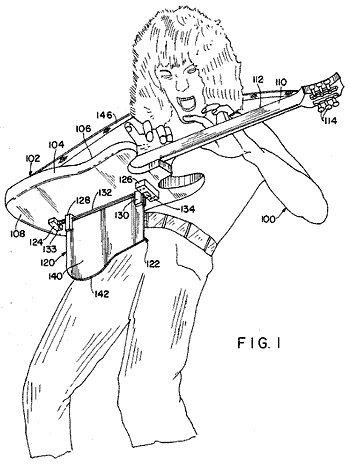
It certainly wasn't my intention, but a large portion of the audience interpreted FizzBuzzas a challenge. I suppose it's like walking into Guitar Center and yelling 'most guitarists can't play Stairway to Heaven!'*
You might be shooting for a rational discussion of Stairway to Heaven as a way to measure minimum levels of guitar competence. But what you'll get, instead, is a blazing guitarpocalypse.
I'm invoking the Wayne's World rule here: Please, No Stairway to Heaven.
FizzBuzz was presented as the lowest level of comprehension required to illustrate adequacy. There's no glory to be had in writing code that establishes a minimum level of competency. Even if you can write it in five different languages or in under 50 bytes of code.
The whole point of the original article was to think about why we have to ask people to write FizzBuzz. The mechanical part of writing and solving FizzBuzz, however cleverly, is irrelevant. Any programmer who cares enough to read programming blogs is already far beyond such a simple problem. FizzBuzz isn't meant for us. It's the ones we can't reach – the programmers who don't read anything – that we're forced to give the FizzBuzz test to.
Good software developers, even the ones who think they are Rockstars, don't play Stairway to Heaven. And instead of writing FizzBuzz code, they should be thinking about ways to prevent us from needing FizzBuzz code in the first place.
- Bloggery committed by chris tower - 2112.30 - 10:10
- Days ago = 2372 days ago
- New note - On 1807.06, I ceased daily transmission of my Hey Mom feature after three years of daily conversations. I plan to continue Hey Mom posts at least twice per week but will continue to post the days since ("Days Ago") count on my blog each day. The blog entry numbering in the title has changed to reflect total Sense of Doubt posts since I began the blog on 0705.04, which include Hey Mom posts, Daily Bowie posts, and Sense of Doubt posts. Hey Mom posts will still be numbered sequentially. New Hey Mom posts will use the same format as all the other Hey Mom posts; all other posts will feature this format seen here.