Though the current project started as a series of posts charting my grief journey after the death of my mother, I am no longer actively grieving. Now, the blog charts a conversation in living, mainly whatever I want it to be. This is an activity that goes well with the theme of this blog (updated 2018). The Sense of Doubt blog is dedicated to my motto: EMBRACE UNCERTAINTY. I promote questioning everything because just when I think I know something is concrete, I find out that it’s not.
Hey, Mom! The Explanation.
Here's the permanent dedicated link to my first Hey, Mom! post and the explanation of the feature it contains.
A Sense of Doubt blog post #4163 - SoD Reprint from 2021 - Reading - Best Selling Novels
Another reprint with lots of commentary on one of my favorite books on writing, one I read a lot before I connected its author to the Dean Koontz whose novels I had read, like Midnight, primarily.
Thanks for tuning in.
LOW POWER MODE: I sometimes put the blog in what I call LOW POWER MODE. If you see this note, the blog is operating like a sleeping computer, maintaining static memory, but making no new computations. If I am in low power mode, it's because I do not have time to do much that's inventive, original, or even substantive on the blog. This means I am posting straight shares, limited content posts, reprints, often something qualifying for the THAT ONE THING category and other easy to make posts to keep me daily. That's the deal. Thanks for reading.
BLOG VACATION #1 - 2026 - Taking a blog vacation for a couple of weeks, until at least June 26th, 2026. But now that it's past June 26, I am not sure when I am resuming normal operations. Mostly reprints. A few simple shares (not that simple shares are out of the norm) and THAT ONE THING. Need time for other things.
A Sense of Doubt blog post #2328 - Writing Best Selling Novels - WHAT I AM READING pt.5
Welcome back to another edition of WHAT I AM READING, which is usually also associated with COMIC BOOK SUNDAY, but this Sunday, as in tomorrow, is JULY FOURTH, which for me will now always be the anniversary of the day my Mom died. Six years ago tomorrow. So, I will have another HEY MOM post tomorrow to acknowledge her death, so more on that tomorrow.
On a regular basis, I hesitate to say annually but on a regular basis, I read books about writing fiction. I have favorites, such as The Writing Life by Annie Dillard, On Writing by Stephen King, How to Write Science Fiction and Fantasy by Orson Scott Card, Science Fiction Handbook, Revised by L. Sprague De Camp and Catherine Crook De Camp as well as Story and Dialogue by Robert McKee.
And among the other favorites, I am found of Writing the Novel by Lawrence Block and How to Write Best Selling Fiction by Dean Koontz. I read both of these books before I read any fiction by either Block or Koontz. I am not really a huge Dean Koontz fan. I like some of what I have read. Midnight is a particular favorite and a frequent touchstone. But I do not read much Dean Koontz, not like my gobbling up of Stephen King novels.
Books on writing inspire me much the same as any books inspire me, both fiction and non-fiction. I like reading writers write about writing because I like to think this reading practice is part of how I hone my craft. It's not as if writers on writing reveal arcane secrets from a world into which I have no window. I feel like I am not looking into that room, the writing room, through a window. I am in the room. I might not be in the banquet hall with the other published novelists, but I am definitely writing, and so I am in the writing room.
Because I have stepped up my writing work, it is time again to read some books on writing, and so I chose Koontz's book to be first.
The thing that strikes me now as I read it -- and I have read it many times before -- is the way in which his rhetoric shaped me as a young man and how it no longer really has the same effect on me. In fact, I quite disagree with a lot of his statements.
Koontz devotes a great portion of the second chapter to criticizing academia and the literature in which academia is interested. These criticisms proved influential to me as a young man in academia, both as an undergraduate student of literature and writing and then as a graduate student in an MFA program. Koontz' arguments may in part be why I wrote a Star Trek novel as my MFA project, one my academic advisor did not even read, though she did pass me and allow me to graduate. I eschewed academic and literary fiction and want to plunge myself into popular fiction and something with a chance of being published by a commercial house.
Though my ire towards academia does not come off as petulantly as Koontz's, I did reject the literary path for fiction about which I was much more passionate.
Koontz properly characterizes the snobbery of academia toward the "popular" or the "mainstream" fiction of the time, IE. best sellers. I encountered this academic bigotry even before I submitted my Star Trek novel to the MFA program. When an Anne Rice inspired older woman enrolled in my MFA advisor's course and was churning out vampire fiction, the teacher wanted my help in looking at those manuscripts because she claimed to "not know anything" about the genre. Well, why did she need to know about the genre? Fiction is fiction. The rules of good fiction apply to all fiction. But this reaction toward that woman's vampire fiction is endemic of the attitudes in academia toward the "popular." It is seen as low brow, lesser, not as "artistic," lacking in quality, the food of the uneducated.
And yet, when one of my PhD holding friends attempted to write a Harlequin romance because she assumed it would be an easy enough route to a quick buck only to be summarily rejected, it was clear that academics cannot stoop to the low brow and be successful. To write a good Harlequin, one must steep one's self in the genre, believe in the genre, and be authentic with the writing. If a writer finds the genre to be beneath her, then this attitude will come through in the attempt, and it did, and it was rejected by the publisher.
Interestingly, since Koontz's How To on best selling fiction was published in 1981, academia has absorbed more of the popular fiction of the time. The schism between what is considered "true art" and "popular" has narrowed. People still excuse their reading (or even writing) of "trash" all the time. There's still the perception that popular books are quick, easy, and "mindless," like cotton candy. I have even held these beliefs. I have often said that I like Stephen King the most of the "popular" writers as if writers like John Gardner or Toni Morrison are not popular in their own ways and among their own audiences. But this comment of mine is meant to be dismissive, forgiving. "Please do not judge me for consuming this trash; this is good trash." And though I have often claimed that John Irving should be regarded as our modern Dickens, perhaps I should be saying that Stephen King should be so regarded. People are not standing in lines for Irving's books. Though Irving is a great writer, and I adore his work, even when I do not enjoy the book overly much, as in the 2015 effort Avenue of Mysteries, which I did not find overly gripping and had to switch from reading it traditionally and consuming it as an audio book. But King is more in line with the idea we have of Dickens as a "hack" (as he was so regarded in his time) that was still wildly popular with the "masses," and people were lining up to get their next hit of the current Dickens episode.
Thankfully, graphic novels and a great deal of "popular fiction" have become part of academic studies. And as I am currently reading Lisey's Story, which I find lyrical and complex in many ways, I would argue that the book is just artful as many so called "literary" novels. The greater acceptance of stories that deal with supernatural, fantastic, and science fictional elements reveal that works of fiction can be both chimerical and artful.
Koontz clearly suffered from inferiority complex for not being accepted by academia or perhaps for not continuing his education past the Bachelor's level, even though he attended a highly ranked state college -- Shippensburg State College of Pennsylvania.
Koontz appears to have been triggered by his high school English teacher, who wrote him and implied he was wasting his time with popular dreck and should take a crack at writing "the great American novel." Koontz balked at this notion and questioned what defines the "great American novel" as such. He feels his novels are both great and American, and they sell well and provide him with the lifestyle he wishes to have.
But then Koontz expands his argument to suggest that no one reads Melville, Hawthorne, or even Hemingway much any more. Koontz goes on from there to make many damning statements with which I disagree.
Koontz seems to think that some writers have chosen to write purely for the approval of academia and refuse to write novels with "popular appeal." There is some truth to this statement. Many snobbish writers refuse to "prostitute themselves" with work they find low-brow, mundane, sensational, and only for the uneducated masses. But the generalizations Koontz promotes that all authors with literary aspirations "turn [their] back on the masses and refuse to write novels with popular appeal" (13) is just nonsense.
After all, Koontz's definition of popularity is just as limiting and narrow as the definition of "literary fiction" that he opposes. He makes a series of generalized claims that are not well supported by his own somewhat convoluted logic. Though I agree with some of his ideas, his overall argument is deeply flawed and seems to come from insecurity and bitterness from someone denied admission to an exclusive club of which he very much wants to be a part.
"There is no merit in writing for a like-minded clique and selling two thousand copies of your book" (Koontz, 13).
No merit? Like-minded clique? That statement by Koontz is just stupid and transparently bitter.
After listing the elements of good fiction (strong plot, action, hero/heroine, convincing characters with motivations, flush backgrounds, mechanical well-written, stylistically somewhat lyrical and vivid), he falsely claims that "the academic generally has little or no use for plot in a novel" (14), which is patently false. Though post-modern novels and stories often are less works of plot than other literary devices, it is inaccurate and quite ignorant to claim that an academic novel (whatever that is) has "no use" for plot.
Later, Koontz makes one of his most puzzling statements about the role of art in our lives and our culture: "What use is art if it not humane? What use is art if it does not give us hope, if it does not lift our spirits? What value does art have if it does not make our years on this earth better, happier, and easier to bear than they otherwise would have been? I will answer my own question: if it doesn't do those things, then art is of no use whatsoever" (Koontz, 15-16).
This strikes me as a very narrow and limiting definition for what art is and what art can do. As an artist, my immediate reaction to such a statement is to begin to imagine art works that are the opposite of Koontz's reactionary and quite stupid definition of art. We would not have "Piss Christ" and so many more art works if all art had to fit into Koontz's myopic, harps and flowers version of art.
Koontz remarks about followed as support for his argument that it is easier to write about villains than heroes. Again, his remarks are full of generalities and seem to overlook the anti-hero let alone the villain as hero, which, in defense of his limited views was less of literary concern in 1981 than today.
I am still going to finish my re-read of Koontz's book because when it comes to the toolbox of writing, he has lots of knowledge and great wisdom. His books are successful for a very good reason. But his heavy-handed moralizing and puerile rejection of academia nauseates me as I hope it nauseates you.
SHORT BITS
I am almost done with Lisey's Story, which may supplant The Stand as my favorite Stephen King book. It's lyrical, and I like the interwoven past-present structure. More on that book in my next installment. I plan to study it closely. I bought the Kindle edition and will purchase a paperback copy to go with my hardcover.
I am still reading Attack Surface, but I have less to say about that right now.
Though I finished How to be an Antiracist, I want to keep writing about it, but not this time. The Koontz thing ate my devoted writing time for this entry. The goal of this focus was to keep the entry focused and give some good content. So more next time.
I also wanted to writ about the Heroes Reborn mini-series from Marvel. I am putting that off for next time, too, but I will share the cover gallery here before I go.
See y'all next time.
+++++++++++++++++++++++++++++++++++++++++++++++++++++++++++++++++++++++ +++++++++++++++++++++++++++++++++++++++++++++++++++++++++++++++++++++++ +++++++++++++++++++++++++++++++++++++++++++++++++++++++++++++++++++++++ - Bloggery committed by chris tower - 2107.03 - 10:10 - Days ago = 2192 days ago - New note - On 1807.06, I ceased daily transmission of my Hey Mom feature after three years of daily conversations. I plan to continue Hey Mom posts at least twice per week but will continue to post the days since ("Days Ago") count on my blog each day. The blog entry numbering in the title has changed to reflect total Sense of Doubt posts since I began the blog on 0705.04, which include Hey Mom posts, Daily Bowie posts, and Sense of Doubt posts. Hey Mom posts will still be numbered sequentially. New Hey Mom posts will use the same format as all the other Hey Mom posts; all other posts will feature this format seen here.
- Bloggery committed by chris tower - 2607.11 - 10:10
- Days ago: MOM = 4026 days ago & DAD = 681 days ago
- New note - On 1807.06, I ceased daily transmission of my Hey Mom feature after three years of daily conversations. I post Hey Mom blog entries on special occasions. I post the days since ("Days Ago") count on my blog each day, and now I have a second count for Days since my Dad died on August 28, 2024. I am now in the same time zone as Google! So, when I post at 10:10 a.m. PDT to coincide with the time of Mom's death, I am now actually posting late, so it's really 1:10 p.m. EDT. But I will continue to use the time stamp of 10:10 a.m. to remember the time of her death and sometimes 13:40 EDT for the time of Dad's death. The blog entry numbering in the title has changed to reflect total Sense of Doubt posts since I began the blog on 0705.04, which include Hey Mom posts, Daily Bowie posts, and Sense of Doubt posts. Hey Mom posts will still be numbered sequentially. New Hey Mom posts will use the same format as all the other Hey Mom posts; all other posts will feature this format seen here.
A Sense of Doubt blog post #3609 - 2024 - Year in Books
Sometime in early summer, I entered the Good Reads Reading Challenge with a 75 book goal, which I just met (exactly) and would not have met had graphic novels not counted.
Perhaps I should do one soon for 2021 - 2023, and then I am complete at least consecutively to 2017, though I could go back farther at least to the start of HEY MOM (2015).
ON READING
Back in early 2023, I decided to save prose books for audio and read comics and graphic novels nightly with my precious and all too brief eyeball reading time as one cannot listen to graphic novels.
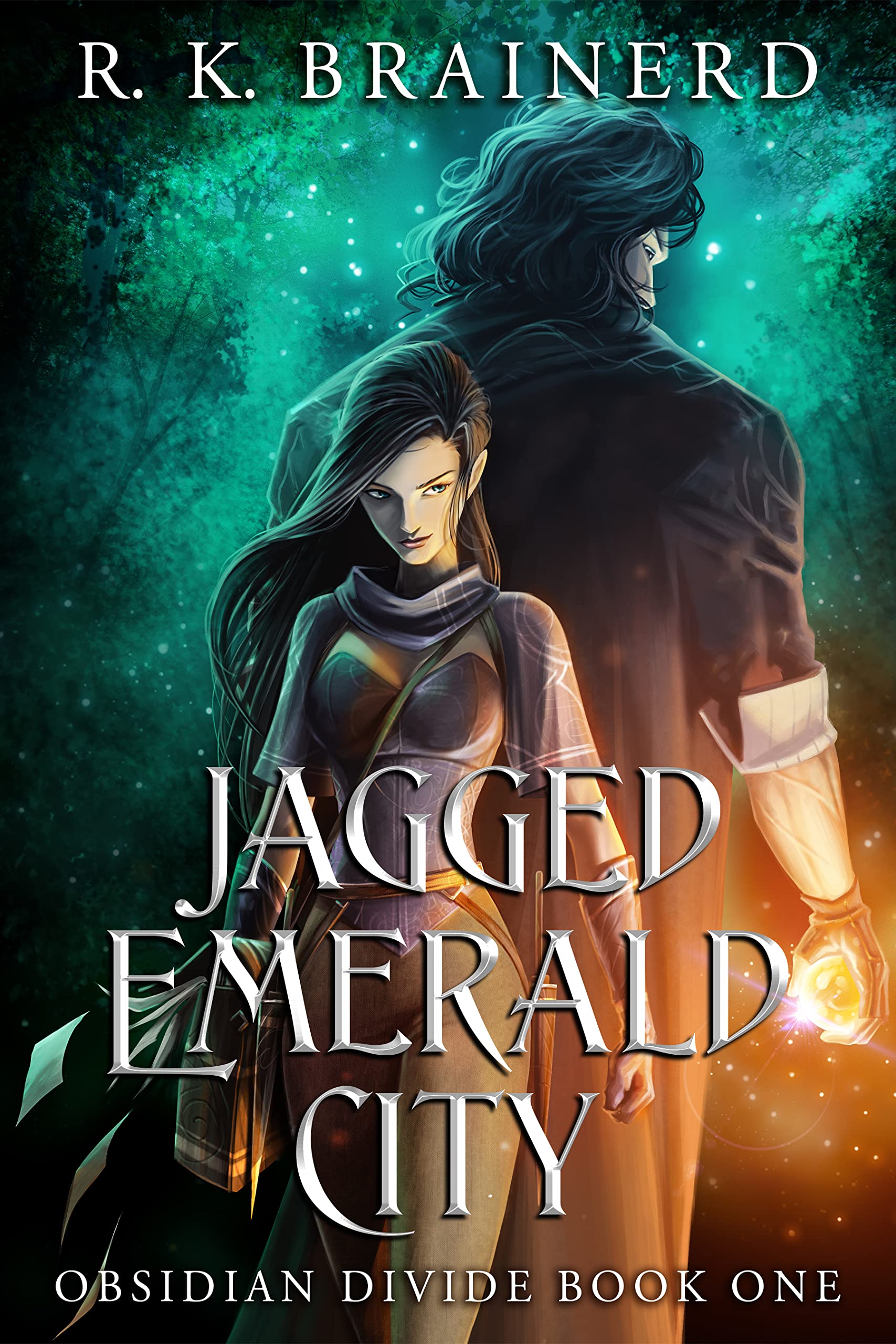
In late 2023, after buying Jagged Emerald City at a con and starting it and rather liking it, I took up reading prose books with my eyes as much as time allows.
In the summer, when I taking time out of my week to lie in the hammock on the porch, I read more, and so several of the books in my 2024 list were finished in the hammock.
Also, I was on a book buying freeze, which didn't last, especially if I take the time to read reviews in Locus, which is how I cam to acquire Mother Howl, Silver Nitrate, Tread of Angels, and Even Though I Knew The End. All of which were okay but none blew me away.
I read several books for our Northwest Voices visiting authors, including several by Rene Denfeld and the one novel by Kimberly King Parsons, which sadly I read AFTER she visited.
I spent a large chunk of the year on the SANDERSON book. August 8th - November 14th to be precise. This was during the time that my Dad passed away. I took the book with me to Michigan, where I spent two weeks saying goodbye and having the Memorial and all the things.
I rarely read books of poetry cover-to-cover in a short time span until I am done, but in 2024, I read two: Orlam by PJ Harvey and Elegy by Larry Levis. Both of which are now among my favorite books of poetry of all time.
There's textbooks in this list, too, because I am back at school.
After being gifted The Alchemist back in the '90s, I finally read it. Didn't really care for it.
I was also underwhelmed by The Way of Kings by Sanderson, though I am told that things get more exciting and enthralling in the next few books, so maybe, some day. Not now.
There's some re-reads in this list as well, beyond just the annual re-read of Dickens' "A Christmas Carol." I re-read Child Finder by Denfeld, which was the whole reason we invited her, that book. I re-read The First Fifteen Lives of Harry August, which I adore. I re-read the first two volumes of Friday before reading the third and final volume. I read Dean Koontz's book on fiction a lot, so that one. I re-read Against Authority by John Twelve Hawks because I plan to write about it on this here blog. I re-read The Best We Could Do to teach it as well as Watchmen, which didn't even make the list, so actually 76 books, unless I didn't re-read Watchmen in the winter. Not sure. Finishing The Science Fiction Hall of Fame is in m any ways a re-read, though I had never read them cover-to-cover when I was younger.
I re-read Broken Monsters by Lauren Beukes. Many re-reads are research for my own fiction writing.
Elektra Lives Again, Midnight Nation, and Nightwing: Leaping Into the Light were also all re-reads.
Best books of the year are as follows.
If you like the slow-burn, female-centered, first-person, fantasy romance, then I would list Jagged Emerald City as one of my favorite books of the year.
After that one, and not counting re-reads, The Invisible Life of Addie LaRue is one of the best books I have ever read.
Though I like the Lisbeth Salander books, and though I am a huge fan of Stephen King's character Holly Gibney, I would not place any of these as best books of the year. So, here's the top five (again without re-reads):
TOP FIVE BOOKS OF 2024
The Invisible Life of Addie LaRue Jagged Emerald City Elegy
Orlam Silhouettes and Shadows - the secret history of David Bowie's Scary Monsters and Super Creeps
Since I left out graphic novels, here's a second list of those as best books of the year, top five (including re-reads):
TOP FIVE GRAPHIC NOVELS
Friday (all three volumes) _ Brubaker/Martin
My Favorite Thing is Monsters - Emil Ferris
Where the Body Was - Brubaker/Phillips
Nightwing: Leaping Into the Light - Taylor/Redondo
The Best We Could Do - Thi Bui
Now, granted, both lists feature bias. Nightwing is my favorite superhero, so his book makes the list, and I am teaching The Best We Could Do, so that surely should make the list.
Likewise, as a huge David Bowie fan, the book on Scary Monsters makes the list, which excludes other excellent books that could make the list, such as Sleeping Giants, Infomocracy, or even and especially my friend Sue's novel The Baseball Widow, which had been atop my to read with eyeballs stack going back to 2022 right before I started the graphic novels thing.
I surely could add more honorable mentions or exceptions, such as the beloved re-reads aforementioned or great reads like The Story of Pop Music, my adored books by A Year in the Country, and Mark Fisher's Ghosts of My Life, which is also fantastic.
Of course, also, not counted, is a manuscript I read for my friend Helene, which will be a book at some point in the future.
Perhaps, you find some interesting things in my book review.
By going to GOOD READS, you can read individual reviews of all these books, though some are very short.
- Bloggery committed by chris tower - 2501.04 - 10:10
- Days ago: MOM = 3473 days ago & DAD = 129 days ago
- New note - On 1807.06, I ceased daily transmission of my Hey Mom feature after three years of daily conversations. I post Hey Mom blog entries on special occasions. I post the days since ("Days Ago") count on my blog each day, and now I have a second count for Days since my Dad died on August 28, 2024. I am now in the same time zone as Google! So, when I post at 10:10 a.m. PDT to coincide with the time of Mom's death, I am now actually posting late, so it's really 1:10 p.m. EDT. But I will continue to use the time stamp of 10:10 a.m. to remember the time of her death and sometimes 13:40 EDT for the time of Dad's death. The blog entry numbering in the title has changed to reflect total Sense of Doubt posts since I began the blog on 0705.04, which include Hey Mom posts, Daily Bowie posts, and Sense of Doubt posts. Hey Mom posts will still be numbered sequentially. New Hey Mom posts will use the same format as all the other Hey Mom posts; all other posts will feature this format seen here.
I had forgotten about the READ campaign Bowie did for American Libraries back in 1986, a few years after Let's Dance.
I never considered that Iggy Pop's album might be named after the novel The Idiot by Fyodor Dostoevsky, which I have never read. I should put it on my list.
I had wanted to read an older classic every year, and I have not held to that.
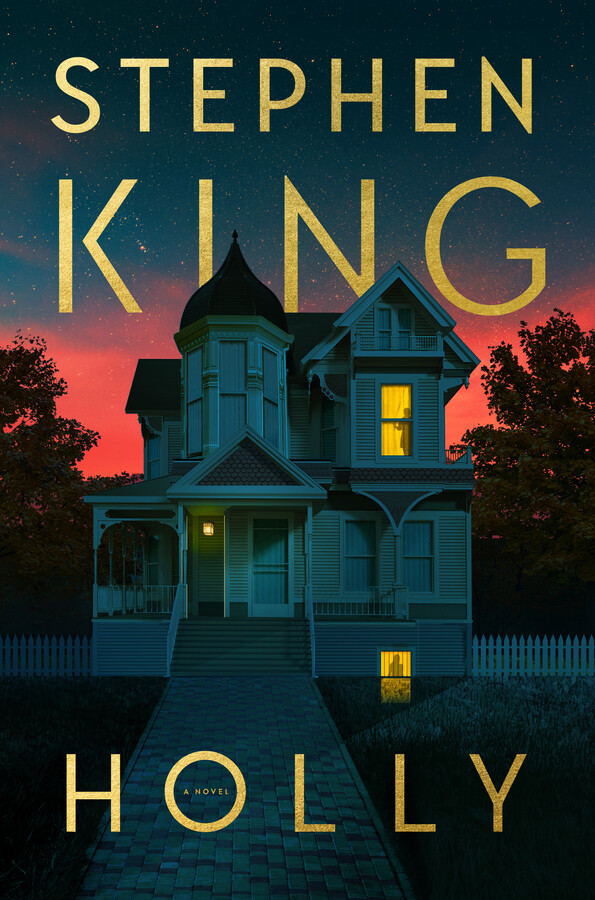
As to what I am reading, I just finished Holly by Stephen King.
I may write about in a future post.
I am reading a lot of graphic novels these days as well as the usual floppy, single-issue comics as well lots of non-fiction books, not all of which are loaded on the CURRENTLY READING section of my GOOD READS page:
I am also reading Jagged Emerald City By RK Brainerd, whom I met at ORYCON in Portland in November, bought her book, and have been really sucked into it, even though I was not going to dedicate reading time to prose books at night and at other "eyeball time," sticking exclusively to audio books for my prose reading. But this book got me, and time that would be spent on comics and graphic novels is being taken with this book that is quote good.
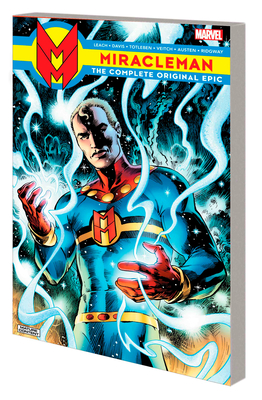
My current graphic novel is Miracleman: The Complete Original Epic, which is dense and slow going, though quite good.
I am about to start All the Marvels by Douglas Wolk, as we are hosting that writer at our next Northwest Voices event.
More on that book later as well.
That's all for today.
Below is a link to the Instagram post of Bowie's READ campaign and the text that went with it.
In 1986 photographer Chalkie Davies produced the portraits here of Bowie with Fyodor Dostoevsky’s The Idiot*, a book not on the list, but that’s no reason not to view these images again.
They were made for the American Library Association‘s READ campaign, and specifically for the 1987 David Bowie for America’s Libraries READ poster, and associated items such as bookmarks.
* David suggested the title for the Iggy Pop album of the same name. He also took the cover shot of Iggy based on Erich Heckel’s painting Roquairol. The photograph is often miscredited to Andrew Kent. Perhaps Iggy can remember the moment?
- Bloggery committed by chris tower - 2401.23 - 10:10
- Days ago = 3126 days ago
- New note - On 1807.06, I ceased daily transmission of my Hey Mom feature after three years of daily conversations. I plan to continue Hey Mom posts at least twice per week but will continue to post the days since ("Days Ago") count on my blog each day. The blog entry numbering in the title has changed to reflect total Sense of Doubt posts since I began the blog on 0705.04, which include Hey Mom posts, Daily Bowie posts, and Sense of Doubt posts. Hey Mom posts will still be numbered sequentially. New Hey Mom posts will use the same format as all the other Hey Mom posts; all other posts will feature this format seen here.
A Sense of Doubt blog post #2539 - Four Years of Detective Comics Read #s 982 - 1046 - Comic Book Sunday 2201.30
This will be a short COMIC BOOK SUNDAY today. I have some other posts about comic books in the works, but those will have to wait.
I couldn't face working today. I took the whole day off. I needed a day off. I have not taken a day off completely since January 8th.
Last day of football before the Super Bowl.
I have what I call a BACK LOG with the comics I buy every month. One title that I stacked up in the back log was Detective Comics. The issues were going into a box with rest of the back log. Every month I would add more issues to the box and watch the back log for Detective Comics grow and grow.
Recently, I caught up on my Nightwing back log, which is sad, because I adore Nightwing.
I was determined to clear my Detective Comics back log of sixty-four issues, including issue #1000.
The oldest issue, #982, had a street date of June 13, 2018, so essentially four years ago.
- Bloggery committed by chris tower - 2101.30 - 10:10
- Days ago = 2403 days ago
- New note - On 1807.06, I ceased daily transmission of my Hey Mom feature after three years of daily conversations. I plan to continue Hey Mom posts at least twice per week but will continue to post the days since ("Days Ago") count on my blog each day. The blog entry numbering in the title has changed to reflect total Sense of Doubt posts since I began the blog on 0705.04, which include Hey Mom posts, Daily Bowie posts, and Sense of Doubt posts. Hey Mom posts will still be numbered sequentially. New Hey Mom posts will use the same format as all the other Hey Mom posts; all other posts will feature this format seen here.
A Sense of Doubt blog post #2497 - Annual Reading of "A Christmas Carol" and assorted Graphic Novels: WHAT I AM READING
Hold on to your hats! This one is a gale force wind of reading splendor.
Even when I am GRADING ROBOT going at full steam power, throttle all the way out, RPMs WAY TOO HIGH (what is that noise? Is that a thousand babies shrieking? No that's GRADING ROBOT's gears overworking...), I am still reading. I am listening to books on audio, I am reading before bed a night, and once a week, MAYBE, I am relaxing in an afternoon -- usually Sunday -- and reading more things during the daylight hours.
I am a writer and an English teacher, so obviously I love reading. But, also, I see reading as essential for my job. I must always be reading old things and new things and all the things in between.
And so, now that I have finished Dune, Dune Messiah, and Children of Dune as audio books, with each one decreasing in that gripping nature of the first, before I move on to God Emperor of Dune and Heretics of Dune, which I decided to plow through before I read anything else, via audio that is, I am onto my annual read/listen to "A Christmas Carol" by Charles Dickens, one of the most perfect stories ever composed in the English language.
When I collapse in bed each night, I try to read a few single-issue comic books and then some of a novel. Even though I had started the collection of Alfred Bester stories I could never finish and my friend Sue's new novel, The Baseball Widow, I am on a graphic novel kick, and I have been working my way through all the graphic novels that have piled up, quite literally, in two huge stacks atop my dresser.
Here they are:
I am trying to work my way through these stacks before I do a deeper dive into regular prose fiction.
I came to The Best We Could Do by Thi Bui because of research for a novel that I am writing.
I was deeply moved by this comic. I had no idea what I was getting into. I had no idea that this book existed before I went looking for Vietnamese literature nor did I know that it had won an American Book Award. It should have won the National Book Award and the Pulitzer. It's that good. WORTHY.
What an incredible book.
There are authors with whom I feel a strong affinity, ones with whom I can imagine having been friends in high school or undergraduate college. Thi Bui is definitely such a person. I loved how she tackled the personal demons of her parents and captured their story and wove that through the history of immigration by so many from Vietnam after the war was lost, the U.S. evacuated, and Saigon fell to the North Vietnamese and the Viet Cong.
I was young when the war began and still pretty young in 1975 when Saigon officially "fell." There have since been reforms, and I am very interested in visiting Vietnam.
One thing that struck me on a personal level in terms of my research for my character in my novel is that Thi Bui's family originally moved to Chicago (actually Hammond, Indiana) to live with Thi's maternal aunt. This connects to my story in which my character and her family live in Chicago, south side, away from what is recognized as "Little Saigon" which is up near Wrigley Field.
I love that Thi's father remarks upon reaching America for the first time "why is it so ugly here?"
There were plights of the Vietnamese depicted in this book that I did not know, such as how their degrees from Vietnam would not be recognized, and they (such as Thi's parents) would have to take minimum wage jobs rather than the professional jobs that for which their education qualified them.
I could not possibly do justice to the book in my own review, so here's some art and the Comics Journal review.
The Best We Could Do opens with the complicated, grueling birth of artist Thi Bui’s child in New York City in 2005. Afterward, as Bui lies exhausted in her hospital bed, she realizes the impact of the event: “Family is now something I have created—and not just something I was born into. The responsibility is immense. A wave of empathy for my mother washes over me.”
Much of the subsequent narrative centers on the history of her mother, father, and siblings living in war-torn South Vietnam, then fleeing in 1978 when Bui was three. Though her family survived calamitous events, the emotional scars and cultural confusion they carry as collateral damage are considerable, resulting in gaps in communication and misunderstandings between each generation’s parents and their children. The weight of this history informs the entire narrative, at times foregrounded but always present.
In her early twenties, Bui traveled back to Vietnam to meet her extended family. It was shortly afterward that she began to record the family’s history, hoping that “if I bridged the gap between past and present… I could fill the void between my parents and me.” Her narrative flashes back and forth in time, illustrating how larger events (war, dictatorship, immigration) shaped the family’s lives. She records her father's traumatic, uprooted childhood in the 1950s (she calls him “Bố,” or “daddy”) and how he endured periods of living as a refugee with his abusive, philandering father in a country wracked with sociopolitical turmoil and poverty. Meanwhile, Bui's mother (“Má”) grew up in privilege as a child of a civil engineer, shielded for many years from the dire conditions of much of the country. After marrying Bố, Má gives birth to multiple children, usually under extremely difficult conditions, including her daughter, Bích, right before the Tet Offensive in 1968; a stillborn child, Thảo, in Saigon in 1974; and her son Tâm in a UN refugee camp in Malaysia in 1978.
The sections detailing the history of Vietnam and the war are powerful and painful, offering up a crash course in the history of that long and tragic conflict, from the dark seeds of its origin to its brutal aftermath under an oppressive dictatorship. In one section, Bui describes her parent’s happiness after getting married, living large on two incomes with the future seeming bright—while forces beyond their control are pointing toward large-scale death and destruction. “By this time,” Bui writes ominously, “the chess pieces of the war had been set. It was 1965.” Bui’s narrative voice is admirably straightforward, with an air of a reporter’s detachment, even when describing the most terrible events, infusing her family’s saga with power and grace.
Bui’s family were among the “boat people” who fled oppressive Communist rule after the war ended. But their troubles didn’t stop after arriving in America; along with the general culture shock, they must contend with bitter social and economic downsizing. Bui’s parents’ educational degrees are not recognized in this strange new land, resulting in long hours of minimum wage work and night schooling to better their economic prospects. Bui vividly describes these blighted early years, stuck at home with her father in an apartment in San Diego, while Má is at work and her sisters are at school. She and her little brother Tâm are left alone to cope with Bố's off-putting, distant demeanor, and his scary superstitions and paranoia. None of this made the family’s assimilation any easier.
With the issue of immigration currently hitting full boil stateside, the 2017 publication of The Best We Could Do couldn’t be more timely, or more welcome. Bui’s story movingly puts a human face to new arrivals to our country, illuminating the background of their lives and struggles. Contrary to the rhetoric of the most reactionary U.S. right-wing factions, immigrants are people, not statistics–more than the sum of their homelands, more than the color of their skin. Bui depicts, with unsparing candor, the multiple traumas associated with being forced out of one’s country into the unknown.
In her introduction, Bui describes the frustration she felt with her original plan of telling her family's story—a combination of text with some photographs and art: “I didn't feel like I had solved the storytelling problem of how to present history in a way that is human and relatable and not oversimplified. I thought turning it into a graphic novel might help.” She teams her brushy line with a burnt orange wash that lends an evocative, melancholic feel; even in the present-day scenes there is a sense of the past hovering, seeping into ordinary life. While Bui has self-deprecatingly referred to herself online as “the slowest cartoonist in America,” she is skilled at page layouts, delivering information deftly and imaginatively. As with her text, she accomplishes this without any undue fuss or “look-at-me” graphic pyrotechnics.
At the narrative’s end, Bui focuses on her now ten-year-old son, wondering if the pain she inherited from being a “product of war” will be transmitted to him: “whether I would pass along some gene for sorrow or unintentionally inflict damage I could never undo.” But she reminds us that life is, at heart, random, and that relationships are not necessarily bound by destiny but by free will and a dizzying array of events, most beyond our control. This final summation is deeply moving. Thematically rich and complex, melding together grief and hope, the personal and the political, the familial and the national, The Best We Could Do is an important, wise, and loving book.
I HAVE endeavoured in this Ghostly little book, to raise the Ghost of an Idea, which shall not put my readers out of humour with themselves, with each other, with the season, or with me. May it haunt their houses pleasantly, and no one wish to lay it. – Charles Dickens
Every year about this time, I listen to some version of "A Christmas Carol" by Charles Dickens. This year I returned to the one that may be my favorite (sorry Patrick Stewart, you're second place) .
Have you ever ACTUALYL READ "A Christmas Carol?" Or do you just know it from movies?
I just love this story, and I would argue to the death that it is one of the best if not the best short stories, novellas, ever written. I know, I know, James Joyce, Flannery O'Connor, Henry James, Margaret Atwood, Eudora Welty, Edith Wharton, Joy Williams, Ottesha Moshfegh, and more have written so many great stories. Not to skip Nnedi Okorafor whose Binti novella that won both the Hugo and Nebula in science fiction, I have been teaching for years (and again next quarter).
But "A Christmas Carol" is quite another thing. Like all of Dickens' canon, the story has mass appeal. It is beloved by literary critics and by readers (and non-readers) alike. It's an iconic story that has permeated our culture in numerous ways with "Scrooge" and "God Bless Us Everyone" as independent idioms.
In fact, "Merry Christmas" as a salutation or departing well wish may owe more to the popularization of it in Dickens' story than anything else. Though the phrase had been in use since its first recoded instance in 1543, it was hardly as popular as other phrases. "Happy Christmas" was also a popular greeting, especially in Britain. And before those on the RIGHT who feel the LEFT is cancelling Christmas, the term "Happy Holidays" has been around for over 100 years not just to acknowledge all religions and cultures as opposed to just Christianity but to simply encompass Thanksgiving and New Year's.
And it's lyrical, which is why films and TV special do not fully do it justice. The language is elegant, fragrant, and fully-loaded like the most redolent Christmas table of sweets and savories.
And it has lasted. Published in 1843, "A Christmas Carol" has endured through its many reprints and editions, versions, and adaptations because it is a seminal work of genius by one of the greatest writers of all English literature. In fact, if popularity were to be factored into an assessment, I might argue that Dickens has had a greater impact on the world and has produced more works of longevity and appeal than William Shakespeare.
Also, given the way "A Christmas Carol" transformed Victorian society and the world ever since, it has had a greater impact than any other story written in English literature. Dickens' story stimulated charity as explained in a Scientific American article about why he wrote it. Even though for Dickens, the charity was his own; he needed a quick infusion of cash. Though despite its sell out blitz once published, "A Christmas Carol" did not instantly make Dickens wealthy.
Charles Dickens considered "A Cricket on the Hearth" to be his best Christmas-themed story, of which he wrote several due to the market he created by the success of "A Christmas Carol." In fact, I would argue that the landslide success of "Cricket" in 1945 was simply due to the two year blockbuster success of "A Christmas Carol."
In December 1845, Charles Dickens published a holiday story that quickly became a sensation among Victorian readers. Its first printing of 16,500 copies quickly sold out before the new year, then went into numerous reprints that affirmed its commercial appeal.
His well-received novel that year wasn’t A Christmas Carol, the tale that modern audiences consider his quintessential yuletide work, but The Cricket on the Hearth, a story few readers beyond diehard Dickens fans recognize today.
Dickens (1812–1870) might be surprised by how little Cricket and his other holiday stories besides A Christmas Carolare read. After publishing Carol in 1843, he produced four other Christmas novels in quick succession, deeming some of his handiwork even more appealing than his iconic account of Ebenezer Scrooge.
When he published The Chimes, a follow-up to Carol for the 1844 holiday season, Dickens was sure he’d topped himself. “I believe I have written a tremendous Book; and knocked the Carol out of the field,” he told his friend Thomas Mitton. “It will make a great uproar, I have no doubt.”
But posterity has been less kind to Dickens’s non-Carol Christmas tales, which also include The Battle of Life (1846) and The Haunted Man (1848). A quick survey of Dickens’s holiday also-rans provides some clues about their lack of staying power.
The Chimes, in which the poor Englishman Trotty Veck is haunted by visions of oppressive poverty that serve as a form of moral instruction, seems obviously derivative of Carol, but without its memorable characters. Dickens biographer Angus Wilson, expressing what appears to be a critical consensus, lamented that this takedown “of a wicked social order never comes to life.”
The Cricket on the Hearth, about a miser named Tackleton who has a last-minute spiritual conversion, seems like warmed-over Carol, too—the nineteenth-century version of a by-the-numbers Hollywood sequel. The Battle of Life, a saccharine tale about a saintly maiden who allows her true love to marry her own sister, doesn’t even benefit from yuletide cheer, since the only holiday scene in the novel is an afterthought. Even Dickens seemed sick of the grind, at one point thinking of leaving Battle unfinished.
By the time he published The Haunted Man, yet another story of a spirit-addled misanthrope who turns over a new leaf, Dickens had clearly run out of steam with his Christmas series. Even his loyal fans were beginning to weary, not seeing the tortured main character, Professor Redlaw, as very compelling. Many readers, says Dickens biographer Michael Slater, “found the story of Redlaw’s emotional and spiritual journey both confused and confusing.”
On the whole, though, Dickens’s yuletide novels proved lucrative, a big reason he continued to write them. As Slater points out, “such keenly-anticipated annual productions from his pen were guaranteed money-spinners.”
“The market for a Christmas book from Dickens had been created,” biographer Claire Tomalin notes of the public mood after Cricket was released, “and the public now looked forward to getting one. If their quality declined—as it did . . . their sales increased.”
Though all but one of Dickens’s Christmas stories has lapsed into obscurity, even the lesser ones sometimes allowed him to explore themes he’d later perfect in more fully realized novels. The moral ambiguities of The Chimes, for example, seem to anticipate the Dickens classic Little Dorrit, Wilson writes.
What’s elevated Carol from the Christmas canon of Charles Dickens as its fellow yuletide narratives have faded? “It is just as much a compendium of the social obsessions that pressed upon Dickens so fiercely at this time,” writes Wilson, “but . . . the result is extraordinarily vivid, like some sermon acted out in a dream.”
If Dickens’s later Christmas novels prove nothing else, it’s that no holiday author has ever been able to top A Christmas Carol.
Not even Charles Dickens.
Here's some university professors on why this book is such a hit:
Literary experts look at why the classic Dickens' story 'A Christmas Carol' still draws us today
Tuesday Dec. 10, 2013
MANHATTAN -- Written 170 years ago, Charles Dickens' classic novella "A Christmas Story" still resonates with people today, according to two literature experts at Kansas State University.
The latest example of Dickens' enduring popularity will also be a nod to one of his most enduring works. A new film about Dickens' life, "The Invisible Woman," starring Ralph Fiennes, will be released on Christmas day.
"A Christmas Carol" features the penny-pinching, Christmas-hating Ebenezer Scrooge and his dramatic transformation after a timely visit from the ghosts of Christmas Past, Present and Yet to Come.
Naomi Wood is a Kansas State University professor of English who specializes in children's and Victorian literature and culture. She says that "A Christmas Carol"has remained popular because of its observations about the holiday and its central theme that a person can always change.
"'A Christmas Carol' is a compelling story about the Christmas holiday not as a religious observance, but as an aspect of the social contract: the time when those who 'have' experience joy in sharing with those who 'have not,'" Wood said. "It's also a story of transformation. Scrooge's story offers the possibility that one can change for the better, become a better person and grow a bigger heart."
Dan Hoyt is a Kansas State University assistant professor of English who teaches Dickens' work. He said that "A Christmas Carol" also accurately captures sentiments that many people feel around the holidays, and gives a refreshing message amidst the commercialism that surrounds Christmas today.
"Much of Dickens' work, including 'A Christmas Carol,' has comic touches and is intensely sentimental. Just about everyone can appreciate those qualities during the holiday season," Hoyt said. "It champions generosity and compassion, and when Christmas feels commercialized in so many ways, that message is powerful and comforting."
Wood said that its compelling characters, as well as elements of the spooky and supernatural, add to the intrigue of "A Christmas Carol."
"The Ghosts of Christmas Past, Present and Yet to Come are wonderful devices for thinking about our lives and what we want our legacy to be," Wood said. "The story also features a sweet and pathetic kid in Tiny Tim, as well as both a happy and unhappy ending. The double ending helps emphasize that we have a choice in how we affect the lives of others for better or worse."
"A Christmas Carol" has been adapted to many film versions, which Wood says would have pleased the author.
"Dickens was an avid theatergoer and was quite used to his novels being dramatized -- sometimes even before they were finished," she said. "He enjoyed seeing his work come to life on the stage, and I think if he would have lived long enough, he would have loved movies. He adapted his own work for public performance, and was renowned for his effective readings."
"Dickens' work still speaks to us on an emotional level," Hoyt said of the author's enduring popularity. "That's evident from the continual retellings and resurrections and re-imaginings of his fiction. 'A Christmas Carol,' for example, has been turned into everything from a ballet to a Broadway musical."
While many screen and stage versions of "A Christmas Carol" are quality adaptations of the novella, Wood said the one thing they sometimes leave out is the social criticism that is a prominent theme in the novella.
"The story is a feel-good parable about the joys of individual charity, but the book also demands its readers look at the vast economic system that produces 'want' and 'ignorance,' which Dickens personifies as society's hideous and starving children," she said. "Dickens wanted his readers to care about the 99 percent, and even more for the 47 percent -- the people who aren't served by the moneyed and privileged 1 percent."
"A Christmas Carol" was Dickens' first Christmas story. He made sure the book was published in time to sell for the holiday season in 1843, the year it was written. He would go on to write four more Christmas-themed novellas, as well as numerous shorter Christmas stories for magazines. Wood said Dickens was a big fan of the Christmas holiday and loved hosting parties with plenty of food, drinks, dancing and magic tricks.
"Dickens delighted in Christmas and having a big and roistering celebration with lots to eat and drink," she said. "He would have a big party for both kids and adults, and danced wildly with as many guests as possible. He was an enthusiastic amateur magician and loved to amaze his guests in made-up characters, such as 'The Unparalleled Necromancer Rhia Rhama Roos.'"
For me, it is simply that the story is great, the message is greater, and the writing is so lyrical and sumptuous, it fills the mouth like a rush of sugar dissolving of a frosted Christmas cookie.
Just look at how it begins:
Dickens delights in his cheeky and clever wit as he launches this story but not without purpose. Though he writes with cuteness and audacious sass about the deadness of nails, either door or coffin, he also imparts key information: Marley is dead, Scrooge can be trusted in business and the signing of official documents, and the British sensibilities of the time for commerce, the accuracy of language as a national imperative, and importance of the transactions of death in an increasing urban environment in which life expectancy was about 40 years for men and 42 for women ("Life Expectancy" English Heritage)
Dickens speaks directly to his audience, who he knows will queue up around the block for this story once he completes it. And he's right. The first 6,000 copy printing sells out in a week (from Dec. 19 to 25th).
"The wisdom of our ancestors is in the simile," he writes, "and my unhallowed hands shall not disturb it, or the Country's done for" (Dickens, 1). I would add that the wisdom is also in the alliteration "D-Dead" and "D-Doornail." Because "Dead as a coffin nail" just doesn't cut the same mustard with its sugar. Besides, surely, Dickens trusted his audience to expound smartly on these points as they discuss the book in the shops and pubs of London.
And in the next paragraph, Dickens really puts the nail in the key element of the story -- the unloved and unloving miserly businessman killing Londoners by depriving them of basic human comforts -- as he describes Marley. But look at the repetition of "sole" to hammer down that nail of being alone, being singular, being unloved, being outside the community.
It should be very clear by the end of just the third paragraph that Scrooge is cut from the same cloth as Marley and headed to the same fate with no one to mourn him as he would be survived by no partners as Marley had been.
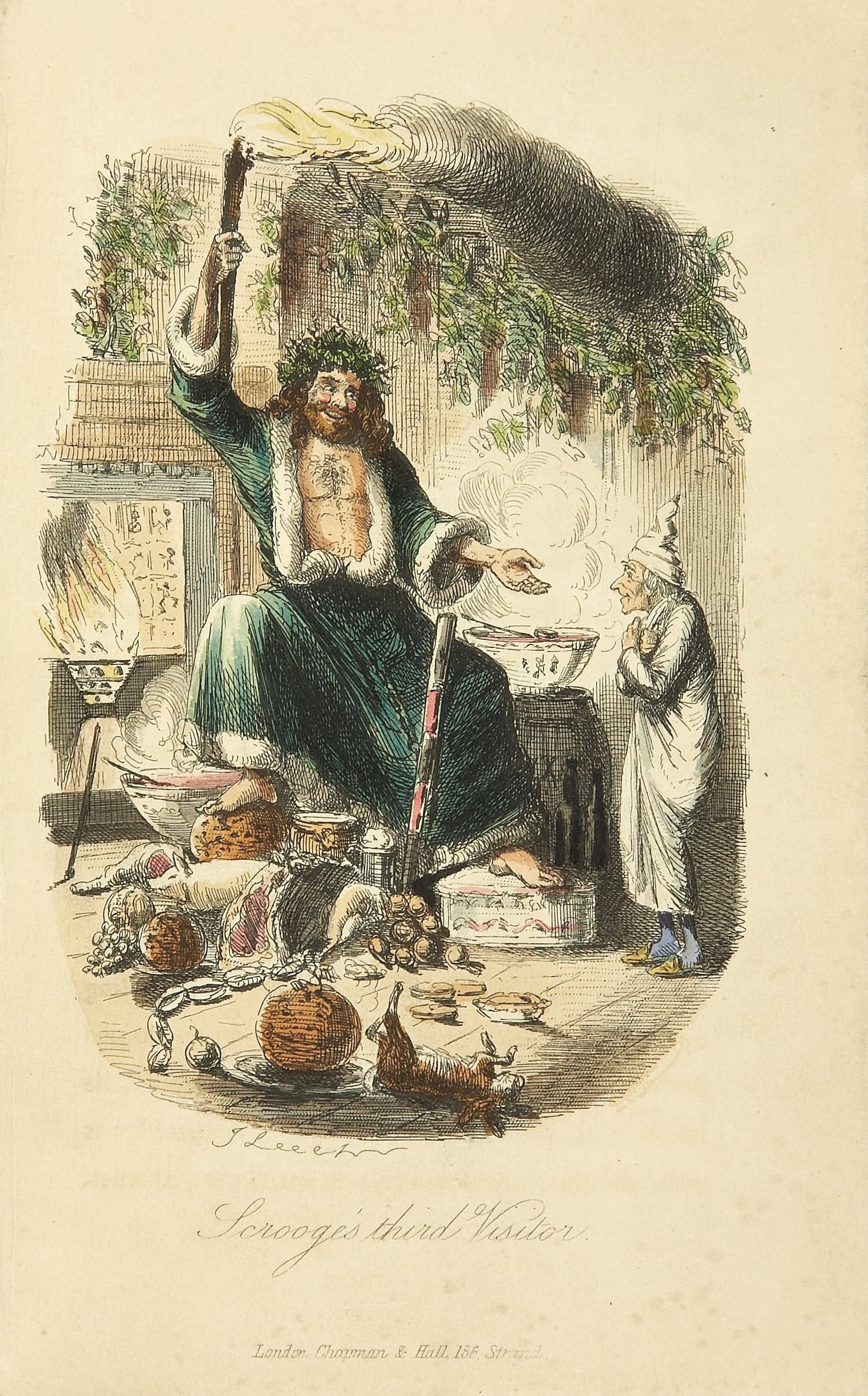
And as to my claim of it being lyrical, check out the appearance of the Ghost of Christmas Present:
Luscious, gorgeous, redolent lyrical writing.
And the ending always brings tears to my eyes if not outright weeping.
Scrooge rights all his wrongs and shows in all ways that he has undergone a transformation; he is a changed man.
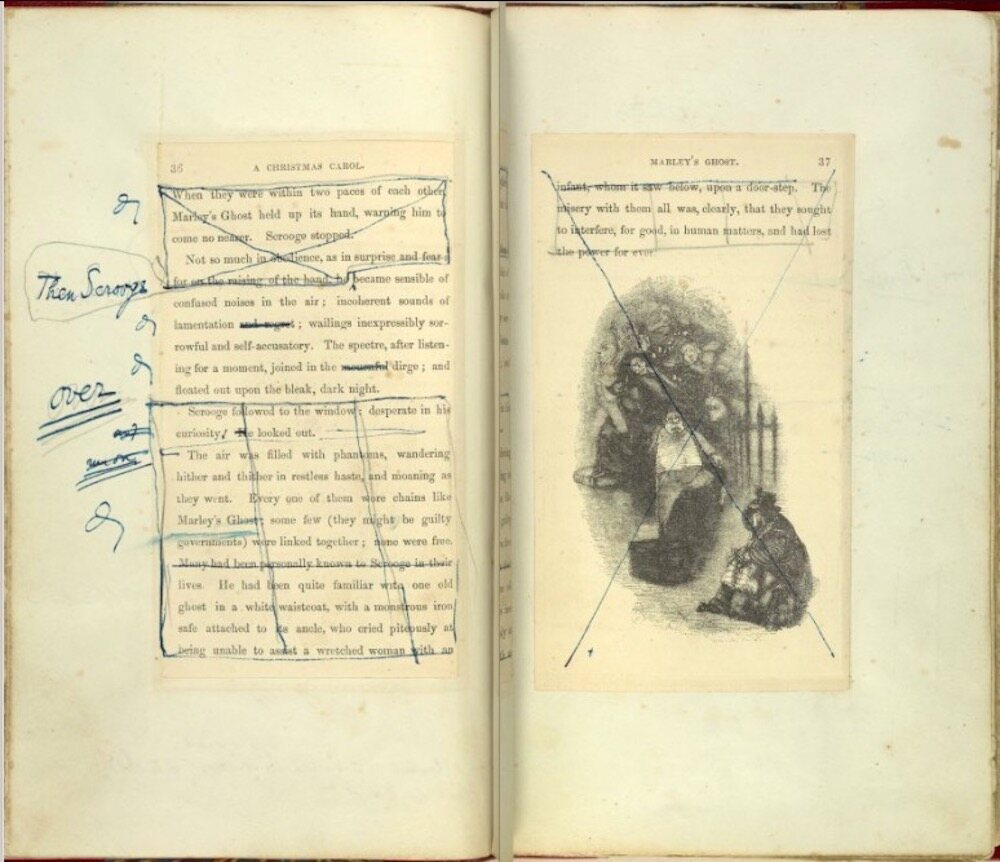
CHARLES DICKENS’S A CHRISTMAS CAROL, published in 1843, swiftly entered the holiday-season canon—the sort of story readers return to year after year, wherever there’s a crackling fire, a dusting of snow, and a mug of eggnog at hand. But when Dickens gave public readings from the text, the story changed a bit from one performance to another. His marked-up stage copy of the book, on view at the New York Public Library, gives readers a peek into the writer’s mind as he reworked his spirited prose.
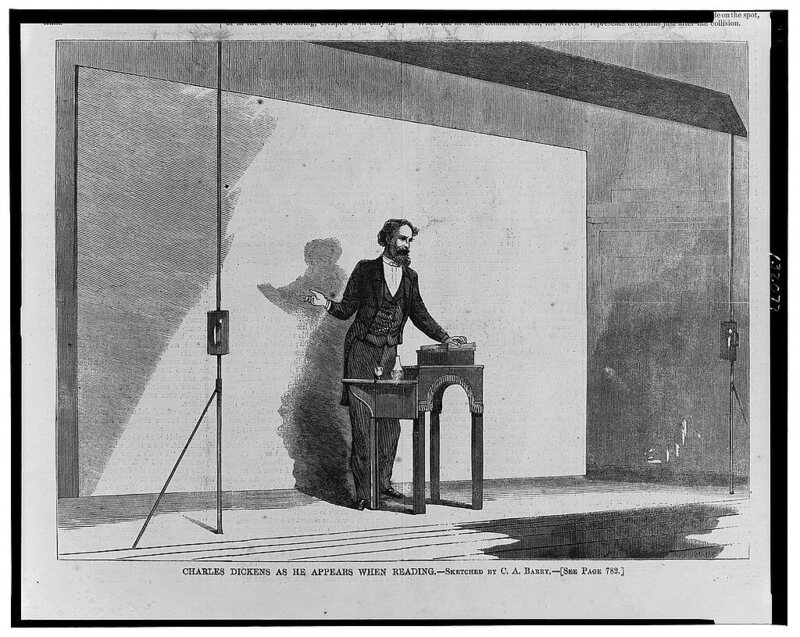
Dickens intuited that his devoted public would get a kick out of listening to him read from the already beloved text, and he spent decades taking his AChristmas Carol act on the road. He devised different voices and styles for each character, so Tiny Tim sounded nothing like Ebenezer Scrooge. Writers of the period commonly traveled to give lectures, but “reading from your own work was new, and his degree of literary celebrity took it into the stratosphere,” says Carolyn Vega, curator at the Berg Collection at the New York Public Library.
People turned out in droves. “Enthusiastic crowds have filled the halls to the roof each night, and hundreds have been turned away,” Dickens wrote to his friend John Forster about readings in Dublin in March 1867. Attendees attempted to pack in even tighter, Dickens continued, asking for “chairs anywhere, in doorways, on my platform, in any sort of hole or corner.”
The author received a warm reception in America, too. When he landed in Boston for a series of readings in fall 1867, the city was “in exstacies,” with 8,000 tickets sold, the Brooklyn Daily Eagle reported. The Eagle predicted that, when Dickens made his way to New York City, “the great novelist will meet with a no less cordial but more sensible reception,” and would find the venues “none too large for the audiences his readings will draw.” Dickens spent that December “basically ping-ponging between New York and Boston,” Vega says. He’d do a few readings in one city, hop into the coach bound for the other, and then repeat the whole routine. There was such fever for admission to Dickens’s readings at New York City’s Steinway Hall, the Buffalo Commercial reported, that “speculators have got hold of the tickets and are endeavoring to sell them at extravagant prices.” Forged tickets were thought to be floating around, too.
Dickens probably could have recited the whole story from memory, but the book itself was part of the appeal. “Even before he started the series of readings, he knew [the book] inside and out,” Vega says. “By the end of doing it for 20 years, he knew exactly what hooks the audience, what worked and what didn’t, but always went up with the book in hand.The idea of Dickens reading to you was the performance you were paying for.” He sat or stood behind a tall desk, with the volume always at hand—even if it was much too far from his face for the text to be easily decipherable.
The book was a prop and a prompt, and Dickens toted it with him and annotated it relentlessly. Over the years, Dickens wanted to fit stories beyond his Christmas fable into a single performance, which meant that each needed to shrink in order to fit into the allotted time. Dickens took a regular, off-the-shelf copy of AChristmas Carol, had the binding removed, and then set the pages onto larger ones, whose margins had plenty of room for notes.
Some of these are standard-issue edits, such as struck-through sentences or entire canceled paragraphs. (The text got leaner over time, Vega says.) Other notes evoke reminders like stage directions, such as a note about conjuring a specific tone. Dickens reminded himself to convey a sense of “mystery” just before Scrooge spots Marley’s ghostly face in his door knocker, and to sound “cheerful” when channeling warm tidings from the humbug’s nephew. In edits to another text he performed, Vega says, “he reminds himself that the tone should be ‘very pathetic,’ circled and written large.”
The edits also offer a window into Dickens’s speedy working style. The author often worked serially, submitting stories under deadline pressure, and “you get a sense of that energy when you look at the prompt copy,” Vega says. Some pages have blots and smudges, indicating that he was working fast, loose, and frantically, without waiting for the ink to dry. Until January 7, 2019, library visitors can take a look at Dickens’s copy, and see that a writer’s work is never really done.
A brilliant though brisk animated adaptation of Dickens' beloved tale by master animator Richard Williams. First seen on US TV in the early 1970s, where it completely freaked me out!
Surely I’m not the only child of the 70s to have been equal parts mesmerized and stricken by director Richard Williams’ faithful, if highly condensed, interpretation of Charles Dickens’ A Christmas Carol.
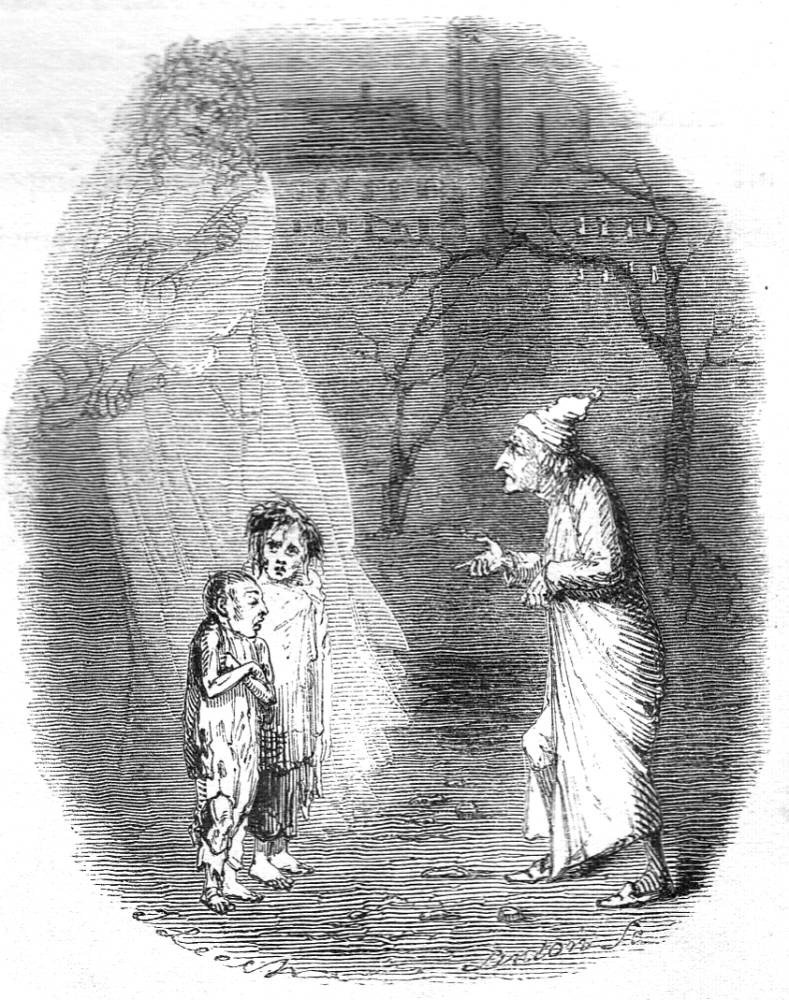
Yellow, meagre, ragged, scowling, wolfish; but prostrate, too, in their humility. Where graceful youth should have filled their features out, and touched them with its freshest tints, a stale and shrivelled hand, like that of age, had pinched, and twisted them, and pulled them into shreds. Where angels might have sat enthroned, devils lurked, and glared out menacing. No change, no degradation, no perversion of humanity, in any grade, through all the mysteries of wonderful creation, has monsters half so horrible and dread… This boy is Ignorance. This girl is Want. Beware them both, and all of their degree, but most of all beware this boy, for on his brow I see that written which is Doom, unless the writing be erased.
D.T. Nethery, a former Disney animation artist and fan of this Christmas Carolexplains that the desired Victorian look was achieved with a labor-intensive process that involved drawing directly on cels with Mars Omnichrom grease pencil, then painting the backs and photographing them against detailed watercolored backgrounds.
As director Williams recalls below, he and a team including master animators Ken Harris and Abe Levitow were racing against an impossibly tight deadline that left them pulling 14-hour days and 7-day work weeks. Reportedly, the final version was completed with just an hour to spare. (“We slept under our desks for this thing.”)
As Michael Lyons observes in Animation Scoop, the exhausted animators went above and beyond
As Michael Lyons observes in Animation Scoop, the exhausted animators went above and beyond with Jones’ request for a pan over London’s rooftops, “making the entire twenty-five minutes of the short film take on the appearance of art work that has come to life”:
…there are scenes that seem to involve camera pans, or sequences in which the camera seemingly circles around the characters. Much of this involved not just animating the characters, but the backgrounds as well and in different sizes as they move toward and away from the frame. The hand-crafted quality, coupled with a three-dimensional feel in these moments, is downright tactile.
The short’s television premiere caused such a sensation that it was given a subsequent theatrical release, putting it in the running for an Oscar for Best Animated Short Subject. (It won, beating out Tup-Tupfrom Croatia and the NSFW-ish Kama Sutra Rides Againwhich Stanley Kubrick had handpicked to play before A Clockwork Orange in the UK.)
With theaters in Dallas, Los Angeles, Portland, Providence, Tallahassee and Vancouver cancelling planned live productions of A Christmas Carol out of concern for the public health during this latest wave of the pandemic, we’re happy to get our Dickensian fix, snuggled up on the couch with this animated 50-year-old artifact of our childhood….
Charles Dickens' gift to the world was Christmas Carol, but what does it still mean to us?
‘A Christmas Carol’ exposed poverty and gave us an image of Christmas that still endures. As an exhibition about the book opens, we look at what it still means to us
For many of us, Christmas – in our imaginations at least – is a distinctly Dickensian affair. Candlelit tables are laden with succulent roast birds and flaming puddings, merry carollers wend their way along snowy streets, families gather harmoniously for fireside stories and games.
The reality may well be more shop-bought, drizzly and fractious, but our Christmas cards, advent calendars and television series (this year the BBC is offering Dickensian, a mash-up of the author’s characters) attest to our rather romantic seasonal attachment to all things Victorian.
Albert Finney was both young and old in the 1970 musical film version
A Christmas Carol, published on 19 December 1843, was an instant success. The first run of 6,000 copies sold out by Christmas Eve. In print ever since, it has also spawned countless adaptations for stage, screen and song. The miserly Ebenezer Scrooge – joyously transformed by the visitations of the Ghosts of Christmas Past, Present and Yet to Come – has been portrayed by Alastair Sim, Albert Finney, Michael Caine, Marcel Marceau, Jim Carrey and, currently, Jim Broadbent in a West End production. Set to join the list in 2017 is rapper Ice Cube.
It has often been said that, in this much-loved story, Dickens invented Christmas as we know it today. Louisa Price, curator of the Charles Dickens Museum – based in the author’s first London family home and decorated for weeks now in a traditional Dickensian Christmas style – says that while A Christmas Carol was instantly influential, the truth is less straightforward.
“He clearly taps into a lot of traditions that we still hold dear: families getting together, wintry weather, special atmosphere, cosy gatherings. It is a story about compassion and good will at Christmas and we still gravitate towards this sort of tale. The book definitely put Dickens centre-stage at Christmas.”
That the festival was hitherto non-existent is, though, inaccurate. “Dickens made Christmas fashionable again, but it was celebrated well before his time,” says Price. “Always popular with the masses, it had fallen out of favour among the metropolitan middle-classes.”
During the 18th and early-19th centuries, industrialisation had transformed the nation. “People were moving from rural communities – perhaps centred round a stately home – and moving into the city,” explains Price. “Nuclear family became more important. People were working longer hours and they had less time off over the season. The way society gathered had changed.”
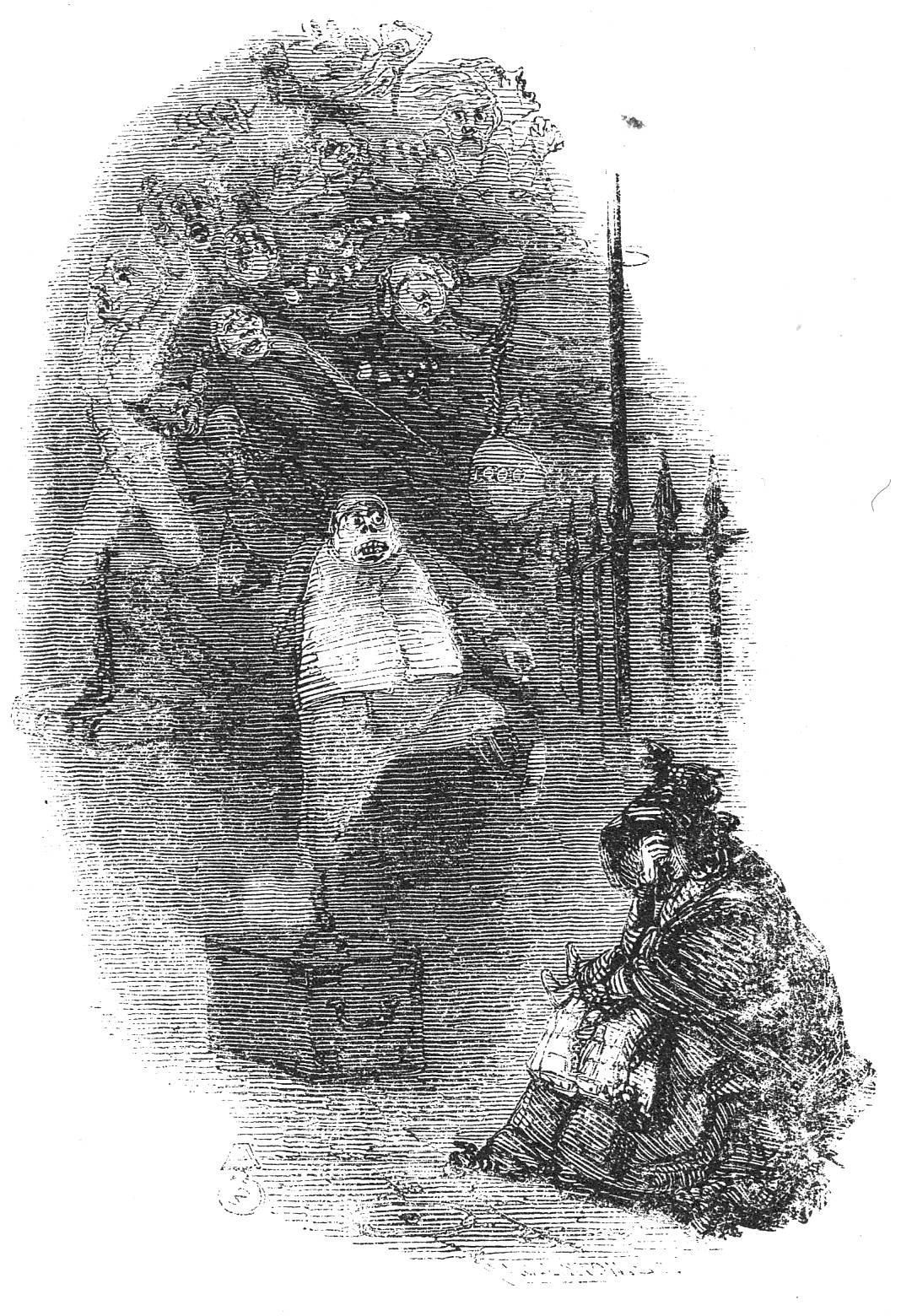
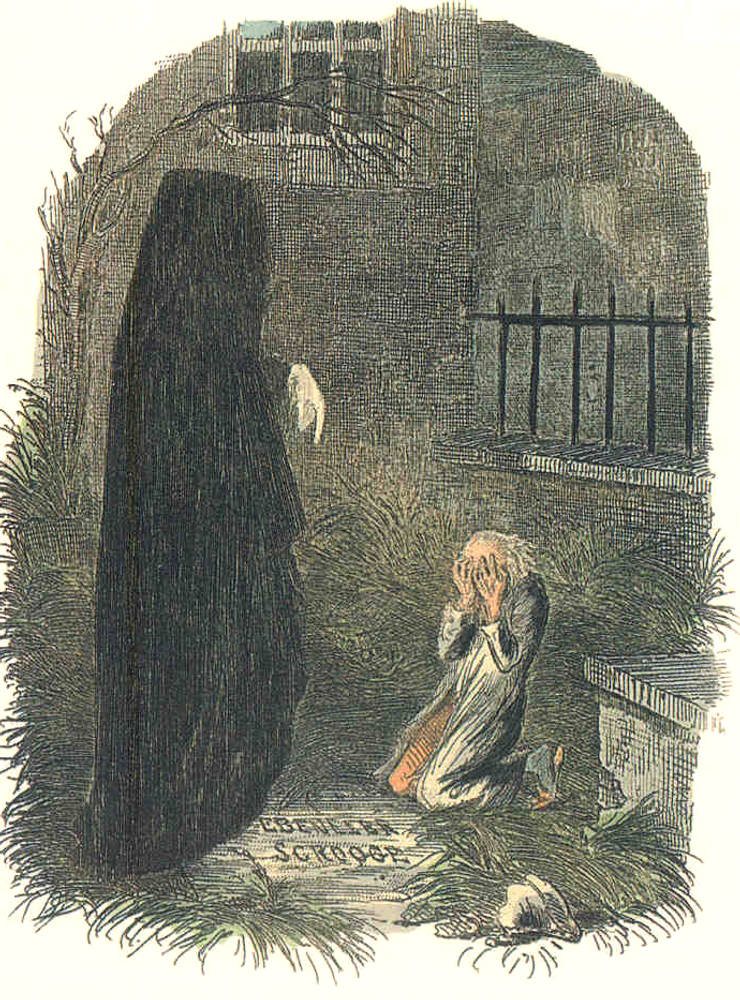
There was, Price says, an established market for seasonal publications, with two almanacs, Forget Me Not and The Keepsake, popular since the 1820s. Dickens took the genre to a new level. “He undercut them, making Carol cheaper but really investing in the presentation, with a cinnamon cloth binding and beautiful illustrations by John Leech.”
Literary circles were charmed. The author of Vanity Fair, William Makepeace Thackeray, declared that the novella “occasioned immense hospitality throughout England; was the means of lighting up hundreds of kind fires at Christmas time; caused a wonderful outpouring of Christmas good feeling...”
Celebrated letter-writer Jane Carlyle notes that after reading the book, her husband, the historian and essayist Thomas Carlyle, dispatched her to buy their first turkey.
Yet while A Christmas Carol is Dickens’ best-known festive story – and his most successful – it was not his first. In 1835 he had published A Christmas Dinner – a lively depiction of the big meal, complete with timeless concerns about family politics – and in the 24 years after 1843, he produced 22 further seasonal stories.
“That man must be a misanthrope indeed, in whose breast something like a jovial feeling is not roused – in whose mind some pleasant associations are not awakened – by the recurrence of Christmas,” he wrote in 1835.
Clearly, says Price, the man loved Christmas. “He came from a family with strong traditions of gathering together and doing a lot of the things that are described in the Carol.” Many of the scenes in A Christmas Carol reflected those in his life. Extended family and friends were welcomed, the house and table were decorated with evergreens, toasts were raised and parlour games and homespun shows – Dickens himself performed magic tricks for the children, Blind Man’s Buff was another favourite – were encouraged.
“One of Dickens’ daughters recalled him taking them down to a toyshop in Holborn and patiently waiting for them to choose their gift for Christmas,” says Price. Oldest son Charley remembered being brought down from the nursery to fill a place at one festive feast after the non-appearance of an expected guest.
As we see in the metamorphosis of Scrooge and the touching celebrations of the Cratchits – poor and worried for disabled Tiny Tim – Christmas was to Dickens also a time for gratitude, generosity and hope.
“Reflect upon your present blessings – of which every man has many – not on your past misfortunes, of which all men have some. Fill your glass again, with a merry face and contented heart. Our life on it, but your Christmas shall be merry, and your new year a happy one!” he wrote in A Christmas Dinner.
The moral behind A Christmas Carol is clear and intentional, though. Dickens’ outrage at the conditions faced by Britain’s poor is well-known. The story was his inspired way of highlighting the problem and exhorting the rich to action.
Earlier in 1843, the findings of a Parliamentary report into child labour had shocked Dickens. He also toured a Ragged School in London’s Clerkenwell and visited his sister Fanny (whose son is thought to have been the inspiration for Tiny Tim) in Manchester.
“He was incensed,” says Price, “and decided he would publish a political pamphlet called Benefit of the Poor Man’s Child. Within days, though, he tells friends he will defer his action until Christmas and that the result will be 20 times more powerful.”
He began writing in October, completing the story in six weeks. The book was intended to be read aloud, something he himself first did publicly that year and continued to do until 1870, the year of his death.
The traditions of the celebrations remained largely relevant then as they do now. In 1843, turkey – such as the giant one Scrooge has sent to the home of the Cratchits, having seen their meagre Christmas Day goose – was an emerging trend, imported from the New World.
Dickens received turkeys – as well as pork pies and ducks – from friends including his lawyer, publisher and his benefactor Angela Burdett-Coutts, the latter’s bird so large, he writes, that he initially mistook it for a baby.
This was also the year in which Christmas cards were first sent, the mass production of many printed goods being a result of industrialisation. Their wording is reflected in Scrooge’s happy declaration of “A merry Christmas to every-body! A happy New Year to all the world!”
It is this message – of compassion and goodwill – that Price believes underpins our continuing affection for Dickens at Christmas. Alongside the wintry imagery, the mouth-watering feasts and the cosy firesides, we are heartened by Scrooge’s eventual humility and generosity.
This year, the Charles Dickens Museum has asked illustration students from Central Saint Martins to create pieces inspired by A Christmas Carol. Many of them, says Price, have applied his words to 21st-century issues. “Responses to the refugee crisis, homelessness, ethical manufacturing all seem relevant. Perhaps, in the face of increasing commercialisation, we are looking for a more thoughtful message for Christmas.”
For details of Christmas events at the Charles Dickens museum see dickensmuseum.com
- Bloggery committed by chris tower - 2112.19 - 10:10
- Days ago = 2361 days ago
- New note - On 1807.06, I ceased daily transmission of my Hey Mom feature after three years of daily conversations. I plan to continue Hey Mom posts at least twice per week but will continue to post the days since ("Days Ago") count on my blog each day. The blog entry numbering in the title has changed to reflect total Sense of Doubt posts since I began the blog on 0705.04, which include Hey Mom posts, Daily Bowie posts, and Sense of Doubt posts. Hey Mom posts will still be numbered sequentially. New Hey Mom posts will use the same format as all the other Hey Mom posts; all other posts will feature this format seen here.