A Sense of Doubt blog post #4258 - Larry Levis, Elegy, and Cut and Paste
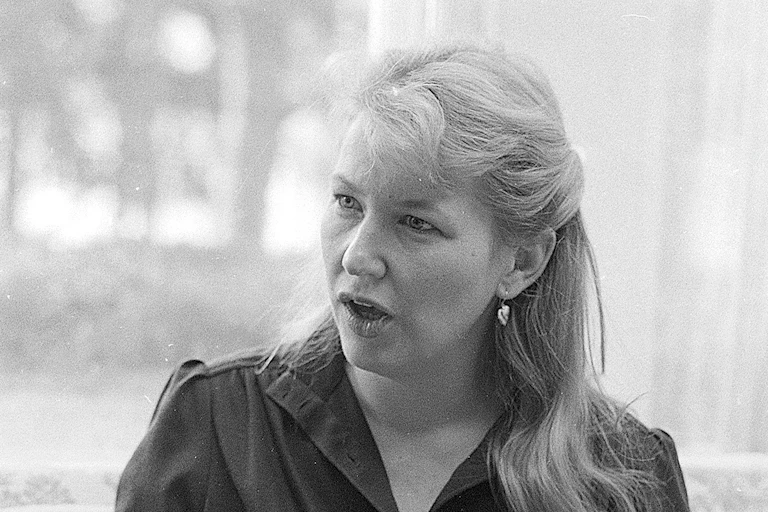
I love Larry Levis. He may be my favorite male, modern poet. Yes, he is.
This is Writerly Wednesday for October 14, 2026.
Thanks for tuning in.
SUBJECT: LARRY LEVIS: Read Poems; List Words: Write a poem with the list you made

As both announcement and discussion post for maximum visibility.
I rarely read books of poetry from front cover to back cover. I pick and choose poems that look or sound interesting. I am attracted by titles that catch my attention.
I read Elegy by Larry Levis all through and then I read it again, and again, and again, and you get the idea.
We writers “borrow.” Some call this “stealing,” but it’s really the highest form of homage.
One of my favorite assignments in creative writing was being given a list of words and assigned to write a poem with all of the words. I shared my list and the resulting poem farther below.
Recently, I started to read Levis again and pull out words or images that I might use whole or modify for my own poems. Sometimes the words are well known and just something I may not think of on my own, like bridges, dead tree, river, grace, moonlight, and ossuary.
Others are images or ideas like blackness of winter, singing in her blood, when the dead come back, raspy hum, invisible birds and animals, the breath of moving traffic, the committee of solitude, walking chemistry sets, under the missing and innumerable stars.
It’s a lot like the cut and paste methods of construction that David Bowie borrowed from William Burroughs and then David Byrne used for Talking Heads’ album Speaking in Tongues that focused on cliches and common phrases strung together in song.
It’s fun! I challenge you!! Make a list or use any of these lists and make your own poem!
Here’s some LEVIS.
I could not find an entire PDF of Elegy, but I did find some of the poems and a collection of poems that includes more, notably “Anastasia and the Sandman” that I referenced in a previous post.
ELEGY WITH A CHIMNEYSWEEP FALLING INSIDE IT
Elegy with a Thimbleful of Water in the Cage
Down Memory Lane: Larry Levis’s ELEGY
Elegy For Whatever Had A Pattern In It
LARRY LEVIS
Elegy with a Bridle in Its Hand
One was a bay cowhorse from Piedra & the other was a washed-out palomino
And both stood at the rail of the corral & both went on aging
In each effortless tail swish, the flies rising, then congregating again
Around their eyes & muzzles & withers.
Their front teeth were by now yellow as antique piano keys & slanted to the angle
Of shingles on the maze of sheds & barn around them; their puckered
Chins were round & black as frostbitten oranges hanging unpicked from the limbs
Of trees all through winter like a comment of winter itself on everything
That led to it & found gradually the way out again.
In the slowness of time. Black time to white, & rind to blossom.
Deity is in the details & we are details among other details & we long to be
Teased out of ourselves. And become all of them.
The bay had worms once & had acquired the habit of drinking orange soda
From an uptilted bottle & nibbling cookies from the flat of a hand, & liked to do
Nothing else now, & the palomino liked to do nothing but gaze off
At traffic going past on the road beyond vineyards & it would follow each car
With a slight turning of its neck, back & forth, as if it were a thing
Of great interest to him.
If I rode them, the palomino would stumble & wheeze when it broke
Into a trot & would relapse into a walk after a second or two & then stop
Completely & without cause; the bay would keep going though it creaked
Underneath me like a rocking chair of dry, frail wood, & when I knew it could no longer
Continue but did so anyway, or when the palomino would stop & then take
Only a step or two when I nudged it forward again, I would slip off either one of them,
Riding bareback, & walk them slowly back, letting them pause when they wanted to.
At dawn in winter sometimes there would be a pane of black ice covering
The surface of the water trough & they would nudge it with their noses or muzzles,
And stare at it as if they were capable of wonder or bewilderment.
They were worthless. They were the motionless dusk & the motionless
Moonlight, & in the moonlight they were other worlds. Worlds uninhabited
And without visitors. Worlds that would cock an ear a moment
When the migrant workers come back at night to the sheds they were housed in
And turn a radio on, but only for a moment before going back to whatever
Wordless & tuneless preoccupation involved them.
The palomino was called Misfit & the bay was named Querido Flacco,
And the names of some of the other shapes had been Rockabye
And Ojo Pendejo & Cue Ball & Back Door Peter & Frenchfry & Sandman
And Rolling Ghost & Anastasia.
Death would come for both of them with its bridle of clear water in hand
And they would not look up from grazing on some patch of dry grass or even
Acknowledge it much; & for a while I began to think that the world
Rested on a limitless ossuary of horses where their bones & skulls stretched
And fused until only the skeleton of one enormous horse underlay
The smoke of cities & the cold branches of trees & the distant
Whine of traffic on the interstate.
If I & by implication therefore anyone looked at them long enough at dusk
Or in moonlight he would know the idea of heaven & of life everlasting
Was so much blown straw or momentary confetti
At the unhappy wedding of a sister.
Heaven was neither the light nor was it the air, & if it took a physical form
It was splintered lumber no one could build anything with.
Heaven was a weight behind the eyes & one would have to stare right through it
Until he saw the air itself, just air, the clarity that took the shackles from his eyes
And the taste of the bit from his mouth & knocked the rider off his back
So he could walk for once in his life.
Or just stand there for a moment before he became something else, some
Flyspeck on the wall of a passing & uninterruptible history whose sounds claimed
To be a cheering from bleachers but were actually no more than the noise
Of cars entering the mouth of a tunnel.
And in the years that followed he would watch them in the backstretch or the far turn
At Santa Anita or Del Mar. Watch the way they made it all seem effortless,
Watch the way they were explosive & untiring.
And then watch the sun fail him again & slip from the world, & watch
The stands slowly empty. As if all moments came back to this one, inexplicably
To this one out of all he might have chosen—Heaven with ashes in its hair
And filling what were once its eyes—this one with its torn tickets
Littering the aisles & the soft racket the wind made. This one. Which was his.
And if the voice of a broken king were to come in the dusk & whisper
To the world, that grandstand with its thousands of empty seats,
Who among the numberless you have become desires this moment
Which comprehends nothing more than loss & fragility & the fleeing of flesh?
He would have to look up at quickening dark & say: Me. I do. It’s mine. 
(reprinted by permission of The University of Pittsburg Press)
Contributor’s notes
Levis Remembered 
LARRY LEVIS
Elegy Ending in the Sound of a Skipping Rope
I
All I have left of that country is this torn scrap
Of engraved lunacy, worth less now
Than it was then, for then it was worth nothing,
Or nothing more than
The dust a wren bathes in,
The fountain dry in the park off the Zeleni Venac,
The needles of the pines dry above it,
The green shutters of the fruitsellers’ stands closed
For the afternoon so that in the quiet it seemed
The wren was the only thing moving in the whole city
As it beat its wings against the stone
To rid itself of lice as the dust rose around it.
The sound of its wings, I remember, was like the sound
Of cards being shuffled, as repetitive
And as pointless.
The characters met on faint blue paper.
They were thin as paper then.
They must be starving now.
~
I don’t feel like explaining it,
And now I have to.
To illustrate its money, the State put lovers on the money,
Peasants or factory workers staring off at something
You couldn’t see, something beyond them,
Something that wasn’t Titograd.
They kept looking at it with their faces
Averted, as if they were watching it take place.
In the casinos, these two lovebirds would lie there
Absorbed in it, staring beyond the green felt
Counters of roulette & baccarat tables, beyond the action,
Beyond the men & women in formal attire.
~
Then someone told me what the money meant,
What they kept looking at:
They were watching the State wither away.
When I tried to imagine it, all I could see
Was a past
Where the ancient goat paths began reappearing,
Crisscrossing a straighter footpath,
Nothing else there except three pedestals lost in moss,
And a man washing a cart horse with soap & tepid
Water, &, at that moment, placing
A plaster of sticky leaves over the sores on the horse’s
Withers, the long muscle in the mare’s neck rippling
As he does so, as she goes on grazing without the slightest
Interruption, standing there in the shade of an oak
At the exact spot where the Palace of Justice
Finally turned into the mist it had always resembled.
In the moment before it vanished
Flies still buzzed in lopsided circles in the courtroom
And a witness accidentally inhaled one while testifying,
And then apologized to the court, apologized
For inhaling a fly, but no one knew what to say,
The room grew suddenly quiet, & then everything disappeared,
And a crowd strolled out of the matinee into a village
That was waiting for them, strolled casually
Out of history,
And into something else: forgetful, inexact,
A thirst, an arousal, a pairing off with whomever they desired,
Strangers even, trysting against walls,
Or in a field of dandelions, on wagonbeds, the moment
Scripted in the involuntary,
Lovely convulsion of thighs lathered as a horse’s back,
Because, as Marx said,
Sex should be no more important than a glass of water.
~
I can’t imagine it back.
I can’t get the miles of dust rubbed away from it,
Or the layers of sheetrock.
The fruitseller’s stand on Lomina Street with its closed
Green shutters was what
Reminded me of Big Sur in 1967,
Reminded me of the beach at Lucia with the vacant
Concession stand, the two unemployables
Entwined like salt in a wave inside it, asleep,
Naked in each other’s arms.
I can’t imagine it enough.
I can’t imagine how to get back to it, with something
In your eye, something always in your eye,
And everything becoming a scrap of paper:
The sprawl of the surf there & the cries of the lovers
Just pin-ups or illustrations behind the counter now:
“Gimme a Coke. Gimme a hot dog too, then,” someone
Says to him, tattoos from the navy over
His forearms, not liking what he does, not
Imagining doing anything else now
Except this. Just this.
What withered away?
I watch the guy working fast & suddenly it’s me who’s
Wrapping the hot dogs in waxed paper, me who
Half turns, grabs the lids & straws for the Cokes,
Adds it up without pausing & hands them the change.
I can’t imagine it enough, & even if I could, one day
That, too, would be the wave’s sprawl on the empty rocks,
The hunger in the cries of the gulls.
He pulls the shutters down & locks it up.
“Gimme This & Gimme That. You O.K., Mr. Sea?”
He says to the sky, to the gulls,
To the slur of water receding
On the rocks, to the empty sprawl of the wave
Showing its hand at last before it folds.
II
The lovers must have stepped out of their money
A few days after the State stepped out
Of its thousand offices.
At night you could look up, & all the black glass
Of the windows would glint back at you
Once, as if in recognition.
The lovers must have stepped out because I saw them
Sitting at one of the tables outside the Moskva & shouting
At each other, shouting so loudly
They did not notice their friends beginning
To gather around them.
I gazed past them at the crowds on Terazije passing by
Amid the smells of exhaust
And grilled meat & the odor the sticky bark of the trees
Gave off in the summer afternoon,
The leaves still & exhausted & not turning or
Falling or doing anything yet
Above it all. I liked them. I liked the way the leaves
Had a right to be there & say nothing about it
Hanging there, motionless, without expression,
Without faces, not looking at all
Like passing generations but exactly as leaves look
When they’re still, looking as if
They are refusing to enlist, looking as they always did,
If I glanced up from the book I was reading,
And rubbed my eyes,
And tried to trace her shape I had thought
I’d memorized,
But hadn’t.
Her shape like the sun on the roads.
~
Too bad, with all the evacuations,
All the troop movements & closed offices,
Each black window shining like a contradiction,
“You’d think the Parliament would . . .
You would think out of common decency, that . . . ”
But the State did not wither away,
It looked just the same, with the rain
Falling between the treeless, bleached yellow
Of cheap housing projects, the rain
Showing them the way home, showing them the Future:
When they get there they find her uncle living
With them, he’s eating dinner
When they arrive, he’s sucking on a fish bone
When they walk in.
In a few weeks Failure & Limitation
Shows its hand in the cold bud
Of her body refusing to open itself,
Refusing to wake up in the morning,
And the uncle by the end of summer walking naked
Through the apartment, pausing one day
Beside her, leaning over her a little, not to
Seduce her but to show her a few things,
To introduce her to
The real head of state grinning through its veil
Of skin as if there was
This joke, something just between
The two of them.
And later the uncle just grins at her,
Grins & says nothing.
~
Love’s an immigrant, it shows itself in its work.
It works for almost nothing.
When the State withers away it resembles
The poor sections of Wichita or Denver.
They held hands the first day & walked under the trees,
And so they were warned about the trees,
About straying into the parks.
A fuzzy haze of green in someone’s yard comes back,
But then it forgets it’s there.
The streets are forgetting they are streets
And they cross other streets
And at the intersections those streets
Begin to forget.
Most of the stores are boarded up, most of what
Is left is braced with two-by-fours in X’s
Over the doors like spells with no power in them,
The sun like neglect bathing the walls,
Bathing the beams you can see right through to,
It’s always the day after the day after here,
And every rebellion’s a riot,
The riot goes on though no one’s there, the streets
Looking burned still, looking as inexplicable
To them as it did the first day
They saw it,
The days are inexplicable,
Their unvarying routine where children not yet
In school peer through the chain link
Of a storm fence above the boulevard & the traffic
To watch for cops,
Where their older brothers with their girlfriends
Sprawl on a car seat ripped out
Of a van & placed here to overlook the city, the river,
Its history an insult in which
They were property.
When it was over, history became a withered arm,
And everyone entered history & no one could find them.
The children keep staring through the chain links
Of the storm fence. The older ones on the car seat
Get high from a glass pipe & watch
The planes on the runway taxi & take off,
They get high again & watch the planes
Glide in & land, & do one last hit before
They stand up & one of them pisses into a small ravine
Of trash. The five-year-old girl keeps peering
Through the storm fence without letting
Her attention stray
Because the price of freedom is eternal vigilance,
Her brother tells her, laughing,
And because the task assigned to her is sacred.
I can’t imagine her enough.
I remember standing in broken glass at the foot
Of a stairway, the woman beside me
Frightened & crying, & the way the glass felt
Like a river freezing under my feet.
I remember how expensive it all seemed,
And after we had split up, in the years that followed.
I would feel my body turn
Slowly away from others so that it could live alone,
So that each afternoon it could
Become wholly a body. It swept the floors of the house
Each day until it was a routine,
Until it became the finite, thoughtless beauty
Of habit.
Whenever the body swept, it could forget.
And the habit was neither pleasure nor work but an act
That kept the stars above it
In the night, kept the pattern of the stars
From rattling out of their frames,
Whether you could see them above you or not,
Whether you looked up & noticed them or not,
The body swept the floors & kept the light above it.
This is why
The girl keeps squinting through the storm fence,
This is why the task assigned to her is sacred,
Why her love for her brother
Is unconditional,
And though she suspects that her brother
Will one day turn into mist behind her,
A space on the car seat, that he will
Disappear like the others have,
It hasn’t happened yet.
I swept the floors to let the worlds blur
Into one another.
But the lovers, the emigrants?
I never see them anymore.
I don’t know where they went.
III
I remember the idiot in the park near Zeleni Venac,
Standing there without a shirt on,
With his fly undone,
The way he’d hold his penis in one hand, & simply howl
And keep howling to anyone passing by
On Lomina Street, because, as Ratko explained it to me,
He believed that he held one end of a leash
He would never find him, this Master he had waited for,
This owner whose whistle he listened for
In the faint blue stillness of the summer daybreak.
In the mornings he would seem calm & play cards
Without understanding them with the others
Who slept in the park & tolerated him, but by
Late afternoon he would begin
To stammer & beg beside the dry fountain, the pine needles
So dry by now they seemed
About to ignite above him, & then, at the certain moment,
He would seem to realize
What had happened, he would become completely still
At that moment, & then . . .
Then the howling would start up again.
It was not the howling of an idea.
It was the flesh being flayed.
~
My friend Ratko used to drink brandy constantly
In little sips throughout the day & could lie
So beautifully about anything
That the government awarded him, each year, a grant
To write stories, but of course he never wrote them
Except on the air as he walked with friends
Through the city.
Continuing his almost endless commentary,
Asking if the idiot did not admit, without knowing it,
The great truth
About us, that a broken string or snipped-off thread
Is all we remember, & that even this is
Less real than the pulpy flesh he held between his fingers.
History has a withered arm.
And the love of these two adhering to paper, delusional,
Vestigial, the daydream of Capitalism,
The last transaction of the State by which it vanishes,
The flies caking the face of the horse standing there
In its innocence again,
I can’t imagine them enough to bring them back.
After a while, when any subject is forbidden,
All thought is deviationist.
And the young schoolteacher in Rijeka is . . . where by now?
And the young Muslim poet from Sarajevo is . . . where by now?
And the harmless, lazy bellman at the Atina Palace is . . .
Where by now?
And the pipe-smoking translator with his office overlooking
Princip Street & the river,
Who was last heard on the phone shouting to someone
As the beams & window glass let go of themselves
In the laughter that shatters all things is . . . where by now?
~
Those nights when I couldn’t sleep in Belgrade,
When I could no longer read,
When there was no point in going out because everything
Was closed, I’d glance at the two of them
On their worthless currency, as if I might catch them
Doing something else, & once,
I turned from their portrait to the empty street
Beneath the window, the thick trees like a stillness
Itself in the night,
And . . . I saw them there. This time they were
Fucking in the rain, their clothes strewn beneath them
On the street like flags
After a war, after some final defeat—fucking each other
While standing up, standing still in the rain & the rain falling
In sheets as if there were no tomorrow left
In it, as if their mouths, each wide open & pressed against
The other’s mouth, stilling the other’s, & reminding me
Of leaves plastered to the back of a horse
Trotting past after a storm, leaves plastered to the side
Of a house by the wind, to what is left of some face . . .
Had taken the breath out of everything. I thought of
The horse passing easily
Under the exhausted-looking mulberry trees, under the leaves
And the haunted scripture—
Some of its characters shaped like blossoms, others
Like a family of crows taking flight, others like farm tools,
Some of them moving in circles like swirls in a current—
All of it written in the cracked, weathered Cyrillic of some
Indecipherable defeat, though once its shapes had been
Perfect for showing one things, clear as a girl’s face,
The girl who skipped rope in her communion dress,
Dry & white as a petal—
Jedan. Cesto?, Nema, Zar ne?
Chaste & thoughtless as the thing she chanted
And then lost interest in, until I could hear only the endless,
Annoying, unvarying flick of the rope each time
It touched the street. 
“Elegy Ending in the Sound of a Skipping Rope” from Elegy, by Larry Levis, © 1997. All rights are controlled by the University of Pittsburgh Press, Pittsburgh, PA 15260. Used by permission of the University of Pittsburgh Press.
I did this assignment long ago with words from Thomas Merton given me by the teacher. My list of words was
steelbright
wildworld
whispering
honeycomb
cocoon
cloistered
encircle
evaporate
I created this poem, which has been revised many times. I think this is the original, though I will present the multiple revisions next week or the week after.
MOONLESS SOLITUDE
THE WELCOME SORROW OF NIGHT
Cunning guides me
down night's streets.
Driving me into the cocoon
of trash. Here, in this alley
unwashed by the sky, I am
cloistered by a quicksand
trash. I am entombed
by gutters, and the gravity
of discarded menus.
A fence of valuable friends encircles
my home. It rises every evening to taunt
my arrogances. Altars are born
of sidewalks -- we worship conversation,
rubbish and tribulations.
"Sorrow offers a chance for ecstasy,"
I murmur.
Innuendoes honeycomb the half-heard
truth. I compose hymns
to the pagan vanity of love.
My razor shaves their skins
adrift in a soapy sink. But nothing,
not the sharpest razor, nor the keenest
mind could save us from the chasms
between our souls.
We are purged in an eternal
lent and we, she and I, resist
the evening love in contrition
for our walking sin.
Garbage evaporates;
steelbrightining the world.
Dawn creeps through the shutters
of my heart, turning it to relieved sighs,
yielding gradually
the emotions that fuel the morning tide.
Our souls remain -- a wildworld of
frozen shadows.
The whispering of her hair
and the whinnying horses
wakes me from dreams.
She's up before me
burning the coffee on the stove
and grooming the mounts.
I mix myself with the lazy smell
of hay. I drink the
barn, tower silos, hay bales,
corn, grain, mice, air, the excess
dribbling from mouth's corners,
staining the quilt
of our makeshift bed.
~ peace, chris tower, your friend in learning!
“Always look on the bright side” - from THE LIFE OF BRIAN

+++++++++++++++++++++++++++++++++++++++++++++++++++++++++++++++++++++++
+++++++++++++++++++++++++++++++++++++++++++++++++++++++++++++++++++++++
+++++++++++++++++++++++++++++++++++++++++++++++++++++++++++++++++++++++
- Bloggery committed by chris tower - 2610.14 - 10:10
- Days ago: MOM = 4122 days ago & DAD = 776 days ago
- New note - On 1807.06, I ceased daily transmission of my Hey Mom feature after three years of daily conversations. I post Hey Mom blog entries on special occasions. I post the days since ("Days Ago") count on my blog each day, and now I have a second count for Days since my Dad died on August 28, 2024. I am now in the same time zone as Google! So, when I post at 10:10 a.m. PDT to coincide with the time of Mom's death, I am now actually posting late, so it's really 1:10 p.m. EDT. But I will continue to use the time stamp of 10:10 a.m. to remember the time of her death and sometimes 13:40 EDT for the time of Dad's death. The blog entry numbering in the title has changed to reflect total Sense of Doubt posts since I began the blog on 0705.04, which include Hey Mom posts, Daily Bowie posts, and Sense of Doubt posts. Hey Mom posts will still be numbered sequentially. New Hey Mom posts will use the same format as all the other Hey Mom posts; all other posts will feature this format seen here.