Though the current project started as a series of posts charting my grief journey after the death of my mother, I am no longer actively grieving. Now, the blog charts a conversation in living, mainly whatever I want it to be. This is an activity that goes well with the theme of this blog (updated 2018). The Sense of Doubt blog is dedicated to my motto: EMBRACE UNCERTAINTY. I promote questioning everything because just when I think I know something is concrete, I find out that it’s not.
Hey, Mom! The Explanation.
Here's the permanent dedicated link to my first Hey, Mom! post and the explanation of the feature it contains.
A Sense of Doubt blog post #4009 - Hey Mom Reprint of #219 from Feb. 11, 2016 - Various Images
I am off for some weekend fun. Today, Saturday, I am attending a Zen cohort meeting at Dharma Rain Zen Center in Portland followed by a gathering of the Star Trek fan club that I have not attended since before the pandemic.
Tomorrow is Super Bowl Sunday, and I plan to just relax, read, and half pay attention to sports getting back to serious work on Monday.
And so, two reprints today and tomorrow. Though the picture above is new, the rest of the content is from around this date, not the exact date, in 2016.
Hey, Mom! Talking to My Mother #219 - Various images and a puppy
Hi Mom, Just some images and comics and things I have been throwing into a folder.
Still in catch up mode.
And here's a puppy.
Reflect and connect.
Have someone give you a kiss, and tell you that I love you.
Talk to you tomorrow, Mom.
Jack Kirby - 1976
Adrian Tomine - The Overlook - 2015
Paris
+++++++++++++++++++++++++++++++++++++++++++++++++++++++++++++++++++++++ +++++++++++++++++++++++++++++++++++++++++++++++++++++++++++++++++++++++ +++++++++++++++++++++++++++++++++++++++++++++++++++++++++++++++++++++++ - Days ago = 221 days ago - Bloggery committed by chris tower - 1602.11 - 10:10 +++++++++++++++++++++++++++++++++++++++++++++++++++++++++++++++++++++++ +++++++++++++++++++++++++++++++++++++++++++++++++++++++++++++++++++++++ +++++++++++++++++++++++++++++++++++++++++++++++++++++++++++++++++++++++
- Bloggery committed by chris tower - 2602.07 - 10:10
- Days ago: MOM = 3872 days ago & DAD = 527 days ago
- New note - On 1807.06, I ceased daily transmission of my Hey Mom feature after three years of daily conversations. I post Hey Mom blog entries on special occasions. I post the days since ("Days Ago") count on my blog each day, and now I have a second count for Days since my Dad died on August 28, 2024. I am now in the same time zone as Google! So, when I post at 10:10 a.m. PDT to coincide with the time of Mom's death, I am now actually posting late, so it's really 1:10 p.m. EDT. But I will continue to use the time stamp of 10:10 a.m. to remember the time of her death and sometimes 13:40 EDT for the time of Dad's death. The blog entry numbering in the title has changed to reflect total Sense of Doubt posts since I began the blog on 0705.04, which include Hey Mom posts, Daily Bowie posts, and Sense of Doubt posts. Hey Mom posts will still be numbered sequentially. New Hey Mom posts will use the same format as all the other Hey Mom posts; all other posts will feature this format seen here.
A Sense of Doubt blog post #3864 - Talking Conversations - Reprint of Hey Mom #380 from 2016
One thing that I don't actually do when I reprint is check to make sure I have not reprinted the post before.
It would have helped if I had marked in the original when I reprint the post, so when I go to reprint it again, I see that note.
But I can check my category. And this time, I will.
Okay, as best as I can determine, I have NOT reprinted this one.
I think it's a good one.
It's still true.
FUN FACT: This original HEY MOM post was published 382 days after Mom died. Today marks 383 days since Dad died. Pretty much the same. Had yesterday not been Music Monday, I would have published on Day #382 since Dad's death.
These synchronicities are meaningful to me, and I pay attention to them.
Thanks for tuning in.
The link to the original post that I am reprinting below:
Hey, Mom! Talking to My Mother #380 - Talking conversations - Throwback Thursday
Hi Mom,
I have missed our conversations in the last 382 days (and a few more since you were not so conversant near the end), and I have gotten away from the purpose for this blog, which is continuing those conversations.
So, today, on the Throwback Thursday, here's the news that is news. Here's what's going on and coming up.
The photo above will be 20 years old next year; next month, you would have celebrated your 58th wedding anniversary (August 16th), which is the same day as I acknowledge my cancer surgery.
So these assorted things that are happening are in no apparent order, much like our conversations.
Liesel and I went out to dinner last night and after trying to get in two different places we ended up at the Texas Corners Brewing Company and had a terrible meal, which is a shame because last summer it was one of our new favorite restaurants.
Liesel took a lamp to work for her desk, and I have to bring her a new bulb this morning.
It may be interesting to note that there are things I would share with you on the phone that I will not put in writing and publish to my blog. But I still tell you those things in my head, through my spirit.
The chickens need a new ramp for their coop, so we're getting one made. Paul Abueva should be over some time soon to measure. We're still waiting on our new awning, which I was hoping would get installed this week. The gas line for the new grill gets put in next Thursday.
I checked out two books on grief from the library last year around this time. I have to take them back today as they are due and I cannot renew them. I have never read them, but they look good. I skimmed the tables of contents. Maybe when I return them, I will check out new ones. There are other books on grief.
For record keeping or in case I want to go back and get them again, they are as follows
Grief and its Challenges by Neil Thompson. 2012 - BF 575 .G7 T49
The Truth About Grief - The Myth of Its Five Stages and the New Science of Loss by Ruth Davis Konigsberg - 2011 - BF 575 .G7 K638
The second book seems interesting as it argues against the five stages of grief. I like the term "disbelief" better than "denial" because it's not like I denied that you are dead, Mom, but it's more like I struggled to believe it, and I did not want it to be true. Likewise, bargaining was more like negotiating, which I see as somewhat different but those words are probably close enough. And I think "acceptance" as magical goal is over-rated. I still have not "accepted" it. I still don't want it to be true, your death, you gone. But I know it is true, and I go on. Maybe one of the stages should be functioning, going on, survival. something like that.
On to other subjects.
After weeks of putting off a Meijer trip, one is imminent. Possibly tomorrow. The list is quite huge. I am not sure I can afford it all. I may suggest to Liesel that we go to the night market tonight. It's a Farmer's Market event!
I just noticed that my phone's ringer has been off since Tuesday night when I silenced it for the musical I was reviewing.
I am reading "Normal" by Warren Ellis. He's serializing this novella in weekly e-book installments for four weeks. It's about an asylum for burnt-out futurists. I also started The Avenue of Mysteries by John Irving. And there's the usual comic books. I was reading off my Kindle for a while but I tired of that. I much prefer actual paper bound books, so the Irving is a hard cover.
I have been working. I am a bit behind on the Whirlpool job, but I have been catching up on grading. I have more to do today and tomorrow, but I am in good shape to take a 20-mile morning ride tomorrow, which I have decided is a weekly thing.
A thunderstorm just passed through. I think the serious part is over. More rain, which means no watering the garden!
I want an ice cream cone. I bought a package of drumsticks with nuts.
I am cooking a pork loin in the crock pot and have to do the dishes, which I will do as I listen to more of The Fuller Memorandum by Charles Stross, which is my current audio book.
I need to do laundry.
Liesel needed light bulbs and her phone charger brought to her at work.
I know, exciting stuff, right? But such were our conversations. This is a pretty good facsimile minus some of the more personal stuff.
Reflect and connect. Have someone give you a kiss, and tell you that I love you. I miss you so very much, Mom. Talk to you tomorrow, Mom.
- Days ago = 382 days ago - Bloggery committed by chris tower - 1607.21 - 10:10
NOTE on time: When I post late, I had been posting at 7:10 a.m. because Google is on Pacific Time, and so this is really 10:10 EDT. However, it still shows up on the blog in Pacific time. So, I am going to start posting at 10:10 a.m. Pacific time, intending this to be 10:10 Eastern time. I know this only matters to me, and to you, Mom. But I am not going back and changing all the 7:10 a.m. times. But I will run this note for a while. Mom, you know that I am posting at 10:10 a.m. often because this is the time of your death.
- Bloggery committed by chris tower - 2509.16 - 10:10
- Days ago: MOM = 3729 days ago & DAD = 383 days ago
- New note - On 1807.06, I ceased daily transmission of my Hey Mom feature after three years of daily conversations. I post Hey Mom blog entries on special occasions. I post the days since ("Days Ago") count on my blog each day, and now I have a second count for Days since my Dad died on August 28, 2024. I am now in the same time zone as Google! So, when I post at 10:10 a.m. PDT to coincide with the time of Mom's death, I am now actually posting late, so it's really 1:10 p.m. EDT. But I will continue to use the time stamp of 10:10 a.m. to remember the time of her death and sometimes 13:40 EDT for the time of Dad's death. The blog entry numbering in the title has changed to reflect total Sense of Doubt posts since I began the blog on 0705.04, which include Hey Mom posts, Daily Bowie posts, and Sense of Doubt posts. Hey Mom posts will still be numbered sequentially. New Hey Mom posts will use the same format as all the other Hey Mom posts; all other posts will feature this format seen here.
A Sense of Doubt blog post #1483 - Ethnocentrism and World Views - More HUM 351 Posts
And so another post in my continuing series of material from the Humanities 351 class I am teaching at Concordia University, Portland.
This is a quickie because, you know, GRADING HELL, but then what else is new.
Here's the work:
HUM
351
Challenges of Global
Diversity
Week 4
It seemed as if the world had gone mad.
~
Chinua Achebe
Introduction
This week we continue
our exploration of Igbo culture and how some Indigenous peoples experienced the
European colonization of Africa.
Investigate alternative
points of view or consider additional resources on your own as we move along
through the required novel and the films, if you choose. Enjoy this week’s
materials and contact the instructor if you have any questions.
Read
·Things
Fall Apart (Achebe, 1994)
View
·Africa:
The Story of a Continent (Davidson, 2000) [Video] [Closed captioned] Note: Watch Episode 5 -The Bible and the Gun and Episode 6 -This
Magnificent African Cake. Both episodes are available on YouTube [Episode 5, Episode 6] and for purchase on Amazon. They may also be available at the CU library
and through other libraries or services.
Post to Discussion
Board: Week 4 – Responses and Worldviews
Initial Post (Due
Tuesday)
In your discussion board
post, respond to the questions posed below. Use specific details from the text
and film to support your answer. Include direct quotations where appropriate.
Feel free to include additional relevant personal observations, stories, and
experiences.
·What do you think about
the range of African responses to colonization portrayed
in Things Fall Apart and Africa: The Story of a
Continent? Be specific.
·What do you think about
the range of European values, ideas, and goals depicted
in Things Fall Apart and Africa: The Story of a
Continent? Be specific.
Support your statements
with evidence from the Required Studies and your research.
My responses
I am
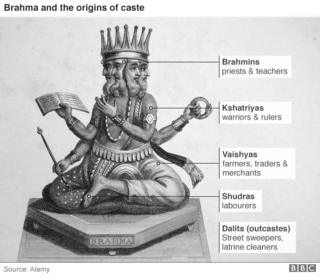
glad that ethnocentrism struck a chord. Yes, isn't the cultural chasm that
breeds ethnocentrism much the same as the class system based on wealth and
status in America, even though, we do not have a class system, say like the
Hindu caste system of India. The system was as unjust as American capitalism
and greed without the illusion of the "American Dream," which lies to
the populace that there is a way out of the crushing poverty for EVERYONE.
Isn't it more than
just judging people for their salary instead of who they are? Isn't the salary
the means to get the nicest place to live, the creation we all crave, the
luxury we all want, and to be able to fulfill desires with immediate
gratification? As an aside, I think immediate gratification brought on by
the access technology provides is one of the most serious modern problems we
all face that few want to admit is a problem.
Isn't American
class system characterized by the all but impenetrable 1% of the 1%?
Isn't that the last
bastion of the staunchest racists, sexists, homophobes?
I love the way you related the
two colonization situations as Hawai’i’s situation has many parallels.
Just a note on writing
correctness: 1800s. Never 1800's. It is a simple plural: 1800s.
I like that you are
investigating a new question about “chosen response” in regards to how Africans
reacted to the arrival of white Europeans.
You have some very good
analysis here and are using sources well. As I have stated elsewhere, I think a
single and unified thesis works better for these questions rather than creating
separate answers and following a more rote method such as questions-answers
homework.
I like your second half very
much, but for simplicity, I am just going to focus on your first half.
I am a bit confused as to what
you are suggesting. Are you saying that these African people (a lot of varied
cultures about which we are generalizing surely), did not have the free will
and resolve to choose how they responded to the coming of Europeans?
What is your evidence for this?
You share the example
from Things Fall Apart that Okonkwo leads the attack on the European Christians; how is
this not choosing their response?
So, you state this, and I am
not sure what you mean:
“This is exactly why I would
argue whether or not certain African’s responses were even taken into account
about European influence.”
Taken into account by whom?
Achebe? Those making the documentary?
Perhaps you are grappling with
the conversion issues that turned brother against brother:
“How do you think we can fight
when our own brothers have turned against us?”
and
“They have broken the clan and
gone their several ways... our brothers have deserted us and joined a stranger
to soil their fatherland. If we fight stranger, we shall hit our own
brothers...”
So is this what you are talking
about? Africans choosing not to fight so as not to strike against their own
people?
You have made intriguing
points, but I seem to lack clarity.
Good job!
This is an amazing
1000+ words on the issues of colonialization with strong source use. Two
immediate recommendations:
- don’t forget italics with
titles, such Things Fall Apart.
- consider adding an extra
source or two when you compose these short essays
It’s better to write a short essay unified by a single thesis for these
responses rather than answering each question in turn, which feels more like
answering questions in the back of a textbook than writing a critical analysis
of material we’re watching and reading.
I want to hone right in on one
of your quotes from Africa:
A Voyage of Discovery. Which
episode does this quote come from? The episode title would be in quotes and
might be used as the in-text cite.
But thanks for the time stamp!!
“What the African inhabitants
might think was never asked. The European idea in the words of one British
colonizer was to seize African territory and then to rule the country as there
were no inhabitants. They were thought of as children and justified taking
their land by calling them lazy savages.”
This idea of parents and
children – this sure is TOUGH LOVE – and the regard of the African peoples as
“lazy savages” goes right to the heart of the European ideas about them.
But saying that the Europeans
“mistreated them greatly” is definitely putting it mildly. I think you are on
the right track as you delve into Things Fall Apart and
go at the ideology here: “African people were “savages” and “uncultured” humans
that needed to be taught a better way of life. Not only did they take land, but
they then built a government, and expected the native people to follow their
rules as well.”
You earlier connected to the
paternal idea. But what other analogies for the relationship can we make?
This belief that the European
way of life was “right” and that all other ways of life were wrong, what do we
call that? There’s a word for it: ethnocentrism.
But even ethnocentrism glosses
that abuses, horrors, devastation, and terror inflicted on the people
throughout Africa.
What else can we say about
ethnocentrism?
What other superior-inferior
relationship is like this parent-child image?
As I have shared in previous
announcements, as much as possible, it’s better to write a unified post with a
thesis and a more than topic rather than this rote Q&A old school homework
method. For our DB2 on Mindwalk, the Q&A seemed all right for the material, especially as
many might grapple with making a thesis from the overwhelming content of that
film. However, from now on, it may be better to make a thesis and write a short
essay rather than simply answering questions.
Thanks for giving me this
teaching moment. You’re the first response I am making this week, so I may
reference this post to other students.
As for your content, you start
with a description of African disbelief at the rumors of the white man’s
abilities, but then you do not really do much more with this topic. Isn’t there
quite a bit more to the “response” by the Igbo than disbelief? Isn’t that the
whole message of last third of the book Things Fall Apart?
I like the quote you share in
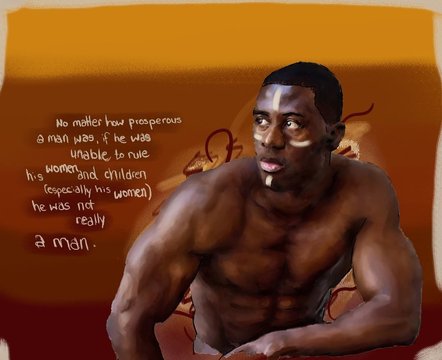
your second half: “He saw things as black and white. And black was evil.
He saw the word as a battlefield in which the children of light were locked in
mortal conflict with the sons of darkness” (Achebe, 1958, p.184).
Good.
So what values and ideas does
this quote express?
It’s more than just no respect
and more regard. The meaning is much deeper and goes to not only the nature of
their humanity but of their very souls.
- Bloggery committed by chris tower - 1903.14 - 10:10
- Days ago = 1348 days ago
- New note - On 1807.06, I ceased daily transmission of my Hey Mom feature after three years of daily conversations. I plan to continue Hey Mom posts at least twice per week but will continue to post the days since ("Days Ago") count on my blog each day. The blog entry numbering in the title has changed to reflect total Sense of Doubt posts since I began the blog on 0705.04, which include Hey Mom posts, Daily Bowie posts, and Sense of Doubt posts. Hey Mom posts will still be numbered sequentially. New Hey Mom posts will use the same format as all the other Hey Mom posts; all other posts will feature this format seen here.
A Sense of Doubt blog post #1476 - More Humanities 351 posts - Achebe, Things Fall Apart, Africa, and Imperialism
I am always moaning about how I am not able to publish original content every day, so then last week I hit on the idea of re-posting content I am writing in my Humanities course as it's ALL ORIGINAL, except the quoting.
So, here's a ton of my own writing. Some decent stuff.
This week's focused on Chinua Achebe'sThings Fall Apart.
Here's content from the course:
Last week we learned about systems thinking as a way to see the world. This week we will explore aspects of Igbo culture in Nigeria and learn something about how Indigenous peoples experienced the European colonization of Africa.
Things Fall Apart (Achebe, 1958) explores colonialism from the perspective of the colonized. Thus, Chinua Achebe’s novel reflects a point of view that might be new. Try to see where the author is coming from and what the author is trying to say.
Investigate alternative points of view or consider additional resources on your own as we move along through the required novel and the films, if you choose. For example, there are diverse and scholarly interpretations of William Butler Yeats’s poem, The Second Coming, that are easily available through a simple internet search. Achebe used a key phrase from this poem as the title of our required text. Although this additional investigation is optional, a better understanding of the poem might help you to get more out of the novel.
Enjoy this week’s novel and films and contact the instructor if you have any questions.
Works Cited
Achebe, China. Things Fall Apart. New York: Anchor Books, 1958. Print.
Africa: The Story of a Continent. Dir. Davidson. Nar. BBC, 2000. Film.
Yeats, William Butler and Cedric T. Watts. “The Second Coming.” The Collected Poems of W.B. Yeats. Ware (G.B.: Wordsworth), 2000. Print.
It seemed as if the world had gone mad.
~ Chinua Achebe
This is the discussion question:
Post to Discussion Board: Week 3 – Africa: The Story of a Continent & Things Fall Apart
Initial Post (Due Tuesday)
In your discussion board post, respond to the question posed below. Use specific details from the text and film to support your answer, including direct quotations where appropriate. Feel free to include any relevant personal observations, stories, and experiences that will help others understand.
What do you think of the range of Christians’ attitudes and behaviors as they are presented in Things Fall Apart and Africa: The Story of a Continent? Be specific.
Support your statements with evidence from the Required Studies and your research.
You rose to the challenge and exceeded my wildest hopes! This is a great entry. I love the sectioning, which gives me a great guide to follow your train of thought and your work, especially when you broke out a separate section on additional research! Very impressive.
I love what you have done here!
Good to grab that source from www.sahistory.org, which I also quoted and cited elsewhere. It’s not Nigeria, but it’s still the same issues and the same churches. Here’s some actual positives about Christianity, which we sorely need to acknowledge, especially given that I just wrote Jacqueline last night about what seems positive in Achebe is not (at least in my view).
Here you have referenced a truth we need to remember. Many missionaries had good intentions about doing good work. However, I would challenge this quote:
“driven by a strong desire to genuinely serve humanity.”
Do you (or anyone in class) think that the missionaries saw the Africans as “human” as “people”?
I would say that some may have. Certainly there were progressives who did not regard those with dark skin as one order of evolution removed from animals but much closer to animals than to white Europeans.
For instance, in Chinua Achebe’s own article “Africa’s Tarnished Image,” he writes of the European dilemma that the Africans are “something dark and ominous and alien” (215) that cannot be converted, educated, civilized, or controlled, at least not for long. That for all the hard work the “Africans will revert to type” (215). And so, Europeans grappled with the question of the “humanity” of the Africans: “Are they or are they not? Are they truly like us?” (215).
We may be astounded by this view as it seems completely counter-intuitive to our understanding or and definition for human. Of course, they’re human. We’re all human, which is why “race” is the wrong word but that’s a diatribe for another time.
Of course, the answer to the question – and it was more often that they are NOT human than that they are – is the justification for colonialism, imperialism, and complete disregard for their religions, customs, culture, and lives.
It’s even a spiritual issue as Joseph Conrad made clear in his book The Heart of Darkness (which receives a sort of “remake” in the film Apocalypse Now).
As Achebe further documents, “Conrad devised a hierarchical order of souls...at the bottom are Africans whom he calls “rudimentary souls” (216); there are also “tainted souls” or “small souls” (Ivory Traders). Europeans have “souls” with no qualifying adjective.
We must be mindful of the different mindset of the people of the colonial time period, which your material also speaks to.
Mr. Brown may have been “nonviolent” but I contend that he was not respectful. Just because he didn’t treat the Africans like cattle does not mean that his descriptions of his god compared to their “wicked” ways is at all respectful.
Good post!!
-chris
“Africa’s Tarnished Image” in Achebe, Chinua, and Abiola Irele. Things Fall Apart: Authoritative Text, Contexts and Criticism. New York: W.W. Norton & Co, 2009. Print.
I agree that Achebe is somewhat fair in not solely portraying the coming of the white man to Nigeria and the issue of Christianity in a negative light.
How is it you see Achebe as more positive and the documentary less so? Could this be Achebe’s style, which is light and almost fable like, versus the documentary that almost plays like an episode of CBS’ 60 Minutes?
You use the example of Mr. Brown as your example of Achebe’s positive view of Christianity. But how positive is it? How is Brown respectful? You should tie each claim you make to an instance. Or better yet, show the instance and then read the subtext of it.
I would argue that the first speech by a white man is aggressive and inflexible. Just because he is less cruel than Smith does not make him a positive depiction of Christianity (especially when you cite no textual evidence to prove your claim).
I see Brown as single-mindedly oriented to imposing a worldview on a people and erasing all other views. How is that positive?
He tells the people of Mbanta that they worship false gods of wood and stone (Achebe, 146). He tells the people that “evil men and all the heathen who in their blindness bowed to wood and stone were thrown into a fire and burned like palm oil” (145).
I do not see the positive here.
As white colonialists ourselves, though not you and I specifically, but as the children who benefit from the oppression, the erasure, the domination, we need to examine the white-washing of our stories and the tendency to see positives in things that are clearly negative.
Now, don’t get me wrong, Christianity at its heart is a marvelous thing. I was hanging at St. Michael’s with Concordia’s own Pastor Bo, Chad, Norm, Ted, Michael, and others, talking theology just Wednesday, so please get my own worldview, which is for one love and great respect for the things for which I can have respect.
But I have to see more discussion here of how Mr. Brown is not so positive.
And while we’re talking about colonialism, imperialism, missionaries, and the lot, check this out:
You are welcome. I prefer to think of as “replying” with guidance and maybe some challenges to help you grow rather than analyzing. I just want the right positive spin on it.
I see your clarification about “strong voice” but did the villagers really start respecting the Christians after they survived the evil forest and just because of that?
Didn’t they make fun of the Christians because of the mistaken use of the word “buttocks”?
Reading page 151, it looks to me like the Christians get a few more converts and a woman (as Achebe writes) after the day when “they should have died”(151), but this does not strike me as the villagers “starting to believe.” It seems to me that a few more start believing, but you seem to be glossing over lots of details.
As for the documentary, I think you make a very good point about the Shona language showing their commitment. You are right about that. But again, you are glossing, and despite showing us African people burning their idols, it is made clear by the narrator (and the looks on the Africans’ faces) that they are not “fully converted.” Isn’t it true that there was more push back?
Any one can answer.
This is how learning happens for you and all of us.
Thanks for engaging in our learning environment.
Thanks for writing!!
Don’t forget your citations and references. You will want to cite and reference both Achebe’s Things Fall Apart novel and the documentary:
Africa: The Story of a Continent, Episodes 5 and 6. Dir. Davidson. Nar. BBC. 2000. Film.
Certainly, since you quote from the film, you must follow this with an in-text cite and a time stamp would be helpful. We should all (me included and I am not ready to share any myself) get in the habit of taking notes with time stamps.
I like that you dig right in and begin to analyze the documentary, but before you get to that level of analysis, you should establish an over-arching thesis for two-three topics you wish to explore and argue. I am a bit lost as to where you’re headed at first, and I should not be.
You share this statement at the start of your third paragraph, which is more thesis-like than anything before it: “neither portrayal of Christianity expanding into Africa is shown to be an entirely good thing” (Benson, 2018). Just to model in-text cites... :-)
Dialing backwards to your first point, it would have been helpful to see you unite the ideas under an over-arching analytical conclusion you have drawn. In the first paragraph, you write that “the expansion into Africa was shown to be nearly inevitable as many European nations sought to capitalize on the natural resources of Africa.” This is very much a statement of the manifest destiny of the mining of the African continent’s resources by the Europeans and the carving up of the territory by its nations. But what does it have to do with Christianity? Can you tie it together.
One interesting question I feel that was raised in episode 6 is the question of whether or not the missionary system worked alongside or in opposition to the colonial system.
Achebe’s novel does not really deal it all with colonialism but only in evangelism and the spread of Christianity. But are these things that same or are they different?
You seem to be grappling with this very thing in the following text, but I am not quite sure what you mean.
What does this mean?
“the only real impact that the implementation of Christianity to this population had may have been a smoother transition into being used as a resource to these newly arrived cultures.”
I can see you trying to make sense of our two texts (the book and the films) but your ultimate point is lost. What is the resource? Is Christianity a resource to the African people? How so?
You continue: “However, while Christianity in Africa: The Story of a Continent seemed like more of a side effect of movement into Africa, it was a strong driving force of the events in Things Fall Apart.”
Side effect? If it’s a side effect, do you mean that the colonialism took place first? Or is the order actually early explorers, like Livingstone, and then missionaries, and then colonialism? Weren’t there missions before there were colonies? Wasn’t the attempt to “civilize” these people (also known as hammering)?
Around time stamp 14:02 of Ep #6, we get treated to that lovely description of “pacification” of the killing of hundreds of African peoples.
But this is British military killing people. In 1906, a minister of the church named Winston Churchill called out stop killing “innocent people” in the name “pacification” (“The Magnificent African Cake,” 14:25).
Here we have Christianity opposing the actions of the military and thus the government by a man who will later be one of the UK’s most revered Prime Ministers in its history?
Is that a side effect?
(No, I am not being a jerk, I hope you know. I always worry that my challenging of ideas sounds jerky. I am trying to make you think, Bryan, and make the rest of the class think, too.
You seem to do better in describing the depiction of Christianity in Achebe’s novel: “The spread of Christianity parallels the spread of the new white culture slowly pushing out the traditional beliefs that Okonkwo strongly holds to. The influence from them is so strong that he finds himself feeling betrayed and like a stranger in his own village.”
That’s good. But how does he feel betrayed? How is he a stranger? Can you show me how that works in text?
And what larger point can you make about conversion and colonialism in Africa from that one analytical observation?
Were people beginning to feel like a stranger not in a strangeland but in there own home?
I am excited that you have seen God Loves Uganda! You should have shared more about that.
How can we extend our views here to what relates to us, as stated in this quote from the Dalai Lama in our week one materials?
From our first week: “
In order to have a happier future for oneself, you have to take care of everything that relates to you. That is, I think, quite a useful view.” ~ H. H. Dalai Lama
Good work. Thanks for getting us thinking!
-chris
Student's text >>text<<
Hey, thanks for engaging and replying! Here we go.
>>Alright. I hope this response covers all those points. You gave me a lot to work with.<<
I know... I hope it doesn’t feel too “handsy.” We’re in the adjustment period of the fifteen week marathon run. I am trying to get us to the level of discourse where we can all be successful, and your engagement is key, so thank you!!
>>References and time stamps: Noted and better on this week's post<<
Being mindful of cites and references is so important to academic rigor. Time stamps?? I know I wrote it, but it’s very much “wish list.” I tried to model it but I couldn’t find that passage I wanted to in one of the episodes about the link between missionary work and colonialism. The interviewer was talking to the guy with the glasses and walking the grounds of a mission somewhere??
>>This is the most formal writing I've had to do for a class with discussion posts so I made an effort to make this week's submission more professional. I'm still in the habit of very informal conversation in these classes so it might take a bit of work to shift over.<<
I feel you. I am very much in favor of the informal. We can be a bit free and loose. I do not mean to come down so seriously. I just want to uphold the expectations of this very important and required 300-level course. We’re not in Kansas anymore... :-)
So attention to references is key and extra stuff (bring in more resources). Be insightful and respectful and dig into the material in the way a school of Concordia’s caliber demands. But we can also break up – LOL – and post memes. We do not have to take ourselves too seriously. After all, education should be fun.
>>I was trying to mention the use of religious conversion as a tool to integrate one society into another, making it easier for European and African values to mesh ....good reading... dig that back up.<<
Exactly!! Extra resources! :-)
Like this?
“Religious Conversion and the Concept of Socialization: Integrating the Brainwashing and Drift Models”
Author(s): Theodore E. Long and Jeffrey K. Hadden
Source: Journal for the Scientific Study of Religion, Vol. 22, No. 1 (Mar., 1983), pp. 1-14
Published by: Wiley on behalf of Society for the Scientific Study of Religion
I could share more about what’s in that article, but it’s a freebie. I will leave it for you and others... :-)
Also, I made no effort to cite that at all... :-) Being INFORMAL.
>>more analytical about what was happening at the time, even though the prompt asked for how I think about the situation and not the objective events that occurred.<<
No, no, we WANT you analyzing!! Please be analytical.
How you think: that’s analysis (or should be).
Are there objective events?
What is objectivity?
Can we really define an “actual” truth in this history? Really?
>>I was worried that if I went into a tangent about God Loves Uganda that it would be too off-task <<
True, good point. The trick is to do both. Really delve well into the prompt and show you have read and watched the materials closely and then thought about what you read/watched, but then, extrapolate with more resources. But you have a good sense of the danger. We have been around the same education block, I suspect, in which students often shift to subjects they know about and can riff on when they are not suitably prepared to write on whats required. Been there; done that.
So incorporate away and extrapolate, just be aware that you need to respond well and in depth the prompt and use the required materials, but we are working to expand world views. We need more materials and topics to do that work!
And since I am theme-making with the film The Gods Must Be Crazy, one more as a sign off...
-chris
Now, we’re cooking with some hot sesame oil! :-)
I like that in your thesis you shared that Achebe’s novel did a better job than the documentary of showing us how the clans of Nigeria lived prior to the arrival of the Christians because this is an important point for our understanding of their culture, their ways, and their world views.
You do very well with the summary of the missionaries to Umuofia and shared some key quotes to really make your case. Despite this excellence, and your far and away exceeding minimum expectations in the content and substance, you could direct more content to your follow up analysis. You are on the right track, but I have questions to guide you (and everyone in the class).
As you write: “We have been sent by this great God to ask you to leave your wicked ways and false Gods and turn to Him so that you may be saved when you die” (Achebe 145). They seemed to enter Africa with no regard for its customs and previous beliefs. The Christians believed they were doing the people a favor by “saving” them from their previous religion.
Is it a “favor”? Or a mission? Or a self-righteous and single-minded belief in what is right and what is not just wrong but evil. Look at the language. What did the protestant Christians of the 19th century mean by words like “wicked”? What is the consequence of not being “saved” in the Christian faith?
Consider what that one quote tells us about Christian dogma and its regard for the African people. Were they even seen as people in the same sense that a European citizen is a person? What persons are regarded as citizens at this time in countries like Britian.
You are on the right track and have delivered superb content, but I am pushing you, and everyone, to dig deeper, make more connections, to analyze and extrapolate more fully.
You also write this: “’The white man is very clever. He came quietly and peaceably with his religion. We were amused at his foolishness and allowed him to stay. Now he won our brothers, and our clan can no longer act like one'" (Achebe 176). This was a very deep statement because it shows how the African people do not initially see the missionaries as a threat until it was too late. The behaviors of the missionaries won over many people and further divided the clans.
Very good!! I agree. But again, what else can be said of this idea? Does it sound familiar? What do you know of the initial meetings between “white” people and the native peoples of North America? What parallels can you draw? Also, what does your very well chosen quote tell us about the people of Okonkwo’s clan? There’s more to mine here.
What other elements can you link to? How did a misunderstanding of Igbo language make the white man seem foolish and harmless in the eyes of the people of the clan?
“Chielo, the priestess of Agbala, called the converts the excrement of the clan, and the new faith was a mad dog that had come to eat it up” (Achebe, 143).
It’s later that your comes into play. How are these related? How do they compare?
For example, what of the idea of brotherhood without blood links described by the Christians that seems foreign and rather impossible by the Igbo people.
Even on page 145, the people were disturbed – “a deep murmur went through the crowd” – when told they worshipped “false gods, gods of wood and stone” (Achebe, 145).
This also connects with material shown in the documentaries, yes? Burning of “false idols”?
We can keep expanding and pushing our analyses and generate some good follow up discussions, I hope.
Great job! You’re really getting us thinking! :-)
-chris
You have generated some good content here on the Christianity question with some key quotes.
Consider tying together the ideas with a thesis.
Setting context is smart, as we all need to remember the details of how Christians were presented in Things Fall Apart.
However, after summary mode, when you do express a critical idea, you suggest that “The Christians had a strong voice of God for the clan.” What does this mean? You should elaborate on that idea. What kind of strong voice? And what do you mean by “for the clan?” Aren’t they outsiders? Were they respected?
You mention the church in the evil forest. Is this how the townsfolk reacted? Did they actually start believing the missionaries over night?
You then move on to discussing the documentary episodes. It would be better to unify your ideas with a single thesis, and then support your claims.
How do you feel Christians were regarded by African people?
I am a bit confused because you end with a very good question, which should be the basis of your thought and exploration for this work. Did all African people in all the places Christians infiltrated throughout the continent (and mainly we looked at north-western Africa, Nigeria, in Achebe, which is on the Gulf of Guinea) suddenly convert? Or did they keep their ways? Was there resistance to the ideas of the Christians?
Don’t fret. I will be challenging more classmates than just you to step up on this subject matter. You’re just first this week. :-)
You have some nice core points and set ups here. You are documenting well but should follow up and dig in more.
Peace,
chris
You write with great precision and clarity. I like the way in which you describe the coming of the Christians and the difference between Mr. Brown and Mr. Smith.
But then you take this huge leap and bring in the locusts. It is a fascinating point to make, and so I am interested in seeing if I can get you to explain it in more depth. The locusts descent that you cite comes from page 56, but the Christians do not descend on the tribe until much later, page 143. I am not sure I see the connection. I get what you’re saying about initial good and then souring. That’s clear. But the locusts are not concurrent with the Christians, and the people were happy to see the locusts and to eat them.
Was the clan actually happy for the missionaries arrival? Wasn’t it the “worthless, empty men,” the Efulefu who were first converted? Locusts are not worthless and empty. The people were starving and so they ate the locusts. How is it the same and so symbolic?
I like the directions some of your peers are pushing you as your main point has merit though I feel you need to explicate further and expand. It’s only one idea about the coming of the Christians and not much about how they are depicted in the novel, and I am steering clear of the African documentary for now in my replies.
Another syudent suggested expanding with ideas of how it’s a human thing to be self-righteous and to push our own beliefs on to others: “I find as humans we do this too often with many things in life. We believe our beliefs are the most correct and we try to change peoples mind to agree with us.”
This is something worth expanding upon because missionary work and evangelism is an integral part of many Christian practices. What’s missing from the process when one people convinced of their rightness covert other people? You have the answer in the dichotomy of Mr. Brown vs. Mr. Smith. Can we look critically at Christian evangelism, especially historically, through the academic lens without seeming as if we’re denigrating Christian faith systems? After all, Brown and Smith are both Christians.
Though we should be mindful that the missionaries of this time period were protestant. For instance, the first missionaries who went to the “dark continent” came by way of the Dutch East India company of 1737 and entered South Africa (a significant distance geographically and culturally from Nigeria) (South African History Online, 2013).
It seems clear that the idea of rights for the indigineous people were compromised whether they converted or not. As stated in SAHO, “In 1742, Schmidt baptised five Khoi-khoi. This caused an upheaval among the Colonialists in the Cape, as politically it was not clear as to whether or not converts to Christianity from the indigenous population should be accorded the same civil and political rights as the Colonists” (South African History Online, 2013).
So, we should examine the differences in Brown and Smith in Things Fall Apart in comparison to the colonization and Christian conversion happening starting in the mid-18th century and growing to a full boil in the 19th century.
As quoted elsewhere in the SAHO site: “"Without doubt it is a far more costly thing to kill the (indigenous population) than to Christianise them." (Warneck 1888) (South African History Online, 2018).
And yet we should remember that the events in Achebe’s novel unfold in the 1890s. Like the Dutch East India Company, Nigeria was ruled by the Royal Niger Company from 1886-1890. Possibly more progressive than the Dutch East India Company, Parliament passed the Slave Trade Act of 1807 prohibiting slave trade to The United Kingdom (“Slave Trade Act of 1807”). The British actively stopped slave trade in western Africa, in around Nigeria, during this period, seizing slave ships and freeing Africans (“Colonial Nigeria”).
Much of the protestant missionary activity into Nigeria from the UK came from Presbyterianism, founded in Scotland in the 18th century, who sent missionaries to Nigeria and established the first Presbyterian Church, much like the one in Achebe’s novel, in 1746 in Calabar (“Presbyterian Church of Nigeria”).
Isn’t it interesting that the people of the clan only see “the white man” and “the white man’s church” without any denomination or sect named or even characterized. It could like be that both Brown and Smith are Presbyterian. It could be that they are different faiths entirely, especially given the difference in approach.
Returning to peer remarks, Katherine makes a good point about the agenda of schools in Africa: Story of Continent as this is also something Achebe wrote on and described people being unwilling to send people to schools, sending only lazy people, lazy children.
I also like another student’s point from the documentary about sermons being in Shona and not in English, which goes to the point I am trying to get you to expound upon in my question above about single-minded sense of self-righteousness. What else could we say about how this “conversion” is part of colonialism? In looking at colonialism, the locusts may be even more symbolic...
Good work, good writing! Good use of the text and including references. More points from the text. Try to proceed from a thesis that has two or three topics.
-chris
PS: I am forgoing references myself, and I am not as interested in you having those as the cites of sources you do use. If I have a print source (and I have several), I will use an end reference for clarity and to model the form. Please ask me to expound on why and how we should use Wikipedia in this class as shown here.
PPPS: Remember, we’re learning and growing and setting the level of rigor. Please engage. Make it so!
- Bloggery committed by chris tower - 1903.06 - 10:10
- Days ago = 1341 days ago
- New note - On 1807.06, I ceased daily transmission of my Hey Mom feature after three years of daily conversations. I plan to continue Hey Mom posts at least twice per week but will continue to post the days since ("Days Ago") count on my blog each day. The blog entry numbering in the title has changed to reflect total Sense of Doubt posts since I began the blog on 0705.04, which include Hey Mom posts, Daily Bowie posts, and Sense of Doubt posts. Hey Mom posts will still be numbered sequentially. New Hey Mom posts will use the same format as all the other Hey Mom posts; all other posts will feature this format seen here.