Hey, Mom! The Explanation.

Here's the permanent dedicated link to my first Hey, Mom! post and the explanation of the feature it contains.

Also,

Showing posts with label racism. Show all posts

Sunday, August 9, 2026

A Sense of Doubt blog post #4192 - Unconscious Bias in Comics Failing Creators - Comic Book Sunday for 2608.09


A Sense of Doubt blog post #4192 - Unconscious Bias in Comics Failing Creators - Comic Book Sunday for 2608.09

Today is also my sister's birthday, but it's Comic Book Sunday. I am recovering from my nine mile hike yesterday.

I don't post about Lori's birthday every year, but here's the last post I did for her birthday:

Friday, August 9, 2024

Back to recovery.

Thanks for tuning in.

https://www.comicsbeat.com/the-unconscious-bias-that-fails-black-creators/


The Unconscious Bias That Fails Black Creators

History needs to be recognized 12 months of the year

1
On May 14, 2026, comic book history was made. Stephanie Williams became not only the first Black Person in 30 years to be nominated for Best Writer at the Eisner Awards, but also the first Black Woman EVER to be nominated for Best Writer. Williams, whose work includes Roots of Madness at Ignition Press, Street Sharks with IDW, Temporal with Mad Cave Studios (Which is also up for Best New Series at the Eisners), Nubia and the Amazons at DC Comics, and issues of DC’s current Wonder Woman run, has spent years proving she is one of the strongest voices in comics. That alone should have made this nomination impossible to miss. And yet, many comic book publications, including this one, did not report on this groundbreaking achievement. 


It’s an issue that runs deep within the core of comic book journalism and the comic book industry at large. Many, unless they are acting opportunistically, aren’t conscious of the importance of this nomination. It shouldn’t be surprising, as many in the comics ecosystem also ignore or downplay racial issues in comics or nerd culture as a whole, unless it serves an opportunity or narrative. Is it malicious intent? No, but it is something that comic pros, as well as comic journalists, need to discuss for the future of the medium to thrive. We have to be honest about the blind spots shaping what we choose to celebrate in comics journalism. And we need to have a candid discussion about who is expected to yell loud enough for the blind spots to be noticed.

The Eisner Awards began in 1988, named after cartoonist Will Eisner, a figure who was undeniably a trailblazer in comics. Eisner helped show that the medium was more than just the funnies in the back of newspapers. But his legacy, like the history of comics itself, is complicated. Eisner also created one of the most controversial depictions of Black characters in the medium: Ebony White. Ebony White was a big-lipped caricature of Black people who, despite his appearance, was often one of The Spirit’s most trusted allies. He was able to disarm bad guys, outsmart criminals, and provide knowledge that helped save the day. Eisner would later alter Ebony White’s appearance into a less offensive depiction, but the character remains a part of a larger history of how Black people have been depicted, dismissed, and reduced throughout comic book history.

The shadow left by this feels impossible to ignore when you look at the awards ceremony named after Eisner himself. The Eisners are considered the comic book industry’s equivalent to the Oscars. They are supposed to represent one of the highest honors in the medium. Yet in nearly 40 years, only two Black writers have ever been nominated for Best Writer, the late Dwayne McDuffie for his work on Icon, and now Stephanie Williams for her work on Roots of Madness and Temporal. This is emblematic of a deeper issue within comics


To suggest that no Black writer has deserved, at bare minimum, a nomination for Best Writer is objectively false. And when people say this is not a big deal, what they are revealing is the unconscious bias that has shaped not only comic book fandom, but also comic book journalism over the years. There have been plenty of critically acclaimed Black writers whose work could have, and should have, been considered for nomination. Some of them have even had their work nominated for, or have won, Eisners in other categories. David F. Walker alone has had his work on Bitter Root, The Black Panther Party: A Graphic History, and Big Jim and the White Boy, all nominated for Best New Series, Best Reality-Based Work, and Best Publication for Teens, respectively, with the former two winning. Regine Sawyer, one of this year’s judges for the Eisners, said this when asked for her thoughts:

“In regards to The Best Writer Nomination, in general most Black Writers have not been given the opportunity to be as prolific as Stephanie has been in a single year. That’s something that’s a rarity for us and it’s key to being nominated. Also, the ones that have been just as prolific, like Vita Ayala, but never received any nomination, let alone one for Best Writer, until this year. With that said, there’s a few factors to consider, the opportunities Black Creators receive vs what they don’t receive in the mainstream comic book industry, how companies support those creators and their work by submitting it to awards like the Eisners, how judges regard those works when/if they have the opportunity to read them.”

For most of mainstream American comic book history, especially when it comes to superheroes, stories have treated cisgender, heterosexual white men as the default. They have been the heroes, the audience, the creators worth elevating, and the perspective the industry assumed mattered the most. But the truth is that fans of every race, gender, and sexuality have been here since the beginning. Fans from marginalized communities have always existed; it’s just that many of them have been silenced or disregarded even when they become comic creators themselves, despite working just as hard and telling stories just as impactful as the default voices the industry has been more than happy to celebrate.

There have been Black creators in this industry from the very early days. Matt Baker comes to mind as an artist who didn’t get the recognition he deserved until after his passing. There’s also George Herriman, the creator of Krazy Kat, whose Black Creole heritage was obscured for much of his life, meaning one of comics’ earliest giants was not fully recognized as part of Black comics history until long after the fact. Joseph Illidge was the first Black editor in DC’s Batman office, but he’s hardly ever recognized for that. There are too many instances of Black writers, artists, and editors who have not been given their due. In many cases,  Black creators are given a smaller award, and certainly not recognized on the level they deserve, instead being relegated to a footnote, and an “honor just to be nominated,” rather than legitimized as groundbreaking and worthy of mainstream recognition and reward. A lot of it comes down to the fact that the industry, consciously or not, has not treated their work as being as important as the default voices it was already trained to elevate. 

That training does not stop on the creator side of things. Popular culture has taught people that characters such as Superman, Batman, and Spider-Man are the top superheroes worth reading, no matter what. They are not just seen as important because of quality. They are embedded into the very culture at its core. For decades, the fans who saw themselves most represented in these stories were also the ones likely to become writers, editors, critics, journalists, and commentators in the space. So when those same fans become the loudest voices, it’s very easy for them to view comics through an unconsciously biased perspective without ever understanding what they’re doing.

That brings us back to the last few weeks. A Black woman made history by being nominated for Best Writer, but she did it without needing a title at either of the “Big Two” publishers, those being DC and Marvel. She made history with her own intellectual properties, those being Roots of Madness and Temporal, working with publishers who saw her visions, and helped her make them a reality on store shelves. She did not get here by being attached to one of the industry’s usual suspects. She got where she is by doing the work with her own creations.

But because many weren’t focused on that work, they missed history happening right in front of them. They were caught up in the hustle and bustle of DC’s Absolute Universe, the chaotic, some say directionless, state of Marvel, as well as the usual cycle of discourse and nonsense that dominates the comic book zeitgeist. Meanwhile, Stephanie was cooking up a body of work that landed her a groundbreaking nomination.

When Stephanie brought it up that many comic publications did not cover her historic nomination, but many podcasters, such as Blerd Without Fear, The Black Comic Lords, The Pink Riot Comic Show, and others had, the issue was clear. This wasn’t some grand conspiracy to undermine her work. It was something a lot more common and sadly, a lot more damning. Unconscious bias on a grand scale


When the nominations dropped, there were celebrations to be had. Many on social media and on podcasts praised Williams, as well as Rodney Barnes for his book Crownsville, Murewa Ayodele for his work on Storm, the collective who worked on the anthology Noir is the New Black (which included Joseph Illidge, ChrisCross, Greg Burnham, and Quinn McGowan), and others for their nominations alongside their white counterparts. The problem lies with folks doing the bare minimum. Too many comic publications just uploaded the nomination list as if it were just another press release, which, sadly, is something that is a larger conversation when it comes to comic journalism altogether. But in this case, no one was looking for an outlier despite it staring them in the face. Nearly 30 Black creators are nominated or are a part of creative teams that were nominated. No one was looking for BREAKING NEWS. The legendary artist Denys Cowan, one of the co-founders of Milestone Media, the co-creator of Static, and one of the creative forces behind the Static Shock TV show, is being inducted into the Eisner Hall of Fame this year. This is a man who was once told, “We already have a colored artist at Marvel Comics.” That alone should have garnered dedicated coverage. Instead, outside of broader Hall of Fame announcements, one of the most important Black artists in the history of comics has largely been treated like another name on a list. 

The issue is compounded even more when you go further back in the timeline. Dr. Sheena Howard, whose book Black Comics: Politics of Race and Representation won the Eisner for Best Scholarly/Academic Work, became the first Black woman to ever win an Eisner. But most of the dedicated recognition around that historic win came from her university, local news, and broader news sources, not comic journalism publications that could have given it the praise it deserved. 

“It’s not rocket science to fairly cover people of color in comics journalism and outlets at large. I don’t know how people can fix their unconscious bias in the way they tend to ignore or overlook Black people and people of color. From my lived experience, my accomplishments are mostly only covered when I reach out to media outlets and pitch. I don’t know what it’s like to be something other than a Black woman, so I don’t know if it’s different for others. When I became the first Black woman to win an Eisner, I had to advocate for myself and pitch to get covered. It’s great that Black journalists or Black outlets cover our experiences, but it locks us into just those outlets, and it’s a barrier white people in comics don’t have to break or contend with, in my opinion. It’s not for me to tell comic journalism publications how to do a better job addressing unconscious bias in their research, reporting, and coverage decisions because that’s labor I shouldn’t have to do. Mainly because the question itself feels unfair and problematic. Sorry if this isn’t the action-oriented answer you wanted but it’s exhausting trying to tell other people how to treat us like everyone else. Black female creators and writers work so hard to accomplish things, and even when they break the barriers and beat the odds, than they have to contend with being ignored for their accomplishments. It’s just exhausting.”

That exhaustion is the point. It should not fall on Black women, Black creators, or just Black journalists to constantly explain why their milestones deserve to be treated as milestones. That work should already be happening in editorial meetings, pitch discussions, and coverage decisions before the person being overlooked has to say anything at all.

Regine Sawyer, who was previously mentioned, saw a similar situation when Women In Comics Collective International, better known as WinC, received the Bob Clampett Humanitarian Award at the Eisners for the work the organization had done. There was some listicle-based and roundup coverage, but little that treated the award as the major comics industry moment that it was. Again, the issue is not that major milestones were never mentioned. The issue is that too often, work done by Black comic creators is acknowledged without being elevated.

When asked for her thoughts on the lack of coverage and how we can improve, Sawyer said:

“We shouldn’t have to beg for it. We work hard in this industry and make history doing it, we can’t force outlets to have a high regard for that, but we can bring to folks’ attention the implications of what that lack represents in terms of racism, misogyny/noir, homophobia, etc.”

In my case, while I brought up Stephanie Williams’s historic nomination on my podcast, I hadn’t thought to pitch a story to The Beat on the topic, and I take responsibility for that. But at the same time, I am not the only contributor to this website. I also recognize that not one of my colleagues pitched it either, and that is a failure on us as a publication. As a contributor to Comics Beat, I believe we failed Stephanie in that moment. And frankly, I believe that the larger comic journalism industry owes her and Black creators as a whole an apology. It should be loud, it should be prominent so that this failing cannot happen again. It needs to be learned from. More voices of color need to not only be allowed to write for these publications, but need to feel welcome. Many complain about the comic industry as a whole, whether it be comic shops, comic conventions, comic publishing, or even comic journalism, that it is not welcoming to marginalized groups, or at the very least, it is not visibly made to feel welcoming. Our opinions and our interests are seen as controversial or not worth talking about. Stephanie Williams said it best in her interview with Comic Frontier recently about her nomination not being covered. When asked how comic journalism sites can improve with similar coverage in the future, she said:

The simple answer is to hire and pay Black writers and other underrepresented voices, and not just for Black History Month features. Build actual relationships with creators across the industry so milestones aren’t a surprise you missed. Treat award nominations as news, not only as a hook for a review. And maybe an even simpler one — follow the people already doing the work. The podcasts and smaller outlets that covered this aren’t hard to find. They were right there. If a major site genuinely doesn’t know what’s significant, the fix is partly humility. Amplify, credit, and pay the folks who caught what you didn’t. None of this is charity. A more diverse, more curious newsroom just makes for better, more interesting coverage of the whole medium. And I feel like this applies beyond comics.”

That is the first step in improving this space. That is how we address this in the future. There are more conversations to be had, more barriers to be knocked down, and more uncomfortable truths this industry still has to sit with. But until we address the unconscious bias many of us carry when it comes to marginalized fans, characters, journalists, and even creators, we are not going to improve.

Because this cannot just be a moment where everyone says “we have to do better” and then moves on until the next historic first gets missed. Stephanie Williams should not have had to point this out to the community at large. Black podcasters and smaller Black-led outlets should not have had to be the only ones doing the work major comic journalism sites failed to do. And Black creators should not have to wait another thirty years for the industry to notice what should have been obvious.

The comic industry loves to talk about legacy. It loves to celebrate history when it is convenient, marketable, and easy to package. But if that history only matters when it centers the same default voices it always has, then we aren’t preserving the legacy of comics. We are falsifying it. Stephanie Williams made history. The failure was not hers. The failure was that too many of us were not paying attention. 


+++++++++++++++++++++++++++++++++++++++++++++++++++++++++++++++++++++++
+++++++++++++++++++++++++++++++++++++++++++++++++++++++++++++++++++++++
+++++++++++++++++++++++++++++++++++++++++++++++++++++++++++++++++++++++

- Bloggery committed by chris tower - 2608.09 - 10:10

- Days ago: MOM = 4056 days ago & DAD = 710 days ago

- New note - On 1807.06, I ceased daily transmission of my Hey Mom feature after three years of daily conversations. I post Hey Mom blog entries on special occasions. I post the days since ("Days Ago") count on my blog each day, and now I have a second count for Days since my Dad died on August 28, 2024. I am now in the same time zone as Google! So, when I post at 10:10 a.m. PDT to coincide with the time of Mom's death, I am now actually posting late, so it's really 1:10 p.m. EDT. But I will continue to use the time stamp of 10:10 a.m. to remember the time of her death and sometimes 13:40 EDT for the time of Dad's death. The blog entry numbering in the title has changed to reflect total Sense of Doubt posts since I began the blog on 0705.04, which include Hey Mom posts, Daily Bowie posts, and Sense of Doubt posts. Hey Mom posts will still be numbered sequentially. New Hey Mom posts will use the same format as all the other Hey Mom posts; all other posts will feature this format seen here.

Saturday, July 11, 2026

A Sense of Doubt blog post #4163 - SoD Reprint from 2021 - Reading - Best Selling Novels


A Sense of Doubt blog post #4163 - SoD Reprint from 2021 - Reading - Best Selling Novels

Another reprint with lots of commentary on one of my favorite books on writing, one I read a lot before I connected its author to the Dean Koontz whose novels I had read, like Midnight, primarily.

Thanks for tuning in.

LOW POWER MODE: I sometimes put the blog in what I call LOW POWER MODE. If you see this note, the blog is operating like a sleeping computer, maintaining static memory, but making no new computations. If I am in low power mode, it's because I do not have time to do much that's inventive, original, or even substantive on the blog. This means I am posting straight shares, limited content posts, reprints, often something qualifying for the THAT ONE THING category and other easy to make posts to keep me daily. That's the deal. Thanks for reading.

BLOG VACATION #1 - 2026 - Taking a blog vacation for a couple of weeks, until at least June 26th, 2026. But now that it's past June 26, I am not sure when I am resuming normal operations. Mostly reprints. A few simple shares (not that simple shares are out of the norm) and THAT ONE THING. Need time for other things.

Link to the original post I am reprinting below:

Saturday, July 3, 2021


A Sense of Doubt blog post #2328 - Writing Best Selling Novels - WHAT I AM READING pt.5

Welcome back to another edition of WHAT I AM READING, which is usually also associated with COMIC BOOK SUNDAY, but this Sunday, as in tomorrow, is JULY FOURTH, which for me will now always be the anniversary of the day my Mom died. Six years ago tomorrow. So, I will have another HEY MOM post tomorrow to acknowledge her death, so more on that tomorrow.

For today, reading:

How to Write Best Selling Fiction by Dean Koontz

Heroes Reborn - Heroes Return mini-series, Marvel Comics

Lisey's Story - Stephen King

and

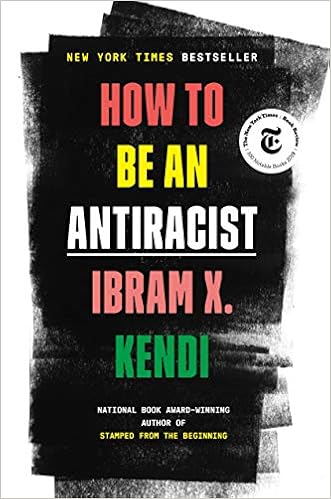
How to be an Antiracist by Ibram X. Kendi


On a regular basis, I hesitate to say annually but on a regular basis, I read books about writing fiction. I have favorites, such as The Writing Life by Annie Dillard, On Writing by Stephen King, How to Write Science Fiction and Fantasy by Orson Scott Card, Science Fiction Handbook, Revised by L. Sprague De Camp and Catherine Crook De Camp as well as Story and Dialogue by Robert McKee.

And among the other favorites, I am found of Writing the Novel by Lawrence Block and How to Write Best Selling Fiction by Dean Koontz. I read both of these books before I read any fiction by either Block or Koontz. I am not really a huge Dean Koontz fan. I like some of what I have read.  Midnight is a particular favorite and a frequent touchstone. But I do not read much Dean Koontz, not like my gobbling up of Stephen King novels.

Books on writing inspire me much the same as any books inspire me, both fiction and non-fiction. I like reading writers write about writing because I like to think this reading practice is part of how I hone my craft. It's not as if writers on writing reveal arcane secrets from a world into which I have no window. I feel like I am not looking into that room, the writing room, through a window. I am in the room. I might not be in the banquet hall with the other published novelists, but I am definitely writing, and so I am in the writing room.

Because I have stepped up my writing work, it is time again to read some books on writing, and so I chose Koontz's book to be first.

The thing that strikes me now as I read it -- and I have read it many times before -- is the way in which his rhetoric shaped me as a young man and how it no longer really has the same effect on me. In fact, I quite disagree with a lot of his statements.

Koontz devotes a great portion of the second chapter to criticizing academia and the literature in which academia is interested. These criticisms proved influential to me as a young man in academia, both as an undergraduate student of literature and writing and then as a graduate student in an MFA program. Koontz' arguments may in part be why I wrote a Star Trek novel as my MFA project, one my academic advisor did not even read, though she did pass me and allow me to graduate. I eschewed academic and literary fiction and want to plunge myself into popular fiction and something with a chance of being published by a commercial house.

Though my ire towards academia does not come off as petulantly as Koontz's, I did reject the literary path for fiction about which I was much more passionate.

Koontz properly characterizes the snobbery of academia toward the "popular" or the "mainstream" fiction of the time, IE. best sellers. I encountered this academic bigotry even before I submitted my Star Trek novel to the MFA program. When an Anne Rice inspired older woman enrolled in my MFA advisor's course and was churning out vampire fiction, the teacher wanted my help in looking at those manuscripts because she claimed to "not know anything" about the genre. Well, why did she need to know about the genre? Fiction is fiction. The rules of good fiction apply to all fiction. But this reaction toward that woman's vampire fiction is endemic of the attitudes in academia toward the "popular." It is seen as low brow, lesser, not as "artistic," lacking in quality, the food of the uneducated.

And yet, when one of my PhD holding friends attempted to write a Harlequin romance because she assumed it would be an easy enough route to a quick buck only to be summarily rejected, it was clear that academics cannot stoop to the low brow and be successful. To write a good Harlequin, one must steep one's self in the genre, believe in the genre, and be authentic with the writing. If a writer finds the genre to be beneath her, then this attitude will come through in the attempt, and it did, and it was rejected by the publisher.

Interestingly, since Koontz's How To on best selling fiction was published in 1981, academia has absorbed more of the popular fiction of the time. The schism between what is considered "true art" and "popular" has narrowed. People still excuse their reading (or even writing) of "trash" all the time. There's still the perception that popular books are quick, easy, and "mindless," like cotton candy. I have even held these beliefs. I have often said that I like Stephen King the most of the "popular" writers as if writers like John Gardner or Toni Morrison are not popular in their own ways and among their own audiences. But this comment of mine is meant to be dismissive, forgiving. "Please do not judge me for consuming this trash; this is good trash." And though I have often claimed that John Irving should be regarded as our modern Dickens, perhaps I should be saying that Stephen King should be so regarded. People are not standing in lines for Irving's books. Though Irving is a great writer, and I adore his work, even when I do not enjoy the book overly much, as in the 2015 effort Avenue of Mysteries, which I did not find overly gripping and had to switch from reading it traditionally and consuming it as an audio book. But King is more in line with the idea we have of Dickens as a "hack" (as he was so regarded in his time) that was still wildly popular with the "masses," and people were lining up to get their next hit of the current Dickens episode.

Thankfully, graphic novels and a great deal of "popular fiction" have become part of academic studies. And as I am currently reading Lisey's Story, which I find lyrical and complex in many ways, I would argue that the book is just artful as many so called "literary" novels. The greater acceptance of stories that deal with supernatural, fantastic, and science fictional elements reveal that works of fiction can be both chimerical and artful.

Koontz clearly suffered from inferiority complex for not being accepted by academia or perhaps for not continuing his education past the Bachelor's level, even though he attended a highly ranked state college -- Shippensburg State College of Pennsylvania.

Koontz appears to have been triggered by his high school English teacher, who wrote him and implied he was wasting his time with popular dreck and should take a crack at writing "the great American novel." Koontz balked at this notion and questioned what defines the "great American novel" as such. He feels his novels are both great and American, and they sell well and provide him with the lifestyle he wishes to have.

But then Koontz expands his argument to suggest that no one reads Melville, Hawthorne, or even Hemingway much any more. Koontz goes on from there to make many damning statements with which I disagree.

Koontz seems to think that some writers have chosen to write purely for the approval of academia and refuse to write novels with "popular appeal." There is some truth to this statement. Many snobbish writers refuse to "prostitute themselves" with work they find low-brow, mundane, sensational, and only for the uneducated masses. But the generalizations Koontz promotes that all authors with literary aspirations "turn [their] back on the masses and refuse to write novels with popular appeal" (13) is just nonsense.

After all, Koontz's definition of popularity is just as limiting and narrow as the definition of "literary fiction" that he opposes. He makes a series of generalized claims that are not well supported by his own somewhat convoluted logic. Though I agree with some of his ideas, his overall argument is deeply flawed and seems to come from insecurity and bitterness from someone denied admission to an exclusive club of which he very much wants to be a part.

"There is no merit in writing for a like-minded clique and selling two thousand copies of your book" (Koontz, 13).

No merit? Like-minded clique? That statement by Koontz is just stupid and transparently bitter.

After listing the elements of good fiction (strong plot, action, hero/heroine, convincing characters with motivations, flush backgrounds, mechanical well-written, stylistically somewhat lyrical and vivid), he  falsely claims that "the academic generally has little or no use for plot in a novel" (14), which is patently false. Though post-modern novels and stories often are less works of plot than other literary devices, it is inaccurate and quite ignorant to claim that an academic novel (whatever that is) has "no use" for plot.

Later, Koontz makes one of his most puzzling statements about the role of art in our lives and our culture: "What use is art if it not humane? What use is art if it does not give us hope, if it does not lift our spirits? What value does art have if it does not make our years on this earth better, happier, and easier to bear than they otherwise would have been? I will answer my own question: if it doesn't do those things, then art is of no use whatsoever" (Koontz, 15-16).

This strikes me as a very narrow and limiting definition for what art is and what art can do. As an artist, my immediate reaction to such a statement is to begin to imagine art works that are the opposite of Koontz's reactionary and quite stupid definition of art. We would not have "Piss Christ" and so many more art works if all art had to fit into Koontz's myopic, harps and flowers version of art.

Koontz remarks about followed as support for his argument that it is easier to write about villains than heroes. Again, his remarks are full of generalities and seem to overlook the anti-hero let alone the villain as hero, which, in defense of his limited views was less of literary concern in 1981 than today.

I am still going to finish my re-read of Koontz's book because when it comes to the toolbox of writing, he has lots of knowledge and great wisdom. His books are successful for a very good reason. But his heavy-handed moralizing and puerile rejection of academia nauseates me as I hope it nauseates you.


SHORT BITS

I am almost done with Lisey's Story, which may supplant The Stand as my favorite Stephen King book. It's lyrical, and I like the interwoven past-present structure. More on that book in my next installment. I plan to study it closely. I bought the Kindle edition and will purchase a paperback copy to go with my hardcover.

I am still reading Attack Surface, but I have less to say about that right now.

Though I finished How to be an Antiracist, I want to keep writing about it, but not this time. The Koontz thing ate my devoted writing time for this entry. The goal of this focus was to keep the entry focused and give some good content. So more next time.

I also wanted to writ about the Heroes Reborn mini-series from Marvel. I am putting that off for next time, too, but I will share the cover gallery here before I go.


See y'all next time.


+++++++++++++++++++++++++++++++++++++++++++++++++++++++++++++++++++++++
+++++++++++++++++++++++++++++++++++++++++++++++++++++++++++++++++++++++
+++++++++++++++++++++++++++++++++++++++++++++++++++++++++++++++++++++++
- Bloggery committed by chris tower - 2107.03 - 10:10
- Days ago = 2192 days ago
- New note - On 1807.06, I ceased daily transmission of my Hey Mom feature after three years of daily conversations. I plan to continue Hey Mom posts at least twice per week but will continue to post the days since ("Days Ago") count on my blog each day. The blog entry numbering in the title has changed to reflect total Sense of Doubt posts since I began the blog on 0705.04, which include Hey Mom posts, Daily Bowie posts, and Sense of Doubt posts. Hey Mom posts will still be numbered sequentially. New Hey Mom posts will use the same format as all the other Hey Mom posts; all other posts will feature this format seen here.
+++++++++++++++++++++++++++++++++++++++++++++++++++++++++++++++++++++++
+++++++++++++++++++++++++++++++++++++++++++++++++++++++++++++++++++++++
+++++++++++++++++++++++++++++++++++++++++++++++++++++++++++++++++++++++

- Bloggery committed by chris tower - 2607.11 - 10:10

- Days ago: MOM = 4026 days ago & DAD = 681 days ago

- New note - On 1807.06, I ceased daily transmission of my Hey Mom feature after three years of daily conversations. I post Hey Mom blog entries on special occasions. I post the days since ("Days Ago") count on my blog each day, and now I have a second count for Days since my Dad died on August 28, 2024. I am now in the same time zone as Google! So, when I post at 10:10 a.m. PDT to coincide with the time of Mom's death, I am now actually posting late, so it's really 1:10 p.m. EDT. But I will continue to use the time stamp of 10:10 a.m. to remember the time of her death and sometimes 13:40 EDT for the time of Dad's death. The blog entry numbering in the title has changed to reflect total Sense of Doubt posts since I began the blog on 0705.04, which include Hey Mom posts, Daily Bowie posts, and Sense of Doubt posts. Hey Mom posts will still be numbered sequentially. New Hey Mom posts will use the same format as all the other Hey Mom posts; all other posts will feature this format seen here.

Friday, June 19, 2026

A Sense of Doubt blog post #4141 - Juneteenth - Freedom Day! SoD Reprint of 3775 from 2025


A Sense of Doubt blog post #4141 - Juneteenth - Freedom Day! SoD Reprint of 3775 from 2025

Just this.

FREEDOM!!!


LOW POWER MODE: I sometimes put the blog in what I call LOW POWER MODE. If you see this note, the blog is operating like a sleeping computer, maintaining static memory, but making no new computations. If I am in low power mode, it's because I do not have time to do much that's inventive, original, or even substantive on the blog. This means I am posting straight shares, limited content posts, reprints, often something qualifying for the THAT ONE THING category and other easy to make posts to keep me daily. That's the deal. Thanks for reading.

BLOG VACATION #1 - 2026 - Taking a blog vacation for a couple of weeks, until at least June 26th, 2026. Mostly reprints. A few simple shares (not that simple shares are out of the norm) and THAT ONE THING. Need time for other things.


Link to the original post I am reprinting below: 

Thursday, June 19, 2025


A Sense of Doubt blog post #3775 - Juneteenth - Freedom Day

I did mention being in low power mode, yes?

This is a lazy post, but there is good stuff here.

First, my previous Juneteenth posts.

Then new Juneteenth posts, with one that I like very much.


Happy Juneteenth.


Thanks for tuning in.


MY PREVIOUS JUNETEENTH POSTS

Friday, June 18, 2021

Monday, June 20, 2022

Monday, June 19, 2023

Wednesday, June 19, 2024


OTHER CONTENT

https://www.history.com/articles/what-is-juneteenth


https://www.texasmonthly.com/being-texan/real-history-of-juneteenth-messier/


I like this one the best:

https://unidosus.org/blog/2022/06/08/understanding-the-significance-of-juneteenth/


+++++++++++++++++++++++++++++++++++++++++++++++++++++++++++++++++++++++
+++++++++++++++++++++++++++++++++++++++++++++++++++++++++++++++++++++++
+++++++++++++++++++++++++++++++++++++++++++++++++++++++++++++++++++++++
- Bloggery committed by chris tower - 2506.19 - 10:10
- Days ago: MOM = 3640 days ago & DAD = 294 days ago
+++++++++++++++++++++++++++++++++++++++++++++++++++++++++++++++++++++++
+++++++++++++++++++++++++++++++++++++++++++++++++++++++++++++++++++++++
+++++++++++++++++++++++++++++++++++++++++++++++++++++++++++++++++++++++

- Bloggery committed by chris tower - 2606.19 - 10:10

- Days ago: MOM = 4005 days ago & DAD = 659 days ago

- New note - On 1807.06, I ceased daily transmission of my Hey Mom feature after three years of daily conversations. I post Hey Mom blog entries on special occasions. I post the days since ("Days Ago") count on my blog each day, and now I have a second count for Days since my Dad died on August 28, 2024. I am now in the same time zone as Google! So, when I post at 10:10 a.m. PDT to coincide with the time of Mom's death, I am now actually posting late, so it's really 1:10 p.m. EDT. But I will continue to use the time stamp of 10:10 a.m. to remember the time of her death and sometimes 13:40 EDT for the time of Dad's death. The blog entry numbering in the title has changed to reflect total Sense of Doubt posts since I began the blog on 0705.04, which include Hey Mom posts, Daily Bowie posts, and Sense of Doubt posts. Hey Mom posts will still be numbered sequentially. New Hey Mom posts will use the same format as all the other Hey Mom posts; all other posts will feature this format seen here.

Saturday, June 13, 2026

A Sense of Doubt blog post #4135 - SoD Reprint of 1942 from 2020 - What is ANTI-RACISM and why should I care?


A Sense of Doubt blog post #4135 - SoD Reprint of 1942 from 2020 - What is ANTI-RACISM and why should I care?

Just this reprint.

Still timely.


LOW POWER MODE: I sometimes put the blog in what I call LOW POWER MODE. If you see this note, the blog is operating like a sleeping computer, maintaining static memory, but making no new computations. If I am in low power mode, it's because I do not have time to do much that's inventive, original, or even substantive on the blog. This means I am posting straight shares, limited content posts, reprints, often something qualifying for the THAT ONE THING category and other easy to make posts to keep me daily. That's the deal. Thanks for reading.

BLOG VACATION #1 - 2026 - Taking a blog vacation for a couple of weeks, until at least June 26th, 2026. Mostly reprints. A few simple shares (not that simple shares are out of the norm) and THAT ONE THING. Need time for other things.


Link to the original post I am reprinting below:

Saturday, June 13, 2020


A Sense of Doubt blog post #1942 - What is ANTI-RACISM and why should I care?

Very little preamble from me because what else can I write that I have not already and how can I write anything the improves on this material shared here with all two of my readers.

In the resources below, I would add this one:

AFROPUNK

IF TLDR, then key bit:

“To be antiracist is to think nothing is behaviorally wrong or right — inferior or superior — with any of the racial groups. Whenever the antiracist sees individuals behaving positively or negatively, the antiracist sees exactly that: individuals behaving positively or negatively, not representatives of whole races. To be antiracist is to deracialize behavior, to remove the tattooed stereotype from every racialized body. Behavior is something humans do, not races do.”


Being anti-racism is important work. It is our new normal, just like physical and social distancing, masks, and testing.

Because, yes, there's still a global pandemic.

https://medium.com/equality-includes-you/what-is-antiracism-and-why-should-i-care-e44f1324adc
What is Antiracism, and Why Should I Care?

To truly fight racism, we have to start with ourselves.


Quyen Nguyen
Quyen Nguyen


No one wants to be called a racist. But if you can accept the hard truth that racism can exist anywhere, including in yourself, then you are one step closer to doing something useful about it.
One way of identifying racist thoughts or ideas you might have is by taking these tests to uncover your unconscious biases. You might be upset or horrified by some of the results. That’s ok. It’s good, actually — it’s a sign that your conscious mind is on the right track. Sit with your thoughts for a bit and digest. Reflect on how these biases might impact yourself and others.
Yourself?
Yes. When we internalize the negative stereotypes society teaches us about ourselves, people of color can internalize racism and become our own worst enemies. I grew up in a town that was 99% white. My colorblind community taught me to just pretend the differences between me and my mostly White peers weren’t there. One of the results of this was that I spent a lot of my childhood internalizing shame about my Vietnamese heritage. It has taken me many years to unlearn the racist ideas I had about myself, and it is a continual process. Lots of people never do unlearn these ideas. The impact is huge. It doesn’t only hurt you. Internalized racism can make you treat others with the same contempt with which you treat yourself.
History professor, Dr. Ibram Kendi, accounts his own painful evolution with his ideas about race here. Reflecting on a speech he gave as a child, he says: “I did not realize that to say something is inferior about a racial group is to say a racist idea. I thought I was serving my people, when in fact I was serving up racist ideas about my people to my people.”
Others:
Unconscious biases manifest in many ways. People of color, for instance, often get passed up for opportunities. Professors at NYU contacted over 6,500 professors at American universities asking for meetings from fake candidates to learn about their Ph.D. programs. They randomly assigned names that sounded male or female, and that sounded White, Chinese, Hispanic, Indian, or Black. White males were more likely to get a response back than all the other people in the other categories combined. Several studies regarding job applications around the world show similar results.
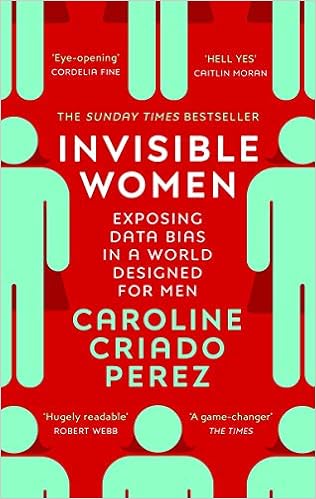
Other times, unconscious biases can result in more dire, and even fatal, situations like this: Black women in the U.S. are 243% more likely to die from pregnancy and childbirth-related issues than White women. Before you even bring up the education argument, sit with this: a 2016 analysis of births in New York City found that ‘black college-educated mothers who gave birth in local hospitals were more likely to suffer severe complications of pregnancy or childbirth than white women who never graduated from high school.’ This disparity is due to unconscious biases that impact the healthcare Black women receive. When they bring up issues or complications they are experiencing with doctors, they are often being “dismissed, disbelieved, and ignored.” (Invisible Women: Data Bias in a World Designed for Men by Caroline Criado Perez).
Now let’s go back to those implicit bias tests. Who might you be unconsciously harming, including people from your own race? What are you going to do about it? If your answer at this point is ‘I don’t know,’ then keep reading.

DON’T SAY “I’M NOT RACIST.”

Thinking or saying “I’m not a racist” is what allows racism to persist. It’s a way to say “not my problem” or “not my responsibility.” But racism is your problem if you believe in having a just and humane society, but you live in one that is not. Don’t be not racist. Be antiracist.
Anti… what?
ANTIRACIST: One who is supporting an antiracist policy through their actions or expressing an antiracist idea.”


How to Be an Antiracist by Ibram X. Kendi

But what does it really mean to be antiracist? In his book, How To Be an Antiracist, Dr. Kendi says this:
“To be antiracist is to think nothing is behaviorally wrong or right — inferior or superior — with any of the racial groups. Whenever the antiracist sees individuals behaving positively or negatively, the antiracist sees exactly that: individuals behaving positively or negatively, not representatives of whole races. To be antiracist is to deracialize behavior, to remove the tattooed stereotype from every racialized body. Behavior is something humans do, not races do.”
And this:
“To be antiracist is to never conflate racist people with White people, knowing there are antiracist Whites and racist non-Whites. To be antiracist is to see ordinary White people as the frequent victimizers of people of color and the frequent victims of racist power.”

DON’T DO NOTHING.


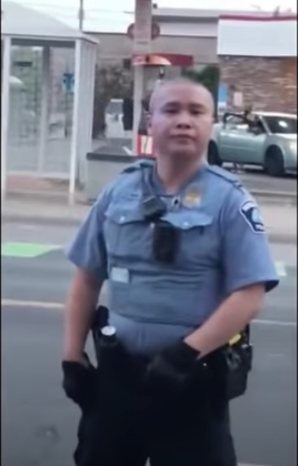
Officer Tou Thao | Darnella Frazier

Look at this disturbing image of Officer Tou Thao standing there, doing nothing, while his partner, Derek Chauvin, murders George Floyd.
This is what continues to happen, again and again, when we do nothing.
To my Asian friends who are horrified at seeing an Asian American officer be complicit in this crime: let this be a reminder to us that we can also be guilty of abusing power or standing by idly when we think it isn’t hurting us. Many of us are grappling with the pain of our own anti-Asian experiences, but we cannot only decry racism when we see it impacting us directly. Black Americans have fought and endured injustices in the U.S. for centuries to give us the rights we have today. We cannot let them continue in this fight alone. The systemic power imbalances that have claimed the lives of George Floyd, Ahmaud Arbery, Breonna Taylor, and countless other Black Americans are the same ones that are killing us. The only path towards an America that stops treating non-Whites as second-class citizens is for all Americans to stand together in this movement in solidarity.

THIS IS HOW YOU CAN DO SOMETHING

It is not for a lack of resources that we are here mourning the continual loss of innocent lives due to racism. It is for lack of action.
An antiracist actively works to stomp out racism by addressing systems, policies, and imbalances of power.
Here are some ways you can be antiracist:


  • If you find that you’re guilty of doing anything on this chart, make an active plan to stop.
  • If you don’t think you can influence systems or power imbalances, you’re wrong. Where do you have close connections? With your family? In your church? In the workplace? Amongst your friends? To start, you only have to look around you.
Even better than doing these things alone, find some friends or colleagues to take on the challenge of becoming an antiracist with you. Start an antiracism group or club. You will have more success in changing the mindsets and actions of people you already have a relationship with. Work through these resources together. Set realistic and ambitious goals, and hold one another accountable to achieve them. Support one another when you slip and say or do something that is anti-antiracist. We all make these mistakes. It’s hard, and it is not a linear upward climb. But you are probably reading this article because you care and are outraged by racism. Don’t lose sight of that.

Read my articles about the rise in racism against Asians related to COVID-19:
Anti-Asian racism is on the rise. This is what it feels like (originally published on Medium and republished in the World Economic Forum)


This document is intended to serve as a resource to white people and parents to deepen our anti-racism work. If you haven’t engaged in anti-racism work in the past, start now. Feel free to circulate this document on social media.

To take immediate action to fight for Breonna Taylor, please visit FightForBreonna.org.


Resources for white parents to raise anti-racist children:

Articles to read:

Videos to watch:

Podcasts to subscribe to:

Books to read:

Films and TV series to watch:
  • 13th (Ava DuVernay) — Netflix
  • American Son (Kenny Leon) — Netflix
  • Black Power Mixtape: 1967-1975 — Available to rent
  • Clemency (Chinonye Chukwu) — Available to rent
  • Dear White People (Justin Simien) — Netflix
  • Fruitvale Station (Ryan Coogler) — Available to rent
  • I Am Not Your Negro (James Baldwin doc) — Available to rent or on Kanopy
  • If Beale Street Could Talk (Barry Jenkins) — Hulu
  • Just Mercy (Destin Daniel Cretton) — Available to rent
  • King In The Wilderness  — HBO
  • See You Yesterday (Stefon Bristol) — Netflix
  • Selma (Ava DuVernay) — Available to rent
  • The Black Panthers: Vanguard of the Revolution — Available to rent
  • The Hate U Give (George Tillman Jr.) — Hulu with Cinemax
  • When They See Us (Ava DuVernay) — Netflix

Organizations to follow on social media:

More anti-racism resources to check out:

Document compiled by Sarah Sophie Flicker, Alyssa Klein in May 2020.

+++++++++++++++++++++++++++++++++++++++++++++++++++++++++++++++++++++++
+++++++++++++++++++++++++++++++++++++++++++++++++++++++++++++++++++++++
+++++++++++++++++++++++++++++++++++++++++++++++++++++++++++++++++++++++
- Bloggery committed by chris tower - 2006.12 - 10:10
- Days ago = 1806 days ago
- New note - On 1807.06, I ceased daily transmission of my Hey Mom feature after three years of daily conversations. I plan to continue Hey Mom posts at least twice per week but will continue to post the days since ("Days Ago") count on my blog each day. The blog entry numbering in the title has changed to reflect total Sense of Doubt posts since I began the blog on 0705.04, which include Hey Mom posts, Daily Bowie posts, and Sense of Doubt posts. Hey Mom posts will still be numbered sequentially. New Hey Mom posts will use the same format as all the other Hey Mom posts; all other posts will feature this format seen here.
+++++++++++++++++++++++++++++++++++++++++++++++++++++++++++++++++++++++
+++++++++++++++++++++++++++++++++++++++++++++++++++++++++++++++++++++++
+++++++++++++++++++++++++++++++++++++++++++++++++++++++++++++++++++++++

- Bloggery committed by chris tower - 2606.13 - 10:10

- Days ago: MOM = 3999 days ago & DAD = 654 days ago

- New note - On 1807.06, I ceased daily transmission of my Hey Mom feature after three years of daily conversations. I post Hey Mom blog entries on special occasions. I post the days since ("Days Ago") count on my blog each day, and now I have a second count for Days since my Dad died on August 28, 2024. I am now in the same time zone as Google! So, when I post at 10:10 a.m. PDT to coincide with the time of Mom's death, I am now actually posting late, so it's really 1:10 p.m. EDT. But I will continue to use the time stamp of 10:10 a.m. to remember the time of her death and sometimes 13:40 EDT for the time of Dad's death. The blog entry numbering in the title has changed to reflect total Sense of Doubt posts since I began the blog on 0705.04, which include Hey Mom posts, Daily Bowie posts, and Sense of Doubt posts. Hey Mom posts will still be numbered sequentially. New Hey Mom posts will use the same format as all the other Hey Mom posts; all other posts will feature this format seen here.