Hey, Mom! The Explanation.

Here's the permanent dedicated link to my first Hey, Mom! post and the explanation of the feature it contains.

Also,

Showing posts with label activism. Show all posts

Friday, November 14, 2025

A Sense of Doubt blog post #3923 - AGAINST AUTHORITY by John Twelve Hawks - book review and advocacy for resistance


A Sense of Doubt blog post #3923 - AGAINST AUTHORITY by John Twelve Hawks - book review and advocacy for resistance

I have been sitting on this post for a long time because I had planned to do more with it, to do everything. I am trying to change how I function in regards to these long planned posts and not overdo it. After all, any readers who venture here are unlikely to digest an entire post if it's gigantic.

This book came out in 2014, but eleven years later it is still very relevant. In fact, with the arrival of tech like Palantir and the proliferation of AI, this book is more relevant than ever. I hate that they gave that company a name from Tolkien. Bastards.

This book is free on Kindle. It's short. And worth multiple readings.

For instance, Hawks makes the point in the chapter "Being Watched by a Machine" that surveillance is not a new thing. In medieval villages, people knew what was going on with everyone. The priests especially were the overseers and institutional heads of these systems. Now we have machines that are by and large invisible to us watching and recording EVERYTHING and these digital shadow selves (all of our accumulated data) can conceivably live on forever. And companies and governments LIE about it. Like how Amazon swore that the Echo devices do not record everything we say, and yet in some murder cases, they had recordings. Or the U.S. Intelligence department swore they were not spying on citizens and then Edward Snowden blew that whistle.

As John Twelve Hawks writes learned people, professors, have been issuing warnings about technology and surveillance for a long time, such as in 1985 by Spiros Simitis in a lecture titled “Reviewing Privacy in an Information Society” and his warning of how computers would change everything dramatically.

September 11th, 2001 changed everything as people willingly gave up their privacy in the name of safety from terrorists.

Did you know that the government can obtain someone's library records without a subpoena, without the person's knowledge, and the librarian is "gagged" by law not to disclose that they gave the government the information? Section 215 of the Patriot Act. It also gave law enforcement the power to enter someone's home without their permission or knowledge.

John Twelve Hawks moved to London in 2002, as the city was quickly becoming the MOST camera-filled city on the planet earth, and London Transport created this very 1984-like poster:


In 2002, John Poindexter created the TIA -- Total Information Awareness system -- to spy on everyone and collect all the data for all time. There was blowback from the public and both sides of the aisle in Congress, and so the system was renamed the Terrorist Information Awareness system, but the technology did not disappear and the collecting continued, as Snowden revealed in 2013.

That's just some of the things covered in Against Authority.

Check it out!!

Thanks for tuning in.


https://www.johntwelvehawks.com/


AGAINST AUTHORITY - By John Twelve Hawks


+++++++++++++++++++++++++++++++++++++++++++++++++++++++++++++++++++++++
+++++++++++++++++++++++++++++++++++++++++++++++++++++++++++++++++++++++
+++++++++++++++++++++++++++++++++++++++++++++++++++++++++++++++++++++++


- Bloggery committed by chris tower - 2511.14 - 10:10

- Days ago: MOM = 3788 days ago & DAD = 442 days ago

- New note - On 1807.06, I ceased daily transmission of my Hey Mom feature after three years of daily conversations. I plan to continue Hey Mom posts at least twice per week but will continue to post the days since ("Days Ago") count on my blog each day. The blog entry numbering in the title has changed to reflect total Sense of Doubt posts since I began the blog on 0705.04, which include Hey Mom posts, Daily Bowie posts, and Sense of Doubt posts. Hey Mom posts will still be numbered sequentially. New Hey Mom posts will use the same format as all the other Hey Mom posts; all other posts will feature this format seen here.

Tuesday, September 30, 2025

A Sense of Doubt blog post #3878 - Portland, OR - A War Zone??!!??


A Sense of Doubt blog post #3878 - Portland, OR - A War Zone??!!??

I had a post on Russiagate scheduled. Then I decided to delay and post a reprint. Then I saw this.

It's everything I want to say about Trump's recent dementia-fueled delusions. Or maybe it's purposeful misinformation and fake news. Never sure with him.

Thanks for tuning in.


+++++++++++++++++++++++++++++++++++++++++++++++++++++++++++++++++++++++
+++++++++++++++++++++++++++++++++++++++++++++++++++++++++++++++++++++++
+++++++++++++++++++++++++++++++++++++++++++++++++++++++++++++++++++++++

- Bloggery committed by chris tower - 2509.30

- Days ago: MOM = 3473 days ago & DAD = 397 days ago

- New note - On 1807.06, I ceased daily transmission of my Hey Mom feature after three years of daily conversations. I post Hey Mom blog entries on special occasions. I post the days since ("Days Ago") count on my blog each day, and now I have a second count for Days since my Dad died on August 28, 2024. I am now in the same time zone as Google! So, when I post at 10:10 a.m. PDT to coincide with the time of Mom's death, I am now actually posting late, so it's really 1:10 p.m. EDT. But I will continue to use the time stamp of 10:10 a.m. to remember the time of her death and sometimes 13:40 EDT for the time of Dad's death. The blog entry numbering in the title has changed to reflect total Sense of Doubt posts since I began the blog on 0705.04, which include Hey Mom posts, Daily Bowie posts, and Sense of Doubt posts. Hey Mom posts will still be numbered sequentially. New Hey Mom posts will use the same format as all the other Hey Mom posts; all other posts will feature this format seen here.

Friday, August 23, 2024

A Sense of Doubt blog post #3475 - DNC: Let Palestinians Speak! (And Fox News Freak Out!)


A Sense of Doubt blog post #3475 - DNC: Let Palestinians Speak! (And Fox News Freak Out!)


COUNTDOWN!!!


Second post with @KatMabu in a week, and that's okay.

Harris walked a very fine line last night between traditional, American political alliance with Israel, condemning Hamas, and yet still supporting Palestinian "self-determination" after a cease fire and hostage return.

Wait, how can a person be "between" three things...?

Even with the compassion for the citizens of Gaza, the DNC did not let a Palestinian actually speak as they should have. Kat explains all in this first video.

Check out some of her other videos...

And thanks for tuning in.

(BTW, I still cried all the way through the DNC this week, but that's not JUST about the excitement of the HARRIS-WALZ MOVEMENT. There's other things.)

DNC SIT-IN HOUR 17 - LET PALESTINIANS SPEAK


FROM INSTAGRAM:


This TAMPONS in boys' bathrooms thing is completely false. Boy, these GOP radicals are freaking out. They are SO TERRIFIED.


+++++++++++++++++++++++++++++++++++++++++++++++++++++++++++++++++++++++
+++++++++++++++++++++++++++++++++++++++++++++++++++++++++++++++++++++++
+++++++++++++++++++++++++++++++++++++++++++++++++++++++++++++++++++++++

- Bloggery committed by chris tower - 2408.23 - 10:10

- Days ago = 3339 days ago

- New note - On 1807.06, I ceased daily transmission of my Hey Mom feature after three years of daily conversations. I plan to continue Hey Mom posts at least twice per week but will continue to post the days since ("Days Ago") count on my blog each day. The blog entry numbering in the title has changed to reflect total Sense of Doubt posts since I began the blog on 0705.04, which include Hey Mom posts, Daily Bowie posts, and Sense of Doubt posts. Hey Mom posts will still be numbered sequentially. New Hey Mom posts will use the same format as all the other Hey Mom posts; all other posts will feature this format seen here.

Friday, May 10, 2024

A Sense of Doubt blog post #3370 - Re-Branding DEI - Necessary?


A Sense of Doubt blog post #3370 - Re-Branding DEI - Necessary?

Had our college DEI meeting today.

Seems to me that the move away from calling programs DEI -- Diversity, Equity, and Inclusion -- is much the same as the move from handicapped to disabled.

It's all about negative perception and connotation. Despite being a more positive word, like having a handicap in golf, handicapped had taken on a negative connotation because of the negative attitudes of people in the culture. Changing the language does not change the attitudes. I use handicapped as much as possible as I find it to be a better word, more positive. By meaning, "disabled" means "unable," at least in its original meaning. Now it means "a person with a disability." Still, often, those labeled "disabled" are not unable, inoperative. They are operative. Sure, in some cases, some has total hearing loss or no ability to move their legs, but they are still operative in other ways.  The example for disabled in the dictionary was a "disabled car," as in one that will not start or operate normally.

Handicapped is still a better word; it means, "needs help."

Likewise, the hatred from the extreme right toward DEI will not cease if DEI efforts rebrand under a new name.

However, I do think the re-branding of "creationism" as "intelligent design" was smart. Many who opposed "creationism" just due to the sound of the term may not be as equally opposed to the sound of something like "intelligent design."

Changing the name of DEI will change the culture war.

And yet, it's great to see an article like this one, and it's worth reading and thinking about.

Thanks for tuning in.


https://www.washingtonpost.com/business/2024/05/05/dei-affirmative-action-rebrand-evolution/


DEI is getting a new name. Can it dump the political baggage?

Under mounting legal and political pressure, companies’ DEI tactics are evolving.

By Taylor Telford

 and 

Julian Mark

May 5, 2024 at 8:05 a.m. EDT


Last year, Eli Lilly’s annual shareholders letter referenced the acronym for diversity, equity and inclusion 48 times. This year, “DEI” is nowhere to be found.


In March, Starbucks got shareholder approval to replace “representation” goals with “talent” performance for executive bonus incentives. At Molson Coors, “People & Planet” metrics have displaced environmental, social and governance (ESG) goals, and the acronym DEI has disappeared altogether.


Amid growing legal, social and political backlash, American businesses, industry groups and employment professionals are quietly scrubbing DEI from public view — though not necessarily abandoning its practice. As they rebrand programs and hot-button acronyms, they’re reassessing decades-old anti-discrimination strategies and rewriting policies that once emphasized race and gender to prioritize inclusion for all.


It’s a stark contrast to 2020, when the murder of George Floyd unleashed a racial justice movement that prompted companies to double down on policies aiming to increase opportunity for groups that have historically faced discrimination. Less than a year after the Supreme Court struck down affirmative action in colleges and universities — a landmark ruling that found race-conscious admissions violated the right to equal treatment under the Constitution — a growing contingent of critics is arguing that DEI creates inequalities of its own. Some conservatives have blamed DEI for a variety of problems, such as the Baltimore bridge collapse and Boeing’s safety woes, without providing evidence. Dozens of anti-DEI bills are being considered by state legislatures across the country, and DEI looks poised to become a wedge issue in this year’s presidential election.


Johnny C. Taylor Jr., chief executive of the Society for Human Resource Management, said that practitioners of DEI and its antecedents traditionally have focused on improving representation for historically marginalized groups, believing that “the magic bullet was diversity.”


“We underestimated that inclusion was the real challenge,” Taylor said. “Now people are saying, ‘Not only should we probably call it something different, we should probably evolve it.’”


This shifting landscape is forcing companies and consultants to adapt on the fly, with many acting preemptively to guard against the legal threats that have led some firms to recast or discard race-based initiatives. They’re renaming diversity programs, overhauling internal DEI teams and working closely with lawyers. Some are moving away from using racial and gender considerations in hiring and promotion, and toward approaches that focus more on inclusion.


To be sure, some companies have successfully fended off challenges. In April, a discrimination lawsuit against an Amazon grant program for Black, Latino and Native American contractors was dismissed by a federal court in Texas, though the plaintiffs have appealed. Pfizer and Starbucks have prevailed in court against similar legal attacks, though Pfizer modified the DEI program in question to make it race-neutral, according to court filings.

And many companies have held onto their programs since the Supreme Court ruled against Harvard and the University of North Carolina last June. Six months after the ruling, the employment law firm Littler Mendelson reported that 91 percent of the 320 executives surveyed said the ruling had not lessened their prioritization of DEI. In fact, 57 percent said they had expanded their DEI programming in the past year.


But that sentiment is far more subdued than it was in 2020, when corporate America poured more than $50 billion into racial justice causes. Meanwhile, the DEI industry — which was worth an estimated $9 billion in 2023, according to market researcher Fact.MR — is also rethinking its public face, consultants say.


Last fall, a few months after the Harvard-UNC decision, Taylor was already noticing growing antipathy toward the methods that companies, institutions of higher education and other organizations used to diversify in their ranks. So instead of referring to DEI, Taylor switched to calling these efforts “IED,” putting the focus on “inclusion” as DEI accrued cultural and political baggage. SHRM, the human resources association he heads, changed the name of its annual DEI conference to “Inclusion 2023.”


Some practitioners and executives dismissed the rebrand as superficial, Taylor said, a concession to political correctness. But months later, his strategy has proved prescient.


A growing number of companies — including language app Duolingo, JetBlue and Molson Coors — are either listing DEI as a “risk factor” in shareholder reports or removing mentions of diversity goals outright. A Bloomberg Law analysis found that two dozen public companies have incorporated similar risk-factor language into their filings. And several companies, including Kohls, Salesforce and Workday, have dropped references to diversity goals in regulatory filings, the Wall Street Journal reported.


Eric Ellis, CEO of Integrity Development, a DEI consultancy, said he’s seen the “branding merry-go-round” playing out for decades, tracing back to the wake of the civil rights movement. He expects the language to keep changing in response to public attacks, especially those by high-profile figures like Elon Musk, who in January wrote on his social media platform X that “DEI is just another word for racism.”


“If every day you’re getting pummeled and there is no effective strategy to protect the brand of DEI, there’s no doubt it’s going to be hard for it to survive,” Ellis said. “We keep adjusting.”


Starbucks is “a case in point” for how companies are altering terminology around DEI, said Brian Bueno, ESG practice leader at Farient Advisors, an executive compensation consulting firm. After Floyd’s murder by Minneapolis police, the company was among the first wave of firms incentivizing executives to achieve DEI targets, he noted.


In its proxy statement last year, Starbucks said it was “holding our senior leaders collectively accountable” for goals that focused “on improvement in Black, Indigenous, and Latinx representation at the manager level.” It also had goals around executive mentorship for BIPOC (Black, Indigenous, and other people of color) employees, scores on inclusive leadership surveys and other metrics, Bueno said.


But starting this year, Starbucks is weighting its incentive plan more toward financial performance, tethering representation-related rewards to “talent” goals. The company’s 2024 proxy statement references a goal to “ensure that leaders have accountability” for “creating a culture of belonging.”

“Starbucks was an interesting case because they did come out with very specific goals,” Bueno said. Now, “they’re moving them from a more prominent area of the bonus plan to a little more backstage.”


Bueno estimated that 35 to 40 percent of large-cap companies  those with a market capitalization of $10 billion or more  have some DEI targets in their executive bonus criteria. About half of them frame these policies around quantitative targets, while the rest take a more qualitative approach. Still, “companies are treading carefully,” given the legal climate, he said.

Starbucks has already withstood legal scrutiny of its policies: In September, a federal judge in Washington state threw out a lawsuit alleging Starbucks violated its duty to shareholders by endeavoring to diversify its workforce. The suit targeted the company’s goals for hiring people of color and awarding contracts to “diverse” suppliers and advertisers, as well as its tethering of executive pay to diversity goals.


Betsy McManus, a spokeswoman for Starbucks, said the company has a goal of achieving “racial and ethnic diversity of at least 30 percent at all corporate levels and at least 40 percent at all retail and manufacturing roles by 2025” in the United States.


“Real inclusion requires intent, and diversity creates stronger communities and workforce,” McManus said in a statement emailed to The Washington Post. “With that in mind, we continue to make improvements and changes to ensure Starbucks remains a diverse, inclusive, equitable and accessible company.”


Eli Lilly scuttled DEI from its proxy statement this year and dropped mentions of “racial justice” — from eight times in 2023 to one in 2024. It also eliminated a section on progress toward meeting its racial justice commitments, which had been included in 2023.


Yet the pharmaceutical giant still ties executive compensation to general goals of fostering diversity within the company — and it cites fostering a diverse workforce as a core priority. In a statement to The Post, the company said it removed the references to DEI “to avoid redundancies in reporting.” Information about the company’s diversity efforts and racial justice commitments are detailed in its latest “ESG report” as well as in a separate DEI report published last fall.


“Lilly is committed to diversity, equity and inclusion — they are foundational in every part of our organization and essential elements of our success as a company,” Eli Lilly said.


Molson Coors, meanwhile, erased DEI references from its “People & Planet” metrics, a change from 2023. This year, it says, fostering an “inclusive culture” is central to its efforts. The company did not respond to a request for comment.


Many large companies see a correlation between a diverse workforce and financial success, and routinely tout the “business case” for DEI.

 Companies with the highest racial, ethnic and gender representation are 39 percent more likely to financially outperform, according to a 2023 study by McKinsey & Co. involving more than 1,200 firms worldwide. In June of last year, a study by the ratings agency Moody’s found that companies with higher ratings tended to have a greater racial diversity on their boards and in their executive ranks.


In his annual letter to shareholders this year, JPMorgan Chase CEO Jamie Dimon emphasized that DEI “initiatives make us a more inclusive company and lead to more innovation, smarter decisions and better financial results for us and for the economy overall.”


Still, he said, JPMorgan will “scour” its programs to ensure they comply with the changing legal landscape. Similar assessments are playing out at Meta, Snap, DoorDash and Home Depot, which have culled their internal DEI teams in the past year. Others, such as Zoom, have outsourced their DEI work to consultant


Marilyn Fish, an Atlanta-based employment attorney who specializes in affirmative action, said she’s seen companies “looking at policies more holistically” since the Harvard-UNC decision. Many of her clients — among them Fortune 500 companies — have renamed their programs to put “inclusion” up front, hoping it will resonate with employees.


Some of her clients recently moved away from employee resource groups that had identified some people as “members” and others as “allies.” Some opened up mentorship programs that were reserved for employees of certain races to people of all backgrounds.


“I do think that some programs were operating with an exclusivity that was potentially problematic,” Fish said. She doesn’t think the new labels matter much from a legal perspective. “What matters most is how their programs are being implemented.”


Joelle Emerson, chief executive of DEI consultancy Paradigm, considers corporate DEI to be “one of the most visible civil rights initiatives of the past decade.” Much like affirmative action before it, DEI has faced resistance from within organizations and outside them — and now it’s being thrust into the political limelight at a moment of acute polarization.


DEI has only been the acronym du jour since 2020,” Emerson said. “Regardless of what we call it, we’ve done a really poor job storytelling what this work is actually about.”


The rebranding is clearly being sparked by the “baggage” now associated with DEI, Emerson said. She pointed to conservative activist Christopher Rufo, who led the campaign to oust Harvard’s first Black president, Claudine Gay, framing her exit as “the beginning of the end for DEI in America’s institutions.”


“Companies with leaders that might be particularly supportive of DEI might also be the ones that are uniquely averse to drawing scrutiny,” Emerson said. “A lot of the companies that were vocal in the past have already been sued.”


Rhonda Moret, founder of Elevated Diversity, a DEI consultancy, said she’s seen “a shift in what we’re being asked to do.” Demand for programs such as unconscious bias training — high a few years ago — has dried up, she said. But there’s been a spike of interest in employee resource groups, particularly those that aren’t race-based, such as groups for caregivers, veterans and first-generation Americans.


Like many consultants, Moret has been tweaking the terminology she uses to describe her work, now framing it as L&I (leadership and inclusion). She prides herself on having always taken an “inclusion-forward” approach, and she’s noticed the movement away from emphasizing “diversity” in her field.

But she’s conflicted about whether to follow the tide and change Elevated Diversity’s name.


“I am what someone thinks of when they think of diversity,” said Moret, who is Black. “Do I want to change who I am to be able to fit into another model? I still haven’t decided.”


+++++++++++++++++++++++++++++++++++++++++++++++++++++++++++++++++++++++
+++++++++++++++++++++++++++++++++++++++++++++++++++++++++++++++++++++++
+++++++++++++++++++++++++++++++++++++++++++++++++++++++++++++++++++++++

- Bloggery committed by chris tower - 2405.10 - 10:10

- Days ago = 3234 days ago

- New note - On 1807.06, I ceased daily transmission of my Hey Mom feature after three years of daily conversations. I plan to continue Hey Mom posts at least twice per week but will continue to post the days since ("Days Ago") count on my blog each day. The blog entry numbering in the title has changed to reflect total Sense of Doubt posts since I began the blog on 0705.04, which include Hey Mom posts, Daily Bowie posts, and Sense of Doubt posts. Hey Mom posts will still be numbered sequentially. New Hey Mom posts will use the same format as all the other Hey Mom posts; all other posts will feature this format seen here.

Thursday, May 2, 2024

A Sense of Doubt blog post #3362 - Legally Re-Scheduling Marijuana Nationally - This Week in Reason Magazine - May 2, 2024


A Sense of Doubt blog post #3362 - Legally Re-Scheduling Marijuana Nationally - This Week in Reason Magazine - May 2, 2024


I have written this same statement before: I do not always agree with Reason magazine.

I kind of like that. I like seeing reasonable arguments that have an internal logic but that do not sit well with my own views and with which I can argue in a variety of ways.

This time I do agree about the issues with the re-scheduling of Marijuana.

I have also included links to many recent articles on the magazine's site from one of its recent newsletters.

Thanks for tuning in!


Rescheduling Marijuana Does Not Address Today's Central Cannabis Issue

Moving marijuana to Schedule III, as the DEA plans to do, leaves federal pot prohibition essentially untouched.

By Jacob Sullum


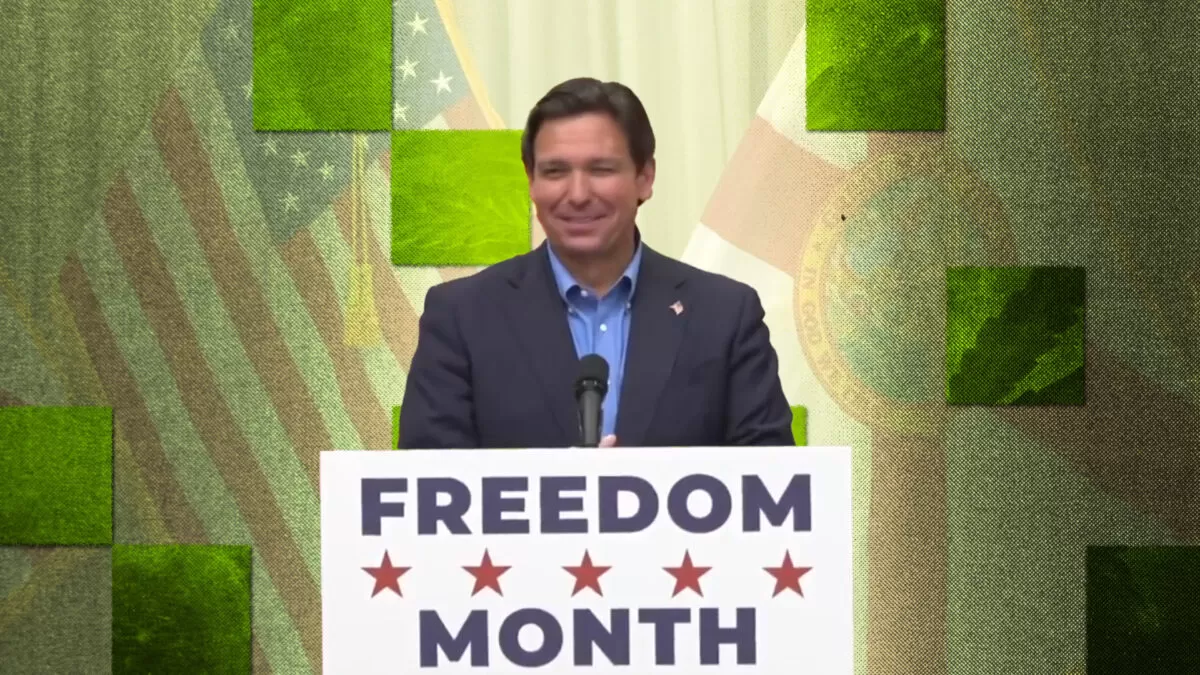
Ron DeSantis Frets About Florida 'Reeking of Marijauna,' Says He'll Oppose Legalization

Once again, the Florida governor is a guy who claims to love freedom—until he disagrees with the choices some adults make.

By Eric Boehm


Florida Police Departments Spent Thousands on Training Seminars Banned in 9 States

A New Jersey government watchdog said Street Cop Training instructors glorified violence, made discriminatory remarks, and offered unprofessional and unconstitutional advice to officers.

By C.J. Ciaramella


Florida Man's Tall Grass Saga Comes to an End

One man’s overgrown yard became a six-year struggle against overzealous code enforcement.

By Daryl James and Ari Bargil


For Peaceful Campus Protests, Colleges Need Free Speech Principles

Even vile speech is protected, but violence and other rights violations are not.

By J.D. Tuccille


Video: MSNBC’s James Carville Unleashes on Young Voters Unhappy With Joe Biden

Discussing the youth vote and whether voters 18-29 will choose to sit out this upcoming presidential election.

By Robby Soave and Emma Camp


Journalism Is Not a Crime, Even When It Offends the Government

Julian Assange and Priscilla Villarreal were both arrested for publishing information that government officials wanted to conceal.

By Jacob Sullum


Supreme Court Won't Stop Texas Porn Law From Taking Effect

"We will continue to fight for the right to access the internet without intrusive government oversight," says the group challenging the law.

By Elizabeth Nolan Brown


Alabama Woman Arrested for Refusing To Give a Cop Her I.D.

Alabama law doesn't let police demand individuals' government identification. But they keep arresting people anyway.

By Emma Camp


Feds Worried About Anarchists Gluing the Locks to a Government Facility

A FOIA request reveals what the FBI and Homeland Security had to say about anarchist activities on May Day 2015.

By Matthew Petti


Rob Long: God Is Good, Drugs Are Better

The former Cheers producer talks faith, ayahuasca, and what it’ll take to bring back the blockbuster comedy.

By Nick Gillespie


MARIJUANA

Rescheduling Marijuana Does Not Address Today's Central Cannabis Issue

Moving marijuana to Schedule III, as the DEA plans to do, leaves federal pot prohibition essentially untouched.

| 


https://reason.com/2024/05/01/rescheduling-marijuana-does-not-address-todays-central-cannabis-issue/


The Justice Department yesterday confirmed that the Drug Enforcement Administration  (DEA) plans to move marijuana from Schedule I of the Controlled Substances Act (CSA), a list of completely prohibited drugs, to Schedule III, which includes prescription medications such as ketamine, Tylenol with codeine, and anabolic steroids. The Associated Press notes that the change, which is based on an August 2023 recommendation by the Department of Health and Human Services (HHS) that resulted from a review President Joe Biden ordered in October 2022, "would not legalize marijuana outright for recreational use."

That is by no means the only thing rescheduling marijuana will not do. Biden wants credit for "marijuana reform," which he hopes will help motivate young voters whose turnout could be crucial to his reelection. The announcement of the DEA's decision seems designed to maximize its electoral impact. But voters should not be fooled: Although moving marijuana to Schedule III will facilitate medical research and provide a financial boost to the cannabis industry, it will leave federal pot prohibition essentially untouched.

Rescheduling marijuana will not resolve the conflict between the CSA and the laws of the 38 states that recognize cannabis as a medicine, 24 of which also allow recreational use. State-licensed marijuana businesses will remain criminal enterprises under federal law, exposing them to the risk of prosecution and forfeiture. While an annually renewed spending rider protects medical marijuana suppliers from those risks, prosecutorial discretion is the only thing that protects businesses serving the recreational market.

Even if they have state licenses, marijuana suppliers will be in the same legal position as anyone who sells a Schedule III drug without federal permission. Unauthorized distribution is punishable by up to 10 years in prison for a first offense and up to 20 years for subsequent offenses. That is less severe than the current federal penalties for growing or distributing marijuana, which include five-year, 10-year, and 20-year mandatory minimum sentences, depending on the number of plants or amount of marijuana. But distributing cannabis, with or without state permission, will remain a felony.

That reality suggests that banks will remain leery of providing financial services to state-licensed marijuana suppliers, which entails a risk of potentially devastating criminal, civil, and regulatory penalties. The dearth of financial services has forced many cannabis suppliers to rely heavily on cash, which is cumbersome and exposes them to a heightened risk of robbery. It also makes investment in business expansion difficult.

Although federal arrests for simple marijuana possession are rare, cannabis consumers likewise will still be committing crimes, even if they live in states that have legalized marijuana. Under 21 USC 844, possessing a controlled substance without a prescription is a misdemeanor punishable by a minimum $1,000 fine and up to a year in jail. Moving marijuana to Schedule III will not change that law, which only Congress can do. Nor did President Joe Biden's mass pardons for people convicted of simple marijuana possession under that statute, which apply only retrospectively, "decriminalize the use of cannabis," as he promised to do during his 2020 campaign.

Biden has repeatedly decried the barriers to education, employment, and housing that marijuana convictions create. But contrary to what he claims, his pardons do not entail expungement of criminal records and therefore do not eliminate those barriers. Nor did the pardons address the various legal disabilities associated with marijuana convictions, cannabis consumption, or participation in the cannabis industry, which include loss of Second Amendment rights (a policy that Biden defends) and ineligibility for admission, legal residence, and citizenship under immigration law. Rescheduling marijuana likewise will not remove those barriers and disabilities.

Moving marijuana to Schedule III will not even make it legally available as a medicine, which would require regulatory approval of specific products. Doctors can legally prescribe Marinol (a.k.a. dronabinol), a synthetic version of THC listed in Schedule III, and Epidiolex, a cannabis-derived CBD solution listed in Schedule V. But they will not be able to prescribe marijuana even after it is moved to Schedule III unless the Food and Drug Administration approves additional cannabis-based medications.

The medical "recommendations" that authorize patients to use marijuana for symptom relief under state law are not prescriptions, and they do not make such use compliant with the CSA. So rescheduling marijuana not only will not legalize recreational use; it will not legalize medical use either.

What will rescheduling do? It should make medical research easier by eliminating the regulatory requirements that are specific to Schedule I, and it will provide an important benefit to state-licensed marijuana suppliers by allowing them to deduct standard business expenses when they pay federal income taxes.

Under Section 280E of the Internal Revenue Code, which is aimed at sticking it to drug dealers, taxpayers may not claim a "deduction or credit" for "any amount paid or incurred during the taxable year in carrying on any trade or business" that involves "trafficking" in Schedule I or Schedule II drugs. As that provision has been interpreted by tax courts, marijuana businesses can still deduct the "cost of goods sold," which counterintuitively means they can deduct the expenses associated with obtaining and maintaining an inventory of cannabis products. But they cannot deduct any other business expenses, including rent, utilities, salaries and benefits, office supplies, security, cleaning services, insurance, and legal fees.

That rule results in a crushing financial burden, forcing marijuana retailers to pay an effective tax rate as high as 70 percent or more. But because Section 280E applies only to businesses that sell drugs in Schedule I or Schedule II, moving marijuana to Schedule III will eliminate that disadvantage.

"I cannot emphasize enough that removal of § 280E would change the industry forever," cannabis lawyer Vince Sliwoski writes. "Having worked with cannabis businesses for 13 years, I view taxation as the largest affront to marijuana businesses—more than banking access, intellectual property protection problems, lack of bankruptcy, you name it. This would be HUGE." In addition to making it much easier to turn a profit, Sliwoski says, the tax change would help attract investors and give marijuana businesses "more leverage" in negotiating those deals.

Aside from those practical changes, rescheduling represents a historic federal about-face on the benefits and hazards of marijuana. Schedule I is supposedly reserved for drugs with a high abuse potential and no accepted medical use that cannot be used safely even under a doctor's supervision. Explaining its rationale for recommending marijuana's reclassification, HHS acknowledged that the drug does not meet those criteria—a point that critics had been making for half a century.

HHS cited "credible scientific support" for marijuana's use in the treatment of pain, nausea and vomiting, and "anorexia related to a medical condition." Regarding abuse potential and safety, it noted that marijuana compares favorably to "other drugs of abuse," such as heroin (Schedule I), cocaine (Schedule II), benzodiazepines like Valium and Xanax (Schedule IV), and alcohol (unscheduled). "The vast majority of individuals who use marijuana," HHS said, "are doing so in a manner that does not lead to dangerous outcomes to themselves or others."

In agreeing to follow the HHS recommendation, the DEA likewise is implicitly admitting that the federal government has been lying about marijuana for decades. But that long-overdue reversal falls far short of addressing today's central cannabis issue: the conflict between federal prohibition and state tolerance, which extends to recreational use in jurisdictions that account for most of the U.S. population. Repealing the federal ban—a step that Americans overwhelmingly support—would resolve that conflict. And while Biden cannot do that on his own, he has stubbornly resisted the idea, even as he emphasizes the irrationality and injustice of the war on weed.


Hey, Ronnie.... It already REEKS of Marijuana...


https://reason.com/2024/05/01/desantis-frets-about-florida-reeking-of-marijauna-says-hell-oppose-legalization/

MARIJUANA

DeSantis Frets About Florida 'Reeking of Marijuana,' Says He'll Oppose Legalization

Once again, DeSantis is a guy who claims to love freedom—until he disagrees with the choices some adults make.

| 


There may not be a more apt visual metaphor for Florida Gov. Ron DeSantis' past few years than his opposition to a proposed marijuana legalization ballot initiative—which he announced Tuesday while literally standing behind a sign celebrating "Freedom Month."

"I don't want this state to be reeking of marijuana," DeSantis said, defaulting to one of the laziest arguments against pot freedom, but one that DeSantis has been using for years. "We're doing fine. We don't need to do that."

How's that for Freedom Month?

In fairness to DeSantis, the jarringly dissonant signage was celebrating the state's sales tax holiday during May. Even so, the gap between DeSantis' pro-freedom messaging and his actions as governor has become a recurring theme for the one-time presidential hopeful.

After all, this is the same guy who wrote a book titled The Courage To Be Free, but has made a name for himself in conservative politics by wielding state power against drag queensstudent groups, and others who have had the courage to freely express their opinions. On the presidential campaign trail, DeSantis would talk up the importance of school choice and parental rights, then moments later promise stricter state control over school curriculums. He's championed Florida's status as a refuge for Americans fleeing poor government policies in other states, even as he's tried to boot out migrants who are voting with their feet by coming to America for the same reason.

Freedom, for DeSantis, seems to mean that you can do whatever you'd please—but only if he approves.

It's disappointing, but hardly surprising, that DeSantis is applying that same logic to marijuana legalization. Florida residents might get a chance to vote on legalizing recreational weed in November, but DeSantis promised Tuesday that he would be "getting involved in different ways" to combat that ballot initiative. It's unclear exactly what DeSantis means, but State Attorney General Ashley Moody and some anti-legalization groups have already sued in state court to block the initiative from getting on the ballot.

The ballot initiative, Florida Amendment 3, would change the state's constitution to allow adults aged 21 and older to possess up to three ounces of marijuana. Existing licensed medical marijuana distribution centers—Florida voters approved medical marijuana in 2016—would be the only places allowed to distribute recreational weed, although state lawmakers could pass new laws to allow for commercial distribution and home growing.

As Marijuana Moment notes, economic analyses of the ballot initiative show that legalization would be a boon for Florida and could generate between $195.6 million and $431.3 million in new sales tax revenue annually.

Greater freedom for Floridians and higher tax revenue seem to matter less to DeSantis than the possibility that some of the state's residents might dislike the smell of reefer. "You want to walk down the street here and smell it," he asked, rhetorically, on Tuesday. "Do you want to not be able to take your family out to dinner because you're worried about it?"

If that's the best argument that the opponents of legalization in Florida can muster, there might be little cause for concern. Even so, having the (admittedly quite popular) governor campaigning against legalization figures to be a factor in the election.

Voters seem to be split on the legalization issue: A poll taken last month by USA Today and Ipsos showed 49 percent of Floridians support the ballot initiative—including 38 percent of registered Republicans. That's well short of the 60 percent threshold required for the amendment to pass.

What DeSantis does as Florida's governor will continue to carry national implications, not solely because he remains one of the most well-known Republican politicians in the country. He's reportedly seeking to patch up his relationship with former President Donald Trump—the two had dinner this week, according to The Washington Post—and may have a role to play in a future Trump administration, or as a Republican presidential candidate in 2028.

By then, maybe he'll have gotten over his fear of the smell of weed.


+++++++++++++++++++++++++++++++++++++++++++++++++++++++++++++++++++++++
+++++++++++++++++++++++++++++++++++++++++++++++++++++++++++++++++++++++
+++++++++++++++++++++++++++++++++++++++++++++++++++++++++++++++++++++++

- Bloggery committed by chris tower - 2405.02 - 10:10

- Days ago = 3226 days ago

- New note - On 1807.06, I ceased daily transmission of my Hey Mom feature after three years of daily conversations. I plan to continue Hey Mom posts at least twice per week but will continue to post the days since ("Days Ago") count on my blog each day. The blog entry numbering in the title has changed to reflect total Sense of Doubt posts since I began the blog on 0705.04, which include Hey Mom posts, Daily Bowie posts, and Sense of Doubt posts. Hey Mom posts will still be numbered sequentially. New Hey Mom posts will use the same format as all the other Hey Mom posts; all other posts will feature this format seen here.