Though the current project started as a series of posts charting my grief journey after the death of my mother, I am no longer actively grieving. Now, the blog charts a conversation in living, mainly whatever I want it to be. This is an activity that goes well with the theme of this blog (updated 2018). The Sense of Doubt blog is dedicated to my motto: EMBRACE UNCERTAINTY. I promote questioning everything because just when I think I know something is concrete, I find out that it’s not.
Hey, Mom! The Explanation.
Here's the permanent dedicated link to my first Hey, Mom! post and the explanation of the feature it contains.
A Sense of Doubt blog post #4102 - A Tickertape of the Unconscious - A Stereolab Music Mix for Music Monday for 2605.11
A Sense of Doubt blog post #4102 - A Tickertape of the Unconscious - A Stereolab Music Mix for Music Monday for 2605.11
Slowly but surely, I am adding old music mixes made on CDs or even cassette tapes (though a lot of my cassettes are gone) to You Tube and then to this blog.
This is one such mix from one of my very favorite bands, Stereolab, who after a ten-year hiatus came back on the scene last year (2025) with a new album!
The mix has been curated over the years and consists of many of my favorite Stereolab tunes.
I had the pleasure of seeing Stereolab in concert at the Vic Theatre in Chicago in 2006.
Below you will find the mix, track list, all the album covers, and several articles and interviews.
ohn McEntire of Tortoise once said that Tim Gane possessed a “totally encyclopedic knowledge of everything—and that is not exaggeration at all.” This is an important fact to remember when diving into the voluminous, eclectic and seemingly overwhelming catalog of Stereolab. The UK-based band, formed in 1990 from ex-McCarthy members Tim Gane and Laetitia Sadier, could be accurately described as the product of their influences without being dismissive of backhanded; when your record, art and film collections go as deep as theirs do, it’s nearly impossible to create something that’s simply “derivative.”
Put a different way, Stereolab listened to a lot of the same records as every other band in the early ’90s—The Velvet Underground, Suicide, Can, Neu!, Silver Apples, The Beach Boys—but their interest wasn’t in recreating those sounds. Their name, particularly in the stretch of records in the second half of the ’90s, takes on an almost literal significance; to Stereolab, the studio was a venue for experimentation and discovery, each track a balance of sonic compounds and fluid integration of seemingly disparate parts. That they later named an album Chemical Chords only further winks at this idea of the band as lab-coated DIYers intently focused on finding the proper formula for musical euphoria, delivered with playfulness, vision and, more often than not, a dose of Marxist/Socialist theory. They made revolution sound like a blast, but they did so coming from a similar background as their own listeners. That they turned a pure and unquenchable thirst for music and art into something so kaleidoscopic and boundless is what makes their music incredible.
Throughout their career, Stereolab released 11 studio albums, nearly two-dozen EPs, plus a handful of compilations, an art installation soundtrack and various other wide-release and rare recordings. They’re an indie record collector’s dream—I can speak from experience, having spent a good chunk of the ’90s tracking down various singles and EPs for the sake of having access to their b-sides, which were often as strong as their album cuts. But they’re also a band whose discography can seem somewhat intimidating for those who haven’t yet had the pleasure of experiencing the “groop” (and that’s another thing—they have their own stylization and lingo that this article doesn’t get into, but you’ll pick it up easily). With three of the band’s classic albums being reissued next month and a North American reunion tour taking place this fall, now is the time to do it right and offer up a beginner’s guide to the band’s music, starting with five of the best Stereolab albums and onto the next steps.
The critical consensus has long held that Emperor Tomato Ketchup is Stereolab’s finest moment. And while I’m loath to uphold conventional wisdom as indisputable fact, this is one of those rare cases in which it’s absolutely correct. On paper, every idea on Emperor Tomato Ketchup existed somewhere in Stereolab’s catalog—the gorgeous French orch-pop of “Cybele’s Reverie” had a bubblier predecessor in “Lo Boob Oscillator,” the psycho-ear-candy of the band’s early noise pop singles achieves hi-fi hit-single potential on “The Noise of Carpet.” And by and large the album is still a patchwork of pop cultural and political influences that the band wore proudly—title borrowed from a Japanese film, lyrics referencing Marxist theory, an album cover patterned after a Bartók performance recording. In practice, Emperor Tomato Ketchup felt like a pretty significant leveling up. This is kaleidoscopic pop that twists and turns and grooves and shimmies its way toward the infinite. This is a big album with big ideas, overstuffed with elements that work in harmony and counterpoint, but never in opposition. “Metronomic Underground” lurches forth in its motorik rhythm as a being that emerges from the primordial soup, but near the end of its eight minutes, emits a cosmic and godlike chorus of organs and keyboards, all building up stormy and tense drones that consume the entirety of its landscape. “Percolator” initially feels like a curious and quirky bit of synthplay, but it too takes an anxious journey toward one of the band’s most magnificent climaxes. And the title track is Stereolab at their funkiest. Kind of. There are essays to be written about this album that might better get toward what it’s about, but the truth is that you’ll really only understand that with 60 minutes to spare and a good set of headphones.
If Emperor Tomato Ketchup is Stereolab’s most cohesive collection of songs and overall strongest moment as a band, its follow-up, 1997’s Dots and Loops, is their most impressive production. Everything feels bigger, brighter, more lush and luxurious. I recently heard the single “Miss Modular” while drinking cocktails in the lounge at Palm Springs midcentury resort The Parker and it felt perfectly placed—a soundtrack for impossibly stylish cool. Yet there’s more than big-budget takes on bossa nova and exotica throughout Dots and Loops. It’s Stereolab dialed to their most saturated, the album sounding pretty expensive when you get down to it—and that includes personnel numbering in the dozens. String sections, horn sections, members of Tortoise, The High Llamas and Mouse on Mars are all part of the widescreen studio experiment. And it is very much a studio experiment; certain tracks, like the four-part, 17-minute side-long centerpiece “Refractions in the Plastic Pulse” have never been attempted live. But what’s here is mostly gorgeously orchestrated, stunningly layered and innovative art-pop, whether in the form of planetarium jungle-jazz in “Parsec,” brassy glitch-funk in “Ticker Tape of the Unconscious,” or the breathtaking exotic waltz of “The Flower Called Nowhere.”
On their earliest records, Stereolab alluded, nodded and touched upon various entry points of note in the hipster vinyl canon—Krautrock, droning noise-rock, ’60s French pop, lounge/exotica and slowcore—though they might have most accurately been called Neu!gaze. But Mars Audiac Quintet is the album on which those disparate yet complementary elements congealed into a more cohesive and maximalist whole, not so much changing their formula as giving it room to breathe. In other words, it’s the album on which Stereolab became the Stereolab we now know today. Or at least a somewhat pure form of it. Stereolab, of course, kept evolving, reshaping the textural elements in their sound, redefining what it meant to be this curious, eclectic, politically radical and decidedly outside-the-mainstream band—one with a major label contract at that! But it’s easy to hear what made the band so exciting in the ’90s, as they were beginning to advance their creativity into something that both embraced and discarded pop sensibilities in an unpredictable swirl of sound. Mars Audiac Quintet is essentially one highlight after another—the infectious drone-pop of “Wow and Flutter,” the Canned Heat buzz-and-groove of “Transona Five,” the space age yé-yé of “Des étoiles électroniques,” the anti-capitalist/anti-imperialist lounge pop of “Ping Pong,” amusingly misinterpreted back around the 2008 election by Meghan McCain. Everything that made Stereolab special can be heard on Mars Audiac Quintet, and it’s in ample, unpredictable supply.
PIN ITCobra and Phases Group Play Voltage in the Milky Night
(1999; Elektra)
Cobra and Phases Group Play Voltage in the Milky Night is a peculiar place to start with Stereolab, not the least significant reason being that its title is a mouthful. That doesn’t mean it doesn’t warrant being early in the queue, however. In fact, it’s by far one of the band’s most ecstatic and vibrant pieces, an overstuffed realization of the band’s creative potential firing in every possible direction. In just a half-decade, Stereolab progressed from a more minimalist drone-pop approach to one immersed in everything from Os Mutantes’ Tropicália to the Beach Boys’ orchestral pop, and from Steve Reich’s Music for 18 Musicians to Jobim and Esquivel. It’s the space-age bachelor pad music the band made kitschy reference to early on in their career, only this time they took full advantage of their resources in order to pursue a bigger-budget, imaginative ideal. They’re at turns jazzy (“Phases”), rhythmically intricate (“The Free Design”), dreamy (“Infinity Girl”), abstract and sprawling (“Blue Milk”), even psychedelically groovy (“Op Hop Detonation”). If the side effect of throwing so many ideas at the wall means Cobra and Phases is slightly less cohesive than its predecessors, it’s a small sacrifice for the sake of showing the full expanse of everything this band can do.
PIN ITTransient Random-Noise Bursts With Announcements
(1993; Elektra)
Two crucial things happened for Stereolab in the years between their debut album Peng! and its follow-up. One, the band signed to major label Elektra, thus giving them a larger platform and wider resources in which to cultivate their hypnotic art-rock. The other was an expansion of the band’s lineup, bringing on board Mary Hansen, whose extra vocal layer helped to characterize the band’s sound, lending a more playful counterpoint to Laetitia Sadier’s stoically tuneful leads up until Hansen’s untimely passing in 2002. The result is a bigger, noisier, weirder album than its predecessor—and arguably one of the strangest major label albums of all time. Transient Random-Noise Bursts With Announcements is a dynamic and ecstatic set of indie rock that’s, to use the band’s own phrase, “super-electric.” An ever-present Farfisa keyboard drone looms large in most of these songs, including the single, “Jenny Ondioline,” which appears on the album in 18-minute form (its final 9 minutes comprise the b-side of Nurse With Wound collaboration Crumb Duck). That Stereolab are the sort of band to choose the album’s longest, arguably least comprehensible track as its “single” (it has a video and everything!) only goes to show just how outside the mainstream the band were thinking, regardless of whether or not a Warner subsidiary was providing money to develop their brand. Funny thing, though—as often as Transient presents pop songs in the form of minimalist noise-pop pieces, it’s surprisingly accessible. “Our Trinitone Blast” rides a wave of tension toward stunning climax, “Analogue Rock” climbs toward a raucous finale, and standout “Crest” features an upbeat jangle-pop backing behind a revolutionary chant: “If there’s been a way to build it, there’ll be a way to destroy it—Things are not all that out of control.” A mantra worth repeating 26 years later, when there are seemingly more reasons to panic than ever.
Also Recommended: Stereolab’s catalog looks considerably less intimidating if you only examine their 11 studio albums and occasional EPs such as The Groop Played “Space Age Batchelor Pad Music” and Instant O in the Universe. But they’ve got an incredible amount of singles and EPs that were only pressed in more limited quantities, which makes compilations like 1995’s Refried Ectoplasm and 1998’s Aluminum Tunes all the more necessary. The former features some of the best singles the band ever released, such as the stunning, shoegazey “French Disko” and the hard-driving Jesus and Mary Chain-style “John Cage Bubblegum.” The latter is a larger selection of songs covering a period of greater evolution for Stereolab, which means a more fragmented and arguably less cohesive set of songs, but a bolder set of experiments, ranging from the gorgeously lush tracks from their Music from the Amorphous Body Study Center art installation to a Jobim cover with jazz flautist Herbie Mann to remixes of tracks from Dots and Loops.
Advanced Listening: This is the part where I tell you that any Stereolab release is worth picking up—and that’s true. Even their minor, barely acknowledged releases include something wonderful to hear. (And if you want to go really deep, seek out some of the non-album singles like “Fluorescences,” as featured on Oscillons from the Anti-Sun.) But before Pokemon-ing every Duophonic UHF disk, listen to debut album Peng! and its follow-up EP The Groop Played “Space Age Batchelor Pad Music” to better understand where they started, how far they’ve come, and just how good their ideas were from the start.
Friday
19 December 2025
Are Stereolab better than ever?
Showcasing their first album in 15 years, the Anglo-French art
rockers sound louder and groovier than their reputation would warrant
It can feel like giddy boosterism to claim that a dormant band is back and better than ever. But it’s true of the Anglo-French pop theorists Stereolab, who were in rousing and eloquent form at their final gig of 2025, in the band’s formative south London. You wouldn’t want to describe a group this unorthodox as slick, exactly. But this iteration of Stereolab sounds louder and groovier than their reputation as slightly aloof, cult darlings would warrant.
Miss Modular, from their 1997 album Dots and Loops, has become emphatically funky. Latter-day members Joseph Watson (keyboards since 2004) and bassist Xavier Muñoz (in the touring lineup since 2019) add penetrating depths to the band’s mutable but unmistakable sound. Time signatures whip past at a dazzling rate, while psychedelic digressions fall back into melodic line at the command of guitarist Tim Gane or singer Laetitia Sadier.
Founded by the pair in 1990 as a guitar band with recherche influences, Stereolab disbanded around 2009 after nine sui generis studio albums and a slew of compilations of burbling, cinematic tunes dusted with German motorik rhythms, Brazilian jazz inflections and elements of French 60s pop. They coped with the loss of one multi-instrumentalist singer, Mary Hansen, who died in 2002, and the dissolution of the romantic relationship between their two creative principals, Gane and Sadier.
Fiercely intellectual, but breezy with it, Stereolab have always been a bande à part. Their shimmying, retro-futurist sound smuggles in lyrics concerning critical theory and social critique. The group have been feted by other musicians – Pharrell Williams is a fan – and sampled by a long list of hip-hop artists across the generations, including the late Mac Miller. Tyler, the Creator also featured Sadier alongside Frank Ocean on a 2013 track. This gig plays host to multiple age groups.
From the first fizz of synth to the noise of the encore, the band more than live up to their myth
Reunited since 2019, the band have played what you might loosely term “the hits’” on previous tours. Now they are airing their first album in 15 years, Instant Holograms on Metal Film, which was released in May. As with Pulp – another outfit with an aesthetically distinct offering – Stereolab’s resurrection has been a resounding creative success. Recorded in Chicago and produced by Cooper Crain of the band Bitchin’ Bajas, the album took Stereolab back to a city and a scene they know well. In the 90s, their producers were storied Chicago left-field musicians Jim O’Rourke and John McEntire (of the band Tortoise, another of 2025’s great returnees).
The horns on Instant Holograms were played by Windy City jazz mainstay Ben LaMar Gay, who sadly has not made the trip to Brixton. But one of tonight’s fabulous surprises is how often Sadier whips out a trombone for understated solos, which offer texture more than showboating (she also plays upside-down right-handed guitar). There is a guest though: Marie Merlet, from Sadier’s former band Monade, on flute and backing vocals.
The performance suggests a few things have come full circle. It is the rowdier overspill from the band’s more prestigious, sold-out Royal Festival Hall show a few weeks ago. If dancing is not exactly easy in the Electric Brixton’s packed space, there has rarely been a place better named to host a gig by these space-age musicians. From the first fizz of synth that opens Aerial Troubles, to the noise of the encore, Cybele’s Reverie, Stereolab more than live up to their myth.
“This is a song about the programs that run our heads, our subconscious and our nervous systems, and the gods we believe without questioning,” says Sadier, introducing Vermona F Transistor, a new track that squelches and swings. “I am the creator of this reality,” croons Sadier. “We stand to attention/ To ordained narrations/ That support disunion.” In setting themselves up as distinct from other bands, Stereolab can seem forbidding. But their between-song messages emphasise hope and warmth. “Capitalism is a wound,” offers Sadier, introducing Melodie Is a Wound, another one from Instant Holograms. “Fascism is a wound. Neoliberalism is a wound,” she continues. “But as a wound it can heal.”
On record, the track encapsulates the band’s exquisitely compressed discipline. Live, the song’s appeal to the hips and the head is amplified, as its percolating rhythms are performed with increasing verve. The night turns into a dazzling workout, restating the band’s appeal with no little swagger.
In an old church by the Thames, the “groop” put together an 18-minute track with a message – here they take Uncut through the creation of “Jenny Ondioline”. “This song is about shifting the perception…”
The centrepiece of Stereolab’s second album, 1993’s Transient Random-Noise Bursts With Announcements, “Jenny Ondioline” has come in many forms: the 18-minute LP version, the snappy single version, and somewhere between those extremes on stage. In any variation, though, there are motorik rhythms, restless guitars, loping bass, droning organs, layered vocals and radical, politically charged lyrics.
“We played this song just last night,” says Lætitia Sadier on the phone from her hotel in Mexico City, where Stereolab are finishing up a lengthy American tour. “It went down very well. We don’t always perform it, and for a while it was not ready to be played, but now we’ve re-adapted it and it feels more friendly.”2019 has seen the group reform for stellar live dates, nominally in support of deluxe remastered reissues of seven of their finest albums, including 1996’s classic Emperor Tomato Ketchup and 1993’s noisier, abrasive Transient….
“‘Jenny Ondioline’ encapsulated everything about Stereolab at that time,” says their longtime manager Martin Pike. “I still think it’s an amazing track.”
“[New York avant-punk guitarist] Rhys Chatham was very influential on me at the beginning of Stereolab,” explains guitarist Tim Gane, “the simplicity of it. I didn’t really understand tunings or just-intonation, but ‘Jenny Ondioline’ was the result of seeing what would happen if you tried to adopt those avant-garde principles for pop music. I just wanted to see what would happen.”
While “French Disco”, originally on the B-side of the “Jenny Ondioline” EP, is perhaps Stereolab’s most widely known song, the title track – named after an early French synthesiser – remains the connoisseur’s choice; strident and positive, it reshapes the politics and musical styles of the past into something fluid, driving and timeless. Sadier, in particular, is deeply connected to the complex lyrics, even if online commentators have sometimes misinterpreted her message.
“I found some versions online which were absolutely horrifying,” she says. “People have got it really wrong. They talk about ‘nation’ in a way that could make me sound like I’m a complete fascist or something! ‘I don’t care if the fascists have to win/I don’t care democracy’s being fucked/I don’t care socialism is full of sin…’ It’s quite a statement to make, right, which can be interpreted in a completely wrong way. But this song is about shifting the perception, saying that we are not the victims, but that we are the creators – we’re not here to cry over our desolate fate, we’re here to create the world that we desire. If you look at things from that point of view, then it’s optimistic.” TOM PINNOCK
SEAN O’HAGAN: Tim and Lætitia lived around Brixton or Camberwell at the time, in various short-stay shared flats. I’d pop over and the little four-track would come out in the bedroom, and I’d hear these very basic demonstrations of new songs.
LÆTITIA SADIER: The demos Tim would give me were little embryos of songs which would then be developed in the studio. “Jenny Ondioline” ends up being quite a droney song, but still there was a chord structure with recurring changes and the melody.
TIM GANE: There aren’t many chords in Stereolab songs, especially at the beginning, which is why Andy [Ramsay, drums] used to call me Captain Easychord! There were two demos for “Jenny…”, part one and part two. But they were based around the same chord. It was the first and only time I ever changed the tuning on the guitar. I just changed it to what I thought was an interesting thing and then just moved my fingers up and down and that was the song. I’m always attracted to things where you don’t have to have a lot of technical ability to sound good – it also feeds back to the drones we’d been using on keyboards since the first record. Lætitia would have put the words and vocals on there soon after I’d demoed it.
SADIER: I was reading a book of paintings by George Grosz at the time. He was German and he painted a lot between the two world wars. Like a lot of artists he was utterly disgusted with what was going on, with the social climate and the social deprivation that was going on around him, and that he was maybe a part of as well. He depicted the Weimar era the best, how depraved men were, and the Nazis and prostitution and misery and people doing all sorts of things to have a bit of bread. In the book they interviewed someone at the time, or maybe it was even Grosz himself, who said that they didn’t care if all this went on, you know, the rise of fascism, and socialism going down the drain. For him what was really important was to remain creative, and to use whatever’s going on around you in the most creative ways. I found that take fascinating.
GANE: This was back in the days when we did rehearse songs a bit – one week after we wrote this, we played it on a French radio show, Black Sessions, presented by this guy Bernard Lenoir. It was quite a big deal back then. He was a big fan, Sebadoh were there in the audience I remember, and we played this 10-minute track and it totally bombed. We should have just played three or four short songs and it would have been hunky dory. When we came to record it a little bit later we just expanded it [even more] and did all these variations. It was our first time at Blackwing Studios.
O’HAGAN: It was a church that was bombed during the Second World War, but one half of the church was never restored, and that became a secret garden with a wall around it, which was pretty amazing. It had two rooms, the big stone one, and the smaller, drier room, which people called the mix room. Back in the ’80s there was this whole thing of having stone drum rooms, for that clattering sound, but this was of course the ’90s when stone rooms were not quite as popular. So everybody actually played in the dry room!
SADIER: I loved going to Blackwing every day; it was our second home for so many weeks. We were either on the road or we were at Blackwing, that’s what I remember from that time. It was like going to work, except we were making the records that we loved making. I remember practising my pool skills there, too!
GANE: We had six weeks there, and that was to record and mix everything on the Transient Random-Noise Bursts… album, and B-sides and ancillary tracks that came out around that time. Transient… definitely has a singular sound and a singular approach, all done in the same place with the same engineer. That does give it a completeness, whereas some of the other albums are a bit all over the shop because they were done in different locations with different people.
MARTIN PIKE: I’d never been into a proper studio for any length of time, so it was all new to me. The studio was quite close to where Tim and Lætitia used to live, so it was easy for them to nip in and out. But the nature of the band in the studio has always been revolving – not everyone’s needed to be there all the time.
SADIER: Around eight or nine each night, cabin fever would set in, and I would cycle around the area. It was like a Jack The Ripper area – you still had real fog in London at that time – and sometimes I would have imaginary adventures around then. It’s not far from the Thames and close to what now is the Tate Modern, but at the time it was just a dark building. I remember discovering this building and being absolutely thrilled by it. All that stretch along the river was in the dark, unexplored.
GANE: In those days we would have recorded guitar, drums and bass together first. Sean might have played the keyboards then, too. I don’t think vocals were done live.
SADIER: I remember it being a bit like a conveyor belt – after the drums, bass, guitars and keyboards were down, then and only then Mary [Hansen, vocals and guitar] and I would start our vocals. It was always quite obvious how to arrange the voices – there was a lead vocal that would carry most of the lyrics which I would sing, and there were some echoing parts which were Mary’s parts. Mary and I would sit down, work it out together and see what would sound best.
O’HAGAN: In those days the organ parts were about not playing the third note in a chord – you’ve got the first, the third and the fifth [in a standard chord], and it was all about leaving out the third. It’s a German chord, it’s got a bit of attitude but it doesn’t have the definition that you’d have with a third in it. When you do that you create overtones, and when you have lots of different instruments playing those two notes you kick off all these other overtones which come out in the room, in the mix. You start hearing things that aren’t actually there, it’s a psychoacoustic thing. The keyboards would have all been amped and all been overdriven. We mainly used a Farfisa single manual and an orange Vox Jaguar then.
GANE: We didn’t record the whole 18-minute thing in one go, we did them in different spots; so we would do five minutes and get that right, and then go on to another version of it. We knew part one would come before part two, but we didn’t know how they would join together. There was lots of noise, throwing things down, putting things backwards, stuff we taped off an audio test record, they were all added on randomly. The speech wasn’t even sampled, we just put the record on and played it over the song.
O’HAGAN: I might have played guitar on the noisiest section, too. There was a little hippie thing to that song. The tape edits were close to that Cluster or Popol Vuh thing, and then the organ at the end would have been going through the Rogue Moog and maybe through an Electro-Harmonix Memory Man box as well. That was a bit of a hippie thing – now it’s not, but back then it would [have seemed that way].
GANE: Then the final composition was done at mastering. The long version is really six or seven separate parts that we edited together. It’s interesting to hear it separated again [on the reissue]; it gives you a different perspective. We always wanted to do a side-long track. We tried to do it again on [1994’s] Mars Audiac Quintet, but it sounded too much like “Jenny Ondioline” but not as good. We didn’t do it on Emperor Tomato Ketchup, but we did it again on [1997’s] Dots & Loops and [1999’s] Cobra And Phases Group Play Voltage In The Milky Night. I suppose it goes back to my youth, and those Can records where you’ve got some poppy songs on Side One and then a really long track on Side Two. I loved that, it seemed exciting.
O’HAGAN: A lot of the mixing would have been done with five or six people mixing together – somebody would be on all the keyboards, someone would be on the drums, etc, so you’d have to group everything, and use things like pencils so you could fade four tracks at once. There would have been edits too, and it might well have been the 24-track that was cut, which is pretty dangerous to do.
GANE: We got the most bizarre drum sound… I’d like to say it was intentional, but we’d taken this fairly expensive, high-end studio and made it sound like a basement. When we were remastering it, the mastering guy said it was the most bizarre mix of frequencies that he’d ever worked with. It’s all middle – middle on top of middle! But the sound works in its own way, it’s a bit of serendipity and it fits in with the chance thing that I like. We also did another mix for the seven-inch, which was the short pop version.
PIKE: We decided it would be the lead single, but it got flipped soon afterwards and [DJs] put on “French Disco” instead. We didn’t have any money to repress or re-sleeve anything, so we just stickered the remaining copies in the warehouse with a sticker that said ‘Includes French Disco’ or something like that. But in America they continued ahead with “Jenny Ondioline”.
SADIER: Earlier this year I made a selection of 60 songs for potential live contenders. I put the full long “Jenny Ondioline” in there, because I thought it would be a super challenge to do that live. I submitted it to the committee, but Tim and Andy didn’t really feel confident that the long version would sound good, because it’s quite difficult to replicate live.
PIKE: Standing in the audience when they play it now, people really love it. It’s classic early Stereolab, I suppose. We had our own record label, Duophonic, so we didn’t have people saying anything like, “Could you get it down to one album so it’ll be cheaper for us?” We just did what we wanted to do, so that was quite a nice thing.
GANE: It’s one of my favourite things that we did. It works, it still sounds good now. I don’t really listen to the records after we’ve done them, but it was nice to hear this at the remastering. I don’t feel that we’d do it in any other way now.
SADIER: The message it carries is very central to our work, or at least to my lyrical work: that we’re all creative beings and we’re all implicated in the course that humanity will follow. We’re much more responsible than we think, we’re also much more apt than we are made to believe. That was my message to the world, that society influences us and we influence it back. That’s the excitement about living. I came from a family where nothing is ever possible, and that’s why I moved away, because I thought, ‘If I stay here I’m gonna have a really unhappy life.’ Instead I was really drawn to moving away and creating my own life. It’s something I was very lucky to be able to do. I think we’re at a point of crisis now [politically and socially], but it’s in crises that we’re given a chance to shift and grow, to move on to something. I don’t know if we’re quite ready, because it is a rather big leap; but we cannot operate with the old paradigms, we have to change.
FACT FILE
Written by: Tim Gane & Lætitia Sadier Performers include: Laetitia Sadier (vocals, organ), Tim Gane (guitar, organ), Sean O’Hagan (organ, guitar), Mary Hansen (vocals, guitar), Duncan Brown (bass), Andy Ramsay (drums) Produced by: Phil Wright Recorded at: Blackwing Studios, London Released: August 24, 1993 (LP version), December 27, 1993 (EP version) Highest chart positions: (EP) UK 75; US –
TIMELINE
March 1993 Stereolab perform an early 10-minute version of “Jenny Ondioline” on French radio show The Black Sessions
May 1993 The group enter Blackwing Studios – housed in a deconsecrated church in south-east London – for six weeks to record their second album, Transient Random-Noise Bursts With Announcements
August 24, 1993 The album is released, followed by the “Jenny Ondioline” EP at the end of the year
Stereolab
Interviewed: “We have to organise how society is run in radically different
ways, based on radically different values…”
Tim Gane and Laetitia Sadier on why they decided to
re-activate Stereolab, new album Instant Holograms On Metal Film, and why
capitalism’s days are numbered…
Next week, Stereolab release their
first new album in 15 years, Instant Holograms On Metal Film. The
band’s eleventh LP finds them opening up new spaces chugging with retro
futurist grooves and big ideas, still spinning fresh radical sounds over three
decades on from the release of their debut EP, Super 45. If you like the sound
of that, you can read MOJO’s review of Instant Holograms On Metal FilmHERE. Below, ‘Lab members Tim Gane and
Laetitia Sadier discuss the decision to get ‘The Groop’ back together, the
making of the record, and why the time is right for a radical overhaul of how
society is run…
After 15 years, why was the time
right to make a new album now? Did [2010’s] Not Music feel
like the end for the band?
Tim Gane: “I guess I did think Not Music/Chemical Chords [the two albums
were recorded at the same time] would be the last LPs of new music from
Stereolab. Even when we started touring again in 2019 it was all around the
recent re-issue of seven of our LPs - a very good reason for sure, but there
was no thinking of extending that to a new LP. In the summer of 2023, we began
to discuss the possibility. [Drummer] Andy Ramsay had already mentioned the idea
and come the Autumn we decided to do it. In six weeks all the songs were
written.”
Was there a spark that set the
record in motion?
TG: “Not really a specific thing,
on my part at least, other than playing big tours had shown us that we could
still make an impact and play with intensity like we always have done. It’s the
same thing when we were recording, the flow was good, and the feeling was the
same as before - exploring ideas and making decisions on the spot. We found
another great collaborator in Cooper Crain from [US outfit and Bonnie ‘Prince’ Billycollaborators]
Bitchin Bajas, who fitted right in with the process of grabbing ideas and
getting them down. He contributed many fantastic ideas.”
What was the process of making the
record like? Was there a pivotal moment?
TG: “The actual making of the
record was pretty much how much we’ve always gone about it since Emperor Tomato Ketchup. We never
rehearse but arrive with basic songs on a demo and start recording things,
shaping them as we go. We always try to keep the essence of the original idea
but how we choose to arrange and present it can vary wildly from the original
demo. Experimenting is much better for us in a studio than in a rehearsal room.
We prefer making tracks by feeling our way, trying different things out then
committing to something and building on that.”
Laetitia Sadier: “There was plenty of space for
me to put my musical imprint beyond lyrical and vocal, which made the process a
true co-creation. And that is very exciting.”
You sent out a wordsearch with
Aerial Troubles – are you fans of codes and puzzles? Does that apply to your
songwriting process?
TG: “That was Martin Pike’s idea.
He runs Duophonic and has been the band's manager since the beginning. He loves
all this kind of stuff and thinks up new things all the time. It’s one way of
making a community and putting fun back into the mix. I’m awful at any kind of
puzzles like Crosswords etc... but I do often approach music like a puzzle to
solve, or to reveal. Setting up situations that limit your movements hopefully
opens up unforeseen directions. On later LPs like Chemical Chords/Not
Music I was probably playing games too much and I think it may have
unbalanced the music in some ways. On this new record I’m still really pushing
myself by involving processes like cut-ups, random assembly of chords and other
chance elements as a way to achieve something intriguing with the music. On
this LP I think there is a better balance between those things and more classic
songwriting styles like picking up a guitar and playing it.”
Why do you thank
Electronics Australia October 1970 on the album sleevenotes?
TG: “I somehow
picked up a copy of this old audio magazine when on a tour of Australia a few
years back. It’s got a nice cover and it was just laying around the studio when
I was writing the demos and every time I finished one I just opened the
magazine to a random page and picked a name from it, which I used as a rough
title. Some of those titles later got changed but the LP name is straight out
of that mag.”
Esemplastic Creeping Eruption; the
lines “Mysterious journeying seed / Adventurous way to proceed” on Flashes From
Everywhere – is the record quite optimistic?
LS : “Putting the idea out there
that perhaps we choose our outcomes much more than we are led to believe. I
think that it is becoming more and more apparent to more and more people as the
absurdity of the political situation intensifies that at some point - soon?- we
will have to organise how society is run in radically different ways, based on
radically different values, such as cooperation, as opposed to the current capitalist
ideology of competition. Aerial Troubles talks of giving birth to/creating a
new existence as we experience the death of ‘modernity’. Yes, this makes this
record in its intent an optimistic and empowering bunch of songs.”
- Bloggery committed by chris tower - 2605.11 - 10:10
- Days ago: MOM = 3966 days ago & DAD = 620 days ago
- New note - On 1807.06, I ceased daily transmission of my Hey Mom feature after three years of daily conversations. I post Hey Mom blog entries on special occasions. I post the days since ("Days Ago") count on my blog each day, and now I have a second count for Days since my Dad died on August 28, 2024. I am now in the same time zone as Google! So, when I post at 10:10 a.m. PDT to coincide with the time of Mom's death, I am now actually posting late, so it's really 1:10 p.m. EDT. But I will continue to use the time stamp of 10:10 a.m. to remember the time of her death and sometimes 13:40 EDT for the time of Dad's death. The blog entry numbering in the title has changed to reflect total Sense of Doubt posts since I began the blog on 0705.04, which include Hey Mom posts, Daily Bowie posts, and Sense of Doubt posts. Hey Mom posts will still be numbered sequentially. New Hey Mom posts will use the same format as all the other Hey Mom posts; all other posts will feature this format seen here.


 PIN IT
 PIN IT
 PIN IT
 PIN IT
 PIN IT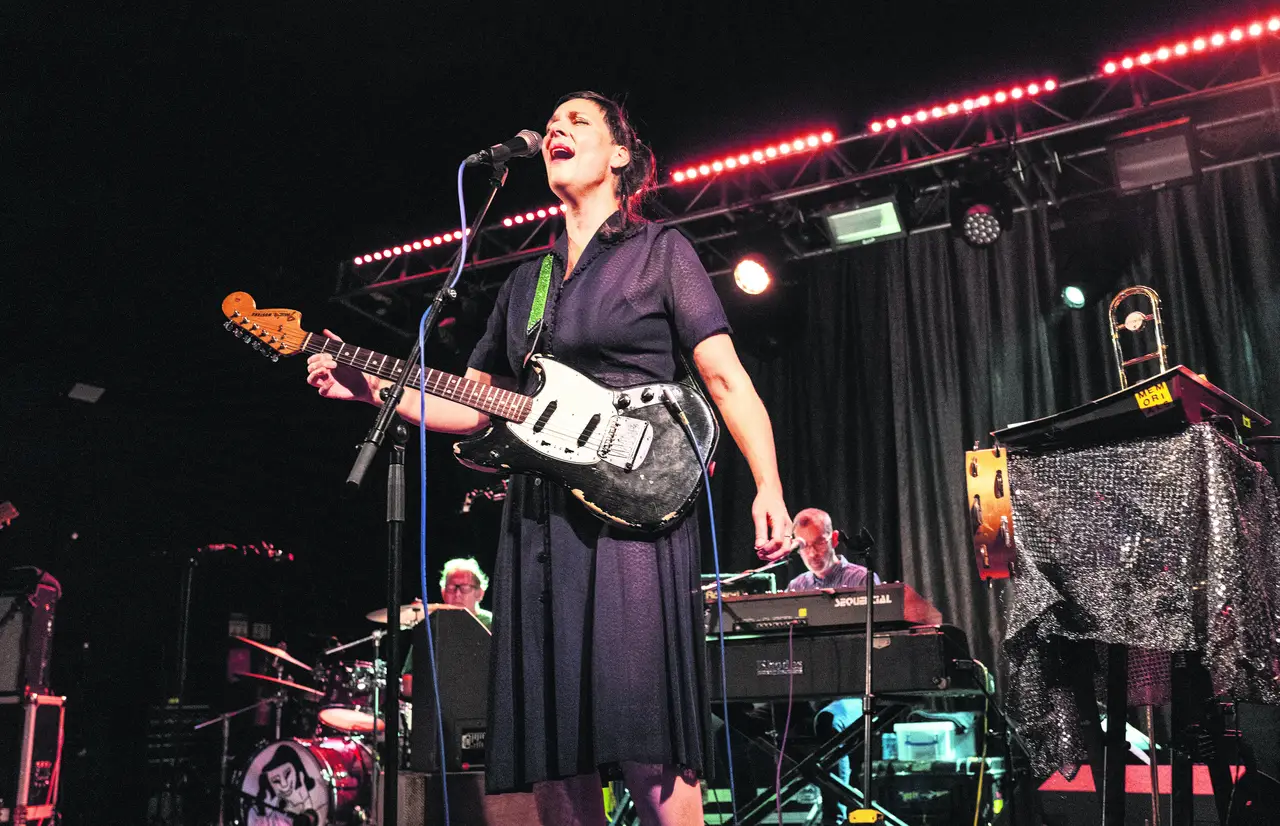





No comments:
Post a Comment