Hey, Mom! The Explanation.

Here's the permanent dedicated link to my first Hey, Mom! post and the explanation of the feature it contains.

Also,

Sunday, January 3, 2021

A Sense of Doubt blog post #2147 - Six recent SFF novels without genre distinctions


A Sense of Doubt blog post #2147 - Six recent SFF novels without genre distinctions

17 DAYS to inauguration

Pulling this one out of the archive. I had a 50 best comics of 2020 planned, but it needs a lot of formatting work, so delaying that one a week or two.

Here, with this, it's good to think about works of fiction without genre definition.

Also, I read both Gideon the Ninth and Middlegame earlier this year. Excellent works!!

https://www.tor.com/2020/03/06/six-recent-sff-novels-that-give-no-effs-about-genre-distinctions/

Six Recent SFF Novels That Give No Effs About Genre Distinctions


Science fiction and fantasy exist as strata of various subgenres: hard SF and space opera, epic and urban fantasy, steampunk and cyberpunk, and so on. It’s baked into genre fiction, this omnipresence of tropes and conventions that allow picky readers to know exactly what they’re in for.
But some authors say: screw that noise. Why limit yourself to just one genre when you can toss them all across the floor, grease up your book, and roll it around in the resulting debris, picking up a little of this and a little of that? (You know, metaphorically.)
Here are six recent works of SFF that give absolutely no effs about the genre divide.

Gideon the Ninth by Tamsyn Muir

Tamsyn Muir’s gonzo debut is the kind of book that demands to be discussed solely in exclamations: Necromancers! Swords! Skeletons! Secrets! Space castles! Giant bone monsters! Dirtbag romance! Shitty teens! A Poochie reference! But I think it’s also important to admire the structure under all that flash. It’s so easy to fall in love with the hilarious and heartrending journey of walking trashbag and teen swordswoman Gideon from “grudging participant in a contest to determine who will join the inner circle of the galactic emperor” to “grudging participant in a murder mystery in a haunted space castle” to, eventually, “grudging participant in the year’s most adorably combative queer romance” that you might not notice how many genres the author is dragging you through along the way.
Is it a fantasy? Well sure: there’s magic galore, dredged from blood and bone. Is it science fiction? Undoubtedly: Gideon is a citizen of a galactic empire and attempts to book passage on a spaceship that will take her to the front lines of an intergalactic war. Is it a mystery? Maybe that most of all: the plot resembles nothing so much as Agatha Christie on mescaline. In short, it’s impossible to slot into any one genre, and if you’re the kind of reader who can’t condone fantasy chocolate in their SF peanut butter, well, Gideon has a one-finger salute for you.

The Affair of the Mysterious Letter by Alexis Hall

Few fictional characters have been remixed and rejiggered and totally reimagined quite as often as Sherlock Holmes of 221B Baker Street. Holmes is a particularly popular public domain character in SFF circles, where he’s squared off against Cthulhu in the Victorian era and, recast as a queer woman of color, unmasked a conspiracy targeting veterans of the second Civil War in a shattered future America. My favorite Holmesian retelling is also the most unhinged: Alexis Hall’s The Affair of the Mysterious Letter is an excellent mystery in the style of Arthur Conan Doyle, a slightly seedy affair that finds its uptight Watson stand-in being yanked along by the deductions of a possibly quite mad detective. But it is so much weirder than that.
In this case (pun intended), Watson is Captain John Wyndham, a trans man who has recently returned from the front lines of an inter-dimensional war in which he suffered a wound from a time-traveling bullet. Our Holmes is the sorceress Miss Shaharazad Haas, who investigates a blackmail scheme targeting her former lover (one of many, all of whom have good reason to hate Haas with a gleeful vengeance). Solving the mystery—which unfolds through Wyndham’s decidedly understated narration as he writes up his adventures for serial pulp publisher whose editors keep trying to make him delve into lurid detail—will take them through dimensions, into the mirrored halls of a psychic prison, and beyond the boundaries of the legendary city of Carcosa, pitting them against salty vampires, mad gods, and fearsome pirates. There’s weird magic and weirder tech and horrors most cosmic, all in the service of a truly satisfying whodunit.

Empress of Forever by Max Gladstone

Max Gladstone is the guy who earned a Hugo nod for a series that mashes together dead gods, necromancy, and contract law, so you won’t be surprised to learn his first stab at novel-length sci-fi is just as freewheeling.
This is space opera at its most operatic, gleefully taking advantage of that old Clarke adage about sufficiently advanced science being indistinguishable from magic. It tells the story of Vivian Liao, a billion tech genius in a climate-scorched near-future Earth who fakes her own death to escape a corporate coup and, through quantum shenanigans, finds herself transported to a distant universe ruled over by an all-powerful green goddess who can destroy planets on a whim and is worshiped by monks who soar through the stars in spaceships made of stained glass. Literally marked for death by the goddess’s hand, Vivian escapes and assembles a motley crew of allies (if some of them only very tentatively so), including a disgraced zealot, a girl born to meld her mind with a ship, a warlord with a death wish, and a cloud of grey goo.
Though Gladstone throws around a lot of ideas sprung from classic SF (nanotech, artificial intelligence, multiple dimensions, a mind-expanding vision of the future of cloud computing), all of them are taken so far over the top that they’ve basically ceased to resemble science fiction and are something closer to bizarro space magic. And I mean that in the most enthusiastic, double thumbs-up way.

The Library at Mount Char by Scott Hawkins

Like a mutated cousin of Neil Gaiman’s American Gods sprung from Clive Barker’s Lament Configuration, Scott Hawkins first and, alas, only novel to date is one of the most original works of nightmarish genre mashing I’ve ever encountered. To even begin to describe the plot is to rob you of the terrible joys of discovering it yourself, but it also isn’t the kind of book you can see coming, so here goes: twelve children survive a disaster that destroys half a city, and are taken in by a godlike being known only as Father, to be raised within the confines of—and in service to—an immense library that holds the secrets to all of existence. Each child is assigned a discipline to master—think Harry Potter, but instead of Hogwarts houses, the children are sorted into “Languages” or “Death and Horror” or “The Future.” Though he seems to care for them, Father is a cruel sort of master; his demands are exacting and the punishments for not meeting his expectations are…severe.
As the novel opens, Father has vanished, and the children are at a loss. One of then, Carolyn, who can speak any language ever imagined, unites with several of her adoptive brothers and sisters to figure out where he went. The more interesting question, of course, turns out to be why they are all there in the first place. Needless to say, the answer is a real cosmic mindfuck.
What fascinates me about the book’s genre savvy is how closely Carolyn’s quest hews to the conventions of the commercial thriller, if one were slathered in phantasmagorical horror. You can almost imagine cheap mass market paperback copies of The Library at Mount Char lining the racks of the Airport of the Elder Gods.

Middlegame by Seanan McGuire

Seanan McGuire has written a story in just about every corner of SFF, and her 2019 novel Middlegame—which is, incidentally, the best thing she’s ever written—often seems like her attempt to fill just about all of them at once.
Like Mount Char, this is a truly apocalyptic coming-of-age story. The unwitting children who are fated to change—or end—the world this time around are a pair of twins, Roger and Dodger, who are separated at birth but grow up intertwined thanks to a psychic connection that is the result of their strange origins. Namely, they were brought into the world via alchemical means by a quasi-immortal named James Reed, himself the rebellious creation of one Asphodel Baker, the greatest scientist magician who ever lived (and a fantastic children’s author to boot). Reed believes that manipulating the twins will give him the power to alter reality and become a god. As their relationship grows and changes over the years, Roger and Dodger discover their shared destiny, and come to have other ideas…
This is all the stuff of fantasy, of course, but McGuire’s worldbuilding is so exacting, it plays out like science. Where Roger is able to change the world through an innate mastery of language, Dodger has a strong head for numbers and can see the equations that underlie all of existence. Alchemy is, of course, a magical science in and of itself, an attempt to command and codify the impossible. This all plays out in a grab-bag of cross-genre tropes: time loops, alternate dimensions, genetic engineering, blood magic and more. If you don’t know what a Hand of Glory is now, read this book and never forget.

Saga by Brian K. Vaughan and Fiona Staples

There is perhaps no other work of modern SFF that fits on this list better than this graphic novel, er, saga from the writer/artist team of Brian K. Vaughan and Fiona Staples. Envisioned as a nigh-unadaptable space-set bildungsroman, it follows the unfortunate life and times of Hazel, the only inter-species child ever born to parents from opposite sides of a galactic war.
Hazel’s parents are Marko and Ilana, ex-soldiers and sworn enemies who find love on the battlefield and mutually decide to desert their respective causes and make a go at marriage. They soon find out that the truly defining struggle of their lives is not the one between the worlds of Landfall and Wreath, but the impossible test that faces every parent, even here on dull old Earth: raising a child who won’t just go on to repeat all of your stupid mistakes.
Saga’s execution is as offbeat as its setup: its universe is truly weird, a place where magic definitively exists, as do ghosts, as do sentient robots with heads shaped like TVs, as do beasts out of fantasy stories and aliens out of your nightmares (but don’t judge a book by its cover, or an armless spider-bodied assassin by her vast number of eyes).
Vaughan and Staples are firmly convinced Saga can only exist as a comic, and that’s not only because of the scope of the story, or its metafictional asides, or its turn-on-a-dime tone, or the vast budget it would take to realize its visuals. It’s also because the sort of wider audience necessary to make it financially viable wouldn’t know what to make of the thing. Sure, Star Wars mixes together science fiction and magic, but Saga mixes together science fiction and everything. It is, and I can’t emphasize this enough, what it is.

That closes out my list of six recent examples, which is by no means exhaustive…so what are your favorite examples of fearlessly genre-defying SFF?
Joel Cunningham was the founding editor of the B&N Sci-Fi & Fantasy Blog (RIP), where he got to explore the galaxy for 5 years and picked up a Hugo Award (well, tangentially) along the way. He lives in New York City with his wife and two children, despite the fact that this is a thing no sane person would choose to do. He tweets @joelevard.

+++++++++++++++++++++++++++++++++++++++++++++++++++++++++++++++++++++++
+++++++++++++++++++++++++++++++++++++++++++++++++++++++++++++++++++++++
+++++++++++++++++++++++++++++++++++++++++++++++++++++++++++++++++++++++


- Bloggery committed by chris tower - 2101.03 - 10:10

- Days ago = 2011 days ago

- New note - On 1807.06, I ceased daily transmission of my Hey Mom feature after three years of daily conversations. I plan to continue Hey Mom posts at least twice per week but will continue to post the days since ("Days Ago") count on my blog each day. The blog entry numbering in the title has changed to reflect total Sense of Doubt posts since I began the blog on 0705.04, which include Hey Mom posts, Daily Bowie posts, and Sense of Doubt posts. Hey Mom posts will still be numbered sequentially. New Hey Mom posts will use the same format as all the other Hey Mom posts; all other posts will feature this format seen here.

Saturday, January 2, 2021

A Sense of Doubt blog post #2146 - Egon Schiele and other fine art on Twitter


A Sense of Doubt blog post #2146 - Egon Schiele and other fine art on Twitter

INAUGURATION COUNTDOWN

18 DAYS to inauguration

Did you know that there are Twitter accounts for artists, from the world of "fine" art, the history of art?

Here's a selection. Too many white men with too few women or artists of color but that's the history of the world. I plan to dig deeper and do a second post. This kind of material is almost worth a second Twitter account or a special list just dedicated to this content.

Still in low power mode.

Enjoy.

LOW POWER MODE: I sometimes put the blog in what I call LOW POWER MODE. If you see this note, the blog is operating like a sleeping computer, maintaining static memory, but making no new computations. If I am in low power mode, it's because I do not have time to do much that's inventive, original, or even substantive on the blog. This means I am posting straight shares, limited content posts, reprints, often something qualifying for the THAT ONE THING category and other easy to make posts to keep me daily. That's the deal. Thanks for reading.


EGON SCHIELE

https://twitter.com/artistschiele


EDVARD MUNCH

https://twitter.com/artistmunch


František Kupka

https://twitter.com/artistkupka


PAUL CEZANNE

https://twitter.com/cezanneart


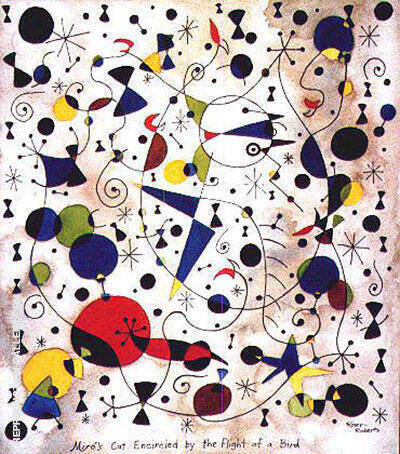
Joan Miró

https://twitter.com/artist_miro


https://www.nytimes.com/2019/06/11/t-magazine/francoise-gilot-picasso.html


https://www.stlmag.com/events/new-perspectives-talk-a-visual-breakdown-confronting-strange-max-ernst-s-l-oeil-du-silence-the-eye-silence/


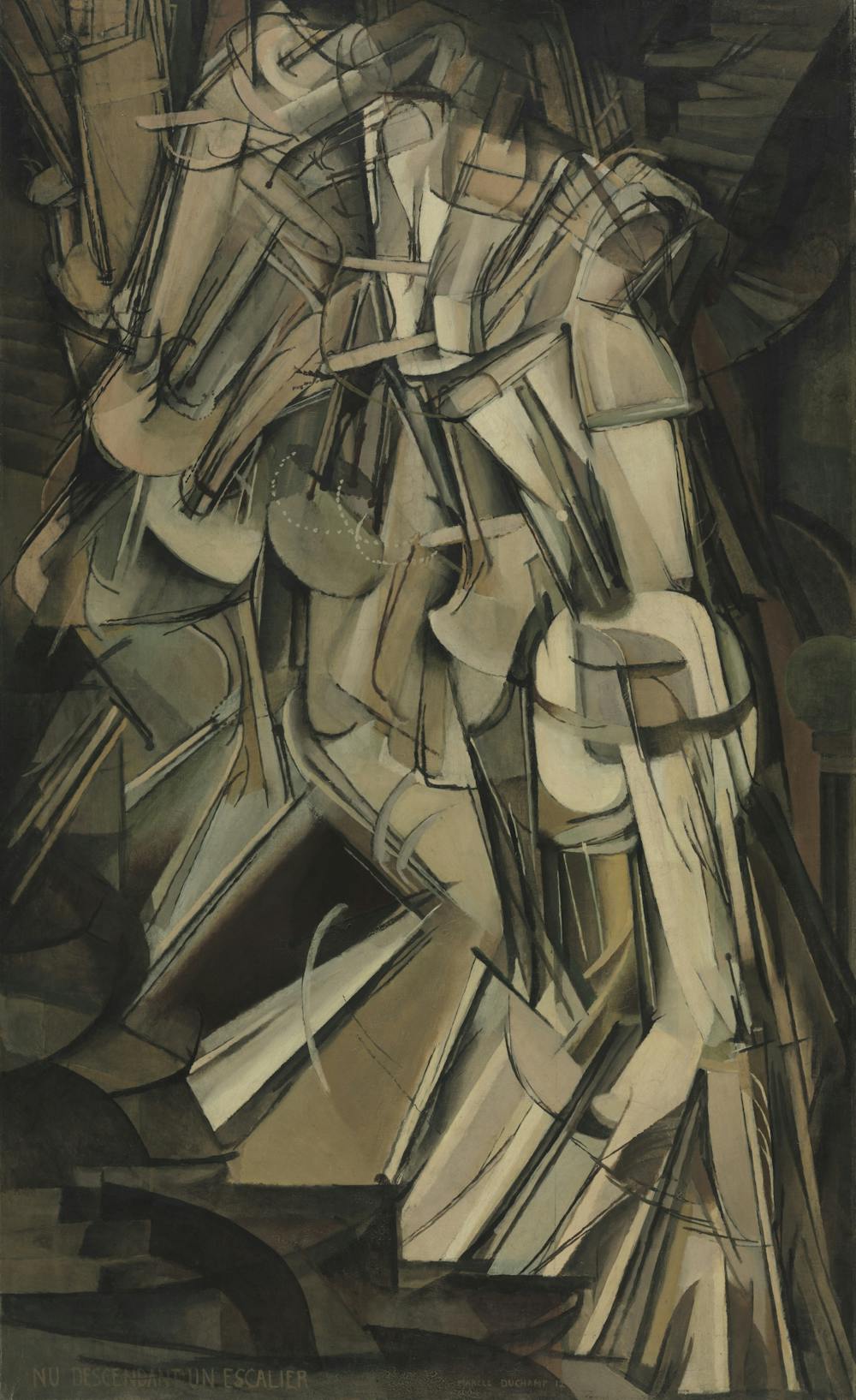
https://twitter.com/artistduchamp


... and my favorite....

https://www.renemagritte.org/

Rene Magritte

https://twitter.com/artistmagritte


+++++++++++++++++++++++++++++++++++++++++++++++++++++++++++++++++++++++
+++++++++++++++++++++++++++++++++++++++++++++++++++++++++++++++++++++++
+++++++++++++++++++++++++++++++++++++++++++++++++++++++++++++++++++++++

- Bloggery committed by chris tower - 2101.02 - 10:10

- Days ago = 2010 days ago


- New note - On 1807.06, I ceased daily transmission of my Hey Mom feature after three years of daily conversations. I plan to continue Hey Mom posts at least twice per week but will continue to post the days since ("Days Ago") count on my blog each day. The blog entry numbering in the title has changed to reflect total Sense of Doubt posts since I began the blog on 0705.04, which include Hey Mom posts, Daily Bowie posts, and Sense of Doubt posts. Hey Mom posts will still be numbered sequentially. New Hey Mom posts will use the same format as all the other Hey Mom posts; all other posts will feature this format seen here.

Friday, January 1, 2021

A Sense of Doubt blog post #2145 - 2020 in pictures

People gather along Oakland's Lake Merritt in November to celebrate President-elect Joe Biden and Vice President-elect Kamala Harris' victory in the 2020 presidential election. (Photo by Melina Mara/The Washington Post) (Melina Mara)

A Sense of Doubt blog post #2145 - 2020 in pictures

INAUGURATION COUNTDOWN

19 DAYS to inauguration


Just this.

Happy new year.


New Penn Station atrium

https://www.nationalgeographic.com/magazine/2021/01/2020-the-year-in-pictures-feature/

protest in Argentina

https://www.thelily.com/12-months-12-photos-a-look-back-at-2020/

12 months, 12 photos: A look back at 2020

These images capture moments big and small

It’s been a year.

It’s hard to fathom that at the start of 2020, coronavirus wasn’t a huge part of the average American’s vocabulary. It’s hard to fathom that in February, we were talking about House Speaker Nancy Pelosi (D-Calif.) ripping up a copy of President Trump’s State of the Union address — rather than wondering, endlessly, how long the president would attempt to overturn the election results. It’s difficult to fathom that in March, while many remote workers and faraway friends and relatives were attempting to navigate Zoom, George Floyd was still living and breathing.

It may be a challenge to wrap our heads around this endless year, but you can lay your eyes on these interesting, illuminating photos. Find 12 images below, one from each month, either taken by a female photographer or capturing the lives of women (or both), during moments big and small.

Hang in there. 2020 is nearly behind us.

January

Sister Tracy Kemme, 33, is seen in Chicago. (Lucy Hewett for The Lily)

A large percentage of millennials have turned away from religion (or perhaps never embraced it at all). Still, for the last decade, roughly 100 women have professed final vows each year, which is part of the process of becoming a nun or sister, writes Rachael Allen in The Lily. With college degrees and work experience, newly vowed women of today are more diverse than generations prior. Here’s a look at the lives of millennial nuns.

February

House Speaker Nancy Pelosi (D-Calif.) tears up her advanced copy of President Trump’s State of the Union address before members of Congress on Feb. 4. (Toni L. Sandys/The Washington Post)

One might argue that House Speaker Nancy Pelosi (D-Calif.) knows the power of an image (and body language) better than most politicians, Amber Phillips writes in The Washington Post. The Post put together a piece highlighting Pelosi’s most iconic power moves, including the moment when she tore apart a copy of President Trump’s State of the Union speech.

March

Emma Alterman organized an online game of Codenames for 10 college friends. (Emma Alterman)

Remember the early days of the pandemic, when Zoom offered a new way to have happy hours and game nights with old friends you hadn’t seen since middle school? The Lily’s Caroline Kitchener spoke with women on how to host the perfect virtual get-together. In these early days, we were blissfully unaware of the impending “Zoom fatigue.”

April

“Belén turned out to be the most fantastic neighbor. We leave homemade food outside each other's door and chat from our balconies,” writes Erica Canepa, who lives in Buenos Aires. (Erica Canepa for The Washington Post)

As the reality of self-quarantining for the long haul set in, By The Way, The Post’s travel initiative, asked three of their City Guide photographers to show readers what life was like for them during the pandemic. Erica Canepa in Buenos Aires noticed her neighbors taking advantage of any small outdoor space they had. She even formed a new friendship with a woman a few apartments over.

May

A medical worker passes a tube, which contains samples taken from photographer Yan Cong’s throat as part of a covid-19 swab test, to a colleague outside of the hotel room where Cong was quarantining in Beijing. (Yan Cong for The Washington Post)

Photographer Yan Cong and her partner, comic artist Krish Raghav, spent two weeks quarantining in separate hotel rooms after returning to Beijing, where they live, after traveling. They documented the bizarre experience for By The Way.

June

Sergine Lucien looks out from her RV in Kissimmee, Fla. (Eve Edelheit for The Washington Post)

The pandemic forced Sergine Lucien, Dave Marecheau and their two children out of their home. After a story about Lucien and her family was published in The Post, the chief executive of Camping World donated a new RV for them to live in. Photographer Eve Edelheit followed the family’s story.

July

Sara Fatell, of Rainbow Doula, poses for a portrait outside of her home in Mount Rainier, Md. (Alyssa Schukar for The Washington Post)

When pregnancy is treated as a heterosexual or cisgender experience, lesbian, gay, transgender, nonbinary and queer families can be left feeling othered, excluded or diminished, writes Madeleine Thomas in The Lily. At Rainbow Doula DC, which its founder says is the only queer-specific doula collective in the Washington, D.C., area, parenthood is far from binary.

August

Ju’Niyah Palmer, the sister of Breonna Taylor, poses for a portrait surrounded by photos and paintings of her sister at her mother’s apartment. (Joshua Lott for The Washington Post)

Before Breonna Taylor’s name became a rallying cry chanted in protests and scrawled on signs, she was Ju’Niyah Palmer’s sister — her companion, role model and confidante. Palmer talked to Post reporter Caitlin Gibson about the weight of losing her sister. “She was my person. I was her shadow,” she said.

September

Mourners gather outside the U.S. Supreme Court to pay their respects to the late Justice Ruth Bader Ginsburg in September. (Evelyn Hockstein for The Washington Post)

Supreme Court Justice Ruth Bader Ginsburg, the second woman to serve on the high court, died Sept. 18 at age 87. For a story in The Lily, previous clerks and colleagues of the justice remembered her profound impact.

October

Candace Valenzuela ran in Texas’s 24th Congressional District. (Allison V. Smith for The Washington Post)

Ahead of the election, Lily staff writer Caroline Kitchener profiled six women around the country who were attempting to flip their congressional districts. Candace Valenzuela, shown here, narrowly lost in Texas’s 24th Congressional District.

November

Volunteer Aparna Raj, 26, right, helps first-time voter Binta Nyan, 18, sign in at the Raymond Recreation Center and Playground. (Astrid Riecken for The Washington Post)

A record number of Americans tracked down ballot boxes and stood in long lines to vote in this year’s election; volunteers all over the country worked to ensure their votes were counted. The Lily shadowed two women working at polling sites in Washington, D.C., to see what their days looked like.

December

Jeremiah Graham greets Santa, who wears a face shield and sits behind a clear protective barrier, at the holiday photo station at the Bass Pro Shops store in Bridgeport, Conn. (Amy Lombard for The Washington Post)

Closing out a year like no other, mall Santas still greeted children — behind face shields. Photographer Amy Lombard highlighted the surreal interactions.

LOW POWER MODE: I sometimes put the blog in what I call LOW POWER MODE. If you see this note, the blog is operating like a sleeping computer, maintaining static memory, but making no new computations. If I am in low power mode, it's because I do not have time to do much that's inventive, original, or even substantive on the blog. This means I am posting straight shares, limited content posts, reprints, often something qualifying for the THAT ONE THING category and other easy to make posts to keep me daily. That's the deal. Thanks for reading.

+++++++++++++++++++++++++++++++++++++++++++++++++++++++++++++++++++++++
+++++++++++++++++++++++++++++++++++++++++++++++++++++++++++++++++++++++
+++++++++++++++++++++++++++++++++++++++++++++++++++++++++++++++++++++++

- Bloggery committed by chris tower - 2101.01 - 10:10

- Days ago = 2009 days ago


- New note - On 1807.06, I ceased daily transmission of my Hey Mom feature after three years of daily conversations. I plan to continue Hey Mom posts at least twice per week but will continue to post the days since ("Days Ago") count on my blog each day. The blog entry numbering in the title has changed to reflect total Sense of Doubt posts since I began the blog on 0705.04, which include Hey Mom posts, Daily Bowie posts, and Sense of Doubt posts. Hey Mom posts will still be numbered sequentially. New Hey Mom posts will use the same format as all the other Hey Mom posts; all other posts will feature this format seen here.