
A Sense of Doubt blog post #4031 - The Great Matt Baker - African-Americans in Comics - COMIC BOOK SUNDAY for 2603.01
I have had this post on the schedule for a long time.
TED at the great pencil-ink blog has a checklist of Matt Baker work, and I have drawn most images from there plus some links in the content to follow.
https://pencilink.blogspot.com/2009/07/matt-baker-comics-checklist.html
As someone who maintains a list of all his favorite comic book artists, Matt Baker is one among a very select list: Pencil Ink Artist List.
As for It Rhymes With Lust, it's a strange little tale of greed, manipulation, and power-hunger. Rust Masson is supposedly so alluring and sexually-desirable that men can barely think straight. She's described as "cunning" and with "animal grace." Newspaper man Hal Weber seems completely in her thrall until he meets Audrey Mason, daughter of Buck Masson, the man Rust wooed, married, and inherited all his wealth when he died, the news item that opens the story.
It's worth a read by true fans of the art form.
Lots of content and great art to follow.
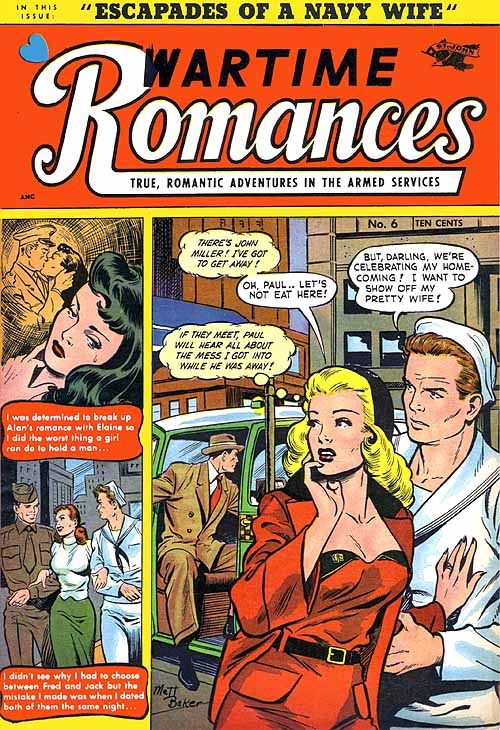
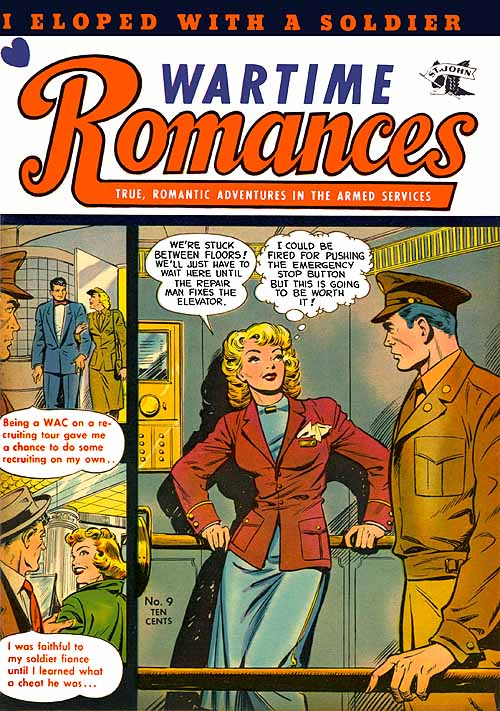
SIDENOTE: I know my mother read a lot of these romance comics when she was young, possibly some of these exact issues. Seeing ads for "pen pals wanted" makes me think that the pen pals she cultivated in England may have been set up through the ads in these comics.
Celebrating Jackie Ormes! #GoogleDoodlehttps://t.co/t6SmieCDOE— gmrstudios (@gmrstudios) September 1, 2020
https://en.wikipedia.org/wiki/Jackie_Ormes
MATT BAKER
http://cbldf.org/2016/02/profiles-in-black-cartooning-matt-baker/
Profiles in Black Cartooning: Matt Baker


Clarence Matthew Baker[1] (December 10, 1921 – August 11, 1959[2]) was an American comic book artist and illustrator, best known for drawing early comics heroines such as the costumed crimefighter Phantom Lady, and romance comics. Active in the 1940s and 1950s Golden Age of comic books, he is one of the first known African-American artists to find success in the comic-book industry.[3] He also penciled St. John Publications' digest-sized "picture novel" It Rhymes with Lust (1950), the first graphic novel despite that term not having been coined at the time.
Baker was inducted into the Will Eisner Comic Book Hall of Fame in 2009.[4] His influence can be seen in artists such as Dave Stevens and Adam Hughes.[5]
Biography
Early years
Baker was born December 10, 1921, in Forsyth County, North Carolina.[1] At a young age he relocated with his family to Pittsburgh, Pennsylvania,[1] and after graduating high school in 1940, moved to Washington, D.C.[1] Prevented by a heart condition from being drafted into the U.S. military during World War II, he began studying art at Cooper Union, in New York City.[1] He entered comics through the Jerry Iger Studio, one of the 1930s to 1940s "packagers" that provided outsourced comics to publishers entering the new medium.[6] Iger recalled that Baker came into his studio with a single sample of a color sketch in his portfolio; he thought the woman was so naturally beautiful that he hired Baker on the spot, as a background artist before he was given his first scripts.[7] Baker's first confirmed comics work is penciling and inking the women in the 12-page "Sheena, Queen of the Jungle" story in Fiction House's Jumbo Comics #69 (cover-dated Nov. 1944), otherwise penciled by Robert Webb and Alex Blum.[8][9]
Much of Baker's work was originally penciled backgrounds as well as female figures for other artists, and most of his work has been inked over, with the inker credited for his work. He quickly developed a reputation as one of the best "Good Girl" artists in the business for his attention to detail when drawing women.[7]
During this period, known as the Golden Age of Comic Books, Baker did work for publishers including Fiction House, Fox Comics, Quality Comics, and St. John Publications.[9] In later years, he independently teamed with inker Jon D'Agostino under the pseudonym "Matt Bakerino"[citation needed] at Charlton Comics.
Personal life
Baker's friend Frank Giusto[10] and artist Lee J. Ames have said that Baker was gay.[11] Baker's brother Fred Robinson added of Baker and St. John Publications publisher Archer St. John, "They had a very close relationship. I don't know exactly what it was."[12]
Phantom Lady

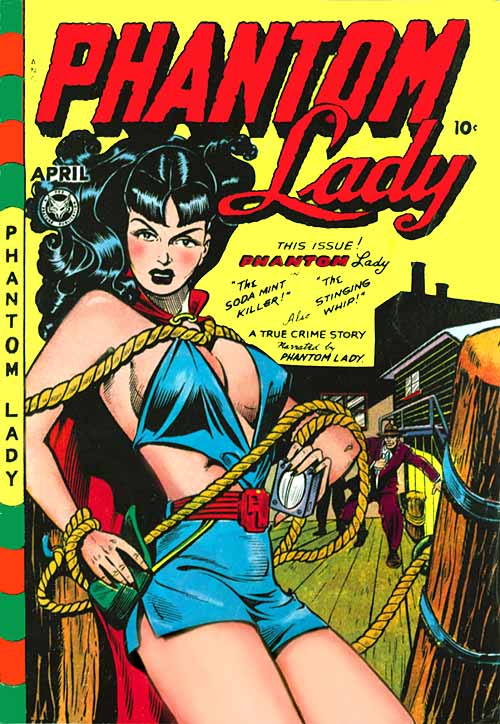
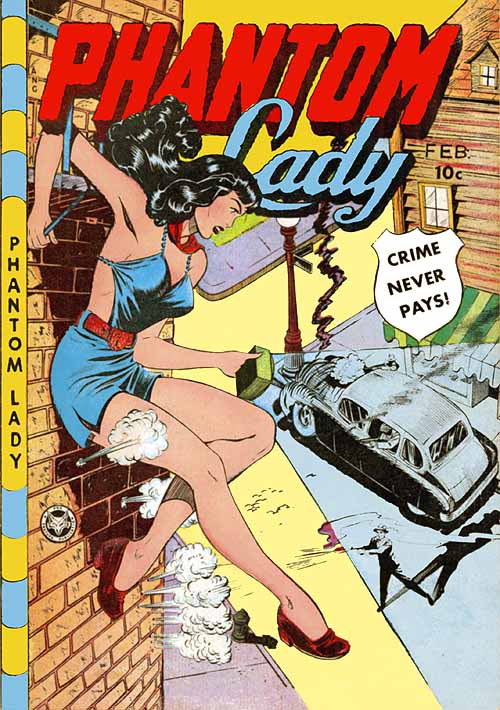
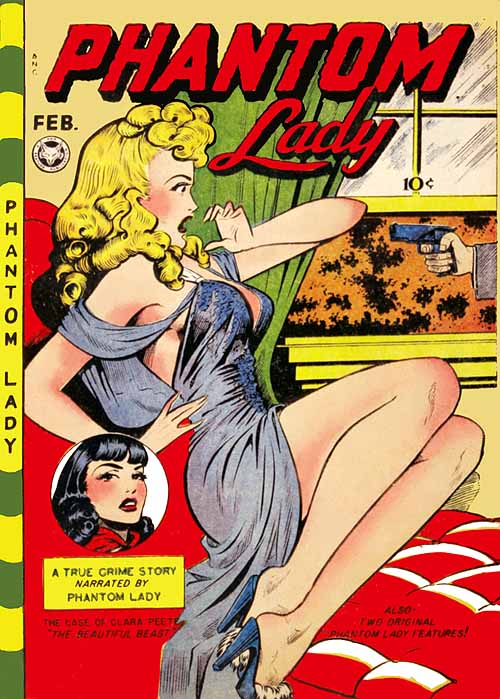
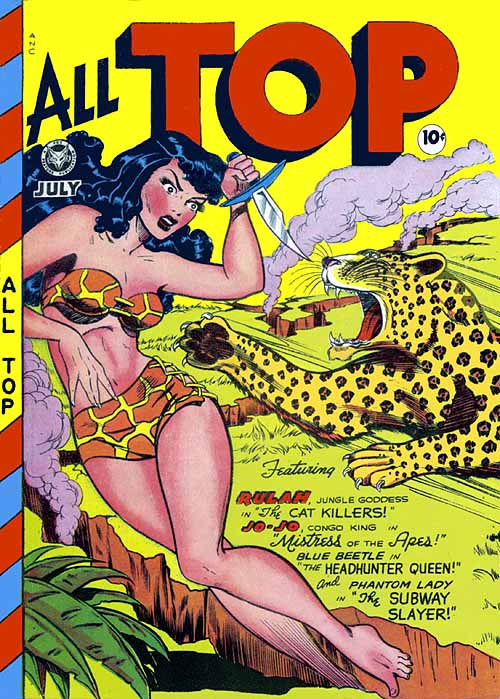
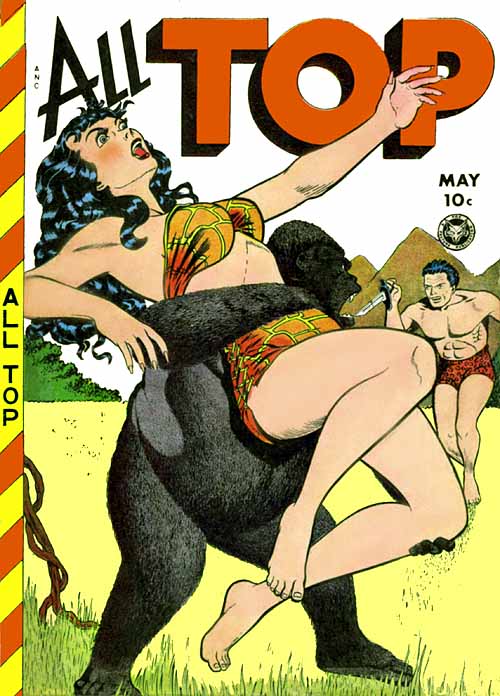
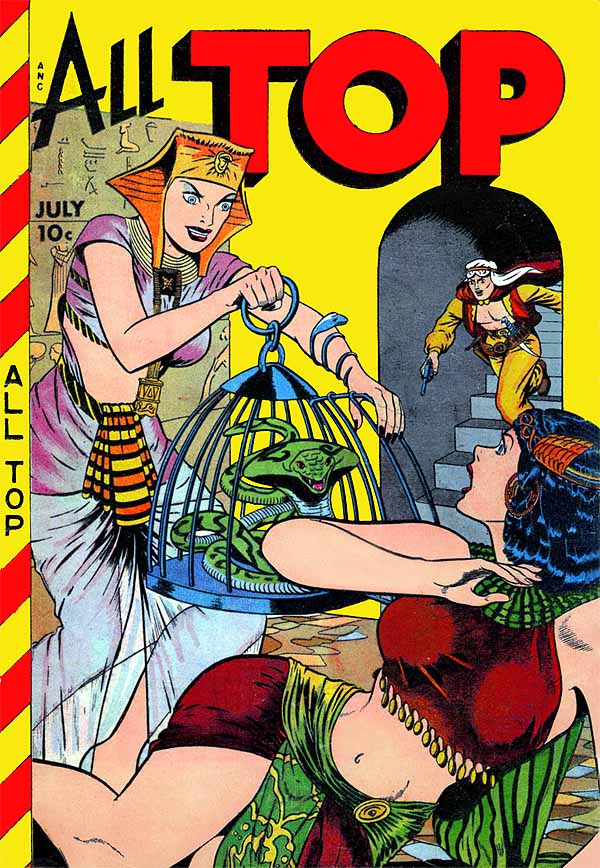
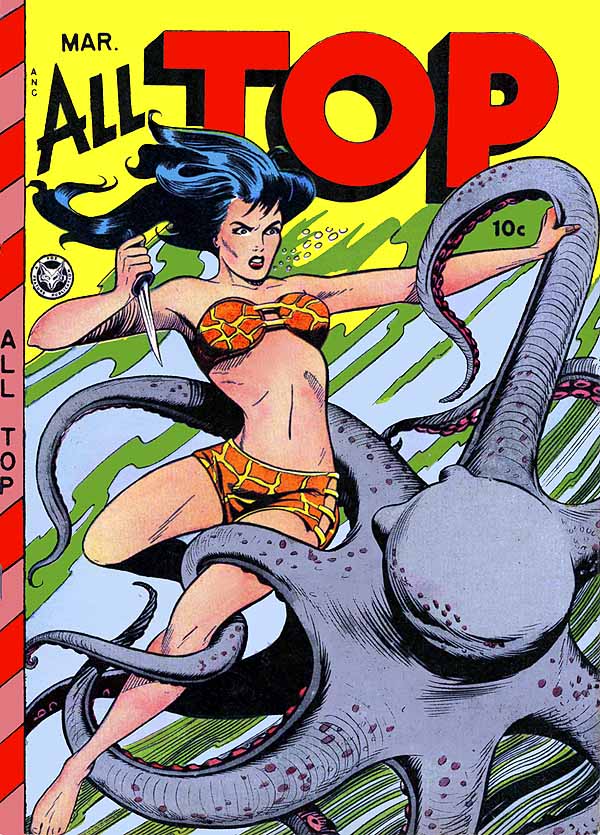
The character Phantom Lady, created by Arthur Peddy, had originated in 1941 as a Quality Comics feature supplied by the Iger Studio. Cartoonist Frank Borth later took over the art. After Quality dropped the feature, which had appeared in Police Comics #1-23 (Aug. 1941 – Oct. 1943), Iger supplied it to Fox Comics. Baker redesigned the character into her best-known incarnation. This version (generally but unconfirmably credited to writer Ruth Roche) debuted in Fox's Phantom Lady #13 (August 1947), the premiere issue after taking over the numbering of the canceled comic Wotalife; the title ran through issue #23 (April 1949). Baker's Phantom Lady also appeared as a backup feature in All Top Comics #9-16 (Jan. 1948 – March 1949).[13]
When psychiatrist Frederick Wertham claimed comics had ill effects on a child's psychological development, he used Baker's Phantom Lady #17 as a key sample. These criticisms led to the 1954 foundation for the Comics Code Authority and decades of industry-controlled censorship.[14]
Other work

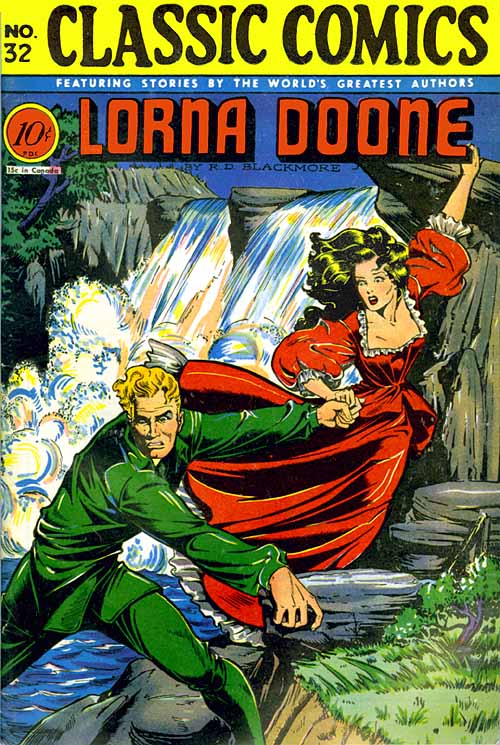
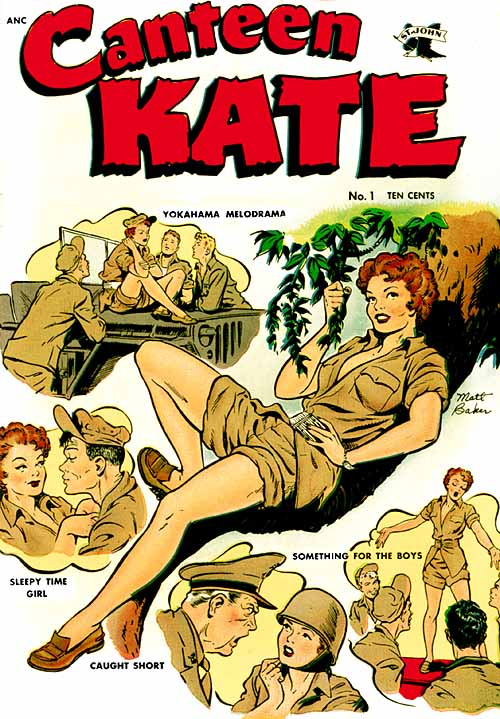
His other artwork for comic books includes the light-humor military title Canteen Kate, for which Baker drew all 22 installments,[15] as well as stories in the suspense anthology Tales of The Mysterious Traveler; the comedic-adventure feature "Sky Girl" in Fiction House's Jumbo Comics, with originals and later reprints running from #69-139 (November 1944 – December 1952); the jungle adventure "Tiger Girl"; "Flamingo", "South Sea Girl", "Glory Forbes", "Kayo Kirby"; and "Risks Unlimited". Baker illustrated Lorna Doone for Classic Comics in December 1946, his one and only contribution to the well-known series.[16] He is the generally credited but unconfirmed artist for Fox's Rulah, Jungle Goddess #17–27 (Aug. 1948 – June 1949, the title's complete run after having taken over the numbering of the defunct Zoot Comics). He also produced Flamingo as a syndicated comic strip from 1952 through 1954.[citation needed] His pen names include Curt Davis.[17] Baker shaped women into classy, realistic beauties, full of character in their own stories as opposed to the ways women were portrayed in other comics of the time.[18]
In addition to several romance comics and other titles for St. John Publications, Baker penciled an early form of graphic novel, St. John's digest-sized "picture novel" It Rhymes with Lust (1950), with writers Arnold Drake and Leslie Waller, writing under the pseudonym "Drake Waller."
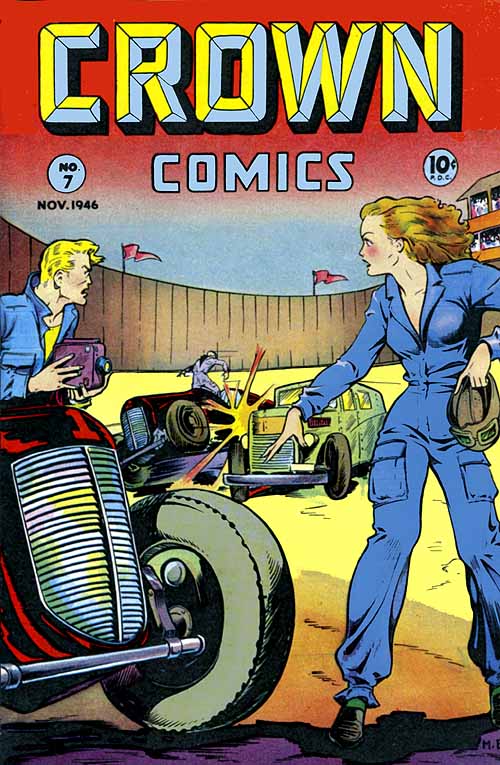
Baker also created or co-created what writer John Arcudi calls "the first known black hero in American comics."[19] The Tarzan-like jungle hero Voodah, drawn by Baker and scripted by an unknown writer, debuted in the publisher McCombs' Crown Comics #3 (cover-date Fall 1945, on-sale date Sept. 19, 1945).[20] As the Grand Comics Database states, based on art credits from "The Matt Baker Checklist" by Alberto Becattini and Jim Vadeboncoeur Jr. in Matt Baker: The Art of Glamour (cited under References), "Voodah is colored like a native African in this comic, but after this issue he is colored like a Caucasian." He additionally is Caucasian on the cover.[20]
Later work and death
Later in the decade, Baker freelanced for Atlas Comics, the 1950s forerunner of Marvel Comics, beginning with a five-page anthological story generally, if unconfirmably, credited to writer-editor Stan Lee, in the omnibus title Gunsmoke Western #32 (Dec. 1955). At some point during this period, working through artist Vince Colletta's studio, Baker went on to draw stories for Atlas' Western Outlaws, Quick Trigger Action, Frontier Western, and Wild Western; more prolifically for the company's romance comics Love Romances, My Own Romance, and Teen-Age Romance; and one story each for the supernatural/science fiction anthologies Strange Tales, World of Fantasy, and Tales to Astonish ("I Fell to the Center of the Earth!" in issue #2, March 1959). Baker also supplied artwork for the Dell Movie Classic edition of King Richard and the Crusaders.[21]
In the late fifties, he branched out into illustration work, for instance for the 16-page illustrated condensation he did of Howard J. Lewis' The Complete Guide to Better Bowling (1956, Maco Magazine Corporation) for the General Motors' Information Rack Service number 1R-58-46 [22] and the early issues of the St. John detective pulp digest Manhunt [23]
His last known confirmed work is the six-page "I Gave Up the Man I Love!" in Atlas Comics' My Own Romance #73 (Jan. 1960).[9] His last known work as generally credited but unconfirmed is the first page of the six-page story "Happily Ever After" in Marvel's Love Romances #90 (Nov. 1960).
He died of a heart attack on August 11, 1959 in New York City.[2][24][25]
Awards
Baker was inducted into the Will Eisner Comic Book Hall of Fame in 2009.[4]
References
- Becattini, Alberto, in Amash, Jim; Nolen-Weathngton, Eric, eds. (2012). "Part One: Meet Matt Baker: Baker of Cheesecake: An Appreciation of Matt Baker, Good Girl Artist Supreme". Matt Baker: The Art of Glamour (PDF). TwoMorrows Publishing. p. 36. ISBN 978-1605490328.
{{cite book}}:|first2=has generic name (help) - Matt Baker at the Lambiek Comiclopedia
- Amash, Jim; Nolen-Weathngton, Eric, eds. (2012). "Part One: Meet Matt Baker: Baker of Cheesecake: An Appreciation of Matt Baker, Good Girl Artist Supreme". Matt Baker: The Art of Glamour (PDF). TwoMorrows Publishing. p. 36. ISBN 978-1605490328.
{{cite book}}:|first2=has generic name (help) Note: Artist credits were not routinely given in comic books in the 1940s, so comprehensive credits are difficult if not impossible to ascertain. - "2009 Eisner Award winners". Comic-Con.org. Archived from the original on August 12, 2010. Retrieved January 14, 2011.
- Baker, Matt. Phantom Lady, Verotik, 1994, cover.
- Becattini, p. 37
- "Matt Baker - First Black Comic Artist | Great Black Heroes". www.greatblackheroes.com. January 14, 2016. Archived from the original on December 6, 2017. Retrieved December 5, 2017.
- Schelly, William (2013). American Comic Book Chronicles: The 1950s. TwoMorrows Publishing. p. 67. ISBN 9781605490540.
- Matt Baker at the Grand Comics Database
- Amash, Jim; Nolen-Weathington, Eric, eds. (2012). Matt Baker: The Art of Glamour. Raleigh, North Carolina: TwoMorrows. p. 128. ISBN 9781605490328.
- Amash, Nolen-Weathington, p. 153.
- Amash, Nolen-Weathington, p. 119.
- Phantom Lady at Don Markstein's Toonopedia
- "Comic Book DB - The Comic Book Database". comicbookdb.com. Retrieved December 5, 2017.
- Ringgenberg, Steven; Procopio, Joseph V. (2013). The Lost Art of Matt Baker: The Complete Canteen Kate. Silver Spring, Maryland: Picture This Press. ISBN 978-0-9829276-6-3.
- William B. Jones, Jr., Classics Illustrated: A Cultural History, with Illustrations (Jefferson, NC, and London: McFarland & Co., Inc., 2002), p. 44.
- As in, for example, the feature "Stuart Taylor in Weird Stories of the Supernatural" in Jumbo Comics #105 (Nov. 1947)
- "Profiles in Black Cartooning: Matt Baker | Comic Book Legal Defense Fund". cbldf.org. February 5, 2016. Retrieved December 5, 2017.
- Arcudi, John (July 17, 2019). "African American Comic Artists Through History, Part 4". Rumble. No. 14. Image Comics. Retrieved September 10, 2019.
- Crown Comics #3 at the Grand Comics Database.
- Jones, Classics Illustrated: A Cultural History, p. 45.
- "A Guide To Better Bowling". February 7, 2021.
- "Manhunt Illustrations". November 4, 2014.
- Duin, Steve; Richardson, Mike (1998). Comics Between the Panels. Dark Horse Books. p. 39. ISBN 978-1569713440.
- Chamberlain, Gaius (January 14, 2016). "Matt Baker". Great Black Heroes. Archived from the original on June 15, 2020. Retrieved November 22, 2019.
Further reading
- Booker, M. Keith (2010). Encyclopedia of Comic Books and Graphic Novels. Vol. 1. ABC-CLIO. p. 45.
- Quattro, Ken (2020). Invisible Men: Black Artists of The Golden Age of Comics
External links
- Strickler, Dave. Syndicated Comic Strips and Artists, 1924-1995: The Complete Index. Cambria, California: Comics Access, 1995. ISBN 0-9700077-0-1
- Black Superhero Hype: Matt Baker
- Matt Baker artwork at American Art Archives web site
- Matt Baker Canteen Kate video
Matt Baker (1921 - 1959) Golden Age comic artist, specializing in Good Girl Art for adventure and romance comics, but also involved with adventure and western titles. Special thanks to Dan Kurdilla for helping with this page. |
Phantom Lady (1948) Baker, Matt - 001
|
Phantom Lady (1949) Baker, Matt - 002
|
Phantom Lady (1948) Baker, Matt - 003
|
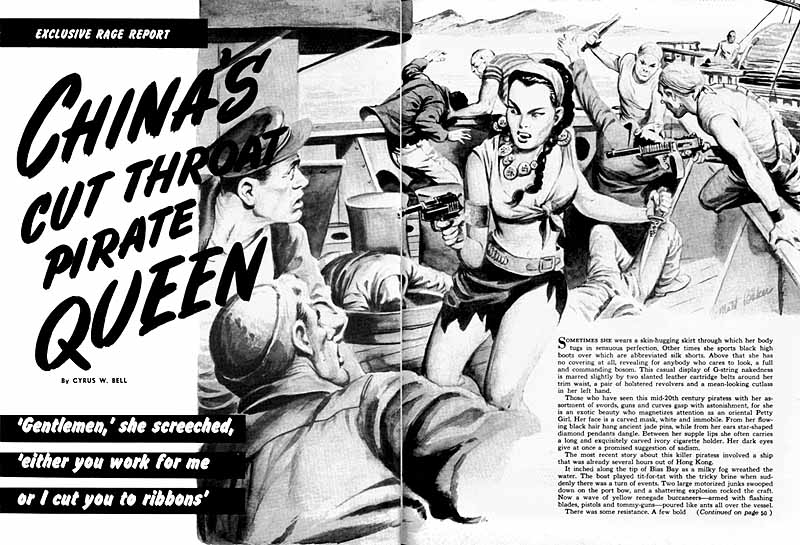
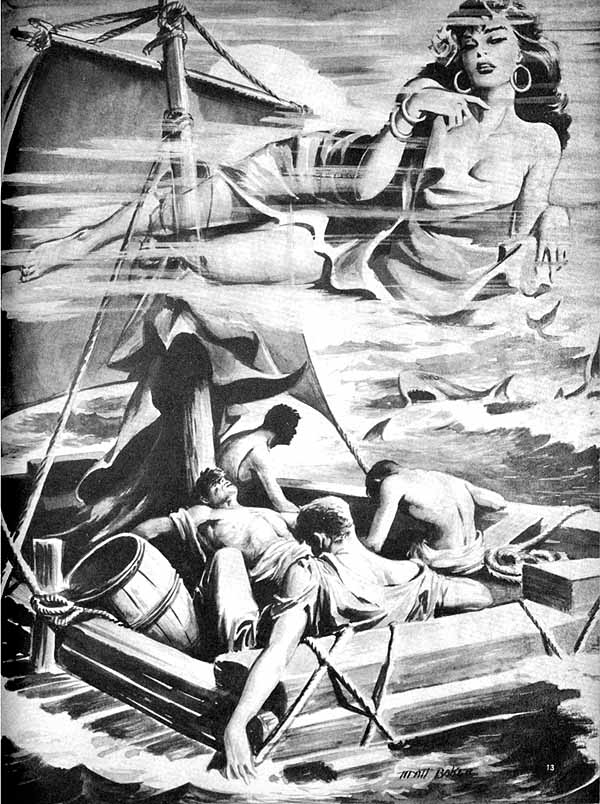
Rage For Men, "China's Cut Throat Pirate Queen" (1957) Baker, Matt - 004
|
Rage For Men, My Escape From The Isle of Death" (1957) Baker, Matt - 005
|
All Top (1948) Baker, Matt - 006
|
All Top (1949) Baker, Matt - 007
|
Classic Comics, "Lorna Doone" (1946) Baker, Matt - 008
|
Crown Comics (1948) Baker, Matt - 009
|
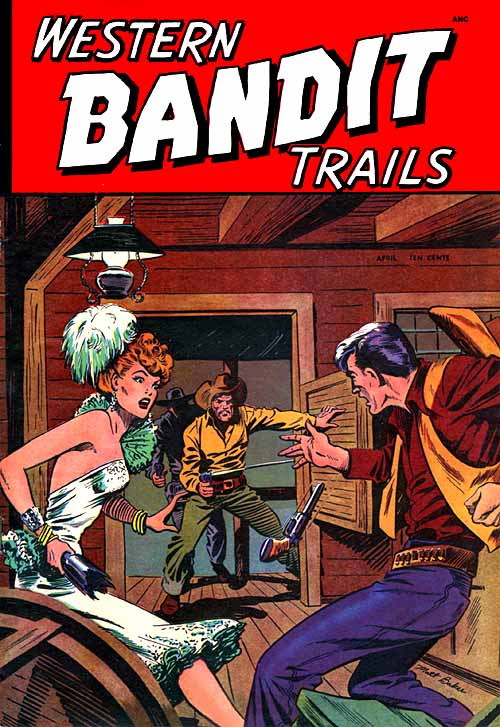
Western Bandit Trails (1949) Baker, Matt - 010
|
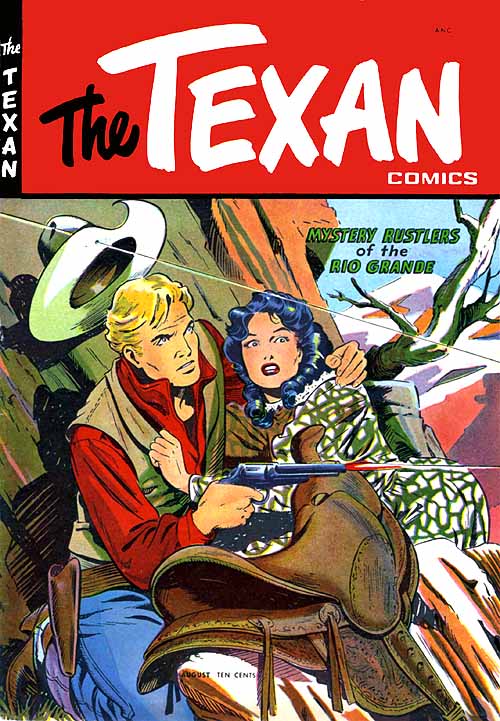
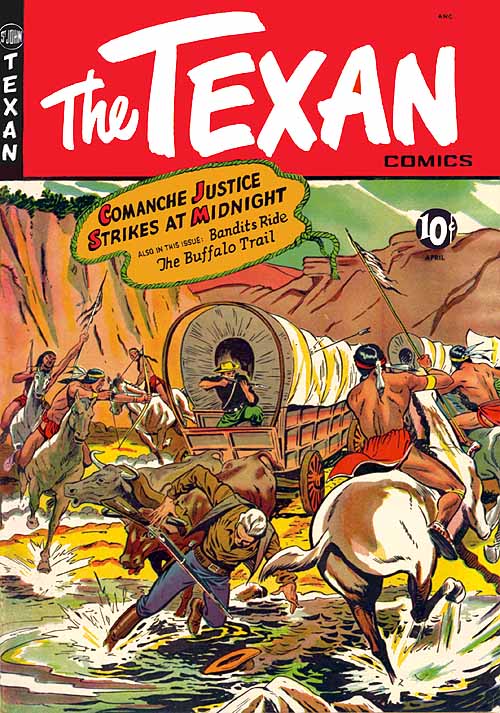
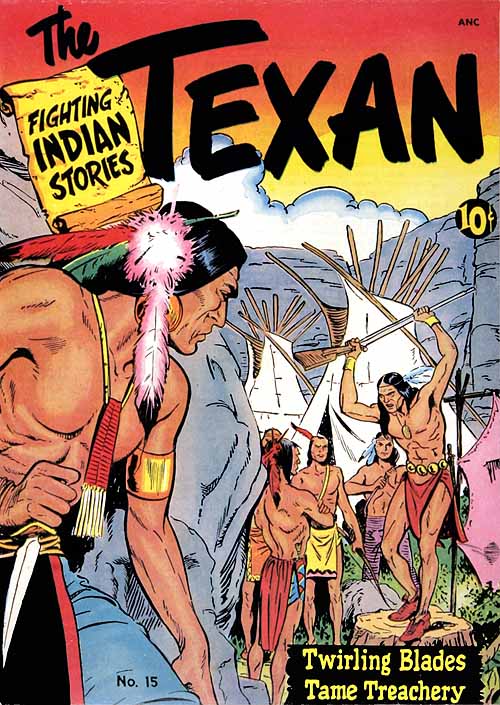
The Texan (1949) Baker, Matt - 011
|
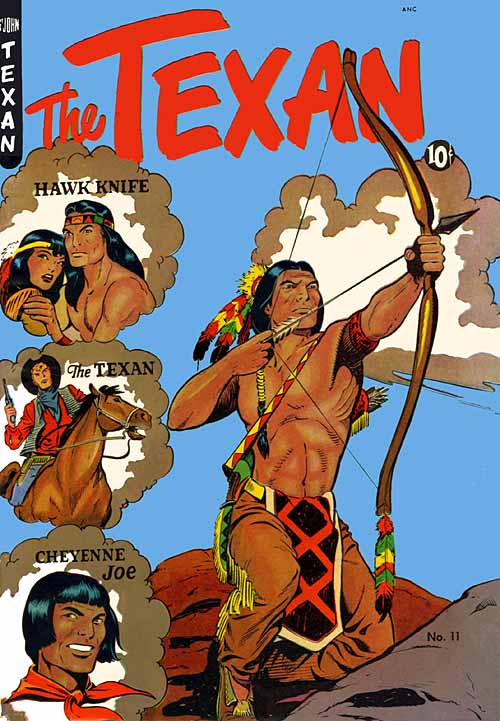
The Texan (1950) Baker, Matt - 012
|
The Texan (1950) Baker, Matt - 013
|
The Texan (1951) Baker, Matt - 014
|
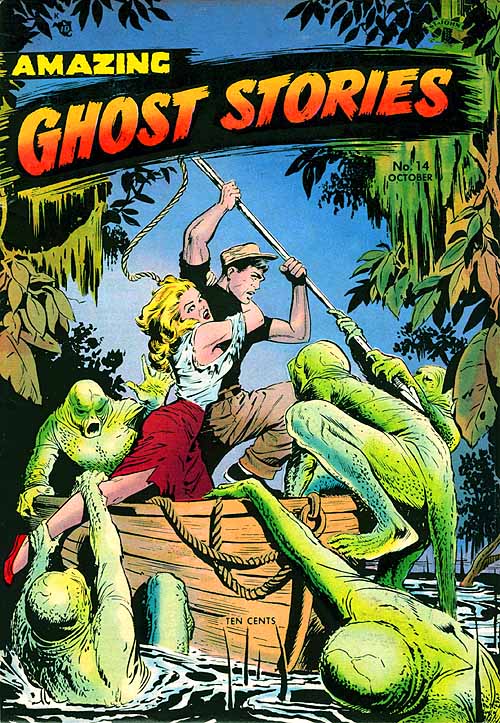
Amazing Ghost Stories (1954) Baker, Matt - 015
|
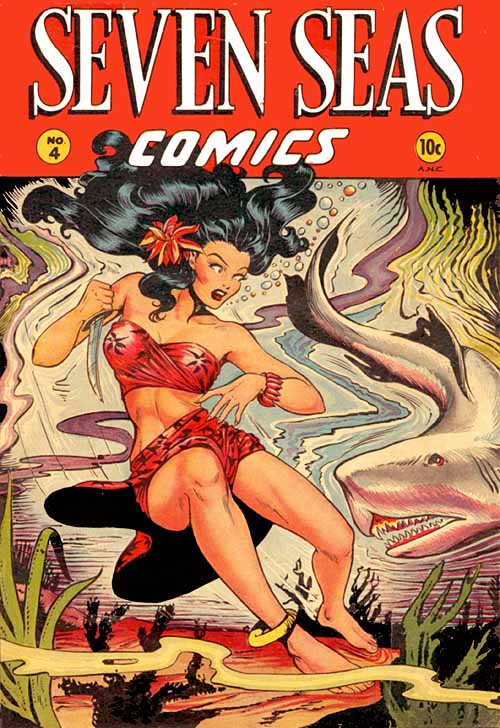
Seven Seas Comics (1947) Baker, Matt - 016
|
Canteen Kate (1952) Baker, Matt - 017
|
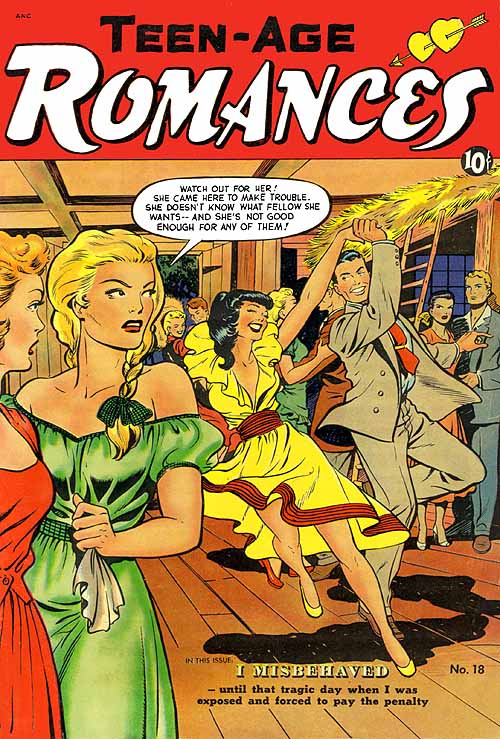
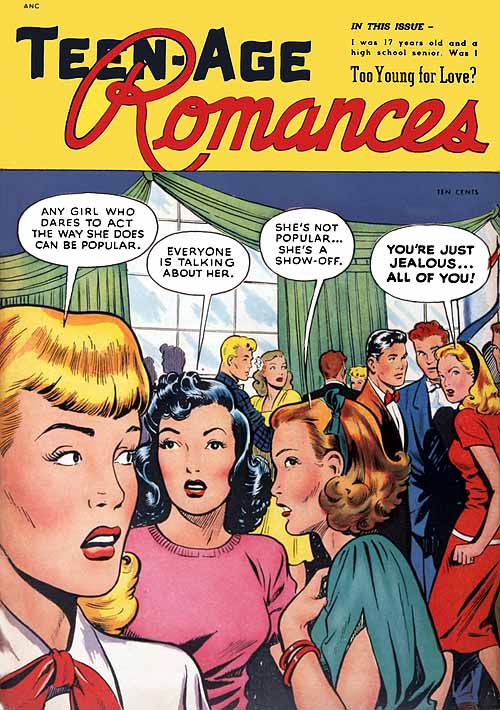
Teen-Age Romances (1951) Baker, Matt - 018
|
Teen-Age Romances (1949) Baker, Matt - 019
|
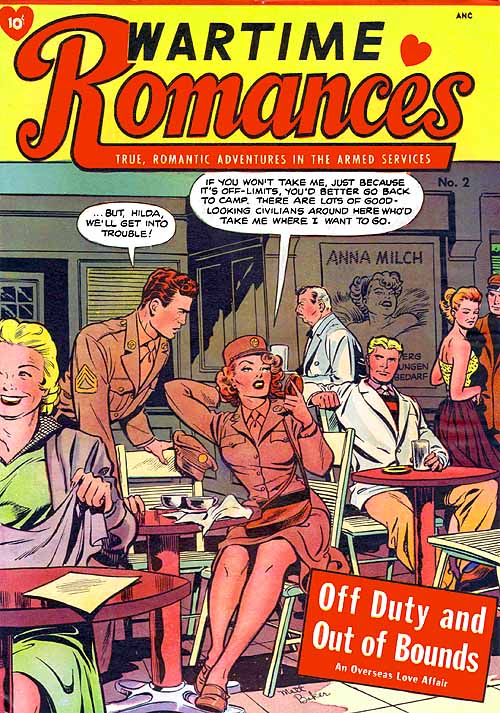
Wartime Romances (1951) Baker, Matt - 020
|
Wartime Romances (1951) Baker, Matt - 021
|
Wartime Romances (1951) Baker, Matt - 022
|
All Top (1949) Baker, Matt - 023
|
All Top (1949) Baker, Matt - 024
|


+++++++++++++++++++++++++++++++++++++++++++++++++++++++++++++++++++++++
+++++++++++++++++++++++++++++++++++++++++++++++++++++++++++++++++++++++
- Bloggery committed by chris tower - 2603.01 - 10:10
- Days ago: MOM = 3895 days ago & DAD = 549 days ago
- New note - On 1807.06, I ceased daily transmission of my Hey Mom feature after three years of daily conversations. I plan to continue Hey Mom posts at least twice per week but will continue to post the days since ("Days Ago") count on my blog each day. The blog entry numbering in the title has changed to reflect total Sense of Doubt posts since I began the blog on 0705.04, which include Hey Mom posts, Daily Bowie posts, and Sense of Doubt posts. Hey Mom posts will still be numbered sequentially. New Hey Mom posts will use the same format as all the other Hey Mom posts; all other posts will feature this format seen here.


No comments:
Post a Comment