
I am reprinting a post from last year that in turn reprints many other posts, but I have also added new material that appears first.
Link to the original post I am reprinting below:

- Eggers' Version: Expected to be a gothic horror adaptation, but timing is TBD after his Werwolf.
- Ti West's Version: Releasing November 13, 2026, with Johnny Depp as Scrooge.
Dreadful apparition, why do you trouble me?
[a holiday cerebration]
[Given that this missive includes twelve footnotes, I might do well to remind you that you don’t have to violently scroll down and up and down and up to read them; you can simply, depending on what sort of machine you’re reading on, hover over or click on the superscript numbers, and the footnotes will make themselves available to you.]
Tomorrow, December 19, is the 182nd anniversary of the publication of Charles Dickens’s A Christmas Carol, and if you’ve worked in publishing more recently than 1843 you might well be thinking right this moment: That’s rather late for Christmas sales, innit.
Indeed, nowadays one would expect a Very Special Holiday Volume by a noted writer to go on sale no later than U.S. Thanksgiving week,1 the better to move a ton of books in that key month between the big birds.2 And quite possibly that Very Special Holiday Volume would makes its way into the world, and the marketplace, with all the publishing bells and whistles known to humankind, including four-color illustrations3 throughout,4 a decorative case,5 embossing and/or foil on the jacket,6 perhaps a ribbon marker, and perhaps even those sprayed edges that were not yet a big thing when I retired from Random House almost precisely two years ago but are now, I’m advised, endemic.7
In any event, however you wrap it, or slice it, A Christmas Carol is a masterly8 novella,9 and I do tend to read it annually around this time of year, because it’s simply, besides blessedly short, so much fun.10
Plus I like my rituals.
And I do also tend, annually around this time of year, to ruminate on the fate of Jacob Marley, specifically:
Does Jacob Marley’s labor in the service of Scrooge’s redemption redeem Marley himself and free him of his chains?
People’s answers to this question (which I tend to post publicly, annually around this time of year) are often detailed and (to me) fascinating,11 so in the service of detail and fascination I’m going to leave the comments on this week’s missive open to all and even sundry. Feel free to weigh in!12 And if you have any other more or less relevant questions, feel free. I’m in rather a chatty mood today.
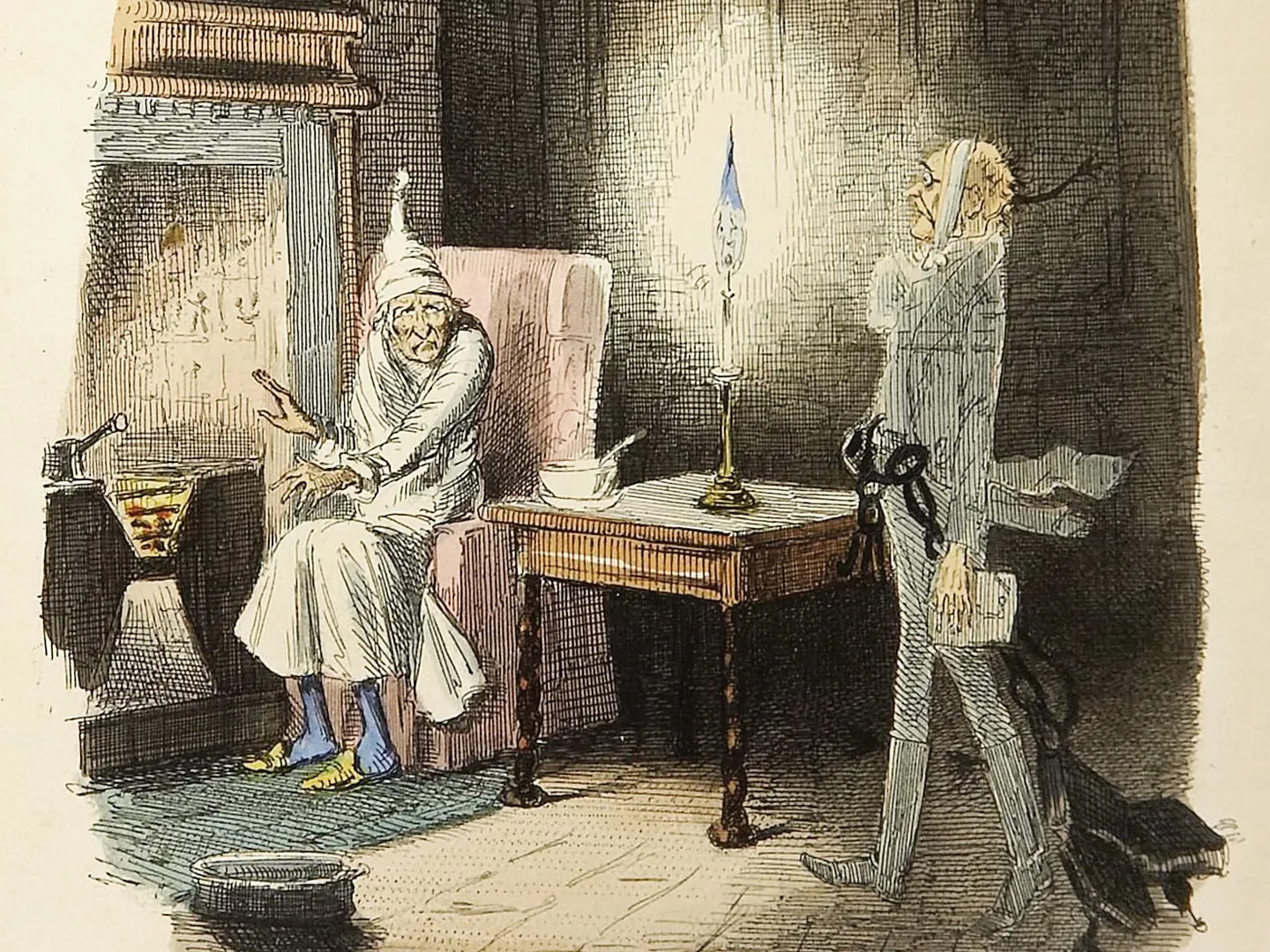
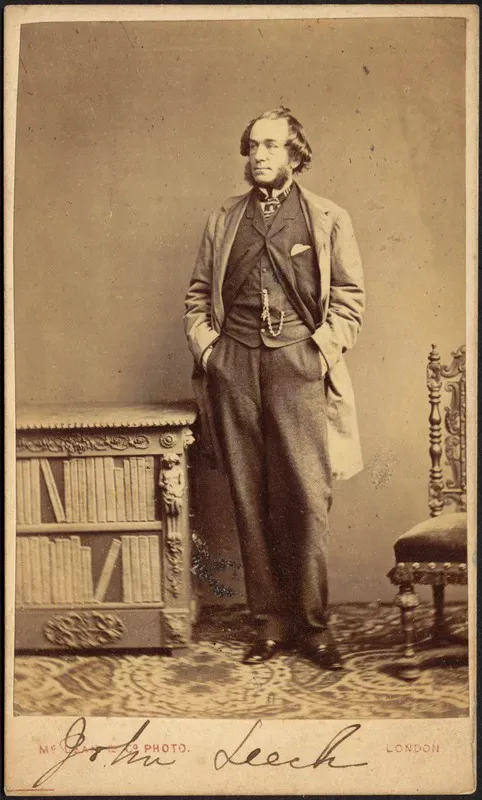
In the United States, books almost invariably go on sale on Tuesday, for myriad stated, and possibly accurately stated, reasons that I don’t need to enumerate here. In Great Britain, Tuesdays are Thursdays, for presumably different myriad stated, and possibly accurately stated, reasons.
Both goose (“with apple-sauce and mashed potatoes”) and turkey make appearances in the Carol, but of course it’s turkey—the “prize Turkey” from “the Poulterer’s, in the next street but one, at the corner”—for the celebrated finale. “What, the one as big as me?” Et cetera.
In normal-people terms: color illustrations.
Which would then also mandate the best-quality paper.
The case is that solid thing holding a hardcover book’s pages together. I just a second ago rapped my knuckles against the hardcover case nearest to my fingers, as if to prove that one can indeed rap one’s knuckles against a hardcover case and make a jaunty, bracing noise. One indeed can. The hardcover in question: Three Plays by [Harley] Granville Barker: The Marrying of Ann Leete, The Voysey Inheritance, and Waste. I’ve pretty much concluded my recent John van Druten spree; now it’s Harley’s turn.
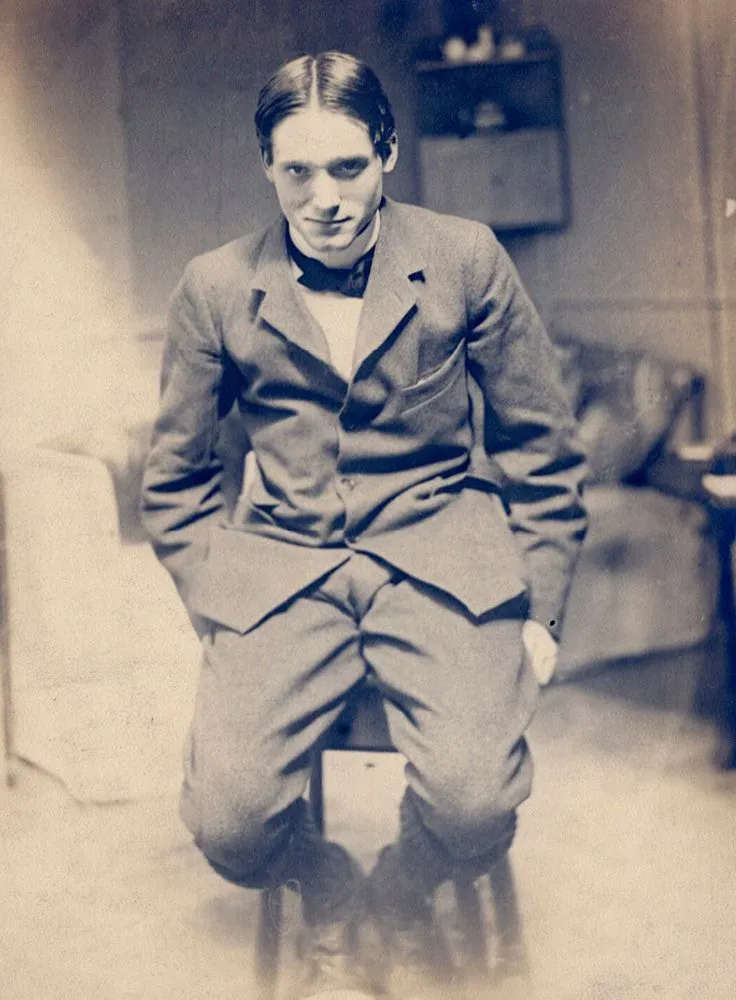
The detachable paper thing that wraps around a hardcover is a jacket (a dust jacket if you want to be old-school about it). Till the day I die, and possibly even beyond that day, I will remain molecularly incapable of referring to a jacket as, as many folk do, a cover. Paperbacks have covers.
As I was saying.
One less thing for me to fret over, along with the encroachment of AI.
I was taught, long ago, to use “masterly” to mean “expert”/“accomplished” and to reserve “masterful” for “domineering”/“bossy.” I’ve learned, though, that this is a somewhat bogus distinction, as I’ve also learned, through repeated pushback, that many writers can’t abide the word “masterly.” (I have no idea why they can’t abide it, and I try not to ask; for the record, the adverbial form of the adjective “masterly” is also “masterly,” though I attempt every now and then to get away with “masterlily,” just to vex people. As far back as 1820 the writer George Beard, in his Introduction to English Grammar, admitted that constructions like “masterlily,” to say nothing of “godlily” and “heavenlily,” were “disagreeable to the ear” and thus “could never gain admittance into common use.” Well, he’s not wrong.) In any event, I’ve stopped attempting to impose “masterly” on those many writers’ writing, though I like it well enough for my own use. Feel free to observe the distinction or not as you see fit. There are, I’d say, many better battles to fight.
The Carol weighs in at about thirty thousand words, which, I’d say, indeed qualifies it to be called a novella, noting, though, that most modern publishers, at least in my experience, would rather literally die than refer to a novella as a novella, so you wouldn’t be surprised to see the Carol published today with the subtitle “A Novel.”
I’ve also written about it before (I like everything about my little essay of 2022 except its ghastly headline), and I think that this link should get you there without fuss (or payment to a formerly, sigh, respectable newspaper).
I know it’s not the norm in online discourse, but I’m endlessly fascinated by clever ideas put forth by people who aren’t me.
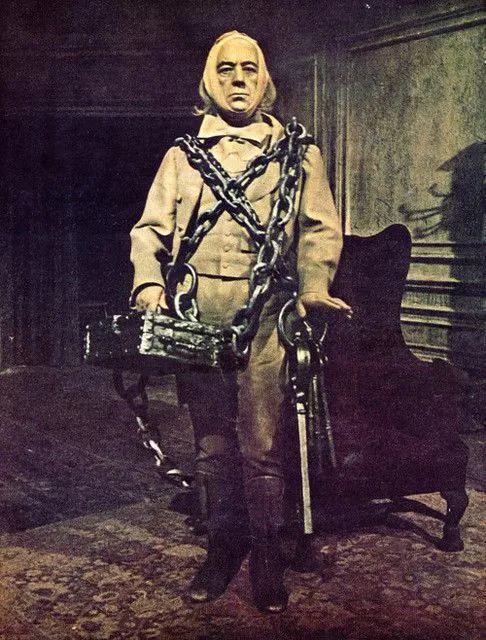
My pet theory, based less on Dickens than on Alec Guinness’s exuberant performance in the 1970 musical filming of A Christmas Carol titled Scrooge, is that Marley has already been redeemed and is well aware of the fact, and he’s leaning into all that shrieking and chain rattling for the sheer fun of it.
Why Dicken’s Scrooge still walks among us at Christmas, 182 years on?
Britain in 2025 has lessons to earn from that great work of the writer
By Keith Flett
LONDON: Charles Dickens’s Christmas Carol was published on December 19 1843. Eleven days later the Chartist Northern Star had this response, which was headed “a Christmas Carol”:“According to annual and praise-worthy custom the unfortunate inmates both of the workhouse and prison throughout the metropolis, will, upon Christmas-day be regaled with the usual good fare of the season. The proportions of the allowances will vary slightly in different institutions, but in all & good dinner will be provided.”
There followed a poem noting that on one day a year workhouse inhabitants ate decently but for the other 364 days it noted: “Come to-morrow how it will; Diet scant and usage rough.”The message of a Christmas Carol remains perpetually relevant in a market capitalist society and several updated stage versions of the Dickens classic are being performed around the country this year.
Before the 2019 general election at a hustings Jeremy Corbyn was asked what he would give Boris Johnson for a Christmas present.“I know Mr Johnson likes a good read,” he said, “so what I would probably leave under the tree for him would be A Christmas Carol by Charles Dickens, and he could then understand how nasty Scrooge was.”
Dickens’s story focused on Scrooge in his City of London counting house seeing the error of his ways and ultimately through a familiar device of festive fiction-ghosts-making amends. His employee Bob Cratchit’s family did get a Christmas turkey.However the attitudes that the liberals of the 1840s displayed on helping the less well-off and indeed on turkeys remain at the centre of right-wing thought.
Bob Cratchit’s family getting a turkey didn’t go down well with the liberals of the day. Commenting on the book in passing in the Westminster Review in 1844, a reviewer noted that since there weren’t enough top-notch turkeys to go round if the lower orders like the Cratchits got one, than others — the deserving rich — would not.
“Who went without turkey and punch in order that Bob Cratchit might get them — for, unless there were turkey and punch in surplus, someone must go without — is a disagreeable reflection kept wholly out of sight,” wrote William Bridges Adams in the Westminster Review, 1844.
The Times reported in 2022 that researchers think Henry VIII was responsible for bringing the turkey to Britain. Its editorial rightly noted that it is the bird of choice for those who eat poultry and that it features in Dickens’s Christmas Carol. It missed the point, perhaps deliberately, about why Dickens had Scrooge buy the Cratchits a turkey.
The poor in the 1840s would eat goose at Christmas if they could afford it. Turkeys were unaffordable except for the rich. Dickens was attacking a market system that rationed food by class. Dickens also focused on the wider attitude of the wealthy to the less well-off.
Scrooge is visited by “two portly gentlemen” seeking to collect funds for the poor at Christmas. They tell him that “many thousands are in want of common necessaries; hundreds of thousands are in want of common comforts.”
Scrooge asks the charity collectors if by some chance the workhouses and prisons are no longer operating. He goes on to make it clear that he will be contributing nothing to the less well off at Christmas: “I don’t make myself merry at Christmas and I can’t afford to make idle people merry. I help to support the establishments I have mentioned (prisons and workhouses): they cost enough: and those who are badly off must go there.”
While exact policies do vary a little it’s a reminder that Scrooge remains with us at Christmas 2025 with politicians from Labour, Tory and Reform. (IPA Service)
Link to the original post I am reprinting below:

The greatest story ever written -- "A Christmas Carol" by Charles Dickens -- was published on this date, December 19th, 181 years ago, in 1843.
I am listening to two versions this year. I started with the Patrick Stewart version because I love him, and I have never listened to that one. However, it's abridged and altered for his performance.
I liked it, but I had to listen to another to get the full effect.

A Christmas Carol (Simon & Schuster Edition)
- Narrated by: Patrick Stewart
- Length: 1 hr and 47 mins
- Abridged Audiobook
- Release date: 09-25-06
- Language: English
- Publisher: Simon & Schuster Audio
I listened to this version also, which is not only unabridged, but it's nearly an hour longer due to special effects, carols, and pacing. The large cast as opposed to a single narrator is great. Very enjoyable. I also add to my library a version narrated by Hugh Grant, but I doubt I want to do THREE versions, despite how much I love this story.

A Christmas Carol
- Narrated by: Sir Derek Jacobi, Kenneth Cranham, Roger Allam, Brendan Coyle, Miriam Margolyes, Tim Mcinnerny, Jamie Glover, Emily Bruni, Jenna Coleman, Joshua James, Hugh Skinner
- Length: 3 hrs and 31 mins
- Radio/TV Program
- Release date: 12-04-18
- Language: English
- Publisher: Audible Originals
Though I have not considered my forthcoming argument compared to other stories, I have been asserting that "A Christmas Carol" is the mostly finely crafted, well-written, most enjoyable, and favorite stories of all time. If I were to think about it, maybe I could think of other comparable stories or those for which the argument could b made from an artistic point of view as superior to this Dickens tale. However, when one considers longevity and influence, the way that this story rejuvenated the celebration of Christmas and fixed many of its traditions in stone, then there is no contest. This story reigns supreme.
The story is my favorite piece of fiction, and I love having this tradition of re-reading it annually (or at least listening to it, which I may like even better in this case).
Thanks for tuning in.
Happy Christmas!
Here's my other Dickens posts, two of which (#2866 and #1396) are reprinted below.
LOW POWER MODE: I sometimes put the blog in what I call LOW POWER MODE. If you see this note, the blog is operating like a sleeping computer, maintaining static memory, but making no new computations. If I am in low power mode, it's because I do not have time to do much that's inventive, original, or even substantive on the blog. This means I am posting straight shares, limited content posts, reprints, often something qualifying for the THAT ONE THING category and other easy to make posts to keep me daily. That's the deal. Thanks for reading.

A Sense of Doubt blog post #2866 - Hear Neil Gaiman Read A Christmas Carol Just Like Charles Dickens Read It
I always read/listen to "A Christmas Carol" at least once each year at this time of the season. Now, I have to explore Gaiman's reading as I usually listen to one of the half dozen I have saved in my library, usually the one by Tim Curry.
https://www.openculture.com/2022/12/hear-neil-gaiman-read-a-christmas-carol-just-like-charles-dickens-read-it.html
Hear Neil Gaiman Read A Christmas Carol Just Like Charles Dickens Read It
in Audio Books, Literature | December 15th, 2022In Christmases past, we featured Charles Dickens’ hand-edited copy of his beloved 1843 novella A Christmas Carol. He did that hand editing for the purposes of giving public readings, a practice that, in his time, “was considered a desecration of one’s art and a lowering of one’s dignity.” That time, however, has gone, and many of the most prestigious writers alive today take the reading aloud of their own work to the level of art, or at least high entertainment, that Dickens must have suspected one could. Some writers even do a bang-up job of reading other writers’ work: modern master storyteller Neil Gaiman gave us a dose of that when we featured his recitation of Lewis Carroll’s “Jabberwocky” from memory. Today, however, comes the full meal: Gaiman’s telling of A Christmas Carol straight from that very Dickens-edited reading copy.
Gaiman read to a full house at the New York Public Library, an institution known for its stimulating events, holiday-themed or otherwise. But he didn’t have to hold up the afternoon himself; taking the stage before him, BBC researcher and The Secret Museum author Molly Oldfield talked about her two years spent seeking out fascinating cultural artifacts the world over, including but not limited to the NYPL’s own collection of things Dickensian. You can hear both Oldfield and Gaiman in the recording below. But perhaps the greatest gift of all came in the form of the latter’s attire for his reading: not only did he go fully Victorian, he even went to the length of replicating the 19th-century literary superstar’s own severe hair part and long goatee. And School Library Journal has pictures. The story really gets started around the 11:00 mark. Gaiman’s reading will be added to our list of Free Audio Books. You can find the text of Dickens’ classic here.
Neil Gaiman reads "A Christmas Carol" - New York Public Library
Note: An earlier version of this post appeared on our site in December 2014.
Related Content:
An Oscar-Winning Animation of Charles Dickens’ Classic Tale, A Christmas Carol (1971)
Charles Dickens’ Hand-Edited Copy of His Classic Holiday Tale, A Christmas Carol
Hear Charles Dickens’ A Christmas Carol Read by His Great-Granddaughter, Monica
Based in Seoul, Colin Marshall writes and broadcasts on cities, language, and culture. His projects include the Substack newsletter Books on Cities, the book The Stateless City: a Walk through 21st-Century Los Angeles and the video series The City in Cinema. Follow him on Twitter at @colinmarshall or on Facebook.
+++++++++++++++++++++++++++++++++++++++++++++++++++++++++++++++++++++++
+++++++++++++++++++++++++++++++++++++++++++++++++++++++++++++++++++++++
+++++++++++++++++++++++++++++++++++++++++++++++++++++++++++++++++++++++
- Bloggery committed by chris tower - 2212.23 - 10:10
- Days ago = 2730 days ago
+++++++++++++++++++++++++++++++++++++++++++++++++++++++++++++++++++++++
+++++++++++++++++++++++++++++++++++++++++++++++++++++++++++++++++++++++
+++++++++++++++++++++++++++++++++++++++++++++++++++++++++++++++++++++++


A Sense of Doubt blog post #1396 - Christmastime Is Here - part two
Okay, I am putting this here, just because I want to remember it
LA BEAT GENERATION AND THE CATALAN MYSTICAL POTS
https://elspotolsmistics.blogspot.com/Hello, time for a bit more Christmas cheer.
Normally, I do a musical mix today. I have many in various states of completion ready to go. Maybe the best use of some free time while off the daily grind of blog broadcast will be to prepare ahead some of these treasures, such as a revisit of the Jam mix with commentary on each song; the Coccteau Twin mix, which is mostly complete; and others like the one I just started with Sinead O'Connor's "Fourth and Vine" as the core or the mix I have been playing for at least a year with Peter Gabriel's "Solsbury Hill" as the foundation.
So today, I thought I would start the Christmas theme with some of my favorite tunes from the Charlie Brown Christmas Special. I tend to listen to this music year around, but more often at Christmas. After all, "Linus and Lucy" was Liesel and my outro (recessional) music at our wedding.
I love this music.
Watching the Charlie Brown Christmas Special is required viewing for me every year.
Also required, the re-read -- these days on audio -- of Dickens' A Christmas Carol. I will be doing so very soon. Or perhaps a reading via YOU TUBE.
OR... I just bought it on AMAZON. Here's a clip.
or this....
I have sampled many versions of A Christmas Carol, but so far the one narrated by Tim Curry is my favorite.

MY PEANUTS MIX
There's a couple of songs in the mix on You Tube not featured in the individual videos below, but scroll down for LoFi and other goodies!!
So, as I complete some other original materials and also do my jobs for which I am paid, presumably, then here's some of the GREATEST music EVER WRITTEN.


 |
| Christmas St. Antoine 2011 - two months after we moved in |

+++++++++++++++++++++++++++++++++++++++++++++++++++++++++++++++++++++++
+++++++++++++++++++++++++++++++++++++++++++++++++++++++++++++++++++++++
+++++++++++++++++++++++++++++++++++++++++++++++++++++++++++++++++++++++
- Bloggery committed by chris tower - 1812.17 - 10:10
- Days ago = 1262 days ago
+++++++++++++++++++++++++++++++++++++++++++++++++++++++++++++++++++++++
+++++++++++++++++++++++++++++++++++++++++++++++++++++++++++++++++++++++
- Days ago: MOM = 3457 days ago & DAD = 113 days ago
+++++++++++++++++++++++++++++++++++++++++++++++++++++++++++++++++++++++
+++++++++++++++++++++++++++++++++++++++++++++++++++++++++++++++++++++++
- Bloggery committed by chris tower - 2512.19 - 10:10
- Days ago: MOM = 3822 days ago & DAD = 477 days ago
- New note - On 1807.06, I ceased daily transmission of my Hey Mom feature after three years of daily conversations. I post Hey Mom blog entries on special occasions. I post the days since ("Days Ago") count on my blog each day, and now I have a second count for Days since my Dad died on August 28, 2024. I am now in the same time zone as Google! So, when I post at 10:10 a.m. PDT to coincide with the time of Mom's death, I am now actually posting late, so it's really 1:10 p.m. EDT. But I will continue to use the time stamp of 10:10 a.m. to remember the time of her death and sometimes 13:40 EDT for the time of Dad's death. The blog entry numbering in the title has changed to reflect total Sense of Doubt posts since I began the blog on 0705.04, which include Hey Mom posts, Daily Bowie posts, and Sense of Doubt posts. Hey Mom posts will still be numbered sequentially. New Hey Mom posts will use the same format as all the other Hey Mom posts; all other posts will feature this format seen here.


No comments:
Post a Comment