
Some quick shares as I fell behind on the blog during the end of the Winter quarter amid final projects and other work.
This news story caught my eye!!
A 14,400-year-old, high-coverage woolly rhinoceros genome was recently reconstructed from tissue found in the stomach of an Ice Age wolf puppy discovered in Siberian permafrost. This analysis, published in Genome Biology and Evolution in 2026, revealed that woolly rhinos were genetically healthy with no signs of severe inbreeding just before their rapid extinction.
- Surprising Health: The DNA shows that despite their extinction 400 years later, the Siberian population remained stable and not heavily inbred, contradicting earlier theories of a long, slow decline due to genetic decay.
- Cause of Extinction: The findings suggest that rapid climate warming at the end of the last Ice Age, rather than human hunting or genetic factors, caused a sudden population collapse.
- Unusual Source: The 14,400-year-old tissue was surprisingly well-preserved inside a mummified wolf pup (Tumat puppy), providing a rare glimpse into the last days of the species.
- Other Sources: Previous research in 2023 used ancient, fossilized dung from hyenas to reconstruct parts of the woolly rhino genome, which showed European populations separated into distinct groups.
https://www.bbc.com/news/articles/cp37k6ld2xeo
Ancient wolf stomach reveals final secrets of extinct woolly rhino
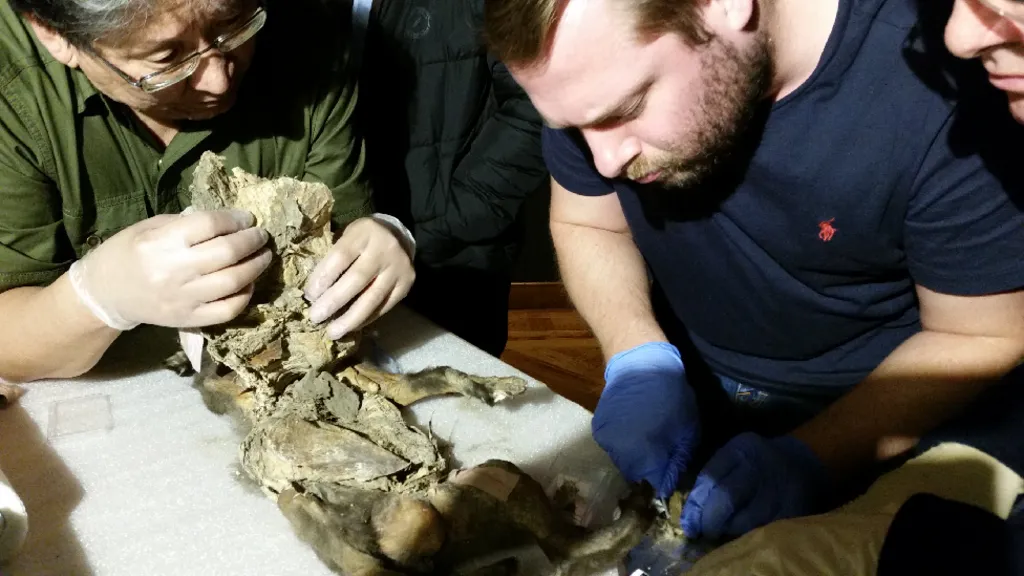
Scientists have made a world-first discovery after
extracting woolly rhinoceros DNA from the stomach of a wolf dating back to the
Ice Age.
The 14,400-year-old find offers rare insight into the
final days of woolly rhinos, finding that they likely became extinct due to a
rapid population collapse.
The DNA was found in the stomach of a wolf discovered
near the village of Tumat, Siberia, with academics from Cardiff University
involved in the study.
"Woolly rhinos had a viable population for 15,000
years after the first humans arrived in northeastern Siberia, which suggests
that climate warming rather than human hunting caused the extinction,"
said Love Dalén, who was involved in the study.
The genetic material came from a fragment of preserved
tissue found during the autopsy of the wolf, which lived around 14,400 years
ago.
DNA testing later confirmed the tissue belonged to a
woolly rhinoceros - one of the youngest specimens of the species ever
identified - and the sample initially caused confusion in the laboratory.
Dr David Stanton, a researcher at Cardiff University's
School of Biosciences, said: "It was a very unusual specimen to work on in
the lab.
"It was initially identified as a piece of cave
lion tissue, so it was quite a surprise when the genetic analysis showed that
it was actually a woolly rhinoceros."
He added it was then researchers realised "how
unique the specimen was".
"The date estimate, very close to when woolly
rhinos went extinct, made it incredibly valuable for understanding how and why
so many species went extinct at the time."
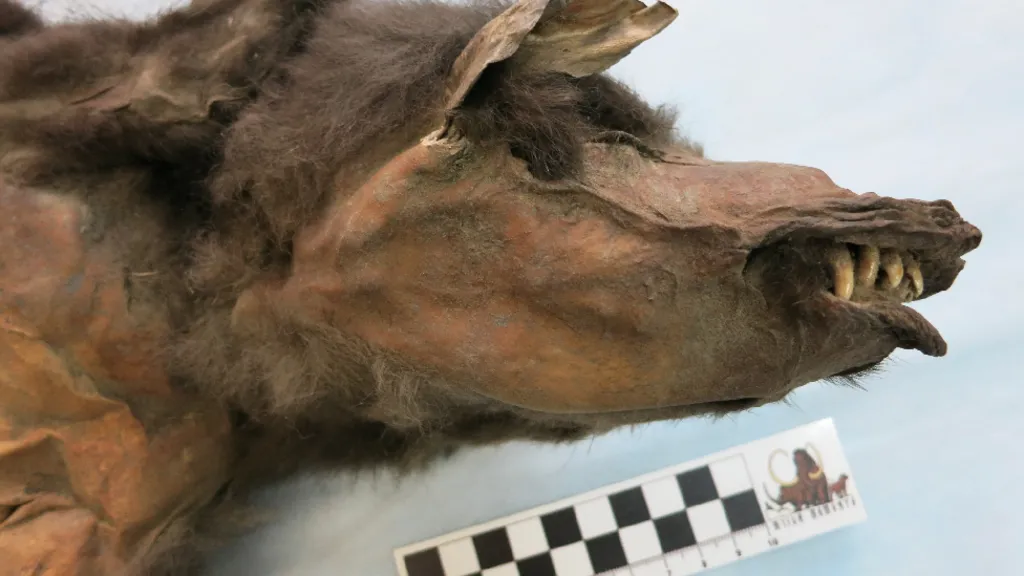
The international research team included scientists from
Cardiff University, Stockholm University, the Swedish Museum of Natural
History, the Greenland Institute of Natural Resources and North Eastern Federal
University.
Their finding suggests woolly rhinos remained
genetically healthy until shortly before they disappeared, pointing to a rapid
population collapse rather than a slow decline.
"Sequencing the entire genome of an Ice Age animal
found in the stomach of another animal has never been done before," said
Camilo Chacón-Duque,from the Centre for Paleoegenetics.
He added that the research could help inform modern
conservation efforts.
"This indicates that the woolly rhinoceros probably
maintained a stable and relatively large population until just before the
species disappeared," the researchers said.
+++++++++++++++++++++++++++++++++++++++++++++++++++++++++++++++++++++++
+++++++++++++++++++++++++++++++++++++++++++++++++++++++++++++++++++++++
- Bloggery committed by chris tower - 2601.30 - 10:10
- Days ago: MOM = 3864 days ago & DAD = 519 days ago
- New note - On 1807.06, I ceased daily transmission of my Hey Mom feature after three years of daily conversations. I post Hey Mom blog entries on special occasions. I post the days since ("Days Ago") count on my blog each day, and now I have a second count for Days since my Dad died on August 28, 2024. I am now in the same time zone as Google! So, when I post at 10:10 a.m. PDT to coincide with the time of Mom's death, I am now actually posting late, so it's really 1:10 p.m. EDT. But I will continue to use the time stamp of 10:10 a.m. to remember the time of her death and sometimes 13:40 EDT for the time of Dad's death. The blog entry numbering in the title has changed to reflect total Sense of Doubt posts since I began the blog on 0705.04, which include Hey Mom posts, Daily Bowie posts, and Sense of Doubt posts. Hey Mom posts will still be numbered sequentially. New Hey Mom posts will use the same format as all the other Hey Mom posts; all other posts will feature this format seen here.


No comments:
Post a Comment