Hey, Mom! The Explanation.

Here's the permanent dedicated link to my first Hey, Mom! post and the explanation of the feature it contains.

Also,

Tuesday, January 29, 2019

A Sense of Doubt blog post #1439 - Watchmen Assignments English 101 LCC

 A Sense of Doubt blog post #1439 - Watchmen Script and Analysis Assignment solo and group English 101 LCC

So, I have been doing tons of writing lately, but it's all for school and all for this English class at Lower Columbia College.

I am not going to do all that writing and not post it all to my blog. Plus, I am typing this entry, Tuesday 1/29, on Saturday 2/2, so I need to catch up and quickly. Fortunately, I have been planning, so the next two, which also relate to this assignment, are basically complete. How's that for being smart about doing double duty?

I haven't taught Watchmen in a class room since 1988 or 1989.  I think it was 1989, but I don't digital records of that time, at least not here. And all my paper files are back in Michigan.

Some of the materials I used, like the famous Comics Journal interview is now online, so it didn't matter that I could not find that issue of the journal when I was home in December.

I put a lot of thought and effort into these two assignments -- one solo assignment and one group assignment.

In short, in the solo assignment, each student choose a recent news story and writes a short comic book script depicting it (though there is also a historical event option). I freely borrowed this idea from LCC faculty member and new friend/colleague Nicole DiGerlando, who does the assignment with Moore's V for Vendetta. Of course, I put my own spin on the idea.

In the group work, the students team up to brainstorm and analyze parts of the Watchmen category, which gets us all talking about the graphic novel and sharing with the class but also allows the students to create the second part of their solo assignment in which they write about four elements of Watchmen that inspired parts of their own comic script.

I think it's pretty cool.


ESSAY TWO -WATCHMEN
for ENGLISH 101 - Lower Columbia College - WINTER 2018

MINIMUM LENGTH = Five pages of comic book script; each page must contain a minimum of four panels. One page may be a splash page. All panels must contain captions and/or dialogue.

MINIMUM SOURCE USE = Three sources minimum: one must be a news article from a credible source.

MINIMUM NUMBER OF CITES = Four minimum: one from each source and an extra.


  1. Pitch idea for comic script
Use Canvas discussion post a pitch of your idea for your comic script by Thursday 1/31 and then respond to two classmates by Tuesday 2/5.

Your pitch should contain a description of your idea, the purpose for how you will communicate about your idea, and at least one source, the recent and credible news article that will form the core of your idea.


  1. PURPOSES FOR YOUR COMIC SCRIPT

- to inform: basically, teach a current event or a current event that opens a subject of inquiry. FOCUS.

- inform with commentary: teach about a news event but with opinion as an added element.

- PARODY/SATIRE: Like Mad Magazine, The Onion, Cracked, and more: How can you express opinions AND mock at the same time. If you choose this avenue, you may use an existing fictional story to parody a news article; for instance, The Mueller of Oz (aping the Wizard of Oz and Mueller investigation).

Use EITHER parody OR satire. These are different animals as will be explained in class.


  1. BRAINSTORM

http://www.cracked.com/

https://www.theonion.com/

https://www.madmagazine.com/

- Let the research drive your work.
- Have an idea? Hunt for a news article.
- Have no ideas? Hunt for news articles. Scroll through Twitter feed. Look at news sites, like the BBC or CNN. Look at fake news sites, like The Onion.
- Hunt for historical ideas and then hunt for more current news articles from the last three years only.


  1. CHOOSING THE RIGHT ARTICLE: WHAT IS KAIROS?

Kairos basically means “timely” or “at the right time,” and is a term we use in rhetoric to think about how we write, why we write, and the purpose of how our writing may strongly affect our audience. For example, the opinion column I read in Sports Weekly last week about more oversight of NFL officials, especially in championship games, and ability to review botched calls like pass interference is an article with much greater kairos following the Saints-Rams game than before it.

Your idea will need to exhibit kairos. And when you write about your idea, which you will do in the second part of this assignment, you will need to define kairos and defend your idea as “timely” and why it is timely.

- What is the difference between a current event and a historical event?

I am defining a current event as one that has taken place since 2015. Your news article will have to be from 2015 through now to qualify.

Though you need to share a current news article as a core source, you may choose a historical event to teach, comment on, and or examine through the lens of satire OR parody. If you choose an event from before 2015, then the next section is for you.

- How do we tie together (connect) a historical event with a current event?

I am going to share various examples in class, one of my main examples will be Columbus and genocide. Should we deify with a national holiday and mythologize someone who neither “discovered” America nor is worthy of celebration given that he was directly responsible for exterminating native tribes and the slaughter of hundreds of thousands of native people.

A Sense of Doubt blog post #1324 - No More Glorifying Genocide, Cruelty, and Avarice - NO MORE COLUMBUS DAY
https://sensedoubt.blogspot.com/2018/10/a-sense-of-doubt-blog-post-1324-no-more.html

How would I connect it? I went to Google and searched “genocide 2016.” I just picked a year in our range, and I found tons of stuff, like this.

“ISIS Committed Genocide Against Yazidis in Syria and Iraq, U.N. Panel Says”
https://www.nytimes.com/2016/06/17/world/middleeast/isis-genocide-yazidi-un.html

Nailed it, n’est ce pas?

Word.


  1. SOME THINGS ARE NOT FUNNY

Some things are not funny. I do not think everything can or should be mocked. Some disagree. I do not think rape is funny. I do not think child abuse is funny. BUT mocking the trouble Adrian Peterson got in for his extreme corporeal punishment of his children could be funny. What Bill Cosby did to so many women is not funny at all, but a parody of the Cosby show with references to his crimes might be funny, or at least some people will find it funny.

I recommend that you use your own judgement when it comes to humor if you choose it as your purpose for this assignment.

I try to use my best judgement in the classroom with my use of humor, and still things fly out of my mouth that, upon further consideration, I might not normally say out loud. I ask you to cut me some slack as I am YOUR TV SHOW and I am doing STAND UP just as I would cut you a lot of slack. You would have to work pretty hard to offend me.


  1. THE COMIC SCRIPT WRITING THE SCRIPT

FIRST, choose how you are TELLING THE STORY. You have to choose one method and stick with it. News Broadcast is the only method that can be mixed with one of the other methods.

- PICTURED NARRATOR: Like Understanding Comics or The Influencing Machine, you create a character who speaks to the reader directly, breaking the “fourth wall” as in the wall between the characters and the reader.
https://en.wikipedia.org/wiki/Fourth_wall

- UNPICTURED NARRATOR: Like Rorschach’s journal, this narrator is simply sharing the story but not DIRECTLY with the reader. The fourth wall is not broken.

- NO NARRATOR - DIALOGUE ONLY: The story does not employ a narrator. Instead the story’s writer creates a situation in which the characters discuss things and convey information through their dialogue. This method is difficult to pull off as there IS NOT NARRATION.

- NEWS BROADCAST: This method to deliver exposition may be combined with one of the other methods. You describe panels set in a TV news room and news anchors are delivering the news.

- OMNISCIENCE (limited) - The Narrator exists but is unseen and unnamed, like Stan Lee, who was often “telling us” the story in the Marvel comic. In some cases, the “telling” feels more overt, like Stan Lee, and in other cases more like a hint, much less obvious. In fiction, this method follows only one character. In comics, the POV can often hop around from character to character, and yet notice how in Watchmen, many of the issues are centered on a specific character and the chapter tells his or her story or he or she actually narrates, such as with both Rorschach and Dr. Manhattan.

- OMNISCIENCE (total) - No clear feeling that the narration comes from a speaker. There’s no sense of a person in the narration at all, and the mode of story telling does NOT focus on a character’s POV, like the character-centered approach of some Watchmen chapters mentioned with limited omniscience.

There’s no “right” answer here.

Choose the method that works best for you and your story. Choose the method you like best.


THE CONTENT

- Use the samples comic scripts to write your own script.
- Examine the various comic book scripts I share in files (or even look around on the Internet yourself) and create AT LEAST the minimum page count.

MINIMUM LENGTH = Five pages of comic book script; each page must contain a minimum of four panels. One page may be a splash page. **** All panels must contain captions and/or dialogue. ****

SPLASH PAGE: A splash page is a single page in a comic book that often (though not always) contains the title and creator information. As it is not always the title page, it can appear anywhere in a comic book. If you use one (and you don’t have to), it can be any of your five pages. A splash page features no panels. It is one giant panel that fills the page.

DESCRIPTION OF VISUALS TO ARTIST: One thing that makes a comic script unique – even more unique than a film script – is that it provides somewhat detailed (some more so than others) descriptions of what the artists needs to show in the frame. BUT often comic book writers are careful not to tell the artist how to draw the imagery. Some give more information and direction than others. It’s a working relationship between two creators. But a good comic book writer will give the artist lots of freedom to, well, BE AN ARTIST while at the same time making sure every detail is accounted for. As an example, Alan Moore planned every sign, match book cover, piece of paper that looks like trash, product name, EVERYTHING. It was all part of constructing his world: Gunga Diner, Promethean Cab Company, ads of Veidt’s Nostalgia, and so much more are in his script.

So, DESCRIBE the panel and then provide CAPTION and/or DIALOGUE in script form as per the samples.

MORE ABOUT THE SCRIPT

Tell your story and meet the minimums (you may exceed). Give the story a clear beginning, middle, and ending. Use characters freely, but as you introduce them, you must describe them. Again, see the comic script samples. One caveat is that some scripts lack character descriptions because the characters were already defined. I have tried to provide several samples that do contain character information. These descriptions do not have to be lengthy.

For example, here’s a description from Kelly Sue DeConnick’s Bitch Planet, issue #3: “Adult Penny Rolle, in a jumpsuit of some kind that is NOT the NC Bitch Planet uniform. Something akin to scrubs, I'm thinking? She's a huge woman -- fat, fat, fat -- with a swathe of curls on the left side of her head and otherwise bald. She is not shackled – her arms hang at her sides. Let's have a good look at her. Don't apologize for the rolls.”


SOURCES: Your story has to be the product of some small amount of research. As such, cite like a traditional essay with in text cites and end references. Character dialogue and/or captions may contain direct quotes from sources. Meet the minimums as detailed here:

MINIMUM SOURCE USE = Three sources minimum: one must be a current news article from a credible source.

MINIMUM NUMBER OF CITES = Four minimum: one from each source and an extra.

Have fun!!! This assignment is supposed to be fun.

Anything I have forgotten will be explained in class and/or added to the editable Canvas assignment and/or my blog.


 PART TWO OF THE ESSAY TWO ASSIGNMENT

YOUR COMMENTARY AND ANALYSIS OF WATCHMEN AND YOUR COMIC BOOK SCRIPT: - In addition to your comic script, you will need to write some analysis.

- DESCRIBE the choices, the decisions you made in creating your script. Define kairos and how your script is timely.
     
- ANALYZE: Choose four elements of Watchmen that inspired elements of your own comic script. Explain and analyze these inspirations. Describe the element of Watchmen and then how it influenced your own creative choices.
     Elements can be a single panel, a page, a sequence, a running theme, a character, an idea, or even part of or all of one back matter (the material after each issue).
     Write a short analysis of this element of Watchmen, focusing both on the instance itself (describe and analyze) and its position in the larger context of the work of Watchmen as a whole.
     I will provide a few examples in class to guide your work on this part of the assignment. We will also do a group assignment that targets this material.

WHY DO WE READ WATCHMEN? Issues and educational goals to examine and/or achieve: Purpose, audience, storytelling techniques, exposition/dialogue/narrative, the connections, commentary on current events(kairos), Developing critical ideas about current and historical ideas, argument and persuasion. How do we influence people with our writing? How does Watchmen influence its audience?

I have more thoughts on why this comic and why comics in this class that I plan to write out on my blog. Stay tuned!

COMIC SCRIPTS like this one: BITCH-PLANET-3_Kelly-Sue-DeConnick.pdf

All in a folder called COMIC SCRIPTS in files.

There is a template:

Comic-Experience-Script-Template-2013-10-05.doc


EXTRAS
SEARCH - "Watchmen comic book script" the full comic

https://www.scribd.com/doc/13749342/Watchmen-comic-full

COMIC JOURNALISM

http://www.tcj.com/reviews/journalism/


WATCHMEN STUFF

Watchmen and Intertextuality:
How Watchmen Interrogates the Comics Tradition
by Julian Darius | in Articles | Mon, 21 March 2005
http://sequart.org/magazine/2664/watchmen-and-intertextuality-how-watchmen-interrogates-the-comics-tradition/


Why does “Watchmen” use the 9-panel grid?
https://literature.stackexchange.com/questions/2558/why-does-watchmen-use-the-9-panel-grid

WATCHMEN - LIT STACK EXCHANGE
https://literature.stackexchange.com/search?q=Watchmen

Why Is Watchmen So Important?
https://io9.gizmodo.com/why-is-watchmen-so-important-5162302


A Reflection on Watchmen: The Power of Color


http://graphicnovel.umwblogs.org/2015/09/28/a-reflection-on-watchmen-the-power-of-color/

Banned Books - Watchmen
https://thecomicbookteacher.com/2014/09/25/banned-books-week-watchmen/

COMICS JOURNAL - ALAN MOORE INTERVIEW 1987
http://www.tcj.com/the-alan-moore-interview-118/

Watchmen: Comics and Literature Collide
https://digitalcommons.fiu.edu/cgi/viewcontent.cgi?referer=https://www.google.com/&httpsredir=1&article=1604&context=etd

Alan Moore, Watchmen and some notes on the ideology of superhero comics
https://www.researchgate.net/publication/233486774_Alan_Moore_Watchmen_and_some_notes_on_the_ideology_of_superhero_comics

ARCHIVE OF THE FUTURE: ALAN MOORE’S WATCHMEN AS HISTORIOGRAPHIC NOVEL
https://www2.le.ac.uk/offices/english-association/publications/peer-english/4/2%20Tony%20Venezia%20-%20Archive%20of%20the%20Future.pdf

“Watchmen: Deconstructing the Superhero”
https://library.ndsu.edu/ir/bitstream/handle/10365/22356/Watchmen.pdf?sequence=1

On the Boundaries of Watchmen-Paratextual Narratives across Media
https://uu.diva-portal.org/smash/get/diva2:869023/FULLTEXT01.pdf

‘‘Who Watches the Watchmen?’’: Ideology and ‘‘Real World’’ Superheroes
JAMIE A. HUGHES

Under the Mask_Non-Normative Sexuality in Alan Moore’s Watchmen
https://libres.uncg.edu/ir/unca/f/T_Smith_Superhero_2017.pdf

GENERAL DISCUSSION AND INTERVIEWS

https://movies.stackexchange.com/questions/24093/what-are-the-qualities-of-watchmen-unique-to-comics-and-in-which-way-did-the-mov/24131


REVIEWS

https://geekreply.com/uncategorized/2015/05/08/10-recommended-comics-watchmen


WATCHMEN TV SHOW - HBO

https://io9.gizmodo.com/these-watchmen-set-pictures-seemingly-reveal-the-fate-o-1826760037

and

https://io9.gizmodo.com/the-cast-of-hbos-watchmen-has-been-revealed-and-the-fan-1826269382

DAMON LINDELOF'S LETTER about the new TV show for HBO
https://io9.gizmodo.com/damon-lindelof-unveils-his-bold-plans-for-the-watchmen-1826239088


SCRIPTS

http://www.scriptsandscribes.com/sample-comic-scripts/

http://www.comicbookscriptarchive.com/archive/the-scripts/

MAIN : http://comicbookscriptarchive.com/archive/

http://www.comicsexperience.com/scripts/


AND THESE (once I publish them)
https://sensedoubt.blogspot.com/2019/01/a-sense-of-doubt-blog-post-re-reading.html
and
https://sensedoubt.blogspot.com/2019/01/a-sense-of-doubt-blog-post-script-for.html


GROUP WATCHMEN ANALYSIS
The purpose of this assignment is to begin to generate ideas for the analysis part of Essay Two.

Group Work Day = Thursday 1/31
Presentation due to be delivered in class = 2/5 TUESDAY
WORTH = 50 pts: 40 points presentation + 10 follow up evaluation

INDIVIDUAL DELIVERIES
- Document with art & analysis (power point may be best).
- Text entry of evaluation of personal work and group work.
- Two responses to two other groups in discussion by Thursday 2/7.

What to do:
- Brainstorm ideas as a group.
- Select four or five elements depending on the number of people in your group.
- Each group chooses at least two connections, one deviation from nine-panel grid, and one other element (plot point, character aspect, narrative technique, etc.).
- ART AND ANALYSIS: For each element, show the art from the comic and analyze it in depth both as a single moment in the comic and the story and in the larger context of the novel as a whole.


DELIVERY OF PRESENTATION

TO INSTRUCTOR: Art and analysis content. In any form. It’s best to put it in a power point. But you may deliver it another way if you prefer.

TO CLASS: Groups present analyses with each person speaking in turn. Or one or two people speak for the entire group, also presenting analysis created by those who wish to remain silent.

TIME MINIMUM: None. But the presentation will be assessed on a sufficient depth of substance as defined by examples shared in class by the instructor.

TIME MAXIMUM: Ten minutes per group.


FROM THE ESSAY TWO ASSIGNMENT (edited):
- please note how your essay content is slightly different than this work for the group presentation.

- ANALYZE: Choose four or five elements of Watchmen.
Describe the element of Watchmen.

     Elements can be a single panel, a page, a sequence, a running theme, a character, an idea, or even part of or all of one back matter (the material after each issue).
     Write a short analysis of this element of Watchmen, focusing both on the instance itself (describe and analyze) and its position in the larger context of the work of Watchmen as a whole.
     I will provide a few examples in class to guide your work on this part of the assignment. And so this is the group assignment that targets this material. I restricted the types of elements that can be chosen and set a minimum (see previous).


IDEAS WITH WATCHMEN:

- Why TWO comic books in the course? Nicole teaches two, and I have different things I wish to accomplish with these works of art.

- WHY WATCHMEN? Other than Time Magazine put it on the list of 100 greatest novels of all time?? Do I need another reason? :-)

GOALS OF CONTENT: Purpose, audience, storytelling
techniques, exposition/dialogue/narrative, the connections, commentary on current events, kairos. Others?

EXTRAS - ADDED 1901.31 at 17:56 hours

IMAGES

This question came up in both classes.
- Take a photo with your phone, email it or transfer it, and then insert it in your power point or whatever.
- Someone who bought the digital copy can take a screen shot of any part.
- Searching the Internet? Tricky but possible. In fact looking at a search of “Watchmen comic book” as images may lead to other people’s analysis!! It’s a good way to decide on a part.
- ALSO, scribd seems to have the entire comic. Had I know about this before now, I would have told you before you bought one. Looks free, but ultimately you may have to sign up. Not sure. But so far I have taken several screen shots of parts that I discussed.

https://www.scribd.com/doc/13749342/Watchmen-comic-full

I may add some images and quick thoughts of the analysis I delivered in class on Thursday 1/31 for at least raw shark and delivered to the shadow – my two connections.

LENGTH

Many intrepid folks noticed I did not set any word counts or limits minimal or maximal on your work for this presentation just as I did not set such parameters for the analysis of the individual essays each of you will do. This is not an accidental omission; it is purposeful. No regrets. Lived life free of compromise. Heh. Hurm.

WAGON CIRCLING TIME

There will be 15-30 minutes but no matter to circle the wagons before presenting on Tuesday the 5th of February.


+++++++++++++++++++++++++++++++++++++++++++++++++++++++++++++++++++++++
+++++++++++++++++++++++++++++++++++++++++++++++++++++++++++++++++++++++
+++++++++++++++++++++++++++++++++++++++++++++++++++++++++++++++++++++++


- Bloggery committed by chris tower - 1901.29 - 10:10

- Days ago = 1305 days ago

- New note - On 1807.06, I ceased daily transmission of my Hey Mom feature after three years of daily conversations. I plan to continue Hey Mom posts at least twice per week but will continue to post the days since ("Days Ago") count on my blog each day. The blog entry numbering in the title has changed to reflect total Sense of Doubt posts since I began the blog on 0705.04, which include Hey Mom posts, Daily Bowie posts, and Sense of Doubt posts. Hey Mom posts will still be numbered sequentially. New Hey Mom posts will use the same format as all the other Hey Mom posts; all other posts will feature this format seen here.

Monday, January 28, 2019

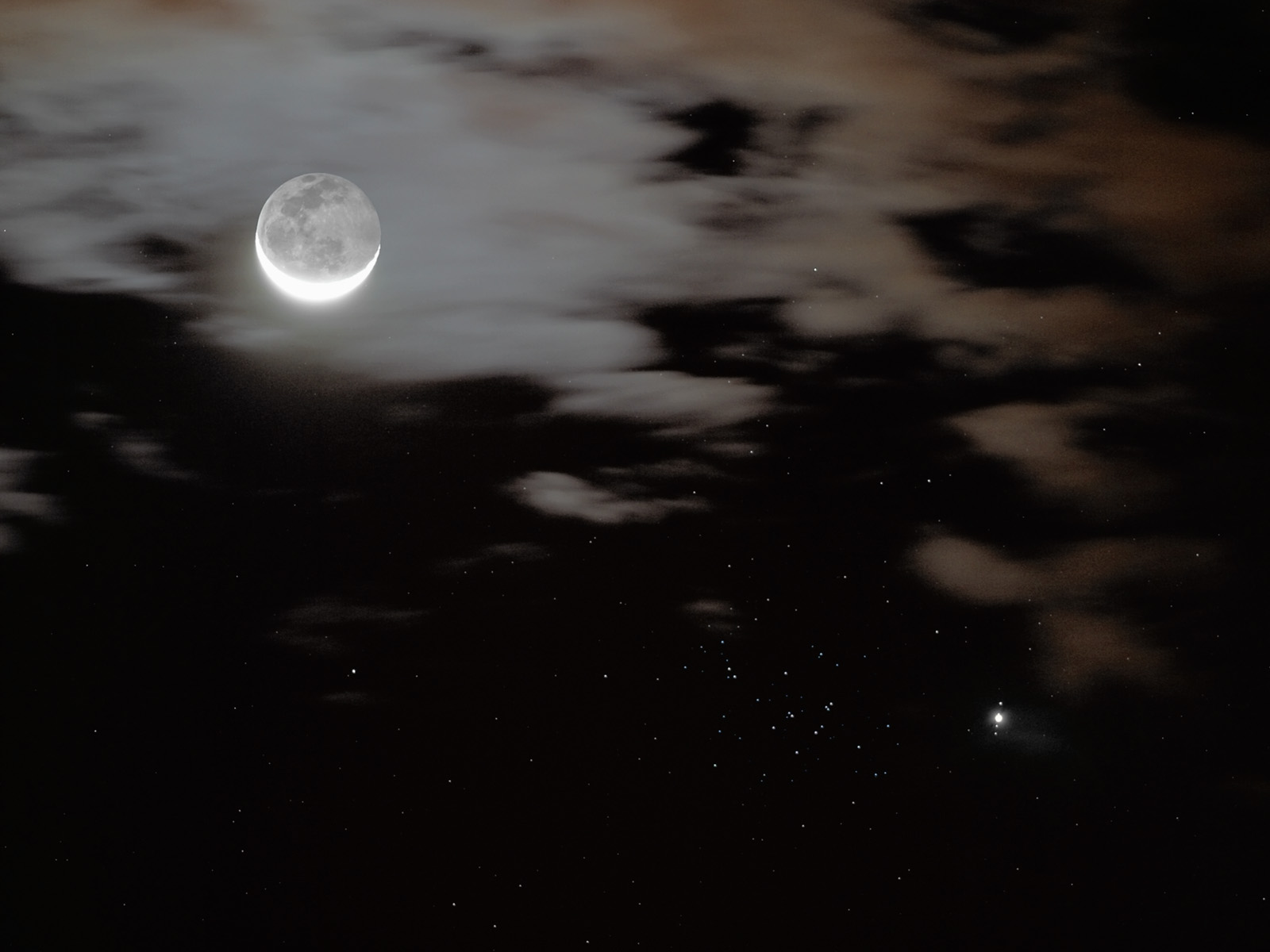
A Sense of Doubt blog post #1438 - And Hiding Away - The Sky is Dark With Mystery

https://apod.nasa.gov/apod/image/0209/moonbees_croman_big.jpg
A Sense of Doubt blog post #1438 - And Hiding Away - The Sky is Dark With Mystery

Hi there, It's me again. I have been away for a bit. I am typing these words on Friday February First and sending them back in time to Monday January 28th.

This mix has been in the works for a long time, but I have not published it yet. And I am not overly motivated to always embed each video. So, instead, I have the first video of the 25-song mix below and then at the end of the post, I have the entire mix in both a link and the video pod player from You Tube.

This is also a link (the same one as later):

And Hiding Away - The Sky is Dark With Mystery - Musical Monday Mix for 1901.28

https://i.pinimg.com/originals/8f/65/b8/8f65b864fc0cbec2578ca7dd636493a1.jpg

This mix is about that need to hide away.

I am feeling that very strongly this week.

As social as I can be, I am not always comfortable with it, and I need that recluse time, that alone time, for self-care, for sanity, and for peace and blessedness.

If I don't get that time, I go a bit crazy.

And so when "the sky is dark mystery," it's time for hiding away.

Do you feel that, too?

Am I alone?

Do you need what I need?

And so, when I think of this need to be a recluse, a hermit, a shut-in, alone, to have quiet time, to meditate, to read, to think, to shut out the clutter and noise of the world, I think of this song -- "And Hiding Away" -- by Innocence Mission, my favourite song by one of my favourite bands.

And so, when I listen to these songs and as I built this mix, I thought about how in my core and as a child, I am and I was an introvert.

Here's some things I have written about Introversion thus far.

Hey, Mom! Talking to My Mother #1058 - Listen to the power of QUIET people

Hey, Mom! Talking to My Mother #323 - More on introverts

Hey, Mom! Talking to My Mother #161 - Introversion - Reprinted T-shirt nonesuchery pt.3

Hey, Mom! Talking to My Mother #1136 - Introversion collected and t-shirt reprint - Throwback Thursday for 1812.06

It should be noted that the PJ Harvey song "We Float" comes from my wife, who has been a wellspring of great music for ten years now, who inspires me, and who keeps my passions at a simmer if not a full boil. Just so you know. I don't want to take credit for the discovery of Harvey's song.


"And Hiding Away"
---------------
I prize the cloudy, tearing sky
for the thoughts that flap and fly.
For staying in and reading by.
For sitting under.
I read a book of Madeline
and her friends in two straight lines,
in Paris, in a house with vines
over its old face.
Far, far is Paris...
and the sky is dark with mystery.
Try, catch the thoughts that flap and fly
in the cloudy, tearing sky,
that touch and stir and won't be tied-
and try to speak them.
I think of my old Flower Sky.
Of us, when we thought we were spies.
Of bobbing eggs in Easter dyes.
Of walks in London.
Try, try to hold my love for you,
it knows no measure.
This is a day for hearing bagpipes
somewhere playing.
This is a day for hearing sarabands
and hiding away.
Sky, I hold my tears if you do.
Starling thoughts, go over me


---------------------------------------

I love these lyrics.
I highlighted some of my favourite lines.

Enjoy the music.

Following is a track list and the link and video pod.

https://pxhere.com/en/photo/737753
And Hiding Away - The Sky is Dark With Mystery - Musical Monday Mix for 1901.28

https://pxhere.com/en/photo/737753
1. The Innocence Mission - And Hiding Away

2. The Innocence Mission - Umbrella

3. PJ Harvey - We Float

4. The Innocence Mission - Black Sheep Wall

5. Imogen Heap - Hide And Seek

6. The Innocence Mission - Song About Traveling

7. Beth Orton - She Cries Your Name

8. The Innocence Mission - I Never Knew You From The Sun

9. Sia - Distractions

10. The Innocence Mission - Clear to you

11. The Innocence Mission - Evensong

12. Aleah - Vapour

13. the innocence mission - My Sisters Return from Ireland


14. The Innocence Mission - I Remember Me - US TV debut - LETTERMAN
15. Cocteau Twins - A Kissed Out Red Floatboat - Best Version
16. the innocence mission - Shadow Of The Pines
17. The Innocence Mission - god is love
18. Frou Frou - Breathe In
19. The Innocence Mission - Now In This Hush
20. Mogwai - Ether
21. The Innocence Mission - Sorry And Glad Together
22. Cocteau Twins - Three Swept
23. the innocence mission - She May Turn Around
24. The Sundays - Here's Where The Story Ends
25. The Innocence Mission - Wonder Of Birds

https://pxhere.com/en/photo/1427093

https://m.theepochtimes.com/assets/uploads/2014/11/12/dark-skies-shutterstock_86844088-WEBONLY-550x330.jpg

And Hiding Away - The Sky is Dark With Mystery - Musical Monday Mix for 1901.28

Here's the video pod player for the entire mix:


+++++++++++++++++++++++++++++++++++++++++++++++++++++++++++++++++++++++
+++++++++++++++++++++++++++++++++++++++++++++++++++++++++++++++++++++++
+++++++++++++++++++++++++++++++++++++++++++++++++++++++++++++++++++++++


- Bloggery committed by chris tower - 1901.28 - 10:10

- Days ago = 1304 days ago

- New note - On 1807.06, I ceased daily transmission of my Hey Mom feature after three years of daily conversations. I plan to continue Hey Mom posts at least twice per week but will continue to post the days since ("Days Ago") count on my blog each day. The blog entry numbering in the title has changed to reflect total Sense of Doubt posts since I began the blog on 0705.04, which include Hey Mom posts, Daily Bowie posts, and Sense of Doubt posts. Hey Mom posts will still be numbered sequentially. New Hey Mom posts will use the same format as all the other Hey Mom posts; all other posts will feature this format seen here.

Sunday, January 27, 2019

A Sense of Doubt blog post #1437 - BETWEEN THE WORLD AND ME - a book review and reflection for study


A Sense of Doubt blog post #1437 - BETWEEN THE WORLD AND ME  - a book review and reflection for study

It's time to talk about race. Again.

I am creating this entry to put down some thoughts of my own but also to share resources with students for their work.

As I have shared recently on this blog, I wrote an assignment for my students to reflect on college and race -- two seemingly different subjects but ones with many intersections -- in a letter-style format, much like Ta-Nehisi Coates' excellent, National Book Award winning Between the World and Me.

Since I am proud of my assignment, I chose to post it to my blog a couple of weeks ago:
A Sense of Doubt blog post #1425 - Essay One - BTWM Letter.

But race and racial issues, as well teaching Between the World and Me, is not a new issue for me. I started teaching BTWM at WMU in Michigan, right after Ta-Nehisi Coates visited and spoke at the university. And so, for years, I have been writing on this subject with content that relates to issues raised in BTWM or that I like to riff on, such as my rap (which is also a riff) on music, race, and the debt we owe African people brought to American to be slaves (and eventually made "American" though not quite in the same manner or regard as "those who believe themselves to be white" as Coates writes).

A Sense of Doubt blog post #1390 - A Debt Not Paid - Appropriation and the Co-Opting of Modern Music

Without permission, though I assume it's okay, I copied the entire training for LCC employees on diversity and put it in this blog entry as I felt it would illuminate this discussion the work my students are doing in their essays: A Sense of Doubt blog post #1436 - Diversity at LCC.

Farther back, there's other good instances. I have a "race" and a "racism" category, which can be accessed via the right side menu, but two notable writings are this one from my recent work and republished an article about Philando Castille’s murder with some commentary by me.

Hey, Mom! Talking to My Mother #371 - I am not afraid of the police; but maybe you should be

As well as this one from three years ago and my t-shirts blog and focuses on the Trayvon Martin case.

T-shirt #118: WWKD: What Would Kirk Do?

BETWEEN THE WORLD AND ME

As for the book, written as advice to his son, Ta-Nehisi Coates uses Between the World and Me to give advice on being an African-American male in our culture, but these are lessons to which anyone can relate. This excellent book explores many themes, such as the importance of securing and protecting the body as well as how to be a good citizen, person, and student.

Some other issues that have come up in class discussions over the years are racial profiling/police brutality, “street” knowledge or wisdom of streets, awakening to diversity, race as a social construct to perpetuate racism (question on that item), bigotry as fear of difference, etc.

I have always suggested the students look up some facts to discuss institutional racism, such as investigating how many CEOs of Fortune 500 companies are white men.

In teaching this work, I have always tried to encourage all of my students -- regardless of their "race" -- consider the issue of white privilege, but especially those students who have been "deceived" as Coates claims into believing that they are "white."

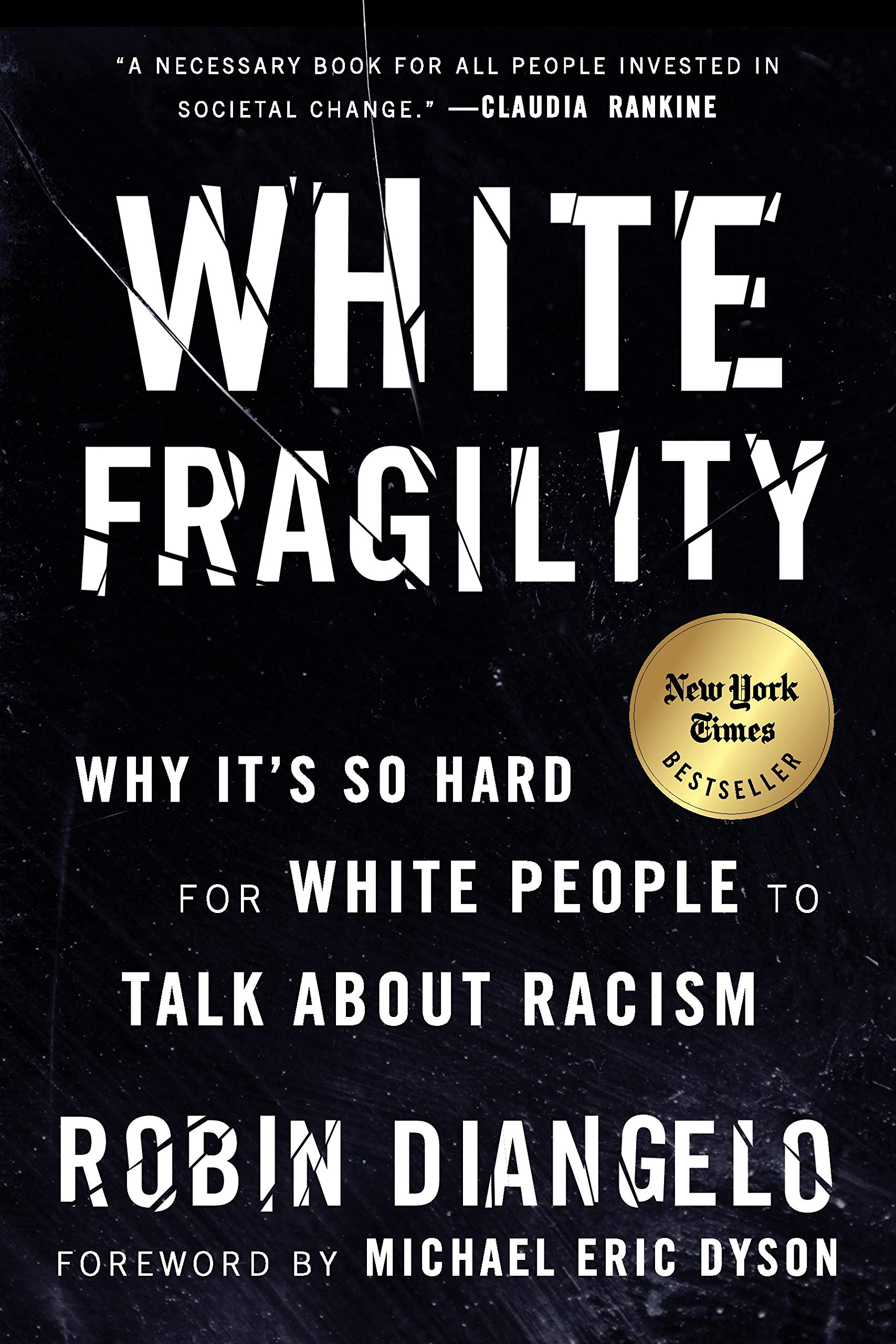
Image result for white fragility
In so doing, I shared an excerpt from the book White Fragility  by Robin DiAngelo,  -- WHITE FRAGILITY - PDF -- and the very well known article, that actually was written by someone teaching for a women's studies department (as I did)

White privilege Unpacking the invisible backpack with notes for facilitating


In the article, Peggy McIntosh compares the idea of "white privilege" (which Coates calls "The Dream," a very different "dream" from that of MLK, Jr.) to the idea of male privilege (often called "the patriarchy" in women's studies classes), and the comparison is quite apt.

After her powerful and thought-provoking list of how white privilege manifests itself in people's lives, she re-defines it as unearned dominance, advantage, and entitlement.

These unearned social benefits are so normal, and so much the status quo, as to seem virtually invisible by those benefiting. Those who enjoy these benefits often resist the acceptance of the situation or have any idea of even how to be sensitive to it let alone do something about it. The resistance to admitting what, for ease and simplicity, we would call "white privilege" is very much like the resistance men have to male privilege, to the pervasive reality of violence against women and the characterization of our society as a "culture of rape." Especially young men (and not exclusively young white men, often just the opposite), very much resist the idea that their "dreamworld" of sex, naked women, and provocative play could be taken away, as evidence by "gamergate," which I wrote about (or shared content about) four times (fully and officially):

Hey, Mom! Talking to My Mother #277 - Sexists, Humans, and Anita Sarkeesian

Hey, Mom! Talking to My Mother #652 - The Plight of the Bitter Nerd

Hey, Mom! Talking to My Mother #708 - No Girls Allowed - The Fragility of Gaming Culture - BITCH MAGAZINE

A Sense of Doubt blog post #1322 - Trilogy - Chat Music podcast, Blur's Parklife, Sexism at Riot Games

It's this resistance that people need to work through, and it could be painful.

One thing the Dean at LCC said to me is to encourage students to try on an ideology, like taking a pair of shoes home and wearing them around the house to make sure they fit right and are comfortable. It's a rule with shoes though. There is no "breaking in shoes." They either feel right from the start or they don't. But ideologies are not shoes. Initial resistance to ideology may be natural and more part of the grieving process of letting go of something valuable and meaningful if not incredibly beneficial. Think of it like wealth or love. Giving it up is a painful process of learning to live all over again with less money or without the loved one.


And so, "whiteness" comes under full academic scrutiny:

On whiteness, a course at University of Wisconsin: Madison: 
http://www.thecollegefix.com/post/30434/

A class to be taught next semester at the University of Wisconsin Madison called “The Problem of Whiteness” aims to “understand how whiteness is socially constructed and experienced in order to help dismantle white supremacy,” the course description states.

“Whites rarely or never questioned what it is to be white,” Assistant Professor Damon Sajnani, who will teach the course, told The College Fix in a telephone interview last week. “So you go through life taking it for granted without ever questioning or critically interrogating it.”
For Sajnani, one way to solve this is to offer “The Problem of Whiteness,” an analysis of what it means to be white and how to deal with it as a “problem.”
My friend Erica Ahmed shared this article:
http://www.vox.com/culture/2016/11/7/13502322/sellout-paul-beatty-booker-prize


In the end we found it impossible to ignore the impassioned pleas of the Lost City of White Male Privilege, a controversial municipality whose very existence is often denied by many (mostly privileged white males). Others state categorically that the walls of the locale have been irreparably breached by hip-hop and Roberto Bolaño’s prose. That the popularity of the spicy tuna roll and a black American president were to white male domination what the smallpox blankets were to Native American existence. Those inclined to believe in free will and the free market argue that the Lost City of White Male Privilege was responsible for its own demise, that the constant stream of contradictory religious and secular edicts from on high confused the highly impressionable white male. Reduced him to a state of such severe social and psychic anxiety that he stopped fucking. Stopped voting. Stopped reading. And, most important, stopped thinking that he was the end-all, be-all, or at least knew enough to pretend not to be so in public. But in any case, it became impossible to walk the streets of the Lost City of White Male Privilege, feeding your ego by reciting mythological truisms like “We built this country!” when all around you brown men were constantly hammering and nailing, cooking world-class French meals, and repairing your cars.

The Sellout, for which Paul Beatty just became the first American writer ever to win the Booker Prize, is both blisteringly funny and blisteringly furious.

And, this organization: http://www.eracce.org/

I was about to take this training before I moved out West. I need to find a similar thing here.

ABOUT US

ERACCE exists to eliminate structural racism and create a network of equitable Antiracist institutions and communities. 


MISSION

The mission of ERACCE is to dismantle systemic racism and build antiracist multicultural diversity within Southwest Michigan institutions by providing education, networking, technical assistance and supportive resources to the region. We define Southwest Michigan as including Allegan, Barry, Van Buren, Kalamazoo, Calhoun, Berrien, Cass, St. Joseph, and Branch Counties. We also support and collaborate with antiracism work in other regions of Michigan as we are able.


https://slate.com/culture/2015/07/between-the-world-and-me-by-ta-nehisi-coates-reviewed.html
And of course, the following came to me via Facebook as is so worth re-presenting.


And this...

FROM BRAIN PICKINGS:

The Terror of Kindness: Ta-Nehisi Coates on Overriding Our Cultural Conditioning and Living Beyond Fear


“We’ve got to be as clear-headed about human beings as possible, because we are still each other’s only hope,” James Baldwin said to Margaret Mead in their forgotten, acutely timelyconversation about race, forgiveness, and the crucial difference between guilt and responsibility. And yet when trauma, injustice, and cultural conditioning smear our vision with blood and tears, we begin to lose sight of this essential, life-affirming truth.
That’s what Ta-Nehisi Coates, a Baldwin-plus of our time, addresses in a beautiful passage from the altogether stirring Between the World and Me (public library).

Ta-Nehisi Coates (Photograph: Gabriella Demczuk for The New York Times)
Coates reflects on the transformative experience of his first visit to Paris — a perspective-reorienting pilgrimage he made from West Baltimore, by way of Harlem, as soon as he received his first adult passport:
It occurred to me that I really was in someone else’s country and yet, in some necessary way, I was outside of their country. In America I was part of an equation — even if it wasn’t a part I relished. I was the one the police stopped on Twenty-third Street in the middle of a workday. I was the one driven to The Mecca. I was not just a father but the father of a black boy. I was not just a spouse but the husband of a black woman, a freighted symbol of black love. But sitting in that garden, for the first time I was an alien, I was a sailor — landless and disconnected. And I was sorry that I had never felt this particular loneliness before — that I had never felt myself so far outside of someone else’s dream.
Loneliness — particularly the loneliness familiar to those of us who are immigrants or alien in any other way, the kind that comes from being in a culture but not of it — is a paradoxical emotion, stretched between longing and fear: we long for inclusion, acceptance, and equal belonging, but fear we’d be hurt, rejected, or violated in the vulnerable-making act of making our longing manifest. The fear takes over — especially if it carries the momentum of previous violations, be they personal or inherited — and erects a protective wall that only further separates us from the very thing we long for.
With an eye to that divisive fear, Coates addresses his young son:
We came back to Paris that summer, because your mother loved the city and because I loved the language, but above all because of you.
I wanted you to have your own life, apart from fear — even apart from me. I am wounded. I am marked by old codes, which shielded me in one world and then chained me in the next. I think of your grandmother calling me and noting how you were growing tall and would one day try to “test me.” And I said to her that I would regard that day, should it come, as the total failure of fatherhood because if all I had over you were my hands, then I really had nothing at all. But, forgive me, son, I knew what she meant and when you were younger I thought the same. And I am now ashamed of the thought, ashamed of my fear, of the generational chains I tried to clasp onto your wrists. We are entering our last years together, and I wish I had been softer with you. Your mother had to teach me how to love you — how to kiss you and tell you I love you every night. Even now it does not feel a wholly natural act so much as it feels like ritual. And that is because I am wounded. That is because I am tied to old ways, which I learned in a hard house. It was a loving house even as it was besieged by its country, but it was hard. Even in Paris, I could not shake the old ways, the instinct to watch my back at every pass, and always be ready to go.
A few weeks into our stay, I made a friend who wanted to improve his English as much as I wanted to improve my French. We met one day out in the crowd in front of Notre Dame. We walked to the Latin Quarter. We walked to a wine shop. Outside the wine shop there was seating. We sat and drank a bottle of red. We were served heaping piles of meats, bread, and cheese. Was this dinner? Did people do this? I had not even known how to imagine it. And more, was this all some elaborate ritual to get an angle on me? My friend paid. I thanked him. But when we left I made sure he walked out first. He wanted to show me one of those old buildings that seem to be around every corner in that city. And the entire time he was leading me, I was sure he was going to make a quick turn into an alley, where some dudes would be waiting to strip me of … what, exactly? But my new friend simply showed me the building, shook my hand, gave a fine bonne soirée, and walked off into the wide open night. And watching him walk away, I felt that I had missed part of the experience because of my eyes, because my eyes were made in Baltimore, because my eyes were blindfolded by fear. What I wanted was to put as much distance between you and that blinding fear as possible.

Complement this particular fragment of the thoroughly terrific Between the World and Me with psychoanalyst Adam Phillips and historian Barbara Taylor on how kindness became our forbidden pleasure and Baldwin onfreedom and how we imprison ourselves.


Review: ‘Between the World and Me’ at The Kennedy Center Eisenhower Theater

https://dcmetrotheaterarts.com/2018/04/11/review-between-the-world-and-me-at-the-kennedy-center-eisenhower-theater/


Marc Bamuti Joseph and Jason Moran (top) during Between the World and Me at the Kennedy Center. Photo courtesy of Jati Lindsay

Ta-Nehisi Coates’s son, Samori, was 15 when his father wrote a book addressed to him, Between the World and Me. Before that book won the National Book Award and was a Pulitzer Prize finalist, it was a heartfelt message to a boy whose father knew he could be shot dead for no reason except he was black. The pain and pride, the anger and anguish, the hope and helplessness Coates feels at this unjust prospect flow through the book like a flooding river of tears.
Ta-Nehisi Coates

Throughout Between the World and Me, Coates refers to people, especially Americans, who “believe they are white.” At the very beginning, he tells of a TV news host in DC who For me reading the book, through welling eyes of my own, was to experience a writer whose graceful command of language and cut-to-the-root political insight left me humbled and in awe. Coates is often compared, aptly, to James Baldwin, whose voice, especially in The Fire Next Time, resounds through Between the World and Me. And—of particular importance to me—Baldwin and Coates both articulate what it means to be white, with a conscience and clarity I almost never find in the work of white writers.
wished to know why I felt that white America’s progress, or rather the progress of those Americans who believe that they are white, was built on looting and violence. Hearing this, I felt an old and indistinct sadness well up in me. The answer to the question is the American believers themselves. The answer is American history.
Baldwin makes a similar point in an essay titled “On Being White…And Other Lies”:
America became white—the people who, as they claim, “settled” the country became white—because of the necessity of denying the Black presence, and justifying the Black subjugation. No community can be based on such a principle—or, in other words, no community can be established on so genocidal a lie. White men—from Norway, for example, where they are Norwegians—became white: by slaughtering the cattle, poisoning the wells, torching the houses, massacring Native Americans, raping Black women.

Joe Morton during Between the World and Me at the Kennedy Center. Photo courtesy of Jati Lindsay.

Coates began writing Between the World and Me shortly after Michael Brown was killed in Ferguson. Samori was born into the same world, a place where the boy’s black body could at anytime be destroyed in order to sustain someone’s belief in himself as white. Between the World and Me is propelled by Coates’s purpose to tell his son as much truth about that contingency as he can—knowing full well that, as he writes to Samori, “I can’t save you.”

The passion on the pages of the book became searingly and exhilaratingly present in the Eisenhower Theater at Kennedy Center when eight illustrious black artists read passages from it to a packed house Sunday afternoon. It seemed an audience not only of fans but of seekers, listeners eager and prepared to be moved and inspired by the truths they knew Coates had told.
The readers, all superb vocal artists, brought a full range of emotions and declaration from dirge to poetry slam. They included superstar tap dancer, choreographer, and actor Savion Glover; Hip Hop playwright Marc Bamuthi Joseph, librettist of the opera We Shall Not Be Moved; Emmy Award–winning actor Joe Morton (Scandal); actor/arts collaborator Greg Alverez Reid; rap artist Tariq “Black Thought” Trotter of The Roots; Broadway and film actor Pauletta Pearson Washington; This Is Us’Susan Kelechi Watson;and 12-time Grammy Award–nominated singer Ledisi.
On a raised platform were a pianist (Jason Moran), a guitarist (Mimi Jones), and a drummer (Nate Smith) who intermittently enhanced the readings with exquisitely sensitive jazz accompaniments. These were composed for the occasion by Kennedy Center Artistic Director for Jazz Jason Moran, who also conducted. The full stage was emblazoned with projections designed by Tal Yarden with Five OHM Productions that began subtly situating the storytelling with indistinct patterns and became steadily more and more powerful, culminating in a furious montage of headlines about black bodies felled.
Ledisi (left) and Black Thought during Between the World and Me at the Kennedy Center. Photo courtesy of Jati Lindsay.


The passages chosen followed Coates chronologically from his youth in Baltimore, to his days at Howard University (and its yard called The Mecca), to his becoming a writer, to his meeting Samori’s mother, to their home in Brooklyn… The black body is a recurring theme. The essential below is another, meaning being the one who must be taken down by one who believes himself white. And a portion of the narrative from the book is told of Coates’s dear friend from Howard named Prince Jones who, Coates learned as he was writing the book, was shot and killed by a cop. Thereafter Coates pays a visit to Prince’s mother, Mrs. Jones, in a passage that aches with grief and courage.
The program was developed and directed by Kamilah Forbes, a friend of Coates’s from their days at Howard and now executive producer of New York’s Apollo Theater, which produced the performance in collaboration with the Kennedy Center. The show was first performed a week before at the Apollo. Now arrived in DC, the entire endeavor represented an extraordinary convergence of institutional resources and artistic talents, all focused on sharing the experience of a text so personal yet so political that it seemed to coalesce every heart in the house.
Surely this fine project should have a life beyond this brief run. I can even imagine that stripped down to its soul, simply the language and the writing, this beautiful adaptation of Between the World and Me by Lauren A. Whitehead could be done in readers’ theater productions on campuses across the country for years to come.


At the very end, after the cast and musicians had been vigorously applauded, names began to appear projected on the set. The audience getting ready to leave the theater instead stopped still, stood hushed, somberly watching and reading as countless names scrolled upward, names upon names of black bodies shot down, names Coates knew his son could be among, black bodies some there could have known. It was a powerful tribute to a collective sorrow that as yet knows no end.

Cast of Between the World and Me at the Kennedy Center. Photo courtesy of Jati Lindsay.


Thanks for reading.

+++++++++++++++++++++++++++++++++++++++++++++++++++++++++++++++++++++++
+++++++++++++++++++++++++++++++++++++++++++++++++++++++++++++++++++++++

- Days ago = 1303 days ago

- Bloggery committed by chris tower - 1901.27 - 10:10

NOTE on time: When I post late, I had been posting at 7:10 a.m. because Google is on Pacific Time, and so this is really 10:10 EDT. However, it still shows up on the blog in Pacific time. So, I am going to start posting at 10:10 a.m. Pacific time, intending this to be 10:10 Eastern time. I know this only matters to me, and to you, Mom. But I am not going back and changing all the 7:10 a.m. times. But I will run this note for a while. Mom, you know that I am posting at 10:10 a.m. often because this is the time of your death.