
Just some more Star Trek shares on the event of the 60th anniversary.
Sad to have no new Trek shows or movies for a while, but then, fans will clamor, and it will return.

Can you imagine a universe without a new 'Star Trek' on the horizon?
Ask actress Jeri Ryan about the endurance of Star Trek, and she answers with the earnestness of a truly converted fan.
"The way that Star Trek has always held a mirror up to society and always been political in a non-threatening way … it's fascinating to me. It was groundbreaking," said Ryan, who knew little about Trek when she joined Voyager in 1997 to play the character Seven of Nine.
Ryan marveled at how the original series, which debuted on NBC in 1966, featured a Russian character as the Cold War was raging in real life, alongside a Black female officer and a Japanese helmsman, sending a not-so-subtle message of what it might take to survive and thrive in the future.
"It was an optimistic view … of what we could achieve if we stop screwing it up," she added, ruefully. "If we learn to appreciate and celebrate our differences and stop being afraid of everyone who is different from us."

Star Trek officially notched its 60th birthday last week, joining a select few TV and film franchises that have survived six decades of pop culture upheaval. The original series, starring William Shatner as Capt. James T. Kirk and Leonard Nimoy as Mr. Spock, aired for three seasons on NBC. It gave rise to a franchise of TV shows, films, video games, novels, comic books, conventions and collectibles.
They're all centered on characters connected to Starfleet — an exploratory and peacekeeping armada co-founded in the distant future by humans, who scoot between planets in giant starships and are connected to other alien species in a United Federation of Planets.
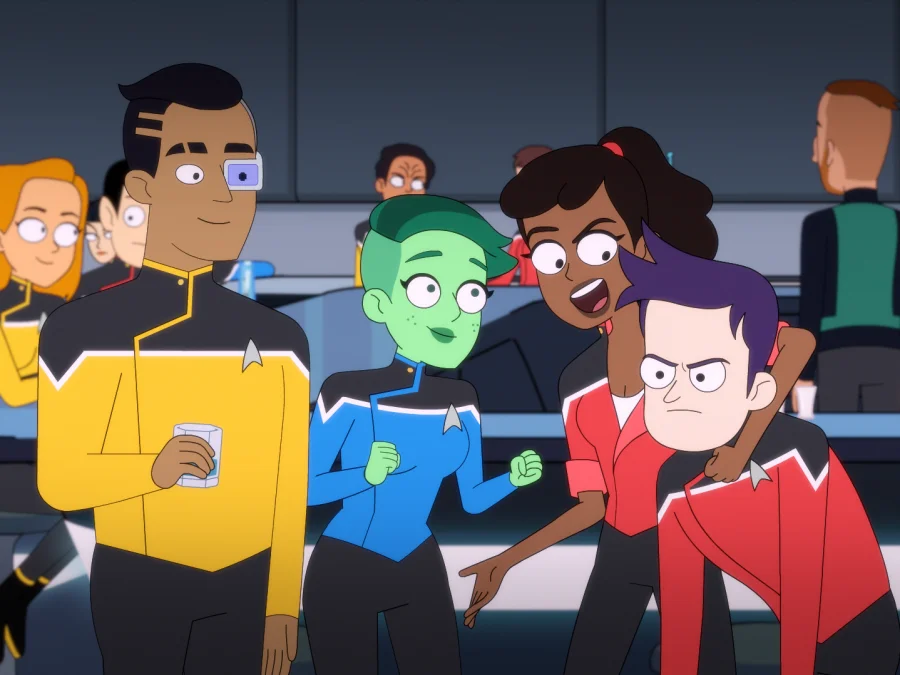
In the streaming era, Trek has spawned seven series and a movie, including Discovery in 2017, the animated series Lower Decks in 2020 and the last two franchise TV series, both planning to wrap up their runs: Starfleet Academy and Strange New Worlds.
And that is where Star Trek's biggest challenge in many years may begin. Though an executive at Paramount+ told Deadline that the company wants to find a new iteration of Star Trek — and a new writing team is also supposedly working on a script for a new Trek movie for Paramount Pictures — there is no definitive film or TV show announced yet.
If no new Trek projects are revealed soon, next year may mark the first time in about a decade that there have been no new Star Trek TV series or movies in production.
Could it be possible that, one year after its 60th birthday, there could be an entertainment universe without new Star Trek, at least for a while?
Why Star Trek may need a break
Critics have a lot of ideas about why Trek might not be resonating with new fans, from dissatisfaction with the direction of recent series, to the limitations of Paramount+, where most new iterations of the franchise have been confined.
Akiva Goldsman, who co-created and serves as co-showrunner on Strange New Worlds, admits that some traditionalist fans may have objected to the big creative swings that the series has taken during its run, including a musical episode and an episode in which most of the crew of the Enterprise is transformed into Muppet-like puppets.
Still, he says Trek's appeal as a morality play that shifts with the times is key to its enduring appeal over decades. "[Its] about optimism, about exploration, about this notion that decency and kindness and empathy are the strengths of our culture," he said. "I think the world often isn't that. And I think we often yearn for that."
Goldsman saw firsthand how early Trek conventions in the mid-1970s pioneered the gigantic science fiction and fantasy-based fan conventions of the modern era. He keeps the program from his first convention in 1974 framed in his office, remembering how fans from across the country gathered to watch an episode screened in a theater with better color and more scenes than the TV version. "From that point on," he said, "all we wanted was more."
So why isn't there more Trek definitively on the horizon after next year? Goldsman blames the impact of streaming TV for reducing viewers' desire to see lots of seasons of one series. "Maybe people just want one or two great seasons of everything and then they move along," he said. "This relationship that we once had with entertainment, was also when there was far less entertainment."
Have changing attitudes about the future made Trek's success tougher?
But Ira Steven Behr, who was showrunner for Deep Space Nine over four seasons in the '90s, has a different point of view on Trek's challenges.
A notorious contrarian with a goatee dyed blue, Behr says Star Trek was born during a time when people believed — amid unrest over the Vietnam War, the Civil Rights Movement and assassination of President John F. Kennedy — that the world could get better through movements that brought massive change.
And, thanks to the success of the space race and moon landing, people also believed technology would be a big part of that success.

"The secret message of Trek is that technology is good and that in the [future] it will be even better and its impact on our lives will be both beneficial and benign," Behr said, rattling off gadgets from the Trek universe that fans love. "In spite of warp drive and replicators, transporters and holosuites, tricorders and tractor beams, our essential humanity will be unchanged."
These days, he added, in a world filled with divisive social media, disinformation spreading across the internet and a backlash against data centers powering artificial intelligence, few still believe the future will be better thanks to technology.
"Those two major thoughts that Star Trek kinda relies on don't make it anymore for people," Behr said. "That s*** doesn't fly."
Some professed Trek fans say the new shows are too focused on identity issues or classically liberal causes — saying it's grown too "woke." Behr noted some of those fans seemed focused on big space battles and high adventure episodes, with little patience for the smaller, emotional storylines.
"All these spaceships would explode and everyone dug it so much and no one's thinking about the hundreds of people getting killed," he added. "Now I realize there's a whole segment larger than anyone thought that would watch Trek for those explosions. They're not interested in any larger thing the show is saying."
Balancing fan expectations with the need to innovate
Relaxing in his Nashville home after completing filming of all Strange New Worlds' final episodes, star Anson Mount, who plays Capt. Christopher Pike, is feeling a bit like a favorite summer camp has ended.
Noting that Trek has been around for almost a quarter of America's lifetime, he says the show is "baked into the cake of our culture" because humans are by nature "fatalistically optimistic" in a way that the franchise highlights.
And while he also acknowledges some fans have criticized Strange New World's more ambitious episodes, Mount is convinced such experimentation was necessary to keep the franchise alive in the 21st century.
"I'd rather it be completely polarizing while doing something new and taking a risk," he said. "I think Star Trek would be dead if we delivered the midline of people's expectations … I'm not happy that people are offended; I am happy that people are having a response."
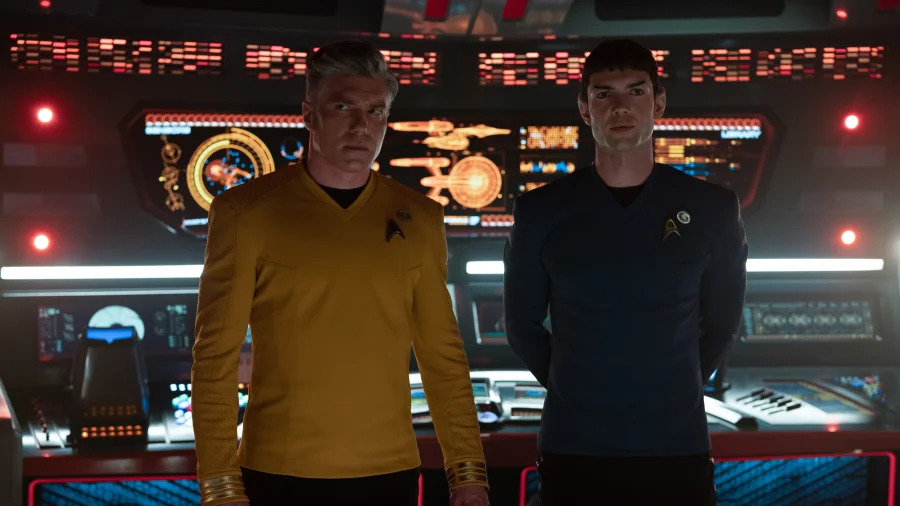
While trying hard to be diplomatic, Mount does have one criticism of the current Trek franchise: "Trek has one problem to figure out," he added. "And that is that its audience is aging and the current strategy is not bringing in a new audience. There needs to be a well-considered plan aimed at changing that."
On that score, Star Trek may suffer from timing, technology and circumstances. Fans often came to older Trek series by watching syndicated reruns on broadcast TV, catching shows like the original series or The Next Generation after school or on the weekends. They also eventually had movies, which could bring the franchise to even bigger audiences.
But the last Trek theatrical movie, Star Trek: Beyond, was released 10 years ago, which further limits access to younger fans.
The fanbase that remains has wildly different visions of what the franchise should be based on when they started watching it — even down to series structure. (For early fans, Trek was an adventure of the week — while Deep Space Nine and Discovery had more extended plotlines.)
But Jeri Ryan wonders if Trek also isn't stalled at Paramount because it might conflict with the politics of the company's latest owner, CEO David Ellison — who has faced criticism for taking action in other parts of the organization to curry favor with conservative President Donald Trump. (Ellison has denied bending news organizations under Paramount's control, including CBS News, to please Trump.)

"I have a hard time believing some of the disinterest is not political," Ryan added, noting Trek's historic devotion to diversity and inclusion. (Paramount notably eliminated its diversity, equity and inclusion programs in 2025.) "I don't think that they necessarily appreciate the message of Star Trek so much. And I don't know that [the franchise's message] fits into where they're trying to take things."
Behr remembered the last time Trek took a sizable break; when the series Enterprise was cancelled by UPN in 2005, there wasn't a new tv show or film until Abrams' Star Trek movie in 2009. He said Star Trek needed a break back then, and it might not be a bad thing for the franchise to get a break right now.
"[Back then], we were talking about sheer overkill," he added. "You know, give fans a chance to want Trek back again … Even freakin' chocolate gets old after a while if you eat too much of it."


The Devil in the Dark Is William Shatner and Leonard Nimoy's Favorite TOS Episode
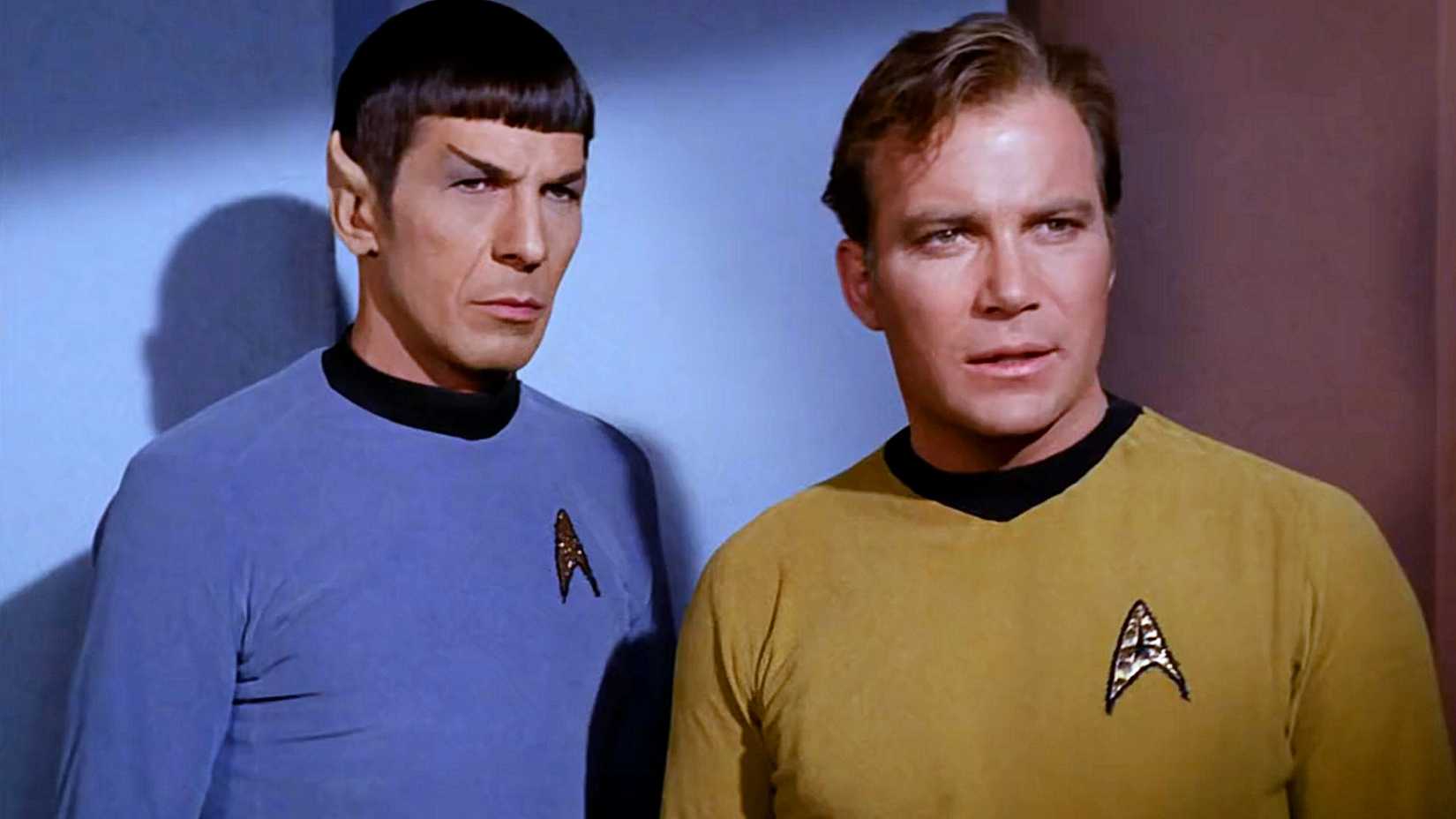
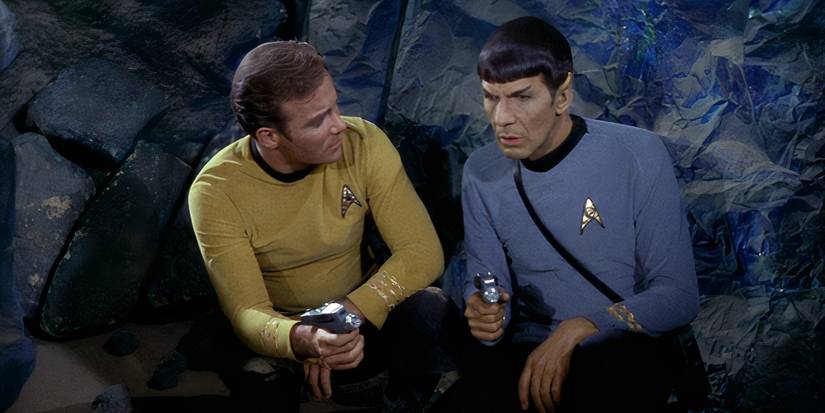
The memorable Star Trek episode begins with the Enterprise arriving at a mining colony on the planet Janus VI. 50 workers have been killed by a "monster" in the mines, and the remainder of the colony is in an uproar. Kirk and Spock soon discover the creature – called a "Horta" – is made of silicon and can burrow through solid rock thanks to acidic secretions.
Kirk injures it with his phaser but also detects signs of sentience. Spock perceives that it means no harm after an aborted attempt to mind-meld with it. The creature is the last of its species, protecting tens of thousands of eggs that the miners have unknowingly threatened. Dr. McCoy heals the creature's injuries, and Kirk brokers a truce between it and the miners once he understands why the Horta attacked.
In and of itself, "The Devil in the Dark" is wildly entertaining. It opens like a sci-fi horror movie, as the Horta attacks and kills a miner, and the audience presumably thinks that a monster is on the loose, just like the rest of the colony. Intriguing clues are added to the mystery, such as a broken Horta egg written off as an unusual mineral formation, and the combination of more deaths and a mob mentality among the miners kicks the suspense up several notches in the second act.
The initial standoff with the Horta is rife with tension, and that tension shifts as viewers realize the "monster" is anything but. It also features The Original Series' Big Three – Kirk, Spock, and McCoy – in top form, as they debate/bicker their way to the answers. Among its other features, the episode is the first time Dr. McCoy utters his signature phrase, "I'm a doctor, not a…" In this case, he's speaking about trying to heal the Horta, and ends the phrase with "…bricklayer."
The TOS Episode Featured an Iconic Star Trek Alien
According to Inside Star Trek: The Real Story by Herbert Solo and Robert Justman, the Horta was the creation of stuntman Janos Proshaska, who surprised producer Gene Coon in his office with the costume. When Coon asked what it was, Proshaska replied that it could be whatever was needed for the episode.
Coon then wrote the script in a swift four days, with the prop as a centerpiece. It wasn't the first time the stuntman had produced such a prop. He created something similar in order to emulate a giant amoeba in The Outer Limits Season 2, Episode 17, "The Probe," a few years earlier. It was the final episode of that classic sci-fi show.
The creature has skirted around the edges of canon ever since then, though it has similarly come close. An effort was made to include the Horta in a shot of Federation diplomats in Star Trek IV: The Voyage Home, but time ran out before it could be put together. Author Diane Duane went so far as to include a Horta crew member in several non-canon Pocket Books paperbacks from the 1980s.
Star Trek: The Original Series Set the Standard for the Trek Franchise
Narrative merits aside, "The Devil in the Dark" is also a textbook example of how Star Trek uses its stories to explore bigger issues of morality and human nature. In the documentary 50 Years of Star Trek, Nimoy cited it as a big reason why he was so fond of the episode: "I thought [it] was a wonderful episode about the fear of the unknown, how we fear and even hate something that we don't know anything about, learn who your enemy is, and it's not, maybe then it's no longer your enemy."
Similar examples abound, from the Tamarians in the Star Trek: The Next Generation episode "Darmok" to Species 10-C in Season 4 of Star Trek: Discovery. Even the relentless Borg have sometimes found common ground with the humanity they seek to assimilate. All of that is on full display in "The Devil in the Dark."
There's a good deal more running beneath the surface as well. The episode carries a quiet anti-materialist message amid it all, with the humans so focused on the planet's mineral wealth that they ignore its true treasure – and a potentially beneficial alliance – in the name of profit.
Its depiction of the colony itself is surprisingly rough-and-tumble for the "perfect" 23rd century of The Original Series as well. The notion that it isn't always sunshine and roses on the fringes of the frontier later became a formative idea for Star Trek: Deep Space Nine. The underground setting predominates, with almost no time at all being spent on the Enterprise: an unusual development for The Original Series.
William Shatner Has a Special Connection With The Devil in the Dark
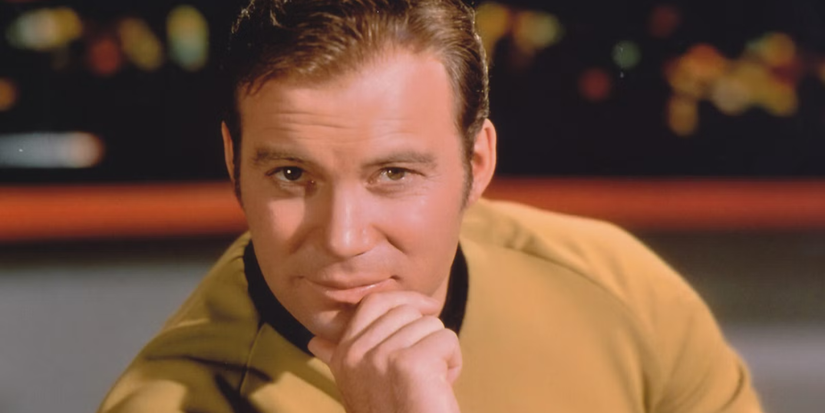
There is another, far more personal reason for his fondness, which he reveals in the same passage of the memoir. During production of the episode, Shatner learned that his father had passed away. Rather than taking time off to process his grief, he insisted on working through it to finish the episode. He cited the cast and crew's unflagging support during that time and felt he bonded with them much more deeply through the experience.
Personal circumstances notwithstanding, "The Devil in the Dark" is an outstanding early example of just how good Star Trek could be. Star Trek creator Gene Roddenberry had big ambitions for his science fiction series, wanting it to be more than just ray guns and robots.
William Shatner, 95, Surprises Fans by Fronting a Heavy Metal Band at Riot Fest

https://www.yahoo.com/entertainment/music/articles/william-shatner-95-surprises-fans-025033310.html
William Shatner has been making records for more than half a century, and just last month he announced a spoken-word album, Love & Other Mysteries, co-produced by Brad Paisley.
This weekend he went somewhere much louder. On Saturday, Sept. 19, the 95-year-old fronted a heavy metal band for the first time, at a Riot Fest after show at Park West in Chicago.
The Covers He Chose
The set included covers of Ozzy Osbourne's "Crazy Train," Motörhead's "Ace of Spades" and Metallica's "Enter Sandman." Shatner also reworked songs from his own catalog and previewed tracks from an upcoming heavy metal album.
"I have explored space. I have explored time. Now … I explore distortion," Shatner wrote on social media.
The band behind him is led by guitarist and musical director Marcus Nand, who has worked with Mike Tramp and Candice Night. Phil Soussan plays bass, Britt Lightning of Vixen plays guitar and Fred Aching of Kings of Thrash and Dead Groove plays drums.
From Park West to Douglass Park
Saturday was a warm-up. On Sunday night he played Riot Fest itself at Douglass Park, and the festival posted video from the set to Instagram.
It had taken a while to get him there. Riot Fest said booking him took "years of persistent letter writing," and its July announcement teased that his rider was demanding. When the news went public, Shatner promised a Black Sabbath cover.
Chicago may not be the last stop. During a CNN appearance this summer, anchor Elex Michaelson asked whether the band would play the big desert festival, and Shatner and his daughter answered together: "Coachella." The festival has not announced its 2027 lineup.
A Very Different Anniversary Year
All of this is happening in the 60th anniversary year of Star Trek. Shatner has spent part of it looking back, reuniting with George Takei and Walter Koenig for the show's birthday and revisiting the detail NBC wanted gone.
He flew to space at 90. At 95, he found distortion.
This story was originally published by Parade on Sep 21, 2026, where it first appeared in the News section. Add Parade as a Preferred Source by clicking here.
+++++++++++++++++++++++++++++++++++++++++++++++++++++++++++++++++++++++
+++++++++++++++++++++++++++++++++++++++++++++++++++++++++++++++++++++++
- New note - On 1807.06, I ceased daily transmission of my Hey Mom feature after three years of daily conversations. I post Hey Mom blog entries on special occasions. I post the days since ("Days Ago") count on my blog each day, and now I have a second count for Days since my Dad died on August 28, 2024. I am now in the same time zone as Google! So, when I post at 10:10 a.m. PDT to coincide with the time of Mom's death, I am now actually posting late, so it's really 1:10 p.m. EDT. But I will continue to use the time stamp of 10:10 a.m. to remember the time of her death and sometimes 13:40 EDT for the time of Dad's death. The blog entry numbering in the title has changed to reflect total Sense of Doubt posts since I began the blog on 0705.04, which include Hey Mom posts, Daily Bowie posts, and Sense of Doubt posts. Hey Mom posts will still be numbered sequentially. New Hey Mom posts will use the same format as all the other Hey Mom posts; all other posts will feature this format seen here.


No comments:
Post a Comment